@BAPS I would like to get in touch with someone regarding using an image from your website for an article. Whom may I get in touch with and how? Thanks, Shruti
Mount Everest from Bihar 🏔️
How could I miss this truly Eureka moment of Everest, Lhotse and surrounding ranges from the Bihar! First clear views I've seen from here.
This is what the Great Trigonometric Survey of India would've witnessed on a regular basis in the 19th century.
“A Kayastha reciting 𝘊𝘩𝘢𝘯𝘥𝘪 𝘚𝘵𝘰𝘵𝘳𝘢𝘴? Outrageous!” they whispered in the corridors of All India Radio, 1931. Society scoffed , “How can a non-Brahmin dare?”
But Pankaj Kumar Mullick and Bani Kumar stood firm.
“On Mahalaya’s dawn, the sun will rise to Birendra Krishna’s voice. 𝘔𝘢𝘩𝘪𝘴𝘩𝘢𝘴𝘩𝘶𝘳𝘢𝘮𝘢𝘳𝘥𝘪𝘯𝘪 will echo across Bengal.”
And so it began. At Brahma-muhurta, Birendra Krishna Bhadra recited the 𝘊𝘩𝘢𝘯𝘥𝘪 𝘚𝘵𝘰𝘵𝘳𝘢𝘴, sinking deeper into the mantras, until his eyes welled with tears like autumn dew. His voice shook time itself. Bengal froze. Hearts trembled. A legend was born.
The next morning, no one asked “Is he Brahmin or Kayastha?” All they asked was: “Who poured his soul into that divine chant?”
94 years later, Mahalaya still belongs to his voice. Even Uttam Kumar couldn’t replace him. When AIR dared to swap Bhadra with Uttam & Hemanta, Bengal revolted. Stones were thrown at the matinee idol’s house. AIR had no choice . Bhadra was brought back with honor.
Thus destiny wrote its script -
⭐ Birendra Krishna Bhadra
⭐ Pankaj Kumar Mullick
⭐ Bani Kumar
Together, they etched Mahishasuramardini into the Bengali soul forever.
This is potentially fatal. This little metal rod sticking out of an entrance in Samachar Market in Mayur Vihar Ext is a disaster waiting to happen.
@AamAadmiParty@MCD_Delhi@KumarMehraulia pls do something abt this!!
Measuring at (h) 2,125mm by (w) 1,450mm, this photograph of Battersea Power Station is the largest in our collection 😲
We're wondering who has one bigger than us 🤔 cultural institutions... over to you!
Nostalgia on steroids. From my grand plan to buy a real house for just Barbies to my mom stitching most of the clothes for my Barbies, so many childhood memories popped up while visiting the #Barbie exhibition 💞 at @DesignMuseum , curated by the phenomenal @Danielle_J_Thom
What makes a book rare?
How much is my rare book worth?
What's the best way to handle and store old books? 🤔
You asked, we answer! https://t.co/yL4VZWRN6x
#WorldBookDay
If the answer is yes to either of the questions above, what are we doing about it? To whom are we addressing at least the second question?
If the answer is no to either/both, then no worries.
TIA to those who take the time to answer either way
2/2 #NationalMuseumDelhi
So, questions for ppl on my timeline...
1) do we care that the National Museum in Delhi is being torn down?
2) do we care that there's no plan - that's been made public - for the storage of the 2L artefacts while the North-South Blocks are being prepped?
1/2 #NationalMuseumDelhi
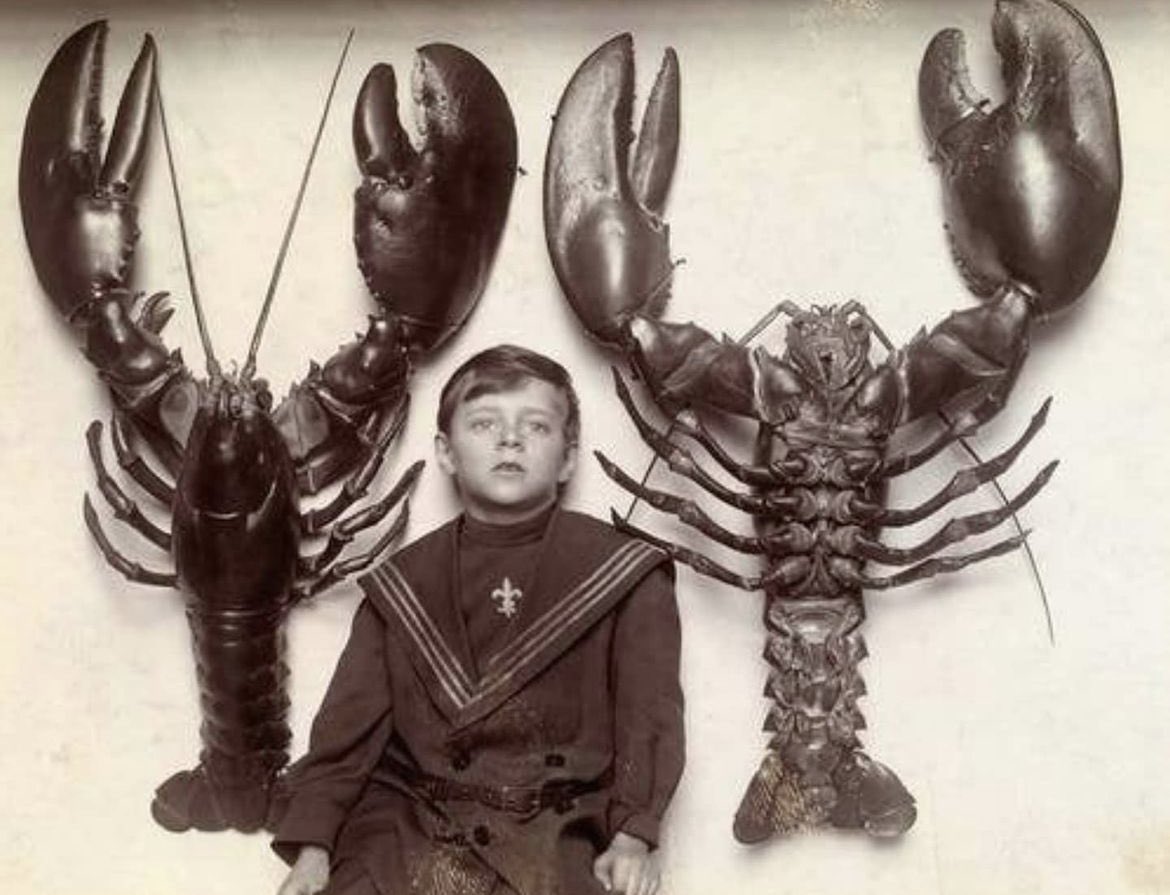
During the American colonial era, lobsters were considered "garbage meat" and were eaten by indentured servants, prisoners, and poor families that couldn't afford anything else. Even the indigenous tribes that lived near the coast would use lobsters as fertilizer or fish bait rather than consume them.
19th-century Kentucky politician, John Rowan, once said, "Lobster shells about a house are looked upon as signs of poverty and degradation." It was common for people to bury lobster shells in their backyard to prevent their neighbors from seeing them.
In one Massachusetts town, indentured servants even sued their owners because they were feeding them too much lobster. They won the lawsuit and got it in ink that they could only be fed lobster—at most—three times a week.
Lobsters had such a bad reputation because they were extremely plentiful. Early colonists could just walk up to the shoreline and collect them because they would wash up onto the shore in droves. The lobster also had a reputation for being a bottom feeder that would literally eat anything. It also didn't help that during this time, people ate lobster by grinding it up entirely and eating it as a paste or stew.
In the early 19th century, people paid 53 cents a pound for Boston baked beans and paid just 11 cents for a pound of lobster. It was quite common for lobster to be served to cats.
Towards the end of the 19th century, the opinion of the lobster began to change. As railroads began to expand across America, the railway companies decided to serve lobster because it was cheap, plentiful, and largely unknown to inland passengers who found it delicious and demanded more! It was during this time that lobster meat was also being canned and sold all across the country, which pushed demand even higher.
By the 1920s, there were fewer lobsters yet demand continued to increase. By the 1950s, the lobster had cemented its status as a delicacy and became something that was eaten by movie stars and the wealthy.
This #WorldFoodDay, we tuck into some of the culinary traditions, ingredients and flavours of the Caribbean that have made their way to homes in London. Each recipe tells a story of the Caribbean's diverse heritage, as well as its complex colonial history: https://t.co/rQTlMiWnZv