@ToAmused@nj_hlongwane@Bantu_Guy The US, the global terrorist state starting wars, bombing children and funding a genocide, is asking for ADHERENCE TO HUMAN VALUES man hire a brain or something
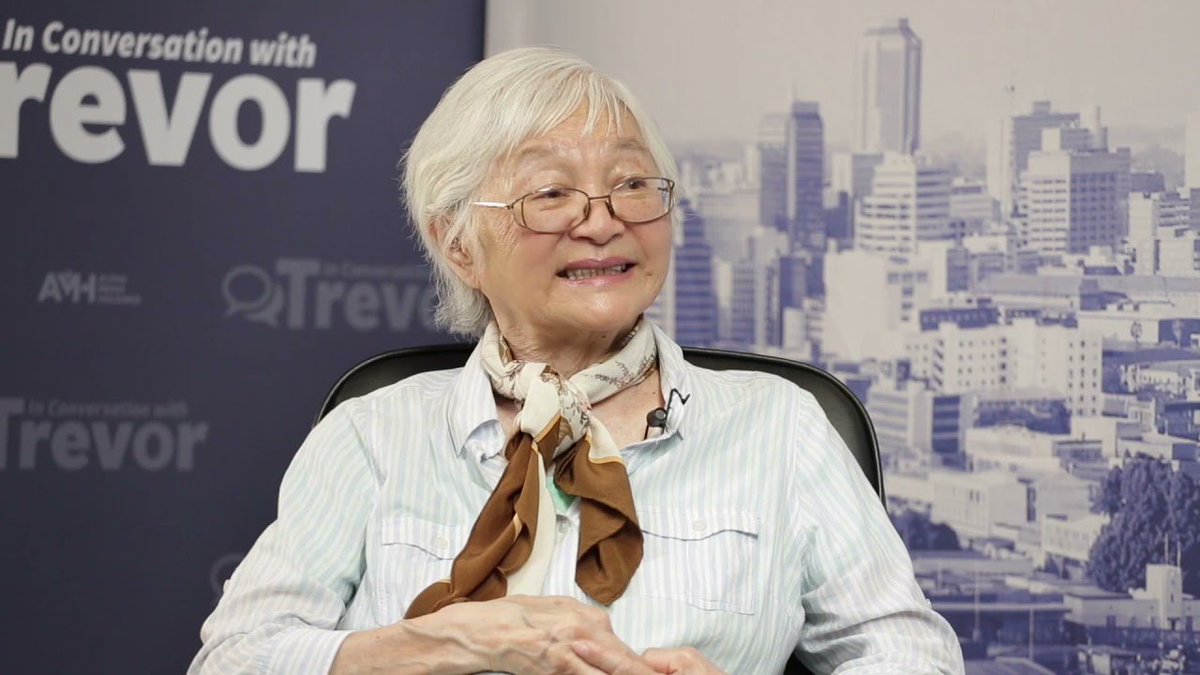
Fay Chung is a Zimbabwean liberation war veteran, educationist and former cabinet minister.
Born in March 1941 into a third-generation Chinese-Zimbabwean family, she was raised by her grandparents after her mother, Nguk Sim Lee, died when Fay was three.
Her father, Chu Yao Chung, was a businessman.
Chung joined ZANU in 1973 and went into exile, working in Tanzania, Zambia and Mozambique.
During the liberation struggle, she helped establish teacher-training programmes and develop curricula for schools in refugee camps.
After independence, she served as Deputy Secretary for Administration in the Ministry of Education from 1980 to 1988.
She became Minister of Education, Sport and Culture from 1988 to 1993, playing a major role in expanding access to primary and secondary education.
She later served as Minister of National Affairs, Employment Creation and Cooperatives and subsequently held senior education roles at UNICEF and UNESCO.
Chung is the mother of Zimbabwean-British actress and activist Chipo Chung, whose father is liberation veteran and politician Rugare Gumbo.
Her memoir, Re-Living the Second Chimurenga, preserves her first-hand account of Zimbabwe’s liberation struggle and post-independence education reforms.
Citigroup sees Zimbabwe breaking with the past as a poster-child of triple-digit inflation and fiscal indiscipline, flagging an economic turnaround is underway https://t.co/gG4r6dB61o
@Munya_Daniel Even our liberation were grounded in marxist ideology. it was not a choice, they actually had to be because its the ideology that provided a critique of the system of colonialism at a deeper level
@JMeservey Before land reform, about 1500 settler crackers owned 80% of the most fertile land, fertile land that they stole from natives, as is their culture. LR brought land to over 200k natives, and they are thriving. Even if 1 native got all the land, better that than a settler cracker!
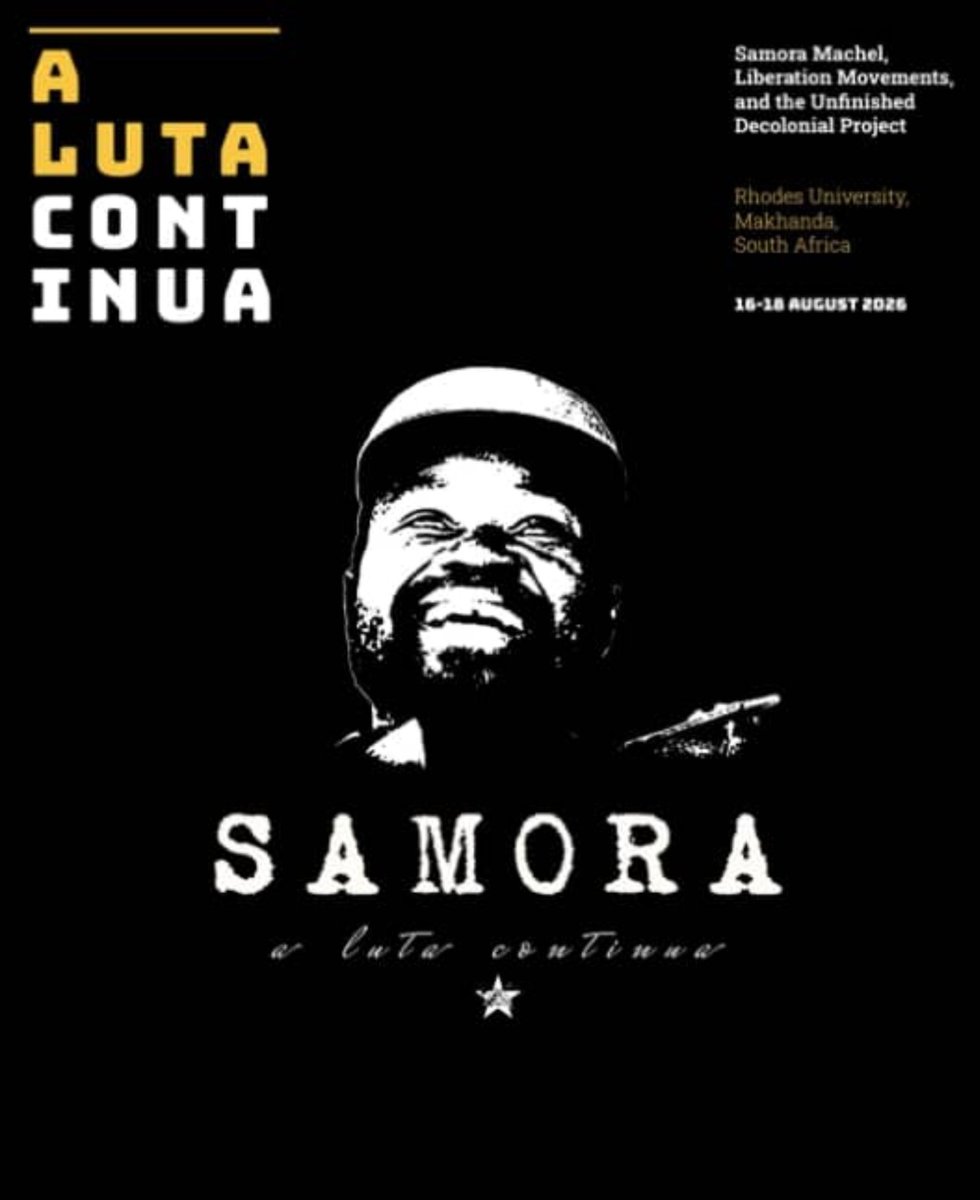
Attending the Samora Machel Symposium at Rhodes University, exploring “Samora Machel, Liberation Movements and the Unfinished Decolonial Project.”
We’re also excited to be launching our new baby the Frontline Newsletter, dedicated to documenting, preserving and sharing Southern Africa’s liberation history.
This would have been our fate, if Rhodesia and Apartheid South Africa had been tolerated.
Rest in Power Mwalimu
Rest in Power Kaunda
Rest in Power Samora
The condescension in that question says more about Washington than it does about Beijing. For decades the West lectured Africa about governance, about transparency, about "ordinary people," while extracting minerals, propping up compliant regimes, and leaving behind conditionalities that gutted health and education budgets across the continent. Zimbabwe knows that history intimately. So forgive us if we're unmoved by a US agent suddenly discovering concern for "ordinary Zimbabweans."
Let's talk about what China's engagement has actually delivered. Roads, dams, hospitals, telecommunications infrastructure, power stations. The Kariba South expansion, the Robert Gabriel Mugabe International Airport upgrade, the Hwange thermal units, the parliament building. These are not abstractions for elites to admire from boardrooms, they are the physical infrastructure ordinary Zimbabweans drive on, drink water from, and get electricity through. Compare that to what decades of Western aid architecture produced: consultants, workshops, and sanctions that choked off lines of credit and made it harder for any Zimbabwean business, elite or otherwise, to access international finance.
And on sanctions, since we're being frank: it was the United States, not China, that imposed ZIDERA and a sanctions regime that has strangled this economy for over two decades, an act ordinary Zimbabweans have paid for in unemployment, in currency instability, in diminished healthcare capacity. If the US State Department wants to talk about who's actually harming ordinary Zimbabweans, it should start with a mirror.
China doesn't impose regime-change conditionalities as the price of a loan. It doesn't demand privatisation of state assets as a precondition. Whatever critiques exist about debt sustainability, and there are legitimate ones worth having, they don't come from a government whose own foreign policy record in this region is one of destabilisation dressed up as democracy promotion.
So the real question isn't how China's engagement is working out for ordinary Zimbabweans. It's why Washington still hasn't reckoned with the damage its own policies have done here.