Talking about the problem has never been our weakness. Acting on it is where we consistently fall short.
We had World Bank funding on the table to implement a full Bus Rapid Transit (BRT) system—an upgrade that combines the speed and reliability of rail with the flexibility and lower cost of buses. Unlike ordinary buses that sit in the same traffic jams as everyone else, a properly designed BRT glides past the chaos on its own dedicated right‑of‑way.
The World Bank gave us only two conditions:
1. Establish a Metropolitan Area Transport Authority (MATA)
2. Acquire the right‑of‑way (RoW) for the pilot corridor
I supervised the consultant who drafted the Principles for the Metropolitan Area Transport Authority (MATA) Bill. I also prepared the Cabinet Memorandum for establishing the Authority, which Cabinet approved on 4 May 2016. Up to that point, everything was on track.
Then the derailment began.
Petty turf wars—driven by personal interests—broke out between @KCCAUG and @MoWT_Uganda. Meanwhile, @mofpedU (and perhaps even MoWT itself) failed to secure the funds needed to acquire the RoW, estimated at UGX 70–100 billion.
The pilot corridor—Kireka to Zana—had its designs completed, revised, and re‑revised at least three times. Yet with no RoW and no institutional harmony, the project slowly suffocated.
As usual, we sabotaged ourselves. And a transformative project died quietly, not because it was impossible, but because we lacked the discipline to follow through.
While we were here playing our shenanigans Dar es Salaam completed construction of theirs and its operational.
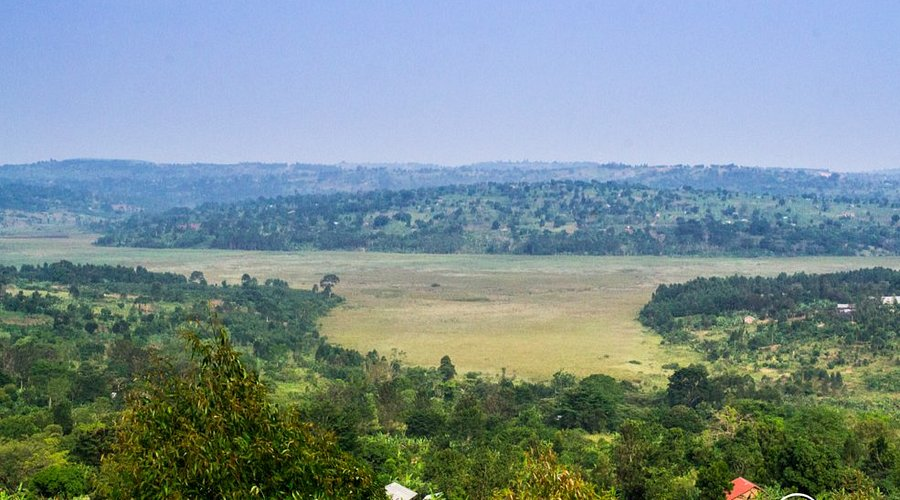
This is Masaka City, 132km from Kampala on the equator highway, given city status in 2020, and shines with clean, organized streets and a peaceful vibe. The growth here shows what urban planning can deliver.
The push on roads & services is paying off... #GoldenPosts
First principle for Mbarara City.
=======
A city is not a real-estate pile.
A city is a productivity system.
Its greatness is not in the height of its buildings, but in the strength of its livelihoods. Not in the number of approved plans, but in the number of citizens who can move, work, earn, learn, and live with dignity.
When transport fails, traffic steals life by the hour.
When services fail, stress becomes a daily tax.
When jobs are far from homes, poverty only changes clothes.
So we must plan differently.
From plot economics to system economics.
From scattered approvals to connected opportunity.
Let us build roads and transit that reduce cost and time.
Let us build markets, workshops, and industrial spaces where skills become income.
Let us treat drainage, sanitation, schools, clinics, and digital systems as core infrastructure, not optional extras.
Because the true test of a city is simple:
Does it increase the productivity and wellbeing of ordinary people?
If not, even the most impressive skyline is a polished illusion.
For Mbarara, let this be the doctrine: Build systems, not just structures.
The main thing to begin with is to reduce the chain of commands in the capital. That dark capital is over managed and hence mismanaged. That can start with revisiting the KCCA Act and redeploy several responsibilities to respective offices and officers.
You can't have the Council, Lord Mayor's chambers, ED's Chambers, RCC, KCCA Land Board and then Ministers' offices all taking decisions on solid waste, revenue mobilisation, land management, roads, housing etc at the same time.
Parallel orders and usurped powers being the order of the day will just wash away all those brilliant efforts.
For instance, the former RCC @HuduHussein (Much as it shouldn't have been his cardinal role) tried to compel landlords to paint those buildings, laboured action or order on street preachers... few weeks after those announcements, he was recalled and redeployed upcountry. His successors were indirectly then discouraged to make any such attempts therefore...
A Smart & Green Kampala is built on data, discipline, and sustainability. Smart systems manage traffic, safety, payments, and services using technology and AI. Green planning delivers walkable streets, solar lighting,clean transport, trees, flowers,drainage, and energy-efficient buildings. When smart tools reduce waste and green spaces absorb growth, the city becomes safer, cleaner, healthier, and competitive. Efficiency + sustainability = a livable Kampala….This is a collective responsibility I believe that @KagutaMuseveni can act by putting his foot down to direct and action the implementation.!!!
@mukulaa Very true, but all this needs intentional investments into the infrastructure fabric of the City but it seems no one is willing to commit the much needed funds
I personally think that Kampala City can be salvaged from its current nebulous state. The solution is not cosmetic fixes, but bold, disciplined urban reforms that restore order, beauty, and pride.
First: Reorganize the CBD. Clear zoning, structured trading spaces, enforced business standards, and compulsory shop displays. A city must look organized to function organized.
Second: Relight Kampala. Modern street lighting across the CBD safe cities are well-lit cities. Darkness breeds crime; light restores confidence.
Third: Urban aesthetics matter. All landlords should repaint buildings every two years. Clean, maintained buildings signal seriousness and attract investment.
Fourth: Cleanliness is non-negotiable. Privatize garbage collection and disposal. Launch a Keep Kampala Clean initiative every last Saturday of the month. Clean cities are disciplined cities.
Fifth: Fix mobility. Pave all walkways, tarmac all CBD roads, restore road signs and plot numbers, mark parking and no-parking zones clearly, and prohibit heavy trailers from the city center.
Sixth: Modern transport & control. Introduce private city transport within an initial 5km radius, install traffic lights at all intersections, and enforce traffic laws strictly no exceptions.
Seventh: Security & enforcement. Create a dedicated City Police with 24/7 patrols, including motorbike units in distinct uniforms. Order must be visible.
Eighth: Smart city reforms. Free public Wi-Fi in the CBD, AI-powered KCCA systems, and AI training for all staff to improve service delivery and accountability.
Finally: Instant fines for city offenses. Swift consequences build compliance.
Green the city. Enforce the law. Embrace technology.
Turn Kampala into a clean, safe, green, and modern African capital.
My Experience in soroti has was amazing and historical ,soroti was once the cleanest and most organized in the country for 7 years and NEMA issued the certificates.we can do it in Kampala. But the private sector must cooperate with the @KCCAUG …dilute politics in the above initiatives then you can achieve positive changes and results.
@KagutaMuseveni@JanetMuseveni@AnitahAmong@mkainerugaba
#KampalaReforms #CleanCity #GreenKampala #SmartCity
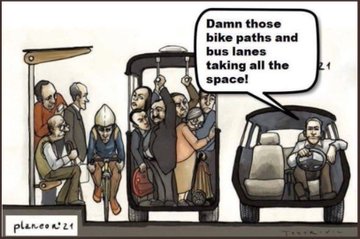
@cityaestheticss The biggest problem with the private car is that it is private. Therefore we only move one person per 5 seats.
We don't share our cars.
We don't share our rides.
We are moving empty cars.
How about if we invested the next 20 years in building a new, well-planned capital city?
Personally, I find Mukono a perfect location, it’s spacious, strategically connected to Lake Victoria, and has room for organized urban expansion.
After those 20 years, once the CBD has fully shifted to Mukono, we could then restructure and modernize Kampala, turning it into a truly mega, well-organized capital region.
Is that such a bad idea?