Impact maxxing at @coeff_giving Global health, statistics, economics, feminism, effective altruism. All thoughts own, but usually better expressed by others
I am always surprised by how little researchers and founders know about the competitive landscape in their fields. Example:
Huge number of PIs working on RSV vaccines and antibodies, not really aware of the competitive landscape or pipeline, what's required to get a best-in-class drug approved, what the neglected populations need.
Why is this? Lots of brilliant people working on things that are very unlikely to have an impact (or generate truly novel insights to advance the field)!
In general, I think people tend to underestimate how much evidence there is for the big ideas in science – natural selection, germ theory, climate change, clonal selection, even cholesterol and statins.
People debated these theories for decades, sometimes centuries, before consensus was formed.
Most N-of-1 discoveries you've heard of probably didn't happen that way: Jenner's experiment on one boy and Barry Marshall's self-experiment with H. pylori for example were not convincing to scientists -- in my opinion, for good reason; far too many people made claims that didn't hold up with further research.
But they, and others, collected far more evidence that did validate those ideas, often from multiple lines of evidence including case-control studies, prospective studies, experiments, and sometimes mechanistic evidence.
(The bacterial/stomach cancer link had actually been explored for decades before but failed to find bacteria with the wrong staining method https://t.co/J6S3wSyzqp which killed the theory for a while; what convinced scientists was large prospective epidemiological studies in the early 1990s, after Marshall's other research. He didn't actually develop a stomach ulcer or cancer from the self-experiment, in any case, so I find it confusing when that's brought up.)
Rigour isn't something new; it's always mattered whether interventions work, but we know better about how to test hypotheses and evaluate causal claims.
Because of that, I think people also tend to underestimate how much evidence is needed to be confident about modern day claims.
That doesn't mean the science is settled or predictable. What doesn't fit now might help us uncover new layers of understanding and refine those theories further.
My favourite example is that leading researchers claimed that immunology was solved in the 1960s, and that only a few details remained -- before VDJ recombination, MHC restriction, regulatory T cells, etc. were discovered! That didn't upend our understanding of clonal selection, but it helped see it from a new perspective and with far more depth than before.
The idea of the famous dissident returning to the China he fled from, only to find a place that is more “humane” than “unfree” Europe, is stirring some discussion.
Reading the Berliner Zeitung interview, I didn’t see Ai Weiwei’s words & experiences as a political verdict on “China vs. West,” nor as the activist making a U-turn on his China stance. Instead, it fits perfectly into Ai Weiwei’s life’s work as a perpetual contrarian and self-described “troublemaker.”
- Ai Weiwei was back in China from Dec 12-Jan 2 for a private family visit. He left China in 2015 after years of house arrest, detention, and harassment. Reuniting with his 93-year-old mother together with his teenage son, he described Beijing as feeling like “a broken piece of jade being perfectly reassembled” - a familiar homecoming many people experience after a long absence, when the air, the faces, and the sense of things click back into place. It’s not a claim about the city per se, which has also changed significantly over the past decade (incl the “Great Brickening” and the demolition of Ai’s own studio).
- A positive change he noted is the improved service quality in Beijing. From banking to buying tailored clothes, he found that things are easy to do. By contrast, he describes bureaucratic processes in Germany as nightmarish, from bank issues to delays in visa applications.
-When he speaks of the “political climate,” he says that “daily life for ordinary people in Beijing feels more natural and more human because people tend to focus on what is directly in front of them,” adding his appreciation of China’s deeply ingrained Confucian traditions and its understanding of human relationships. This is not a comment on state power, dissent, or freedom/repression, but on social behavior and cultural roots; here, “political climate” is used to describe social atmosphere.
- When he refers to Germany as “an insecure and unfree country struggling to find its position between history and the future,” Ai Weiwei is responding to a question about Germany’s image in China, not necessarily offering a personal verdict on Germany (even if his personal view may overlap).
Nowhere does Ai Weiwei claim that Europe is politically “unfree” in this interview, nor that China is politically “free”. He does talk about ‘freedom’, explicitly and implicitly, but it’s social freedom. In Germany, he was legally free but socially isolated. In China, he was politically constrained but socially connected.
That tension is precisely what makes Ai Weiwei interesting, as a person and as an artist. He’s definitely not a witness for the defense of China - he is one of the most outspoken critics of censorship and political power of his time.
He criticizes China, the country he loves; he criticizes Germany, the country that supported him; he criticizes the US, where he was educated, he criticizes Europe, where he now lives; and he even criticizes money, which he has plenty of.
Ai Weiwei’s work makes us question the constructions of power around us. Framing his emotional connection to China and his criticism of Germany’s social coldness as a "China vs. West" victory narrative would miss that point entirely.
Some news: Open Philanthropy is now Coefficient Giving! Our mission is unchanged but the new name reflects our growing work with other donors to multiply the impact of their giving.
🧵 on our work to make philanthropy a more efficient "market" and plans going forward:
🚨 Hiring scientists to help give away money 🚨
At @open_phil, we have given away $600M in biomedical research since 2016. Now, we're expanding the team to do more.
Hiring:
* Up to 3 Senior Program Associates
* Program Officer in strep A
Remote OK, salaries in links! (thread)
Why maybe you shouldn't keep quiet about donating to charity...
This was in the Charities Aid Foundation philanthropy report....
"In the UK, we are famous for not talking about money and this often includes philanthropy. The less we talk about giving, the less it becomes an expected part of our responsibility to our local community and the wider world. While many of us do not want to boast about our generosity, we may do the charities we support a disservice by not acknowledging our support more publicly."
"What you can do: talk to your friends, family and colleagues about the charities and causes you care about. You can celebrate the work they do without centring yourself - or the size of your donation - in the story. Consider volunteering as well as donating, if you are more comfortable talking about giving time than money in conversations with others."
I've encountered this negative attitude to discussing charity, as I've been attacked by (thankfully the few not the many) when I pubish my annual transparency blog about where the money from my charity fund goes.
Some snipe at it saying, if you tell people about it, it devalues the giving. I disagree, in my view raising awareness about charitable giving and charities is important for someone in my position. And I will continue to do it.
Some personal news:
After four years, this was my last week at Our World in Data!
It's hard to express how much I've enjoyed working with my colleagues, and being part of such a great project to make global data & research accessible to the world. I'm really going to miss it!
I've learnt so much from the whole team on data visualization, accessibility, data management and writing for a broad audience.
When I started, I didn't particularly care for data visualization (!) and didn't even know what trachoma was.
But I've been wanting to spend more of my time working on longer-form, sometimes in-the-weeds content on medical innovation & global health.
For example...
- How can we get innovative clinical trial designs adopted more widely?
- What if the Golden Age of vaccine development is right now?
- How do we get ambitious global health efforts restarted?
- What would it take to create a universal flu vaccine?
- How have microscope resolutions advanced so much over history?
- How did heart surgery become possible & routine?
- How did major data collection projects get started?
These are some of the things on my to-do list, and from next week, I'll be working full-time at Works in Progress as an editor on science & global health, working with authors, and writing my newsletter Scientific Discovery, co-hosting the podcast Hard Drugs, to cover these topics and many more.
I'll also be working with Open Philanthropy on clinical trials, exploring and supporting the great ideas out there in innovative trial design, improving participation, transparency, and the more 'boring' but important processes that make research possible.
Anyway, there's lots more to come —
Look forward to more 9,500 word articles, 5-hour long podcast episodes, regular biotech and medicine round ups, and lots more science, medical innovation, and global health content ☺️
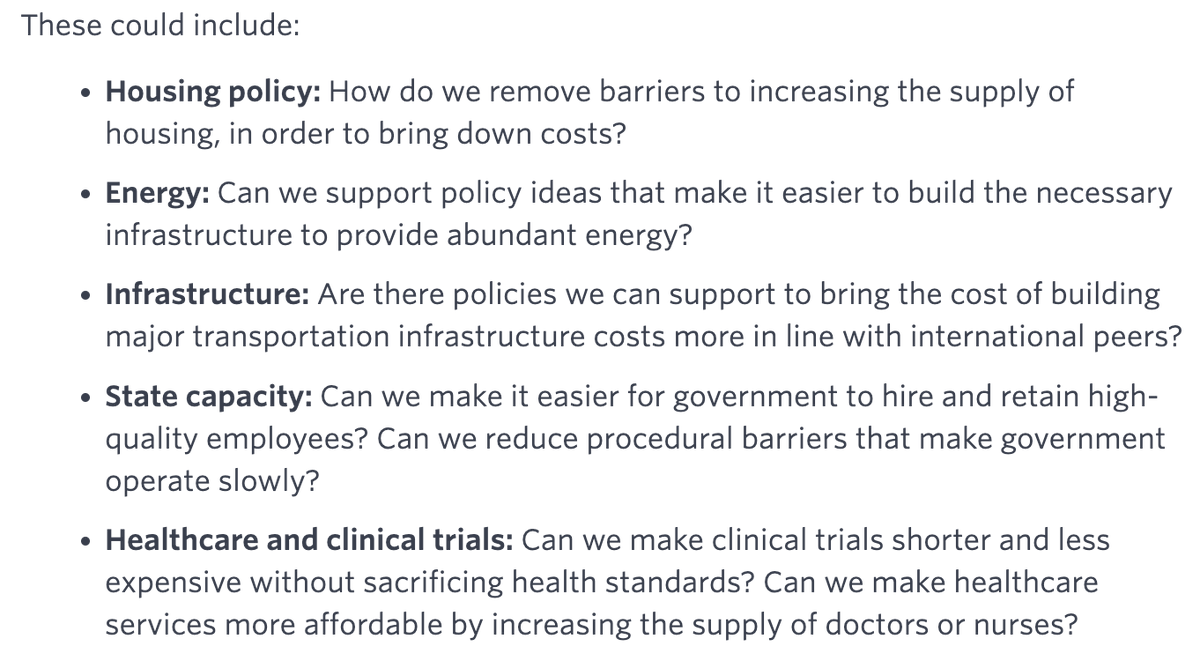
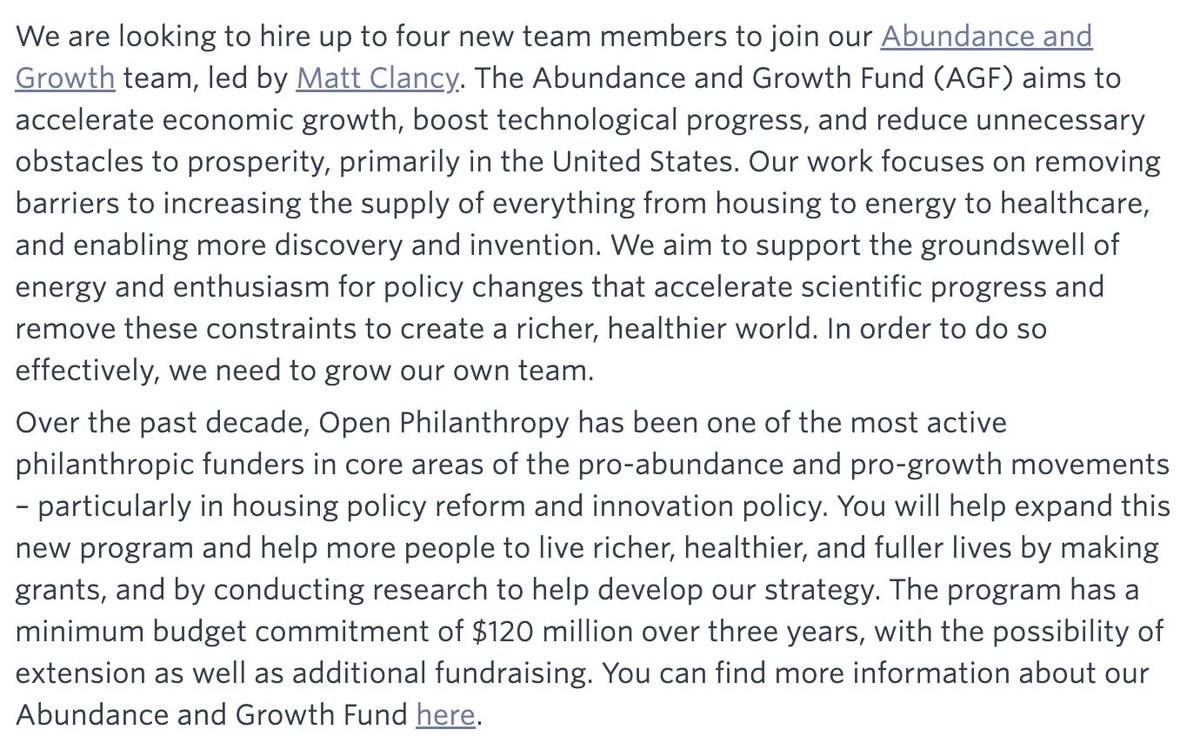
Highly recommend applying to our two new Abundance and Growth roles at @open_phil ! We are looking for up to 4 new team members including specialists in areas like energy, housing, clinical trials, etc. as well as broader generalists to help us direct $120M+ in the coming years
The Abundance and Growth Fund at Open Philanthropy is hiring! We’re looking for 2-4 people to help expand this new $120+ million program to accelerate economic growth and reduce the cost of living through strategic grantmaking and research. (1/4) https://t.co/45KOarYLyY
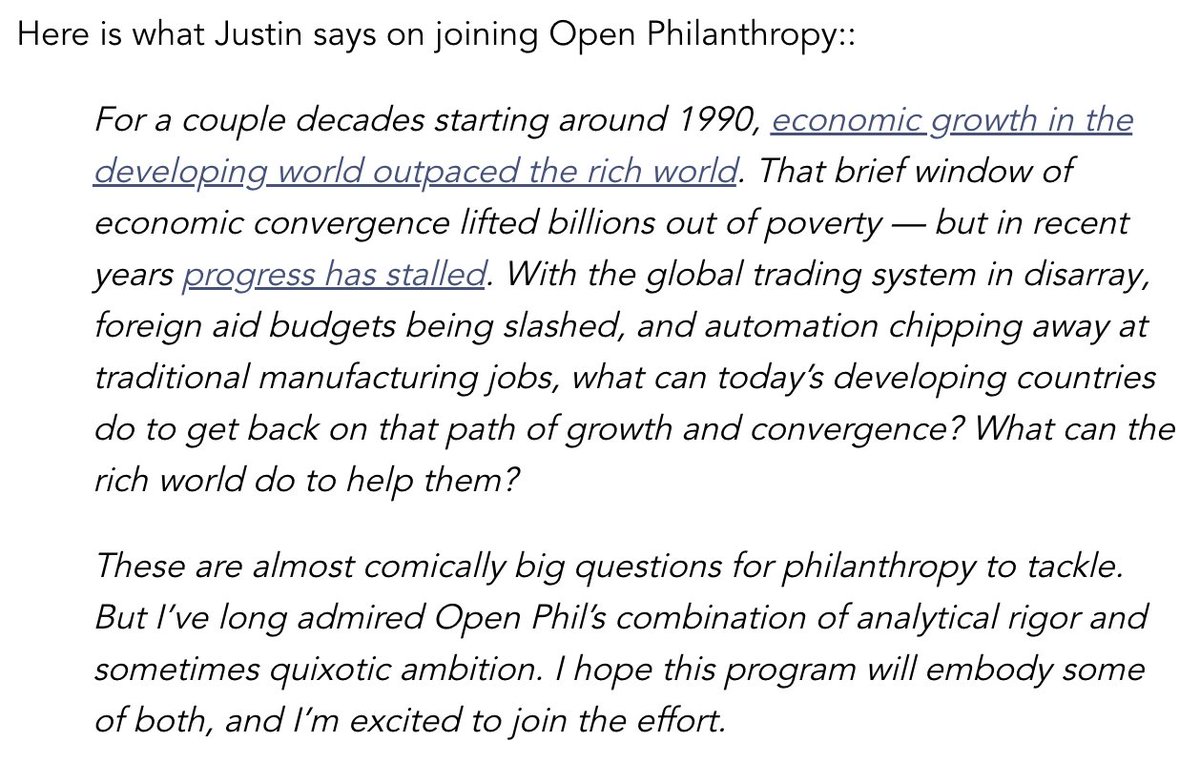
Extremely excited to have @JustinSandefur officially joining @open_phil to lead our work on economic growth in LMICs! Lots of opportunities and challenges ahead and I think Justin will do a great job leading this work.