Just posted: My latest TED talk. I look at technology from the perspective of human ultrasociality -- deep needs for community and communion. From that view, you can see how social media, edtech, and especially AI block human flourishing
https://t.co/htYeTCCIYo
OFC encodes option values while LPFC tracks spatial locations during both overt (eye movements) and covert (internal) attention.
Effects of overt and covert attention on decision-making dynamics in prefrontal cortex
https://t.co/TW57wZkIbf
#neuroscience
Ben Sasse is my hero for so many reasons, including this: using what remains of his voice to call for rolling back the phone-based childhood, and giving kids the independence they need to develop the skills of democracy:
@BenSasse
https://t.co/AvgxyGCCnd
Just a few years ago, America’s public schools were rushing to get every child a laptop. Now, the conversation has flipped.
After pouring billions of dollars into laptops, tablets and apps, many schools are facing a digital reckoning.
Read more: https://t.co/VEqepE9iTI
60 Percent of Grades at Harvard Were A’s. Enough Is Enough, say my colleagues David Laibson and @jasonfurman (and I couldn't agree more). https://t.co/RCXpFIPnT0
Brains seem to be wired so that signals are “just right”. This paper argues that there is a special “sweet spot” in how the brain is organized that keeps activity balanced.
https://t.co/kIIAqCbYAM
#neuroscience
The Science of Learning, 2nd ed. is here! Updated #cogsci research on attention, memory & motivation, plus new sections on instructional pitfalls & student self-regulated learning. Download now: https://t.co/U501E4ydeN
#TheScienceOfLearning2
Breaking News: Harvard University voted to cap the number of A’s they are permitted to award to undergraduate students, in an attempt to reduce grade inflation. https://t.co/cRVFs2Bb9i
Teens are struggling to wake up on time, their grades are suffering and they’re moody, parents say.
A new study shows the extent to which school-night phone use could be disrupting vital sleep for adolescents. https://t.co/AztEYXpjfv
Our colleagues at @deansforimpact just released The Science of Learning, 2nd ed!
#TheScienceOfLearning2 includes updated research, pitfalls to avoid, and more, grounded in our best scientific understanding of how students learn. https://t.co/KTxsRUiDlq
New research on providing information to parents who are selecting a school: information and social factors matter. Via @matt_barnum
https://t.co/0jdDuOsNiJ
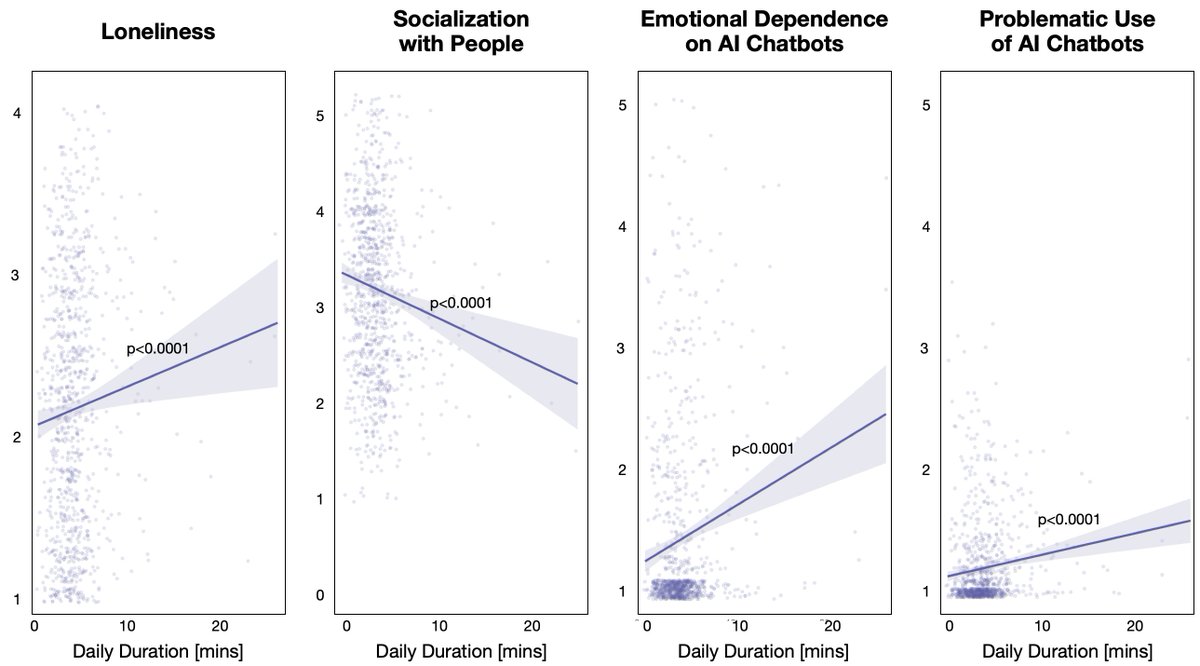
AI chatbots have become increasingly human-like, with more users seeking emotional support and companionship from them.
New research founds that higher daily usage with chatbots—across all modalities and conversation types—was linked to higher loneliness, dependence, problematic use, and lower socialization with real people.
People with stronger emotional attachment tendencies and higher trust in the AI chatbot also tended to experience greater loneliness and emotional dependence, respectively.
People are increasing using AI for companionship, relationship advice and emotional support. But there may be serious downsides to these types of interactions.
https://t.co/sPUHsXOEg8
There is a lot of emerging evidence that writing by hand offers vital benefits.
""There's actually some very important things going on during the embodied experience of writing by han... It has important cognitive benefits."
https://t.co/ILjXoKM4YH
According to a recent study, reading for pleasure has fallen by 40% in the last 20 years, continuing a long-running downward trend. By many measures, reading skills for both students and adults continue to fall. Jeffrey Brown spoke with Elizabeth Alexander of the Mellon Foundation about a new effort to boost the world of words. https://t.co/gFJh5Uid6q