New #rstats blog up!
https://t.co/jXutrGTpe5
This is the first in a new series discussing causal inference with experimental data using multilevel models. My basic case is g-computation is the way to go.
Can you believe that WMS2025 (July 8-11) is less than a week away? If you are interested in Working Memory Research, WMS2025 is THE BEST online conference with THE AWESOMEST community of researchers across the globe! So DON'T FORGET TO CHECK IT OUT! https://t.co/Sn8yQOlROm
We are excited to announce that @ChrisJungerius
is joining the team of organizers of WMS 2025! With him joining, the prep for the party is in full throttle!
Exciting updates!
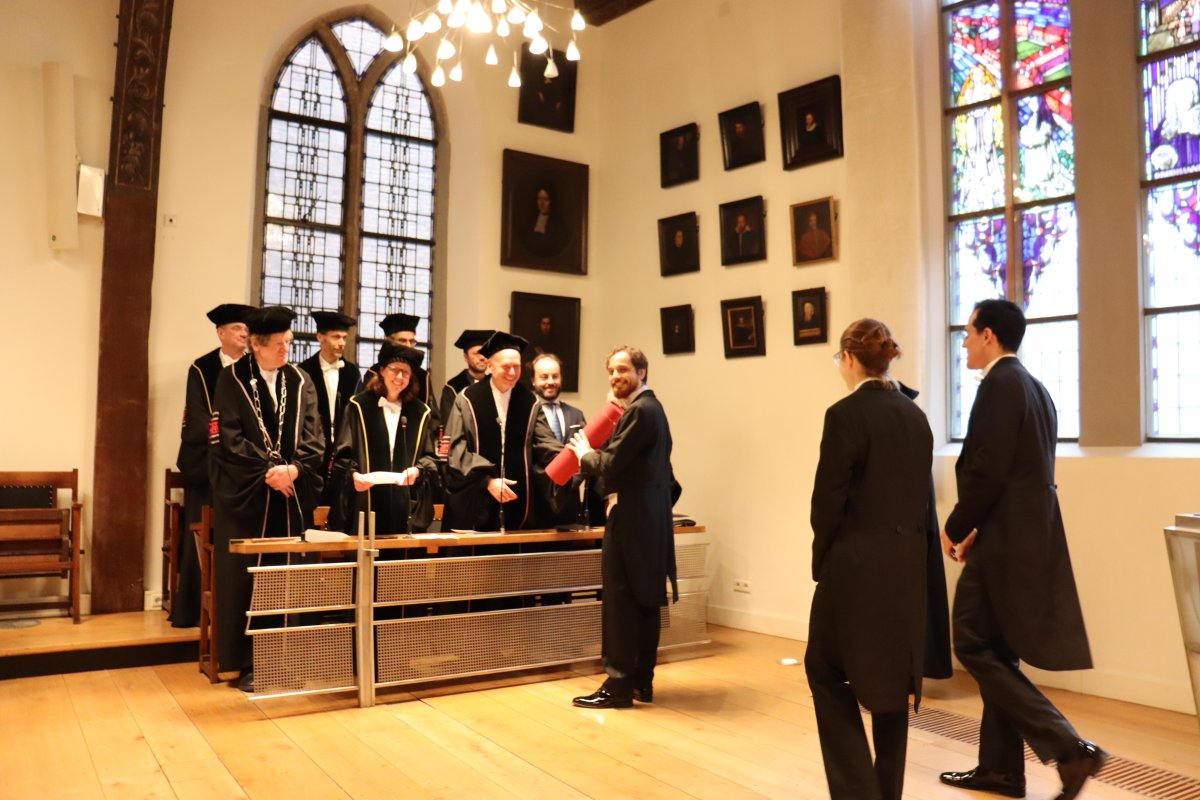
I defended my PhD under Heleen Slagter in January—'Learning What Matters: How to Pay Attention in a Volatile World'—and today, I’m starting as a Research Associate in the @BaysLab at Cambridge. Looking forward to new challenges ahead!
Interested in how the internal and external processes work together to support efficient behaviour?! Check our latest findings where we tracks the internal and external selections simultaneously in a visual search task that relies on both processes https://t.co/rmWy6N1hKF
A vision science classic from Li Zhaoping that I somehow overlooked till now: feeding the top images into your left/right eyes gives the bottom percept, but most people still saccade first to the isolated right-eye bar even though there’s nothing consciously different about it.
This is amazing work. Highly recommend checking out the preprint linked in the article - the discussion in particular is a well-written, sassy takedown of the whole field.
@mattansb Perhaps move beyond restricted Gaussians to MaxEnt stuff, so prior family choice based on the type of data you're modeling: Poisson for count, Exponential for time-to-event, etc.
The hardest thing to explain to non-academics is how different technical rigor is across fields. Here's (yet another) article in PNAS, of course handled by Fiske, of course in psych, that we would have desk rejected. Paper is "Can Names Shape Facial Appearance?" 1/n
I procrastinated again by starting a tutorial on "cognitive models" (stats models that fit well reaction time data) in #Julia
https://t.co/NPDPstTGdG
I'm quite happy about the animations I managed to make. Julia has a lot of potential!
What does this mean? It suggests that internal attention (within working memory) and external attention (to perception) involve different selection mechanisms. They might be operating to solve different goals.
🧵 (5/7)
Our findings contribute to the understanding that internal and external attention are qualitatively different. This opens up new questions about how we manage and prioritize information internally versus externally.
🧵 (6/7)
To find out, we ran multiple experiments. Participants performed visual working memory tasks where the relevance of items was implicitly predicted by:
- The combination of two items
- An implicit retro-cue
- Implicit temporal cueing
🧵 (3/7)
It’s well-known that statistical learning can shape how we direct our attention to external stimuli in our environment. But can it do the same for how we focus on information in our working memory?
🧵 (2/7)
🚨 New preprint! 🚨
https://t.co/VJgfIeyPdb
Excited to share the last preprint of my PhD with @HeleenASlagter and @freekvanede. We explored if statistical learning biases internal attention in visual working memory. The results were surprising!
🧵 (1/7)