Describe what you want, and Claude builds the first version. Refine through conversation, inline comments, direct edits, or custom sliders.
Export to @canva, as PDF or PPTX, or hand off to Claude Code when the design feels right.
🍴 @wearecherrypick is an app that finds recipes, plans meals and orders groceries from supermarkets - with an AI twist. Helping 500k+ users eat better, it encourages healthy eating and reduces waste with thousands of AI recipes. Read the full story → https://t.co/chkCKRLdD2
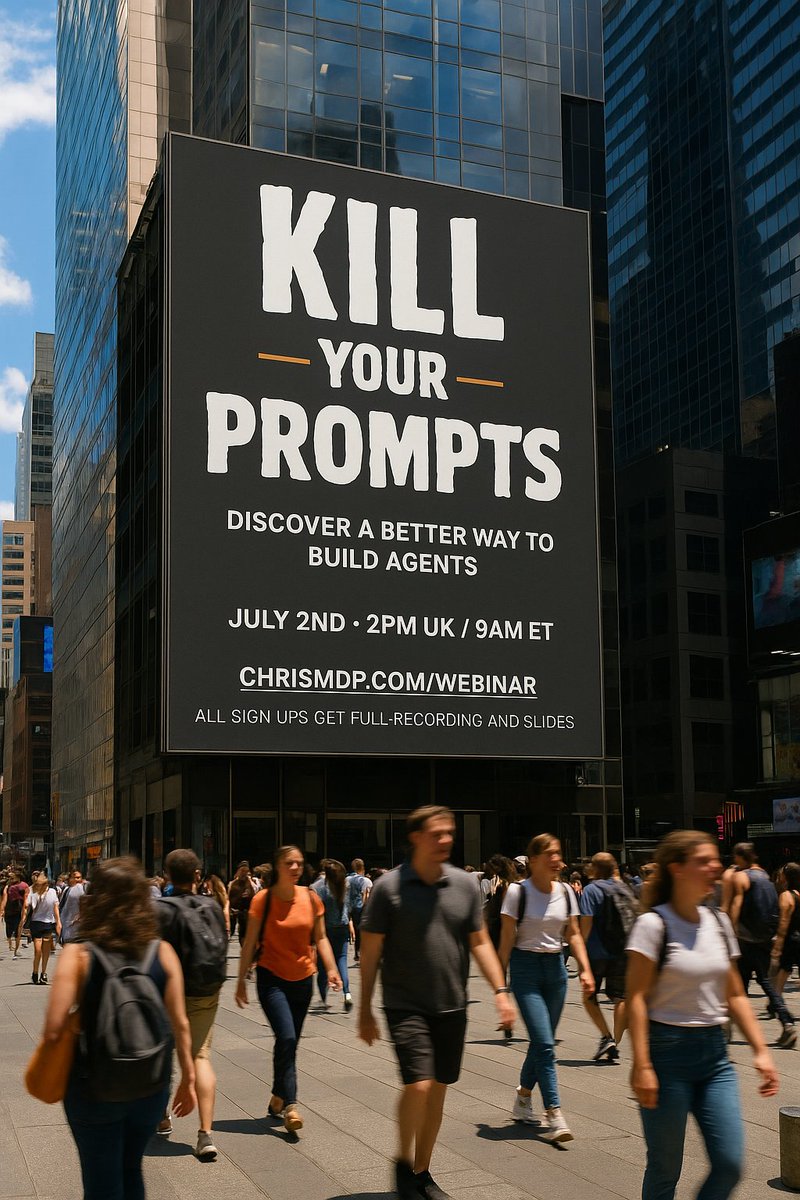
FINAL CALL: "Kill Your Prompts" starts in one hour! Free to join?
Sign up: https://t.co/MAYiKkijuv
All sign ups get full slides and recording (even if you don't make it)
You control less of your AI conversation than you think.
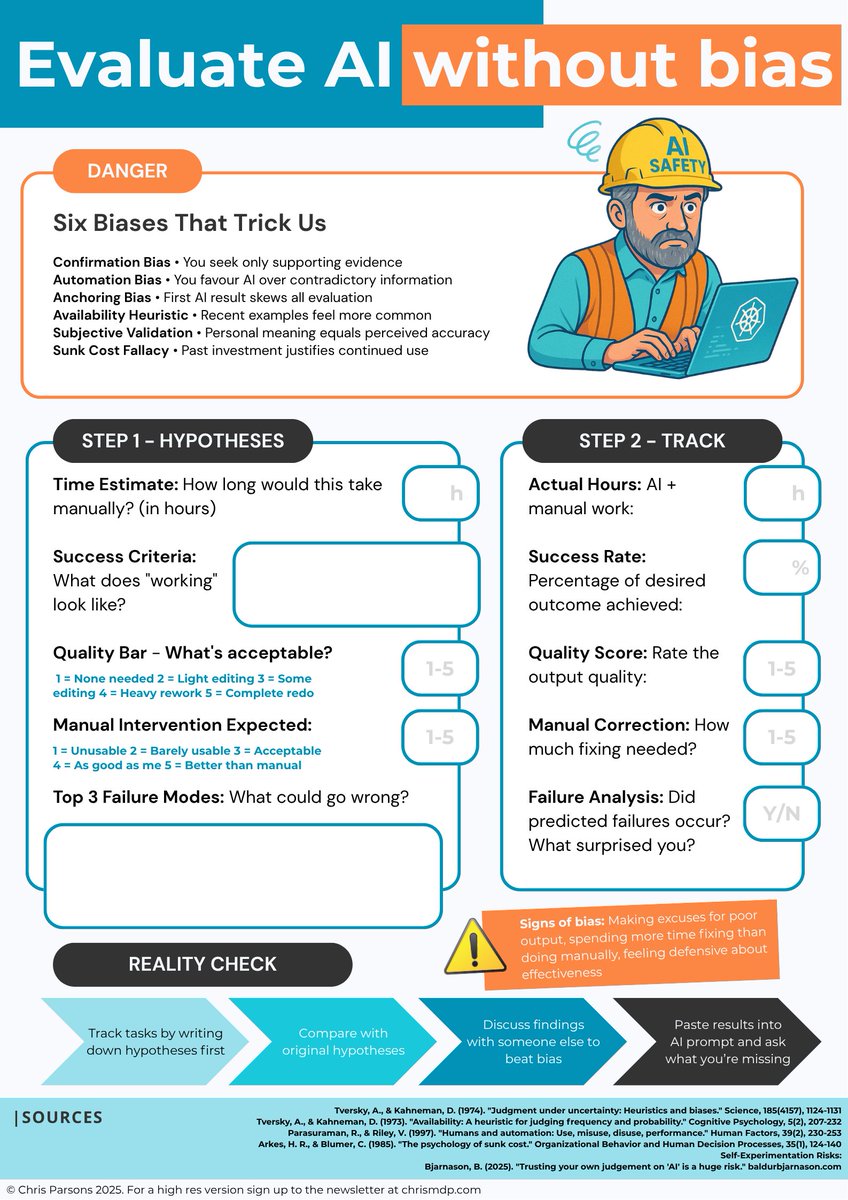
(Quite proud of this infographic. Didn't do well on LinkedIn. Perhaps X users are more discerning?)
Your AI experiments are failing because you're biasing yourself, and being smart makes it worse. How to prevent it:
We all suffer from these biases (and many more):
→ Anchoring Bias - First AI result skews all evaluation
→ Availability Heuristic - Recent examples feel more common
→ Subjective Validation - Personal meaning equals perceived accuracy
→ Sunk Cost Fallacy - Past investment justifies continued use
Intelligence is not a defence against these biases. The only protection is systematic measurement before cognitive biases distort your judgment.
Most teams skip this rigour and wonder why their "successful" AI experiments don't scale.
I created a one-page evaluation framework (attached) that forces objective measurement.
Will you print it out and fill it in?
…probably not. But the principles are solid and I’d encourage you to follow them!
→ Before experimenting: Write specific hypotheses about time savings, quality thresholds, and failure modes
→ After completion: Track actual time (including hidden costs), measure concrete outcomes, calculate true ROI
→ Red flags: Making excuses for poor output, spending more time fixing than doing manually, feeling defensive about effectiveness
We CANNOT prevent bias entirely, but we can fight against it. It's especially hard with AI, but with proper rigour we be as scientific as we can.
Which AI tool will you evaluate properly this week?
Bitten the bullet and paid for Opus and the Claude Max plan for Claude Code.
Jury is out so far: trying to be objective on usage and state hypotheses up front.
Just tried local MCP servers, again. Bleurgh.
I'm pretty technical and it took an hour to get one of the most popular ones working at all, and then the results were extremely poor.
MCP local is a rabbit hole. Don't bother. Remote, well maintained MCP servers is the way to go.