@Reddit will humble you faster than any other platform!
I tried posting there for SEO visibility. First few attempts- ignored, or called out for sounding like a brand. Learned quickly that Reddit users have a very sensitive radar for anything that feels promotional or AI-written.
Here's what actually works, based on what I've seen and what the community itself says:
1- Forget backlinks (that's not the game)
Most Reddit links are no-follow anyway. The real value is visibility, trust signals, and increasingly- AI citation. ChatGPT and Perplexity pull heavily from Reddit threads because the content reads as authentic. That's the actual opportunity in 2026.
2-Karma first, links never.
Spend time in the community before you post anything with an agenda. Answer questions genuinely. Share opinions. Build a history that looks like a real person, not a brand account.
3-Never drop a link in your first comment.
If you have something worth sharing, answer the question fully first. Come back later if people ask for more. The link should feel like an afterthought, not the point.
4-The subreddit rules are serious.
Mods are getting smarter about brand drops. If your brand name ends up on an automod ban list-there's almost no recovery. It's not worth the shortcut.
5-The real play:
Search- site:https://t.co/TltmkLL6JO "your keyword" in Google. Find threads that are already ranking and still warm. Drop a genuinely useful answer. That thread is already doing SEO work- you're just adding to it.
The founders winning on Reddit are the ones being the most HELPFUL person in the thread. The product comes up when someone asks.
That part takes longer. It's also the only part that actually works.
picture credits- Christian Meckelmann
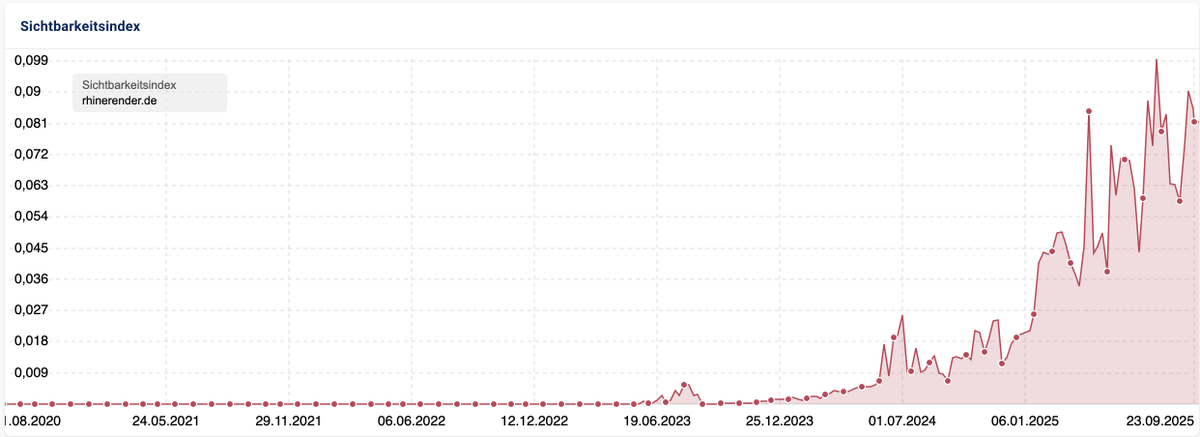
We grew our website from zero to 720,000 impressions in 12 months using AI-generated content.
Here's the honest breakdown, including why the numbers just dropped and why we're not worried.
Some context first:
@RhineRender is a 3D visualisation studio based in Cologne, co-founded by Moussa and myself alongside our other ventures.
When we started focusing on SEO, the website had almost no organic visibility. Zero content strategy. No agency. Just us figuring it out.
We started publishing AI-generated blog posts targeting keywords our potential clients were actually searching for. Consistent execution, clear strategy, no big budget.
The results over 12 months: 5,394 clicks. 720,000 impressions. Visibility index went from flatline in 2023 to its highest point ever by mid-2025.
Then the dip happened.
Two Google updates hit last months (2026) and numbers dropped. BUT we caused part of it ourselves, deliberately.
We shifted from TOFU keywords (high volume, low buyer intent- e.g. "what is 3D rendering") to BOFU keywords (lower volume, actual buyers- e.g. "3D rendering agency for architects Germany").
Traffic numbers look worse on paper, but the people coming on the website are closer to buying.
That's the trade we made. We'd make it again.
Why this matters beyond RhineRender:
This is exactly the problem we built @rankrealizer to solve; giving founders and small teams the ability to run this kind of SEO strategy without an agency, without juggling 10 tools, and without spending months figuring out what keywords to target.
One tool. Keyword research, content generation, auto-publishing. Built for teams who want results, not dashboards. Minimalstic, robust, scaleable.
Most B2B founders are panicking about AI search eating their SEO traffic. The data tells a different story.
Forbes just published something worth stopping for. Here's what's actually happening:
AI answers are taking over informational searches- "what is X" and "how does Y work." Queries that were never close to a buying decision anyway.
Commercial intent searches? Still sending people to websites, and still converting.
The people ready to compare tools, shortlist vendors, start a trial- they're still clicking through. AI isn't intercepting them.
The companies panicking right now are optimising for traffic that was never going to buy.
Smart founders are doing two things instead:
→ Doubling down on bottom-funnel SEO- the keywords buyers actually use when they're ready to act
→ Making sure content gets cited by AI engines during the discovery phase- so your brand is already familiar when the buyer reaches Google
Those aren't competing goals. They're the same goal, done right.
This is exactly why we built @rankrealizer. Small teams shouldn't need two separate strategies to show up on Google and in AI answers. One tool. Both goals.
Full Forbes breakdown in the comments.
Say hello to @leadrealizer; a mobile-first CRM with an AI sales companion that turns your scattered WhatsApp threads, emails, and DMs into a simple daily action plan.
No admin. No guessing. Just clarity on who to contact today.
Most sales teams don't struggle with strategy. They struggle with consistency. And that's exactly why we built Leadrealizer. Here's what makes it different:
→Unified Inbox: WhatsApp, email, LinkedIn DMs, calls- all in one place, no more context switching.
→AI sales companion: drafts messages, plans follow-ups, & reminds you before deals go cold.
→Daily action plan: built automatically, so you always know who to contact next.
→Mobile-first: sell from anywhere, not just your desk.
If you're a B2B founder or sales professional done with heavy CRMs and Google Sheets, download the app and DM us your feedback. Link in comments 👇
The future of B2B sales is mobile, contextual, and AI-assisted. And we're here for it!
#b2b #crm #mobilecrm #leadrealizer #betalaunch
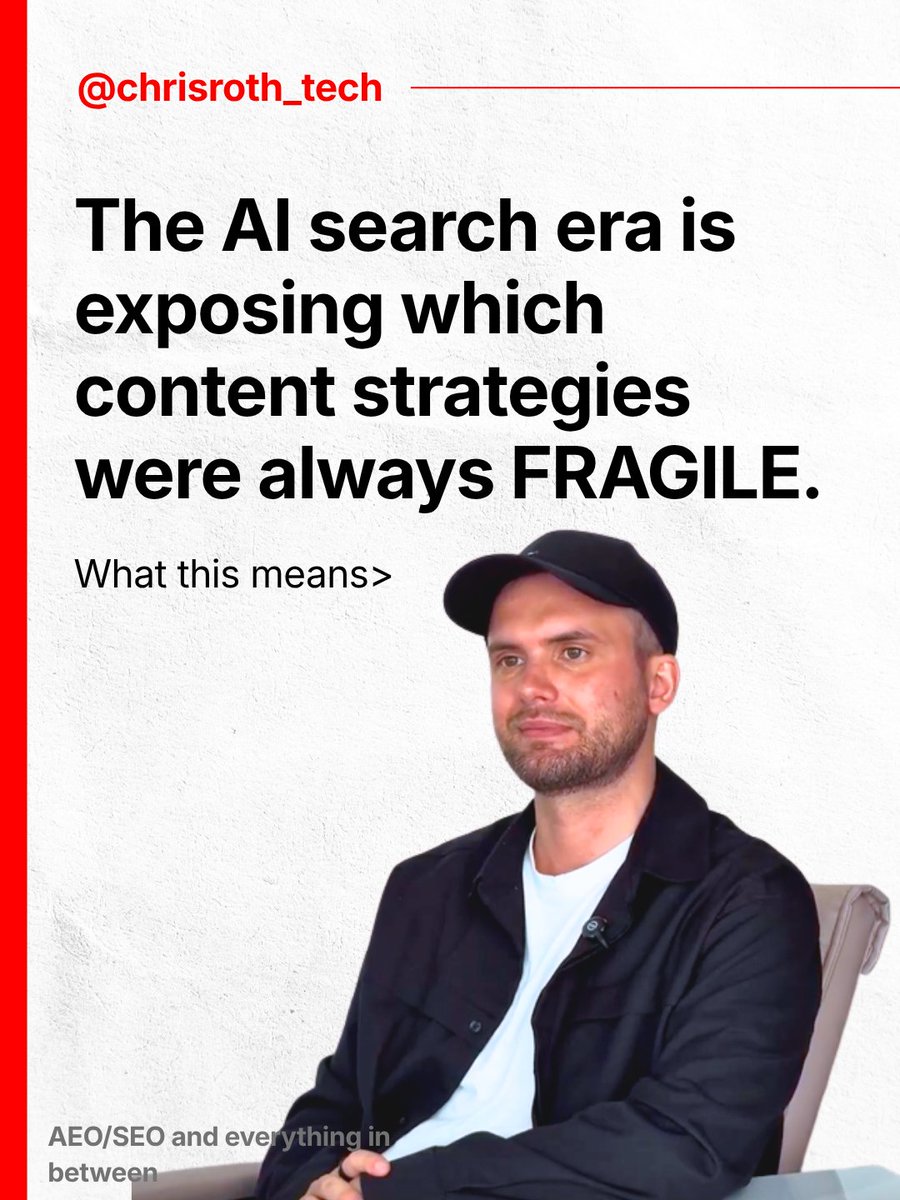
The AI search era is exposing which content strategies were always FRAGILE.
For years, B2B marketers tracked rankings, clicks, impressions. It worked.
Then ChatGPT, Perplexity, and Google AI Overviews started answering questions directly, and a chunk of that traffic just stopped showing up.
Here's what's actually happening underneath:
When AI cites your content, people don't click. They remember your name. Then they search for you directly, days later, different channel, same intent.
Most SEO tools are still counting clicks while that awareness builds quietly in the background.
The teams pulling ahead aren't choosing between Google rankings and AI citations.
They're doing both. Content that ranks AND gets cited. That's where the compound effect kicks in.
SEO isn't being replaced. It's being extended. The measurement just hasn't caught up yet :)
@rankrealizer
Recently had a call with @ken_tsuno from CheckPCB.
Two Cologne startups, both active in India at the same time, completely different industries; and yet we kept finding ourselves saying "yes, exactly that."
The speed. The relationship-first culture. The way things move once trust is built.
For us at @leadrealizer, that's exactly the market we're built for. Grateful for the organizations making these connections happen, bridging German startups with what's actually happening on the ground in India.
Want to know more about Ken and what CheckPCB is building? GTAI published a great interview with him on India's growing role in global electronics manufacturing. Worth a read, link in the comments.
@GTAI_com , #Start2, #GermanAccelerator, #KölnBusiness @InvestinNRW
My team had 0 AI skills, 3 months ago. Today they're saving HOURS every week, building AI agents.
It’s surprising how far we’ve all come. We’ve been using N8N, claude, notion AI and custom agents, without a single line of code or a paid course. A few examples from just this week:
Thorsten , my co-founder at @leadrealizer, built a cold mail outreach system that runs while he sleeps! And then he did the same for LinkedIn outreach for all 3 of us.
Gunjan, our marketer, automated social media posting, from research to drafting to scheduling it on a calendar. All of it, on her own.
The point is, small teams with the right AI tools don't just compete with bigger teams, they beat them by removing every bottleneck that used to require a hire.
One automation replacing a weekly task. That's the world we're building toward, and honestly, it's why Leadrealizer and @rankrealizer exist.
We're not just building tools. We're building the unfair advantage for small teams who move fast and think clearly. The next few years are going to be very good for people who figured this out early.
AEO isn't replacing SEO. It's building on top of it.
Answer Engine Optimization targets AI systems like ChatGPT and Perplexity, but Google still sends real traffic.
SEO teams winning right now aren't choosing between the two. They're doing both.
Most bootstrapped SaaS founders are optimizing for one or the other. That's the gap.
Here's what actually works when you want to rank on Google AND get cited by AI:
1) Structure content as direct answers to specific questions. AI pulls clean, concise responses, not long-winded intros.
2) Write FAQ sections in natural language. That's how AI surfaces answers, and it helps with featured snippets too.
3) Build topic depth, not one-off posts. AI engines favor sources that cover a niche consistently, same as Google's E-E-A-T signals.
4) Target conversational queries. People ask AI in full sentences with context. Write for that, and your Google content improves too.
None of this requires a big team or an SEO background. It just requires knowing what to write and how to structure it.
That's exactly what @rankrealizer handles, content built to rank on Google and get picked up by AI, without needing to figure out two separate strategies.
What's one question your ideal customer is asking AI right now that you're not answering?
STOP TREATING AI LIKE A VENDING MACHINE!!!!!!!!
Google's John Mueller and Martin Splitt tested AI-assisted SEO work.
Their finding was simple: AI needs clear strategic direction.
Without it, you get generic content that Google skips over, and that AI search engines like Perplexity and ChatGPT won't cite either.
Most founders treat AI like a vending machine. Put in a prompt, get out traffic. It doesn't work that way :/
The founders actually getting results aren't replacing SEO strategy with AI. They're using AI to execute strategy faster, better briefs, tighter structure, content built around what their audience is actually searching for.
That's the whole idea behind @rankrealizer. It's built by SEO experts, not vibe-coded. The AI handles the heavy lifting- research, structure, optimisation, but it runs on STRATEGY that's designed to rank on Google and get picked up by AI search engines.
Direction first. Execution second.
That order matters.
What's the biggest SEO mistake you see founders making with AI tools?
#seonews
THIS IS HUGE- Google just dropped 5 changes to how links appear in AI Overviews and AI Mode.
Most founders will miss what this actually means for their traffic.
Everyone's scrambling to react. The advice is all over the place. And Google is still mid-experiment, testing link placement, citation formats, source attribution in real time.
Here's the uncomfortable truth: there's no perfect AI SEO playbook yet. Not from Google. Not from anyone.
The companies that win in this environment aren't the ones chasing every algorithm update.
They're the ones doing the boring, durable stuff consistently. Answering real questions. Building genuine authority. Creating content that earns references, from humans and AI systems alike.
That's not a new insight. It's just harder to hear when everyone's selling you the latest optimization hack.
Google and AI search aren't two separate games. They're the same game, slightly different rules. The content that ranks on Google is largely the same content getting cited in AI Overviews and ChatGPT responses.
Write for humans. Answer questions clearly. Build authority in a specific niche.
The fundamentals compound. The hacks don't.
Are you adjusting your content strategy for AI search, or doubling down on what already works?
Earlier this week in Bangalore, we also got to meet Jan Noether, Director General, Indo-German Chamber of Commerce.
If you're a German company wanting to do business in India, this is the person you want in your corner. AHK Germany has been building bridges between German and Indian business for decades. BMW, Bosch, Siemens, all the major German conglomerates built their market through this network. And on the Indian side, connections every major industrial group you can name.
As a startup, getting access to this network is not something that happens easily. Being part of the German Accelerator India cohort just opened a door we didn't expect to open this early.
@leadrealizer@IndoGerman
I tested 500 AI- generated blogs for our website's SEO.
I'm really frustrated when B2B founders assume AI content is either brilliant or useless.
Neither is true.
We've been testing AI-assisted SEO for months. The content that actually ranks, and gets cited by AI engines like Perplexity and ChatGPT, isn't the FIRST draft.
It's the stuff that goes through 'recursive improvement'.
So, get this pattern: AI writes the initial piece, then scores it against specific criteria like search intent match, competitive depth, clarity.
Weak sections get flagged, rewritten, re-evaluated.
You repeat until every criterion passes. The loop is where the quality happens.
First draft might hit 60% of your criteria. Third or fourth iteration, you're at 90%+ and the content actually competes, on Google and in AI-generated answers.
We've seen this across product pages, comparison content, and long-form SEO posts.
The difference between content that sits and content that ranks is almost always the criteria you define upfront, not just "make it better," but specific, measurable standards trained around your brand and positioning.
AI handles the heavy lifting. You set the bar.
What criteria do you use before hitting publish?
If you're a founder, struggling to create visibility for your business, repeat after me:
"Google's AI Overviews has raised the bar, and we're here for it"
I think most bootstrapped founders are still playing the old game, chasing keywords, building backlinks, crossing fingers.
I mean, that still matters, but it's no longer enough on its own.
AI search features (ChatGPT, Perplexity, Google's AI Overviews) are pulling answers directly from content, before users EVER click a result.
If your content isn't structured to be cited, you're invisible in both places.
The founders getting traction right now aren't choosing between Google rankings and AI citations. They're doing BOTH.
That means writing content that answers specific questions directly. Clear structure. Definitive statements. A brand voice that's consistent enough for AI to recognize as authoritative, not just keyword-dense enough to rank.
Domain authority alone won't save you. Generic AI content won't either.
What actually works is content built to rank on Google and get pulled as the answer in AI search, at the same time.
I don't think SEO is dying. I think It's splitting into two games, but most founders are only playing one.
Google still drives clicks. But ChatGPT, Perplexity, and AI Overviews are now answering questions your customers used to Google.
If your content isn't structured to show up in both places, you're leaving visibility on the table.
The brands winning right now aren't choosing between Google and AI search.
They're writing content that ranks on Google AND gets cited when someone asks an AI tool "what's the best [thing you do]."
That requires a different approach.
- Clear, direct answers to specific questions.
- Content built around how people actually talk, not just how they type into a search bar.
- Structure that works for crawlers and LLMs at the same time.
This doesn't mean you need to scrap what's working. Just build on top of it.
@rankrealizer handles both- built by actual SEO experts, not vibe-coded AI. It does the heavy lifting of creating content for you so a three-person team can compete without hiring an agency.
So, start thinking about what questions your customers are asking AI tools about your product.
#seotips
After 10 years in sales, as a founder, this is the ONLY advice i give to every young founder I meet.
[THREAD]
What do you think about this?
#founderjourney#justbegin









![chrisroth_tech's tweet photo. I don't think SEO is dying. I think It's splitting into two games, but most founders are only playing one.
Google still drives clicks. But ChatGPT, Perplexity, and AI Overviews are now answering questions your customers used to Google.
If your content isn't structured to show up in both places, you're leaving visibility on the table.
The brands winning right now aren't choosing between Google and AI search.
They're writing content that ranks on Google AND gets cited when someone asks an AI tool "what's the best [thing you do]."
That requires a different approach.
- Clear, direct answers to specific questions.
- Content built around how people actually talk, not just how they type into a search bar.
- Structure that works for crawlers and LLMs at the same time.
This doesn't mean you need to scrap what's working. Just build on top of it.
@rankrealizer handles both- built by actual SEO experts, not vibe-coded AI. It does the heavy lifting of creating content for you so a three-person team can compete without hiring an agency.
So, start thinking about what questions your customers are asking AI tools about your product.
#seotips](https://pbs.twimg.com/media/HHjP2fnXcAAc2Sl.jpg)
![chrisroth_tech's tweet photo. After 10 years in sales, as a founder, this is the ONLY advice i give to every young founder I meet.
[THREAD]
What do you think about this?
#founderjourney #justbegin https://t.co/L3YqLytPKU](https://pbs.twimg.com/media/HHitghUXkAUzpz3.jpg)


