Excited to announce Options 101!
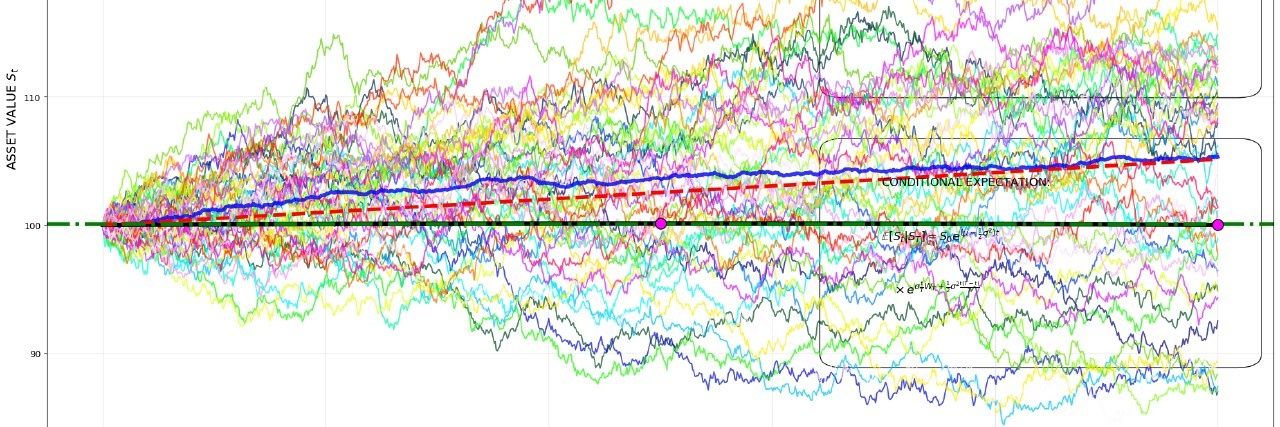
It's a site that provides free, no-ads, no-shill education on financial options (calls + puts).
The first course is one I'm now teaching this fall at Charles University in Prague. Lecture notes, videos, assignments.
https://t.co/rzTLlbxBoz
I'm joining OpenAI next week!🥹 The job search turned out to be really challenging but also super rewarding, so I wrote a small blog to share what I learned along the way and hopefully make the process a little less mysterious for the next person. https://t.co/6FigSBdenD
For any students taking a course in asymptotics and perturbation theory this semester (or just for anyone curious), I posted a bunch of free lectures on YouTube:
https://t.co/gqbs976l8K
One of the greatest joys for an author is when what you’ve written is published in another language. At least, that’s how I feel. That’s why I’m so happy about the release of my book *Game Theory* in the UK—the English-language version of *Die Tabelle lügt immer*.
A new book on @ChapterPal: "Introduction to Game Theory: a Discovery Approach" by Jennifer Firkins Nordstrom.
The book provides an introductory textbook on game theory using a discovery-based approach to teach core concepts such as players, strategies, zero-sum games, and non-zero-sum interactions.
Building intelligent agents for multi-agent system is impossible without game theory.
Read with an AI tutor: https://t.co/Z2cskiNTKg
(The content is free to read when you are logged in. Accounts on ChapterPal are free unless you want to upgrade.)
If you see any issues with the content, please report them to me.
Every time I commute or eat, I don't watch Netflix. I watch C++ lectures.
It's only 20 minutes a day.
But after 6 months, I finished watching 38+ hours of C++ content.
I finally finished watching the entire Data Structures & Algorithms playlist by @pmavrin
61 videos
~90 hours of content
Presented by an ICPC World champion
I already attended lectures with the same content 14 years ago. Yet, it was a nice refresher.
I was happy to see how much simpler things became. Back at ITMO University, I struggled most of the time to understand the concepts behind some sophisticated data structures.
Turns out, the skills I gained through more than a decade of work experience really helped. Specifically,
1. Decomposing a big problem into smaller ones
2. Thinking about edge cases
3. General reasoning skills
A strategy with a Sharpe of 0.94 (and 513.8% cumulative return).
A strategy only Goldman Sachs can trade?
The secret behind their $8.3 billion 2022 net income?
Nope.
Backest a VIX-based futures strategy and demolishes the benchmark.
Just like the pros:
Two math olympiad champions wrote a training manual in 1993 on two old Macintosh computers, and every American kid who has won a major math competition in the last decade learned to think from it.
Their names are Sandor Lehoczky and Richard Rusczyk. The book is called The Art of Problem Solving. Most people in math know it as AoPS.
Since 2015, every single member of the US International Math Olympiad team has been an AoPS student. Not most of them. Every one.
That statistic sounds impossible until you understand what the book actually does.
Lehoczky and Rusczyk were not professors. They were competitors. Lehoczky earned the sole perfect AIME score in 1990 and led the national first place team. Rusczyk was a USA Mathematical Olympiad winner and a perfect AIME scorer in 1989. They had both survived the same brutal selection process the book was designed to train students for.
And the first thing they decided was that almost every existing math textbook was teaching the wrong thing.
School math gives you formulas. You memorize them. You apply them. You pass the test. Then you sit down in front of a real competition problem and the formula does not apply, and you have nothing underneath it.
That is the gap. The gap is not knowledge. It is thinking.
The entire premise of AoPS is that problem-solving is a transferable skill, not a bag of memorized tricks. A student who genuinely understands why a technique works can adapt it, combine it with something else, and deploy it in a context they have never seen before. A student who only memorized the technique freezes the moment the problem looks different.
The book teaches the difference between a formula and a method.
A formula tells you what to compute. A method tells you how to see. The students who win olympiads are not the ones who know more formulas. They are the ones who have trained themselves to look at an unfamiliar problem and recognize its structure. To see that this problem is secretly asking the same question as a problem they solved three weeks ago, just dressed differently.
Rusczyk calls this "learning to read the problem." Not reading the words. Reading what the problem is actually asking underneath the words.
The second thing they built into the book is tolerance for being stuck.
Most students treat confusion as a signal to stop. The book treats confusion as the starting point. Every chapter pushes students past the point where the obvious approach runs out. That moment of running out is not failure. That is where the actual thinking begins.
Lehoczky once described it this way. If you can solve a problem quickly, you are not learning. You are performing. Learning only happens when you are past the edge of what you already know.
The book was written on old Macintosh computers in 1993. Rusczyk launched the AoPS website in 2003. Today the community has over one million users. Thousands of students enroll in AoPS online courses every year. Most winners of every major American math competition are AoPS alumni.
A platform built by two kids who were good at math competitions has become the infrastructure that produces the next generation of mathematicians, engineers, and scientists who are good at thinking.
The formulas you memorized in school will eventually be obsolete.
The thinking you trained will not.
What is one problem in your life right now that you have been avoiding because you do not yet know the right formula to solve it?
This one is big.
AI Hedge Fund 2.0 is now live.
How it works:
1 • pick your stocks
2 • AI investors do research
3 • quant models trade
4 • every call is explained
Just the start. 100% open source.
Introduction to Theoretical Computer Science
컴퓨터과학의 기초 이론을 다루는 무료 오픈 교재로, Harvard 학부·대학원에서 강의 교재로 사용됨.
배우는 내용 : 기초수학, 계산모델, 알고리즘, 계산 가능성, 복잡도 이론, 암호학, 확률 알고리즘, 양자 컴퓨팅.
https://t.co/fXoXeqXQYD