A woman used Uber 4–5 times a week for 3 years.
She opened the app, typed her destination, and accepted whatever price appeared. Every single time.
She never questioned the fare. Never compared options. Never adjusted a single setting. She treated Uber like a taxi meter whatever number shows up, you pay it.
Over 3 years she spent roughly $18,000 on rides.
A former Uber driver who completed 11,000 rides told her: "You're paying surge pricing when you don't have to, tipping in the wrong order, and missing 9 tricks that save regular riders 25–35% on every single trip."
He said passengers think the price they see is the price fixed, final, take it or leave it.
"It's not. Uber's pricing engine is one of the most dynamic systems ever built. It changes every 60 seconds based on demand, location, time, weather, driver supply, and your own rider history. There are at least 9 things you can do to land on the lower end of that algorithm instead of the higher end. Most riders don't do a single one."
He told her: "You've probably overpaid by $4,000–$5,000 over the last 3 years. Not because Uber scammed you. Because you never learned how the machine actually works."
Here are the 9 things he showed her🧵
Do you know where your passport ranks in the world? Check its global ranking, mobility score, and the destinations you can enter visa-free, with a visa on arrival, or with an electronic travel authorization.
If u have used a condom for more that a year you should be able to know these facts
🔥 The Expiry Date Matters
Condoms have a shelf life — usually 3-5 years from manufacture (check the specific date on the wrapper, not just the box).
Latex degrades over time, especially with heat/humidity exposure. An expired condom is more likely to break.
🔥 Storage Location Kills Them Faster
Your wallet is the worst place to keep one.
Body heat + friction from sitting/walking breaks down the latex in weeks, not years.
Keep them in a cool, dry place — a drawer, not your back pocket.
🔥 Oil-Based Lubricants Destroy Latex
Vaseline, baby oil, lotion, coconut oil — all of these degrade latex condoms within minutes of contact, causing microtears you won't see.
Only use water-based or silicone-based lubricant with latex condoms.
🔥 Pocket Check Before Use
A fresh condom should have a small air bubble/pocket when you squeeze the wrapper.
If it feels flat, brittle, or sticky through the wrapper, don't use it — it may already be compromised.
🔥 Pinch the Tip
Always pinch the tip while rolling it on to remove air — trapped air at the tip is a common cause of breakage during use.
🔥 Never use two at once ("double bagging") — the friction between them actually increases the risk of both breaking, not decreases it.
🔥 Not All Materials Work the Same
Latex: most common, don't use with oil-based lube
Polyurethane: thinner, ok with oil-based lube, but higher breakage rate than latex
Polyisoprene: latex-free, stretchier, still avoid oil-based lube
Lambskin: blocks pregnancy but NOT STIs (porous to viruses)
🔥 Fit Matters More Than People Admit
Wrong size (too tight or too loose) is one of the top reasons for slippage or breakage. "One size fits all" is a marketing claim, not a biological one.
🔥 Post-Use Check
After sex, check the condom for visible tears before disposal. If you find damage — or if it slipped — that changes what happens next (emergency contraception window, STI exposure considerations).
🔥 Key Takeaway
A condom is only as reliable as how it's stored, checked, and used. Most "condom failures" aren't manufacturing defects — they're preventable errors in handling.
The GCE O-Level, introduced in Britain in 1951, was never designed for the masses. It was the preserve of grammar schools, an elite stream educating roughly the top 20% of pupils. ( mission school type schooling in Zimbabwe) The other 80% of 16 year olds were never expected to sit O-Levels, let alone pass five subjects. Yet Zimbabwe has taken an examination built for an academic minority and decreed it the minimum standard for an entire nation.
The predictable consequence is that the overwhelmingly 90% of rural pupils leave school without five O-Levels. They’re recorded as having failed Zimsec. 46 years consistently 90% of rural kids “ fail”. They are branded failures, when in fact it is the education system that has failed them. We have imported a colonial sorting mechanism, stripped it of its original context and transformed it into a national instrument of humiliation. There is nothing enlightened about forcing children to climb a ladder that was never built for them.
India and China do not pretend that every kid must become an academic; they use examinations early on to sort students into appropriate pathways, the vast majority into technical and vocational training, while Zimbabwe has turned an elite academic filter inherited from Britain into a universal test of worth. The irony.
The real tragedy is not that rural children fail to obtain five O-Levels. It is that policymakers still mistake an examination designed with a particular end as mass education. It is bureaucratic dogma sustained by inertia and defended by people who have never had to live with its consequences.
Inzwaka shamwari
You're not avoiding intimacy because you've lost interest in your woman.
Uri kungotya because you no longer trust your erection.
Dzimwe nguva inomira, yobva yangorara
Now every bedroom moment feels like a test you might fail.
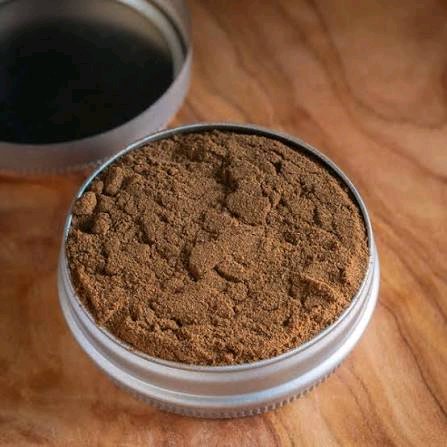
Here are some herbs to fix this.
Top 25 countries with the highest English proficiency:
1. Netherlands
2. Croatia
3. Austria
4. Germany
5. Norway
6. Portugal
7. Denmark
8. Sweden
9. Belgium
10. Slovakia
11. Romania
12. Finland
13. South Africa
13. Zimbabwe
15. Poland
16. Latvia
17. North Macedonia
18. Bulgaria
19. Kenya
20. Greece
21. Bosnia and Herzegovina
22. Hungary
23. Czechia
24. Malaysia
25. Serbia
HISTORICAL BACKGROUND OF SNUFF
Snuff (powdered inhalants for nasal use) in pre-colonial Zimbabwe and southern Africa likely involved indigenous plants and herbal mixtures rather than tobacco, which originated in the Americas and reached Africa via European traders and explorers in the late 15th–16th centuries (or possibly slightly earlier through coastal trade networks).
Pre-Tobacco Context
Tobacco's arrival: Tobacco (Nicotiana species) was not native to Africa. It spread globally after European contact with the Americas. In southern Africa, including areas that became Zimbabwe, it was adopted relatively quickly by local populations, often integrated into existing smoking, chewing, or snuffing practices. Archaeological and historical evidence shows tobacco use becoming established in the region before or around early European settlement in southern Africa, but it built on prior traditions.
Pre-existing practices: Many African societies, including the ancestors of the Shona (associated with Great Zimbabwe and later Zimbabwean cultures), had long traditions of using inhaled or nasal substances for medicinal, ritual, spiritual, and social purposes. These could include powdered herbs, roots, barks, or mixtures with ash/charcoal for potency or texture. Such practices parallel global indigenous uses of nasal powders (e.g., in the Americas before widespread tobacco dominance).
Direct archaeological evidence specifically for nasal snuff at Great Zimbabwe (c. 11th–15th centuries) is limited in public records—excavations have yielded smoking pipes, pottery, and trade goods, but nasal powders leave fewer traces unless containers or residues are found. However, oral traditions, ethnographic accounts, and continuity in Shona/Ndebele/Kalanga practices point to deep roots.
Traditional "Bute" or Indigenous Snuff in Zimbabwe
In modern Zimbabwean (especially Shona) culture, "bute" (or variants like ibute, jambwa) refers to traditional snuff with strong spiritual and ancestral significance. It is used by spirit mediums (svikiro), traditional healers, and in ceremonies (e.g., bira or ancestor veneration) to facilitate communication with ancestors, induce trance, clear the mind, or for medicinal purposes like clearing sinuses or treating ailments.
Non-tobacco varieties: One key type, often called jambwa or traditional bute, is described as not derived from modern/commercial tobacco. It is a special plant or mixture grown organically, often on riverbeds or silt deposits during the dry season. Preparation involves boiling in clay pots, mixing with oils (e.g., from acacia trees), drying, grinding, and sieving. This aligns with pre-tobacco herbal traditions.
Tobacco-based bute: Later varieties incorporate local or introduced tobacco (e.g., bute rematare, rehondo, mudhombo), mixed with ashes or other additives. These became dominant after tobacco's introduction and spread.
This distinction suggests that indigenous herbal nasal powders predated tobacco and were adapted once tobacco arrived, much like how cannabis (dagga) smoking traditions influenced tobacco adoption elsewhere in Africa.
Cultural and Historical Role
Spiritual significance: Snuff was (and is) a "connecting tool" to the ancestral world. It features in rituals for guidance, healing, protection, or dispelling negativity. This likely has pre-colonial origins tied to animist and ancestral veneration practices common among Shona and related groups.
Social and medicinal uses: Beyond rituals, it served as a stimulant, remedy for headaches/colds, or social custom (offered in gatherings). Containers like snuff spoons or boxes were crafted.
Broader southern African parallels: Similar nasal snuff traditions exist among Nguni, Zulu (sangomas), and other groups, often preferring snuff over smoking in ritual contexts. Tobacco integrated into these but did not erase earlier plant uses.
Help a brother in this fight | Please Help By Sharing This Post🙏🏾
My name is Marlon Sibiya, a 31-year-old married man and father of a three-year-old daughter. My family and I reside in a rented apartment in Norton.
Before I was diagnosed with Polycystic Kidney Disease (PKD), I was self-employed, operating a small printing business at Katanga Shopping Centre in Norton. Unfortunately, due to my deteriorating health, I am no longer able to manage the business effectively, which has significantly affected my family's source of income.
My health challenges began when I experienced severe shortness of breath, particularly at night, making it difficult to sleep for nearly two weeks. Initially, I thought I was suffering from asthma, so I sought medical attention at a local hospital. After undergoing blood tests and a chest X-ray, the results revealed a serious medical condition, and I was urgently referred to Parirenyatwa Group of Hospitals for specialist care.
Following further medical investigations, I was diagnosed with kidney failure caused by Polycystic Kidney Disease. I was admitted for treatment and dialysis work-up on 11 June 2026 and remained hospitalized for one week before being discharged on 20 June 2026.
I am now undergoing dialysis twice every week as prescribed by my doctors and am taking medication to manage my condition. While dialysis has become essential for my survival, it has placed an enormous financial burden on my family.
My assigned dialysis session is at 3:00 a.m., which requires me to leave Norton around midnight to travel to the hospital. The transport costs at those hours are very high and have become difficult for me to afford, especially since I am no longer able to earn a stable income due to my illness.
In addition to the ongoing dialysis treatment, I have also been advised that a kidney transplant offers the best long-term solution for my condition. However, the costs associated with the transplant process, including medical evaluations, surgery, medication, and post-transplant care, are far beyond my family's financial means.
It is with great humility that I appeal for your assistance. Any support towards the following would be deeply appreciated:
- Dialysis treatment costs.
- Transport expenses to and from dialysis sessions.
- Medication and routine medical care.
- Kidney transplant evaluation, surgery, and post-transplant treatment.
Any other financial or material assistance that may help ease the burden on my family during this difficult time. Your generosity would not only help me continue receiving life-saving treatment but would also give me hope of undergoing a kidney transplant and returning to a productive life to care for my wife and young daughter.
Thank you for taking the time to consider my request. I sincerely appreciate any assistance you may be able to provide. May God richly bless you for your kindness and compassion.
Yours faithfully,
Marlon Sibiya
0777489810 / 0775680877
Norton, Zimbabwe
Ecocash
0777489810
Marlon Sibiya
Innbucks
0777489810
Marlon Sibiya
Paypal: [email protected]
Go Fund Me Link available below🙏🏾
As a man,
Never seek sympathy.
Go to jail. Go broke or get sick close to death.
You'll learn who people truly are.
They will laugh, leave, and call you weak.
Take care of yourself first.
It's 100% your responsibility.
Fight until you win.
You're alone.
Life has no balance,
> There are good women who are sidechicks.
> Whores that have perfect relationships.
> Good guys who are being cheated on.
> Lazy people who have money.
> Givers who are really poor.
> Stingy people who are rich.
> Hardworking people who are paupers.
> Innocent people who are in prison.
> Thieves walking freely.
> Poor people with perfect immune system.
> Rich people who dare not to skip a week to visit the clinic.
> Hungry people with no illness, foodie with ulcer dilemma.
Just Live and Let Live, also try to enjoy life as it comes.
Strange Things Your Body Does Without Permission:
1. Déjà vu — you feel you have lived this exact moment before
2. Altruism — you help strangers with zero benefit to yourself
3. Placebo Effect — a sugar pill heals you because you believe it will
4. Dreams — your brain creates full movies every night for no clear reason
5. Intuition — you know the answer before your brain processes the question
6. Blushing — your face betrays your emotions before your words do
7. Contagious Yawning — you yawn just by seeing someone else yawn
8. False Memories — you remember events that never actually happened
9. Flow State — time disappears when you are fully absorbed in a task
10. Mob Mentality — calm individuals become irrational inside a crowd
11. Hypnic Jerk — your body jolts awake just as you fall asleep for no reason
12. Phantom Limb — your brain still feels pain in a limb that no longer exists
13. Goosebumps — your skin reacts to music the same way it reacts to cold
14. Forgetting why you walked into a room — your brain erases short tasks on arrival
15. Crying at ads — your emotions respond before your logic even notices
GIRL'S PSYCHOLOGY I WISH I KNEW SOONER
1) She respects you more when you respect yourself first.
2) The more you chase her, the faster she loses interest.
3) Mixed signals almost always mean low interest.
4) Emotional connection matters way more to her than looks.
5) She wants you to lead but will never directly tell you.
6) Her attraction increases when you're slightly unavailable.
7) She notices how you treat other people when she's not around.
8) She loses respect the moment she sees you seeking validation.
Girls fall in love with the man who makes them feel something while still respecting himself.
Save this.
Most men learn these the hard way.
Man to man
1. Shave your pubic hair regularly. Why are you keeping hair in your armpits and private areas? Where hair grows, you sweat more. Shave.
2. Change your underwear whenever you shower, or at least once every day.
3. Do not have unprotected sex with anyone whose sexual history you do not know. Show each other your test results before going down raw (if you must).
4. Change or wash your bedsheets at least every weekend. Sometimes the reason your skincare is not working is because your bedsheets are dirty.
5. As soon as you get home from anywhere, wash your hands before doing anything else.
6. Oral hygiene is very important. Brush your teeth, scrape your tongue, and floss at least once daily. If you can do it twice, even better.
7. Wash your butt crack properly. When you are in the shower, spread your butt cheeks and wash thoroughly. It is your body for crying out loud.
8. If you have genital appointment, two to three days beforehand, shave, eat fruits, drink enough water, wear deodorant, and wear clean underwear to the link up. They should naturally crave to eat you out because you smell so good.
9. Bathe twice daily, no matter what. If you go to the gym, bathe before and after your workout. It is non-negotiable.
10. After using the toilet, use water only or water with tissue paper to clean up. Do not use only tissue.
11. Wash your towel regularly.
12. Normalize sleeping naked. Let your private parts breathe.
Men,
If you're asking her for permission, you're the girlfriend.
If you're finer than her, you're the girlfriend.
If she's older than you, you're the girlfriend.
If you're begging her to date you, you're the girlfriend.
If you can't piss her off, you're the girlfriend.
If she's tamed you, you're the girlfriend.
If you can't make her cry, you're the girlfriend.
If she controls the sex, you're the girlfriend.
I asked my 80-year-old grandfather:
"What's the one thing you wish you'd done sooner?"
He didn't say travel.
He didn't say money.
He didn't say career.
He said 9 words that I'm still thinking about a year later:
The Justice Uchena Commission of Inquiry into the Matter of Sale of State Land in and Around Urban Areas Since 2005 summary presentation has been released and its findings are shocking! The report is yet to be released after a court ordered its immediate release.
The summary presentation says the Zimbabwean State lost almost US$3 billion through unpaid intrinsic land value, with the exact prejudice put at US$2,977,072,819 according to the report.
The twenty two page summary also says many people were settled on urban state land without basic services like clean water, sewer systems and roads. Some houses were built on wetlands, under power lines, over sewer lines, and on land meant for schools, clinics and public facilities.
The summary also points to political abuse, land barons, illegal sales of state land, weak government controls, poor record keeping, undervaluation of land, corruption, and politically connected individuals using names of top ruling party leaders to influence government processes.
Another major hazardous issue is the public health risk. Pit latrines were built close to water sources, creating a danger of underground water pollution and outbreaks of cholera and typhoid.
The summary shows massive corruption, political interference, institutional failure, illegal land sales, poor urban planning, and a huge financial loss to the State and people of Zimbabwe.
It took a High Court application and years of pressure before President Emmerson Mnangagwa was ordered to release the Uchena Report into the looting of state land. It is yet to be released. The fact that citizens had to go to court to force the publication of a report commissioned by the President himself says everything about how politically sensitive the findings were.
Please find the twenty two page summary via my Telegram link👉🏿 https://t.co/f3TcNRwoAl
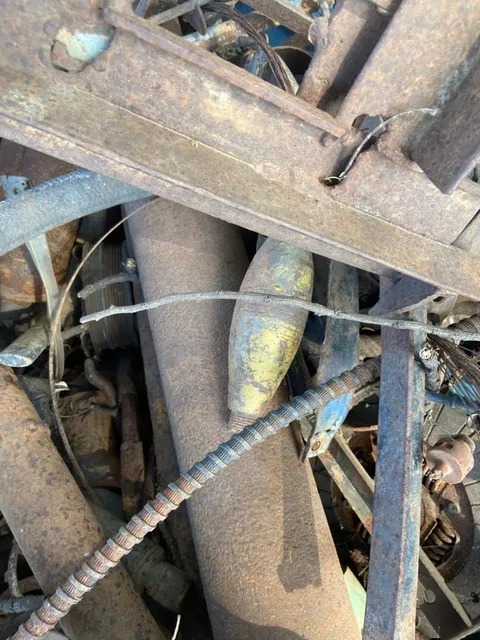
I work at a Chinese company located at 1 Craig Allan, New Ardbennie, Harare. The company manufactures mining equipment and also buys scrap metal, which they melt in a foundry to make products.
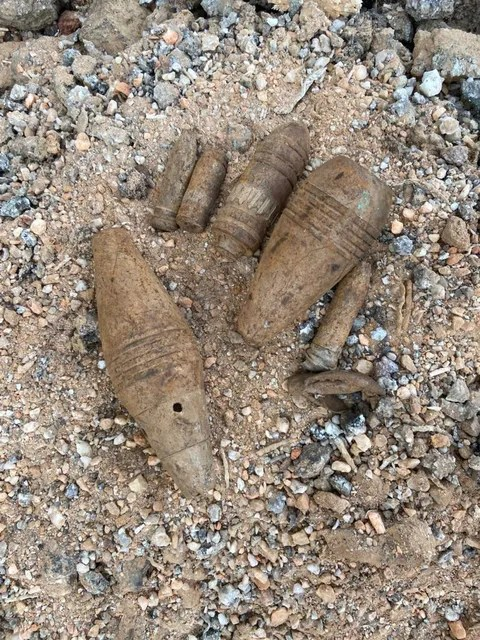
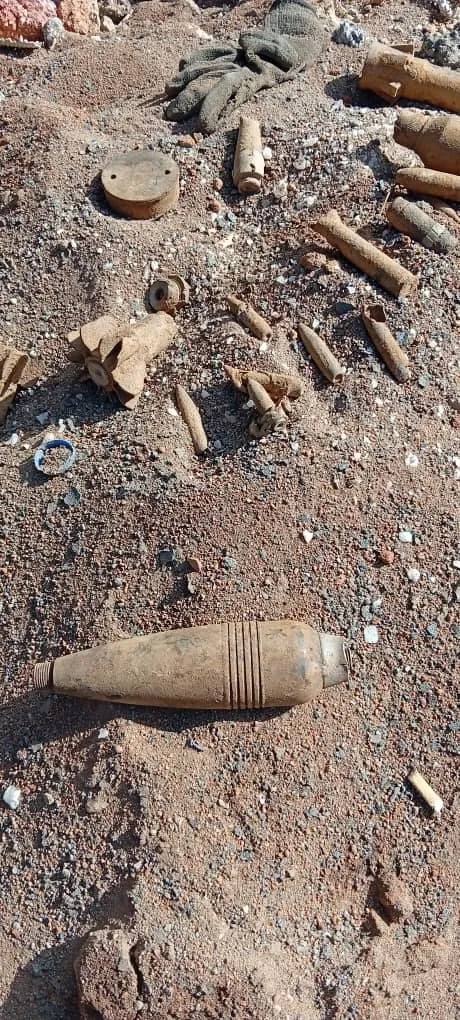
Last month, a client brought a truckload of scrap metal to sell to the company. While offloading it, we discovered that among the scrap metal there were also live bombs inside the truck. We immediately informed the manager, who is Chinese, but he forced us to continue offloading the scrap.
Within a minute after notifying the boss, one of the bombs exploded and injured two workers. One worker sustained serious chest injuries and was admitted to Parirenyatwa Hospital. The other worker suffered minor head injuries, was also admitted to Parirenyatwa Hospital, and was discharged two days later.
No police report was made after the incident. The worker who was seriously injured was later sent home without any assistance from the company.
We have tried to arrange meetings with the Chinese boss, but nothing fruitful has come out of it. He only says, “I don’t care about anyone here. I came to make money and go back to China.”
We also approached the NEC Iron and Steel Industry for help regarding the poor working conditions, but nothing has happened. They only promised to come and address our concerns.
May you please help us expose this matter and advise us on the proper legal channels we can follow? I will also send photos of the bombs.
@mpslswzim@PoliceZimbabwe@NPAZim@ZLHRLawyers