Today, together with @RalfBrandGER and Gorden Sudeck, we are proud to present the German version of the Affective Exercise Experiences (AFFEXX) questionnaire, along with an incredible supplement containing data and scripts (https://t.co/IxYdDMBSRF). More information about the AFFEXX here: https://t.co/b5nYmA7Cml
https://t.co/6Obwgv5Uro
An important day today, with the publication of this groundbreaking new RCT with my good colleagues from Portugal, @Diogo_tei, @VascoBastos13, @AnaJesusAndrade, and @Antoniopalmeira. A short thread...
https://t.co/fjM7qO0Awm
It’s official: my talk on @TEDx “Eating behavior:
Multidimensional and potential of a positive perspective” is out now: https://t.co/2ufaBGQ1Vi
Thanks to #TedxWhu for inviting me and all those who made this possible! @rennerbr@HealthPsyKN@unikonstanz@jkulinz@dfg_public
I was delighted to read that there is a new instrument to assess Mental Health-Related Barriers and Benefits to Exercise for adult populations.
As the authors highlight, anxiety and depression symptoms are widespread and increase the risk for physical inactivity.
By assessing mental health-related barriers, the MEX scale can be used as a checklist-like tool by physical activity coaches.
The instrument has been initially validated in healthy adults and more recently with adults with chronic pain. I hope that we will soon see some further validation work with psychiatric patients!
https://t.co/2BErKgXYhM
https://t.co/NKXSMtOdwZ
@madeleinelco@MichaelaPascoe@Anitabamorim@kusalkumar@ntvandam
Finally: 1. Artikel als Erstautorin wurde gerade veröffentlicht 🎉 Danke an alle Beteiligten und vor allem an @ChrNiermann, Birte von Haaren-Mack & Klaus Bös 🙏
#wisskomm#sportsscience
https://t.co/AeStKoJac8
Diese Woche haben wir eine ganz besondere Ankündigung für Euch!
Wir freuen uns sehr, dass unsere #Olympia2024 Sonderausgabe “Olympic-Mind: Die Psychologie sportlicher Höchstleistung" online gegangen ist.
1/
Do you have a knack for the technical and operative ins and outs of a behavioral science lab?
Would you like to join our team in beautiful Hamburg?
Then make sure to check out our job posting below (in 🇩🇪). ⬇️
Sharing/RT is greatly appreciated! 🤩
Ostrich No More: Exercise science must confront its research shortcomings. To do so, we need to take the first step. We need to acknowledge we have a problem and we need to assess the prevalence and severity of the problem. Please, contribute to the effort by responding to the survey below.
🚀 New study alert!
Our systematic literature review out now in @SportsMedicineJ explores the within-subject association of physical behavior & affective well-being in everyday life @Marcogiurgiu
@MarkusReichert8@mHealth_Lab_KIT
https://t.co/z7guWFTFU2
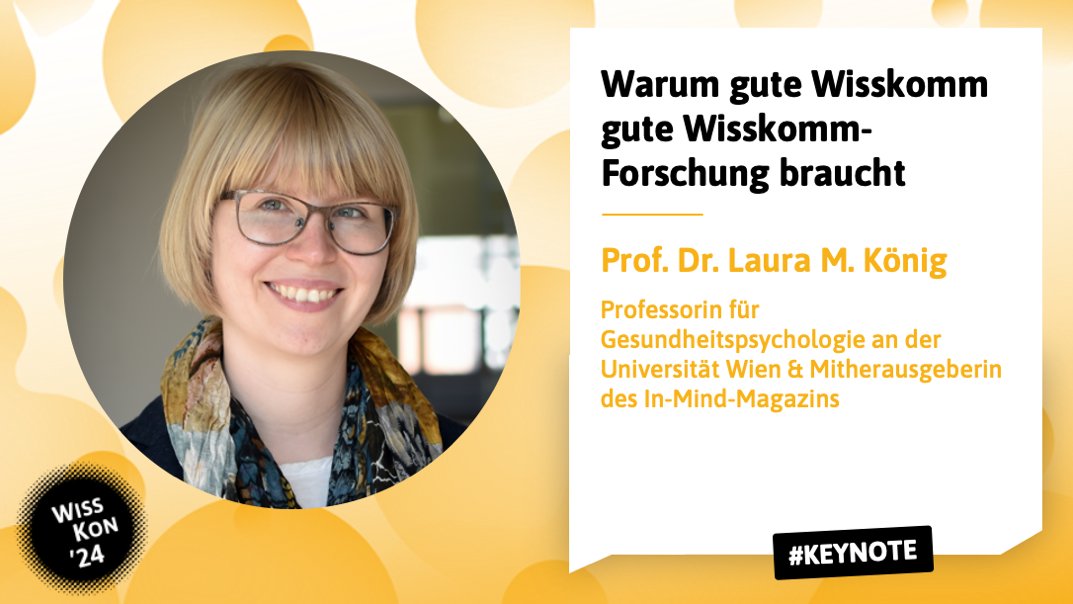
„Warum gute Wisskomm gute Wisskomm-Forschung braucht” – damit wird sich Prof. Dr. @LauraMKoenig von der @univienna in ihrer Keynote bei der #WissKon24 am 19. April 2024 auseinandersetzen.
https://t.co/L66UwpZZTb
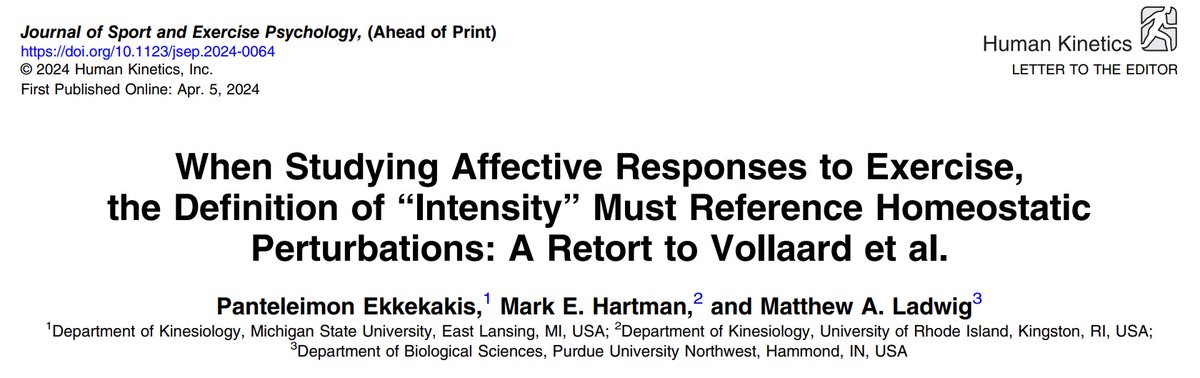
FREE PDF: If resistance on the bike is 100% of peak but you cycle for only 5 seconds, so your heart rate or oxygen uptake only go to, say, 60% of peak, is the intensity "high"? When the outcome is affect, @MHartman_E, @M_A_Ladwig and I say 'no.' Discuss!
https://t.co/YU3sO8btLn
Kahneman and exercise science? What is the relevance of the scientific legacy of the great Israeli psychologist and Nobel laureate to the science of physical activity? It's much more than you think. A thread -- and a tribute...