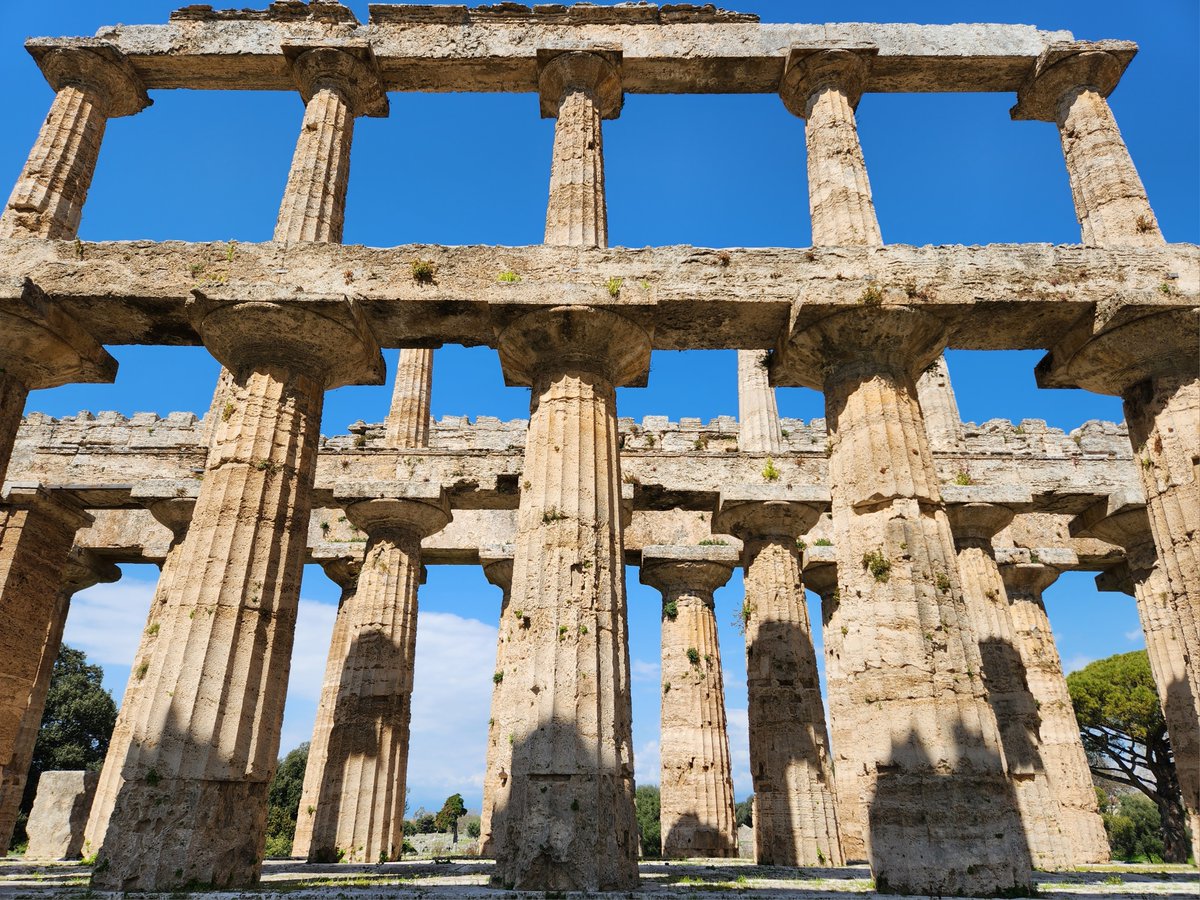
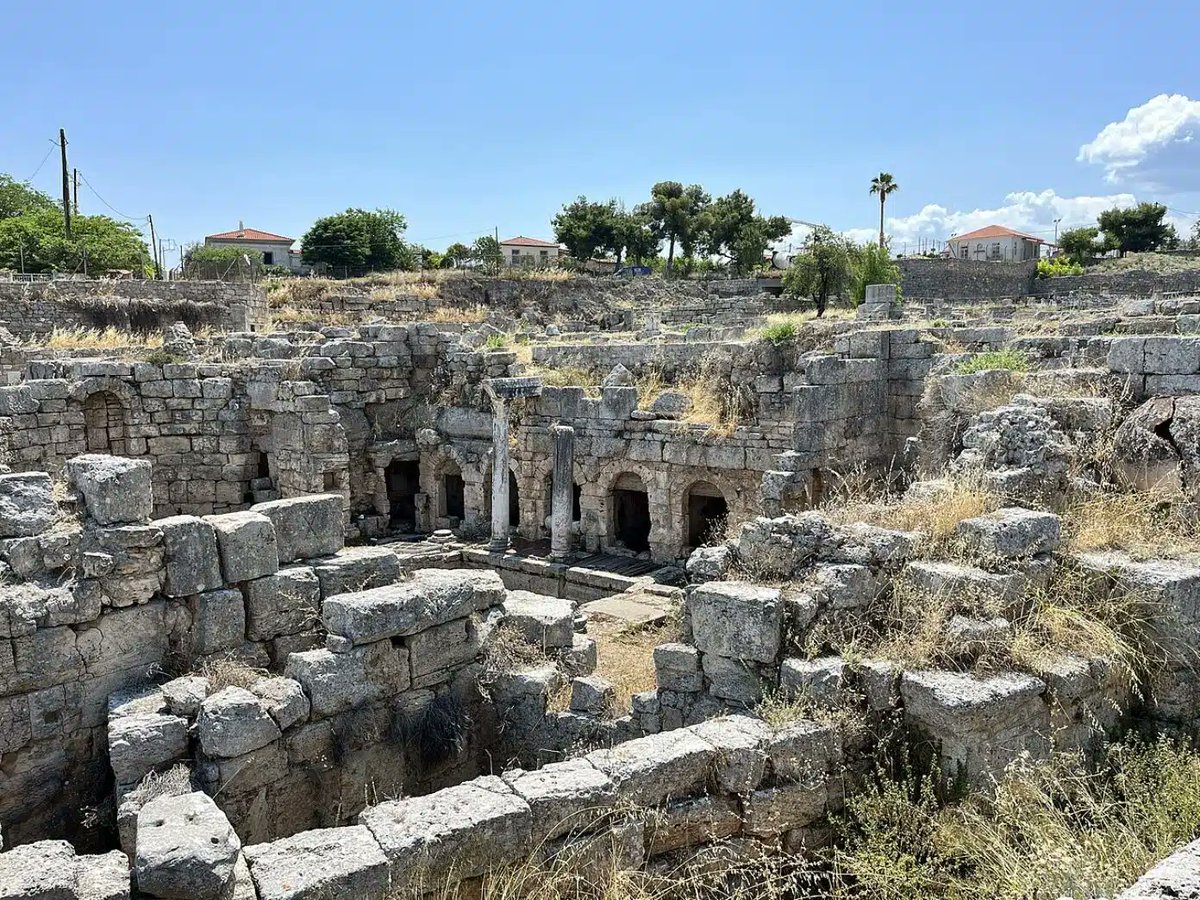
View across the cella of the Second Temple of Hera of Paestum. Below is a thread on this ancient city and another of its temples, the Temple of Athena.
📸 by me.
🇫🇷 🎥 Installation des expositions « Zurbarán » et « Sculpter la couleur » : un travail de précision millimétrique, mené d’une main de maître par les commissaires et les équipes du musée du Louvre.
Objectif : offrir aux visiteurs la meilleure expérience possible pour découvrir les peintures saisissantes de Francisco de Zurbarán et les sculptures exceptionnelles du musée national de Valladolid.
Découvrons ici l’installation de quelques œuvres dont celles du Musée des Beaux-Arts de Lyon, du Museo Thyssen-Bornemisza et du Norton Simon Museum.
À découvrir du 7 octobre 2026 au 25 janvier 2027.
Cette exposition bénéficie du soutien de Deloitte , Grand mécène.
Avec le concours du Cercle International du Louvre American Friends of the Louvre
🌎 🎥 Installation of the exhibitions “Zurbarán” and “Sculpting Colour”: a feat of millimetre-perfect precision, expertly carried out by the curators and teams at the Louvre.
The goal: to offer visitors the best possible experience, showcasing the striking paintings of Francisco de Zurbarán alongside sculptures from the National Museum of Valladolid.
On view from 7 October 2026 to 25 January 2027.
Let us discover here the installation of some works including those from the Museum of Fine Arts of Lyon, the Museo Thyssen-Bornemisza and the Norton Simon Museum
This exhibition is supported by Deloitte, Grand Patron.
With the support of the Cercle International du Louvre and the American Friends of the Louvre.
Submerged beneath the turquoise waters of Laconia, Pavlopetri is the world’s oldest known submerged city, dating back over 4,000 years! 🌊🏛️
With intact streets, courtyards, and tombs, this Bronze Age marvel offers a timeless portal into Greece’s deep history. 🇬🇷✨ #Pavlopetri
Pedro de Candia was a Cretan Greek explorer & part of the "Famous Thirteen" who participated in the Conquest of Peru under Francisco Pizarro.
Described as a giant and "extremely tall and strong", he brought a posse of Cretans to help the Conquistadors in the conquest
Mini 🧵:
The top Democrats on the Senate and House foreign affairs committees urged the State Department to review the conduct of Kimberly Guilfoyle, the U.S. ambassador to Greece, citing a WSJ investigation.
🔗: https://t.co/Zf6dEkky9A
@DCurtisIsa58@MarioNawfal Maybe you should pray to the right God and beg Him to make your leaders apologize for the murder of 175 innocent kids... After all, apparently divine intervention is the only thing left to end the madness...
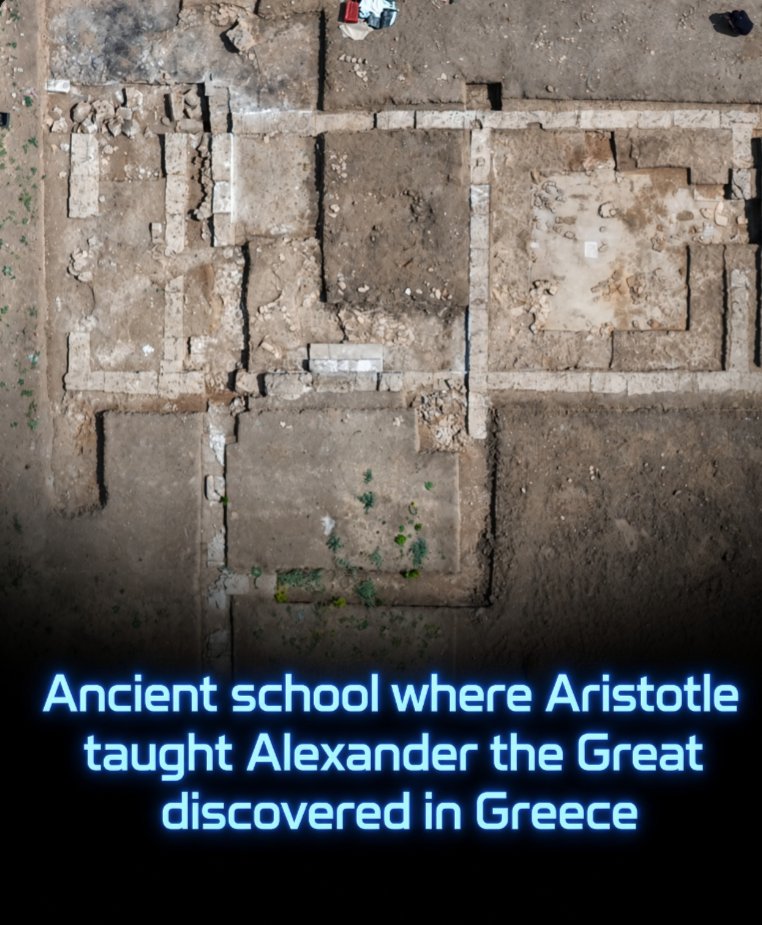
Greece has uncovered the school where Aristotle taught a teenage Alexander the Great.
Archaeologists in Greece have uncovered the ancient Royal Gymnasium at Mieza, the site where the philosopher Aristotle tutored a teenage Alexander the Great between 343 and 340 BCE.
Led by archaeologist Angeliki Kottaridi, the excavation team revealed a sprawling, 30-acre ancient school complex with lecture halls, banquet rooms with colorful mosaics, a wrestling school and an athletic stadium. The find also brought up physical remnants of everyday student life, including four bronze writing styluses likely used by Alexander and his elite classmates.
This historic find links literary tradition to physical remains and offers a rare look into the classroom that shaped the ancient world. At Mieza, Aristotle did not merely tutor the future conqueror. He instructed a small group of young Macedonian nobles, including Hephaestion and the future Egyptian pharaoh Ptolemy, in ethics, philosophy and sciences.
By unearthing the physical classrooms of these historical figures, archaeologists have located the site tied to the start of the global Hellenistic era.
The Benakis Family, one of the leading families of the Greek diaspora in Alexandria. Seated in the foreground are friends of Cavafy: the author Penelope Delta and her brother Antonis, founder of the Benakis Museum in Athens. Photo: Alexandros K. Samaras collection.
26 Σεπτεμβρίου 2000 – «Εξπρές Σάμινα»...
Ο στρατιώτης Πεζικού, Βασίλης Ραχούτης, μόλις στα 19 του χρόνια, διάλεξε να μείνει πίσω για να σώσει ζωές. Έσωσε μητέρες, παιδιά, μέχρι και ένα βρέφος. Δεν έσωσε όμως τον εαυτό του. Έκανε το χρέος στην πατρίδα!
Ένας πραγματικός σύγχρονος Ήρωας, που το όνομά του πρέπει να θυμόμαστε και να τιμούμε.
Αθάνατος!
JUST ADDED! In addition to the evening classes, Introductory Modern Greek will now be offered via Zoom on Wednesday mornings from 10 AM to 11:15 AM EDT.
This course is designed for those with no prior knowledge of the Greek language. https://t.co/8xRegSLVt0
#greek#moderngreek
An amazing group of people have started an online Ancient Greek text repository (like TLG) for FREE.
They currently have about 8000 texts online.
https://t.co/tAnJWpi1Nz
A giant step of Hellenic heritage! 🏛️ Carved from pure Parian marble, this colossal foot wears an elaborate Greek sandal from the 4th c. BC, once belonging to a majestic statue of an Olympian god. Greek artistry echoing through time! 🦶🇬🇷 #GreekArt#HellenicHeritage#History
This blew my mind: between 1403 and 1407, the Ming Dynasty emperor commissioned an encyclopedia - now called the Yongle encyclopedia, after the emperor - that was so vast in scale (around 400 million Chinese characters) that the only other encyclopedia that finally exceeded it was Wikipedia in 2007, 6 years after its launch!
This is yet another example of West-centric our sense of intellectual history is: in French education we're taught that encyclopedias as a concept started with Diderot and d'Alembert's "Encyclopédie" in the mid-18th century, which we're told was the first attempt in history to gather all of human knowledge in one place.
Not only was the Yongle encyclopedia completed 350 years earlier, and not only is it 20 times larger than L'Encyclopédie, but it was itself a very late entry in a Chinese tradition of encyclopedias which started with the Huanglan - more than 8 million characters in length - compiled around 220 AD (https://t.co/jlWoDrDzwa).
Unfortunately much of the encyclopedia has been lost: out of the original 11,095 volumes, only around 400 are known to have survived (300-ish of which are in China). But we sometimes find new ones, like two volumes that surfaced in 2020 in the attic of a French family, descendants of a naval officer who had received them as a gift from corrupt Chinese officials in the 1870s.
They went to auction in Paris with a starting price of 5,000 euros and sold for 8.12 million to a Chinese textile entrepreneur, Jin Liang, who donated them to China's National Archives of Publications this summer (https://t.co/2bRD4or98r).
Have you considered the possibility that the Homeric narratives found inspiration in a much older Aegean epic context than we imagine? The depiction on the Pylos Combat Agate brings to mind the Homeric descriptions of the hand-to-hand combats of the heroes of the Iliad.











![frad_fradi's tweet photo. Ὁ Ἑπτανήσιος [ἀπό τὴν Κέρκυρα] Ἐλευθέριος Χανδρινὸς, γεννήθηκε στὴν Κομοτηνὴ στὶς 18 Σεπτεμβρίου 1937.
Παιδὶ τοῦ Ὑποστρατήγου Κωνσταντίνου Χανδρινοῦ ποὺ ἐκείνη τὴν περίοδο ὑπηρετοῦσε στὴν Κομοτηνὴ, καὶ τῆς Μαρίας τὸ γένος Ἐλευθερίου Δροζίνου.
1/6 https://t.co/OmtfgNfBoP](https://pbs.twimg.com/media/G1H_lX8WkAAdrpI.jpg)





