Seems like if we're really concerned that capital will displace labor, we should start by closing the 16 percentage point tax advantage capital enjoys over labor.
Earlier today, @DrOzCMS claimed that large numbers of Marketplace enrollees aren’t “legit” on the grounds that some enrollees don't file a claim in any given year. Re-upping this thread on why this argument is seriously flawed.
And just think about how Trump and Republicans have gone out of their way to make life more difficult for people at the bottom of the income scale: tariffs, healthcare cuts, forcing people off SNAP
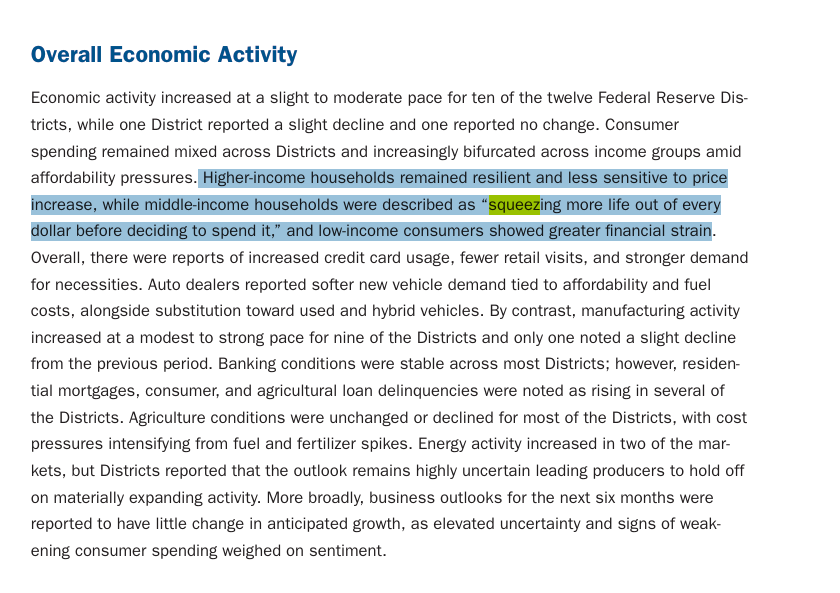
What a line in the Fed's Beige Book today:
Middle-income households were described as “squeezing more life out of every dollar before deciding to spend it,” and low-income consumers showed greater financial strain.
This is America's economy now -- an "E-shaped" -- economy with the top 20% doing just fine. The middle stretching every dollar and the bottom in serious trouble.
@ben_moll@MattBruenig@mattyglesias Do you think the “complication” of erasing a lifetime’s worth of accrued tax liability is more or less optimal than taxing those gains periodically?
@ben_moll@MattBruenig@mattyglesias Question in next tweet on the last sentence in your paper:
"Generalizations of the type considered in Section 6 complicate the optimal tax formulas in some cases, but it remains true that taxing asset holdings each period is generally suboptimal"
@RadWill_ Good stuff - would just think about trade off between speed ( getting a job quickly) vs holding out for the right job. Important to consider how tough it gets to be out of work for an extended time
This is a reason also to think about wage insurance
It was great talking with @ShiraOvide about ways to prepare for AI-driven job disruptions.
Modernizing the unemployment system (better benefits, better administrative funding, and better data) would go a long way!
The Medicaid work requirement enacted by last year’s Republican reconciliation law was already bad enough – taking away coverage from millions who don’t show either that they’re working enough or are exempt. But the Trump administration’s final rule makes a bad policy worse.
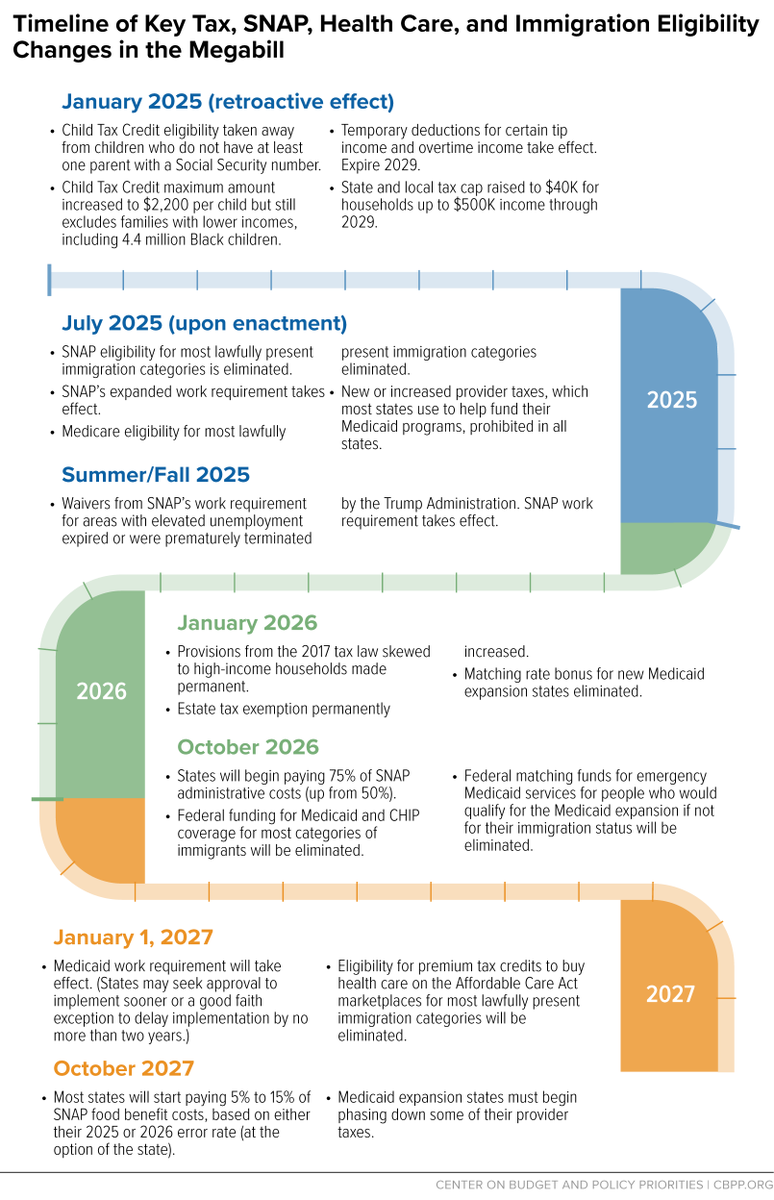
I have a new report outlining the harm to the Black community from this administration’s actions and from the implementation of HR 1. While focused on the many harms, this report also features the timeline of implementation (1/8).
The standard of living for Black households and small businesses faltered in 2025 and through the start of 2026 due to a variety of Trump Administration policies: https://t.co/SOF0IOWlUZ
Americans are increasingly worried about the potential for artificial intelligence to cost them their job--being extraordinarily strict about rules that require you to prove you have a job or qualify for an exemption to get health care are not going to help.
From AEI's Brent Orrell AI report, this sentence struck me as one of our unfortunate starting points: "The US devotes less than every other OECD economy except Mexico to “active labor market programs,” which provide retraining, income replacement, and other supports for workers"
We have built an economic régime where GDP climbs, markets soar, and the typical worker stands still unless the labor market is white‑hot. And if inflation fears keep us from ever running the economy hot again, real median wages may be stuck on pause indefinitely:
**When...
BREAM: The Bureau of Labor Statistics says inflation is now outpacing wage growth. How do you answer that concern?
HASSETT: That's a technical matter. Personal income includes lots of things like transfers and food stamps that we have been reducing as part of our effort to make government leaner and meaner.
Once you sort through demographic change & use a consistent deflator over time, the story becomes more interesting: periods of stagnation to real median wages (1973-95, 2000-14, maybe now), followed by bursts of growth when we're near full employment (1961-72, 1996-2000, 2015-22)
It's true: When families with kids lose SNAP, they're not just losing the help they need to afford groceries. School-aged kids may lose automatic enrollment for free school meals next school year. Families with babies, toddlers & preschoolers lose streamlined eligibility for WIC.
Real personal income is now falling year-over-year, and for bottom 50% households it’s down even more sharply, per @equitablegrowth.
One straightforward place to start reversing that: raise the federal minimum wage, which has been stuck at $7.25 for 17 years.