A 107-year-old Chinese grandmother pulls out a sweet from her pocket and gives it to her 84-year-old daughter,
You’re always mums baby no matter how old
Vietnamese artist Thiên Dinh is known for his delicate paper‐art works where he transforms fragile sheet of paper into stunning animal sculptures of fishes, birds and even dragon, which possess stunning sense of realism.
Look at these Betta fish.
https://t.co/hLNgbjxJhr
THIS IS ACTUALLY INSANE because I'm still mad thinking about it. My cousin and her friends were over complaining they were starving, so I tried to be nice and bought a few boxes of pizza with my own money, just trying to be the cool older cousin and not make it a big deal. I go to the kitchen to grab a slice and find out they didn't even eat it, they were putting dirty coins all over the pizza to film some stupid 5 second TikTok.
It is beyond disgusting to put actual money straight on the cheese just for likes on the internet. I paid for that food and they turned it into a gross science experiment instead of eating it. What really got me is when I called them out, they just laughed and said I was killing the vibe!! Imagine wasting food and someone else's money, then acting like I'm the problem. That was the exact moment I realized I'm done doing favors for people who treat everything like a joke for social media, stay hungry next time because I'm not funding your trashy content.
NEW: 13-year-old Australian boy swims for four hours in cold and dangerous waters to save his mom and siblings who were swept into the ocean, says God is who got him to shore.
The family was on kayaks & paddleboards when they were swept about 2.5 miles out to sea.
After a conversation with his mother, Austin Appelbee decided he would swim back to shore to find help.
Appelbee says he prayed throughout the four-hour swim and told God he would get baptized if he made it out alive.
"I don't think it was actually me [swimming]... It was God the whole time. I kept on praying, kept on praying. I said to God, 'I'll get baptized.'"
"The waves are massive, and I have no life jacket on… I just kept thinking 'just keep swimming, just keep swimming,'" he said.
"And then I finally made it to shore, and I hit the bottom of the beach, and I just collapsed."
Appelbee says when he got to shore, he had to sprint for about a mile to find help.
According to AP, the family drifted 9 miles from Quindalup and spent 10 hours in the water.
When he reached the shore, Appelbee alerted authorities, who then sent out a helicopter to find his mom, 12-year-old brother, and 8-year-old sister.
Austin's mother, Joanne Appelbee, said one of the hardest decisions of her life was sending her son to shore.
"One of the hardest decisions I ever had to make was to say to Austin: 'Try and get to shore and get some help. This could get really serious really quickly,'" she said.
What a remarkable kid.
Video: 7 News.
I was standing in the checkout line at the grocery store. It was crowded and loud.
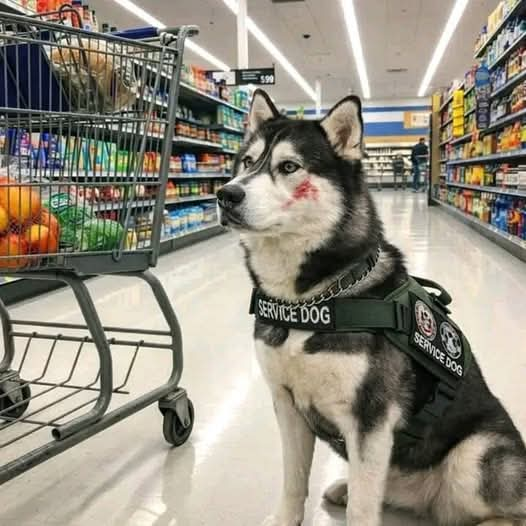
My dog, Titus—a strong, focused Husky service dog—was sitting perfectly still beside me. His body was lightly pressed against my leg, his posture calm and steady, his eyes locked onto my face. He didn’t look away for even a second.
A woman behind me tapped my shoulder sharply.
“That dog needs a muzzle,” she snapped.
“Look at the way he’s staring. He’s dangerous. It’s irresponsible to bring a dog like that into a store.”
At that moment, the room started to spin. My vision narrowed, the warning signs hitting all at once. I knew I only had seconds.
“He’s not staring because he’s aggressive,” I said, my voice shaking as I gripped Titus’s harness.
“He’s staring because he knows something is wrong with me.”
Then I collapsed.
But I didn’t hit the floor.
I landed on Titus.
He had already braced his body, ready to catch me.
When I came to, the paramedics were there.
Titus was lying across my legs, using his body to create space, keeping everyone back. The woman was gone.
“Good boy,” one of the EMTs said, gently patting his head.
“He didn’t let anyone touch you until we arrived.”
He wasn’t preparing to attack.
He was prepared to do his job.
He was prepared to protect my life. 🐕🦺🖤
Educate yourself before you judge.
Service dogs come in all shapes and appearances—and they save lives. 🚑
Jasmine limb
We adopted Barnaby to die.
I know that sounds harsh—but it’s the truth.
He was 15 years old.
A senior Pit Bull with cloudy eyes and a slow, careful walk.
The shelter paperwork said “Hospice Foster.”
His family had surrendered him because he “slept too much” and struggled to get around.
So we prepared ourselves for goodbye.
Orthopedic beds in every room.
Ramps instead of stairs.
Quiet nights.
Soft mornings.
We thought we were giving him a peaceful place to spend his final weeks.
But Barnaby had other plans.
Week one: He slept.
The deep, healing sleep that only comes when you finally feel safe.
Week two: He realized this wasn’t temporary.
He wasn’t going back.
This… was home.
Week three: He found the stuffed toy.
Not new.
Not fancy.
Just a worn, soft little toy.
And he carried it everywhere.
That’s when the “dying” Pit Bull disappeared.
The dog who “could barely walk” began trotting proudly through the house—stuffed toy clenched in his mouth like a trophy.
The dog who “slept too much” started waking us up early, toy in hand, ready for the day.
At night, he sat just like this—holding it close, as if afraid it might vanish.
That’s when we understood.
Barnaby wasn’t dying.
He wasn’t weak because of his age.
He was exhausted from loneliness.
From cold floors.
From being left behind.
Now he’s 15 years old.
He steals pizza off the counter.
He outruns me to the backyard.
And he still carries that same stuffed toy—proof that joy found him again.
We failed at hospice fostering.
But we succeeded at something better.
We gave a senior Pit Bull a reason to stay.
And he showed us that sometimes love doesn’t just extend a life…
Sometimes, it brings it back. 🐾❤️
Credit: Tayler
A man turned his window into a special place after he began receiving daily visits from a great kiskadee, which soon started bringing its friends to enjoy it together.
My stepdad, Greg, never said 'I love you.' He was a hard man. Worked construction. Came home, ate, slept. He paid for my college. He paid for my car. But he never hugged me. I always thought he resented me. I wasn't his real son. Greg died of a heart attack last week. I was cleaning out his truck. In the glove box, I found a worn-out notebook. It was a diary. Entry 1: Met a woman with a boy today. The boy looks sad. I want to make him smile. Entry 50: The boy needs braces. Picking up extra shifts. Entry 200: He graduated today. I stayed in the back so I wouldn't embarrass him with my dirty work clothes. I've never been prouder. Entry 500: I wish I knew how to talk to him. I just hope he knows I’d die for him. I sat in the driver's seat of his dusty truck and cried until I couldn't breathe. He didn't say it. He did it. Every single day. Love isn't always words. Sometimes, it’s calloused hands and a tired back.
Anonymous
A 20-year-old YouTuber buys his parents their dream home.
Northern Irish YouTuber Adam B (real name Adam Beales) famously surprised his parents with their dream house back in May 2020.
At just 20 years old, Adam secretly bought a brand-new four-bedroom show home in Derry, Northern Ireland, using earnings from his YouTube channel, which he started at age 12.
His parents had been house-hunting and particularly loved this property, so he purchased it (along with some furniture) without them knowing.
Adam has said the gesture was to thank his parents for supporting his YouTube career.
On the icy winter nights of Hungary, many stray dogs are fighting for daily survival. Local engineers responded not with electric heaters but with a smart and compassionate solution: solar-heated tunnels.
These shelters are made of dark-colored, heat-absorbing materials and a thermogel layer that stores sunlight during the day and slowly releases heat at night.
Curved and insulated designs protect dogs from cold winds and keep the interior comfortably warm; all with no cables, electricity costs or complicated maintenance required.
Animal welfare organizations across Eastern Europe are adopting these shelters more and more. They function even in remote areas, require minimal care and give vulnerable dogs a chance of survival in the brutal cold winters...
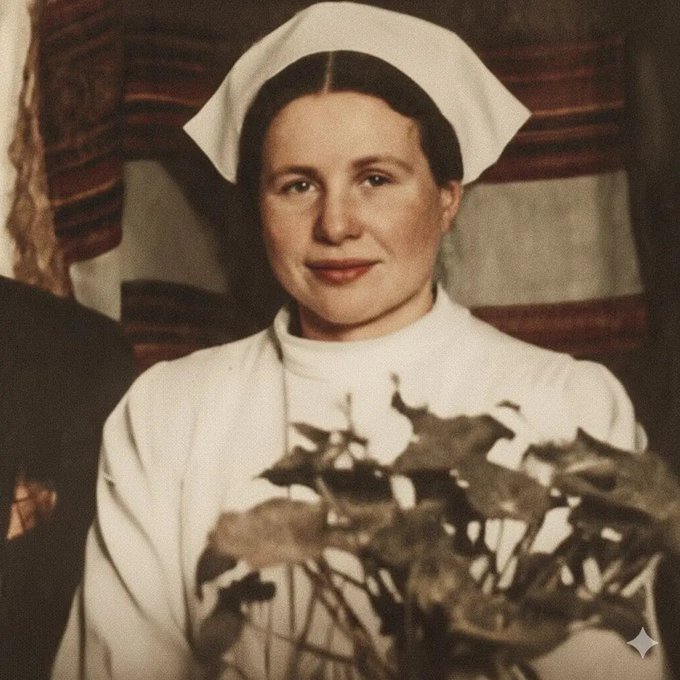
In the autumn of 1942, a slight, 32-year-old Polish social worker named Irena Sendler passed through the gates of the Warsaw Ghetto with a carpenter’s toolbox in her arms. Beneath the hammers and nails lay a drugged six-month-old infant, breathing softly, utterly silent. One cry would have meant instant death for both of them. Irena smiled at the guards; they waved her through. They never suspected that this quiet woman would repeat the journey 2,499 more times.
The ghetto was a slow-motion extermination. Starvation, disease, and random murder stalked every street. Jewish parents faced a choice no human being should ever have to make: keep their child and watch them waste away, or hand them to a stranger who promised a chance—however thin—at life.
Irena came officially to inspect for typhus. In reality, she came to steal children from death.
Babies left in toolboxes or ambulances under false bottoms. Toddlers sedated and tucked into potato sacks. Older children led by the hand through the stinking, lightless sewers while German boots marched overhead. “Not a sound,” she whispered as rats scurried past their feet.
She knew that the rescued children would be given new names, new religions, new families. Their pasts would vanish unless someone remembered. So, on fragile scraps of tissue paper, Irena wrote each child’s real name, their parents’ names, and their new hiding place. She rolled the papers tight, slipped them into glass jars, and buried them beneath an apple tree in a neighbor’s garden. If she were caught and killed, the truth might still survive.
She was caught.
On October 20, 1943, the Gestapo kicked in her door. They took her to Pawiak Prison and demanded the list. When she refused, they smashed both her legs with iron bars. Then her feet. Then her arms. For weeks the beatings continued. She never spoke. They scheduled her execution. On the appointed morning, guards dragged the broken woman from her cell.
Instead of a firing squad, she found herself outside the prison walls—alive. The Polish underground council Żegota had bribed a guard to mark her file “shot while trying to escape.” Officially dead, Irena Sendler limped back into the shadows to keep working.When the war finally ended, the first thing she did was dig up the jars under the apple tree. She spent years trying to return the children—now scattered across convents, farms, and foster homes—to whatever family might remain.
Almost no parents had survived. But the children had. Because of her, 2,500 Jewish boys and girls lived to grow up, to marry, to have children and grandchildren of their own—an entire secret branch of the human family tree that the Nazis never managed to cut down.For decades her story stayed buried deeper than the jars themselves. Then, in 1999, four high-school girls in rural Kansas stumbled across a brief mention of her name. They found the old woman still living quietly in Warsaw and brought her courage back into the light.
Journalists called her the greatest rescuer of the Holocaust. Irena only shook her head.“I could have saved more,” she said. “That regret follows me to the grave.”Irena Sendler—armed with nothing but a ghetto work permit, a toolbox, and a refusal to look away—proved that even in the heart of the worst evil humanity has ever devised, one determined person can still keep the darkness from winning completely.
A man in Alaska noticed a few homeless cats wandering around his house on freezing nights.
He tried inviting them inside, but since they’d spent their entire lives on the streets with no human contact, they were too scared to enter. So, he built a small temperature controlled shelter with cozy beds, food, and water just for them.
Every night, the cats come in and rest safely. Deep respect for such kind hearted souls.
I love this so much! 🌹♥️🐈🐈🌹♥️
Who Knew? 🤷🏻♂️🦮
In July of 1917, a stray brindle Bull Terrier mix wandered onto the campus of Yale University where members of the 102nd Infantry were training. He would hang out with them, watch them, and ultimately one of the Corporals fell in love with him. So when it was time for the soldiers to ship out, they smuggled him on board and he made the trip to Europe with them. Upon discovery by the commanding officer, he saluted, (as the men taught him how to do) and was allowed to stay on board.
"Stubby" served with the 102nd Infantry Regiment in the trenches in France for 8 months and participated in four offensives and 17 battles. He was wounded by a hand grenade and during his convalescence made rounds to see troops to keep morale up. He became sick from mustard gas until a special gas mask was designed to protect him. He learned to warn his unit of poison gas attacks, located wounded soldiers in no man's land, and, since he could hear the whine of incoming artillery shells before humans, became very adept at letting his unit know when to duck for cover. He was solely responsible for capturing a German spy by keeping hold of his pant leg until help arrived.
He ultimately earned the rank of sergeant and after the war made his home in Virginia with Robert Conroy, the soldier who found him at Yale. Stubby earned countless awards, statues in his honor, (including one at Yale), met presidents Wilson, Coolidge and Harding, and became the Georgetown Hoyas' team mascot.
From stray bully breed to hero. Thank you, Sergeant Stubby, for your service. You will not be forgotten.
"My name's Raymond. I'm 73. I work the parking lot at St. Joseph's Hospital. Minimum wage, orange vest, a whistle I barely use. Most people don't even look at me. I'm just the old man waving cars into spaces.
But I see everything.
Like the black sedan that circled the lot every morning at 6 a.m. for three weeks. Young man driving, grandmother in the passenger seat. Chemotherapy, I figured. He'd drop her at the entrance, then spend 20 minutes hunting for parking, missing her appointments.
One morning, I stopped him. "What time tomorrow?"
"6:15," he said, confused.
"Space A-7 will be empty. I'll save it."
He blinked. "You... you can do that?"
"I can now," I said.
Next morning, I stood in A-7, holding my ground as cars circled angrily. When his sedan pulled up, I moved. He rolled down his window, speechless. "Why?"
"Because she needs you in there with her," I said. "Not out here stressing."
He cried. Right there in the parking lot.
Word spread quietly. A father with a sick baby asked if I could help. A woman visiting her dying husband. I started arriving at 5 a.m., notebook in hand, tracking who needed what. Saved spots became sacred. People stopped honking. They waited. Because they knew someone else was fighting something bigger than traffic.
But here's what changed everything, A businessman in a Mercedes screamed at me one morning. "I'm not sick! I need that spot for a meeting!"
"Then walk," I said calmly. "That space is for someone whose hands are shaking too hard to grip a steering wheel."
He sped off, furious. But a woman behind him got out of her car and hugged me. "My son has leukemia," she sobbed. "Thank you for seeing us."
The hospital tried to stop me. "Liability issues," they said. But then families started writing letters. Dozens. "Raymond made the worst days bearable." "He gave us one less thing to break over."
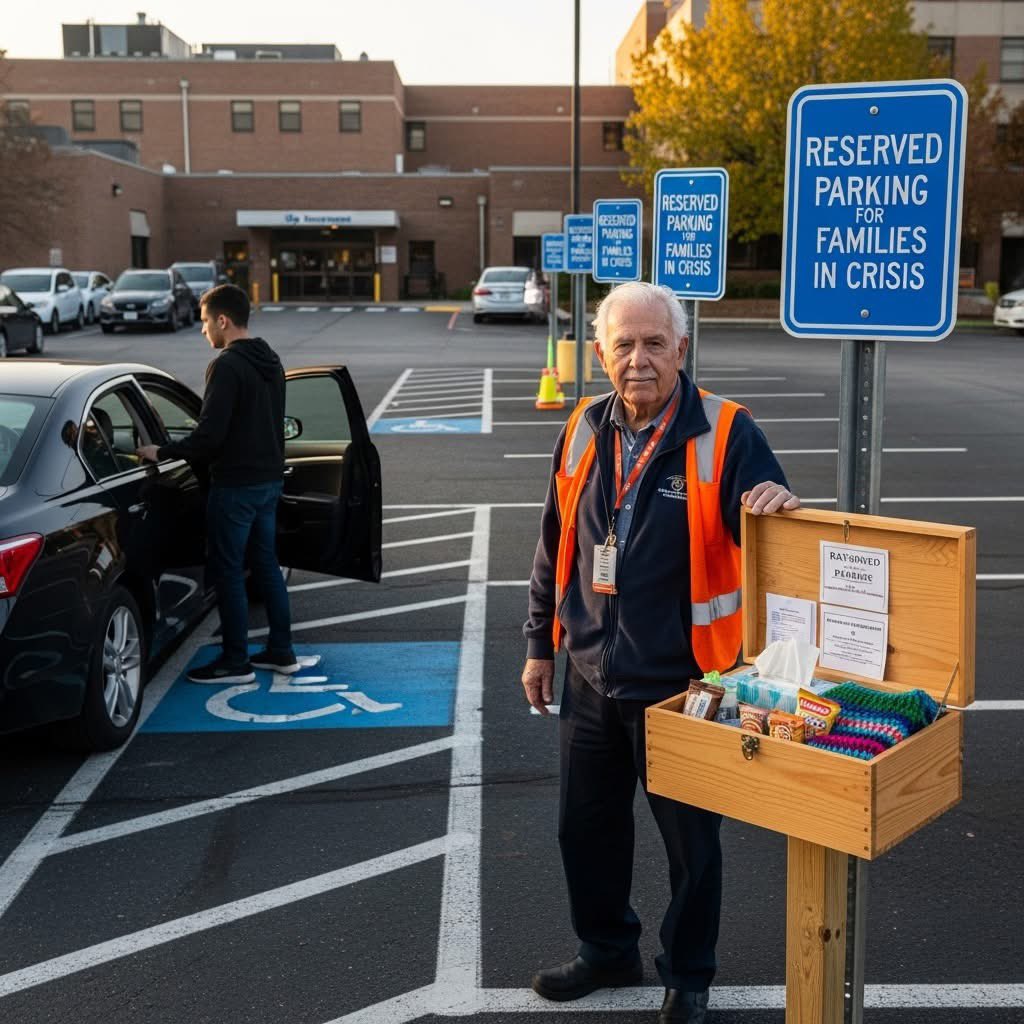
Last month, they made it official. "Reserved Parking for Families in Crisis." Ten spots, marked with blue signs. And they asked me to manage it.
But the best part? A man I'd helped two years ago, his mother survived, came back. He's a carpenter. Built a small wooden box, mounted it by the reserved spaces. Inside? Prayer cards, tissues, breath mints, and a note,
"Take what you need. You're not alone. -Raymond & Friends"
People leave things now. Granola bars. Phone chargers. Yesterday, someone left a hand-knitted blanket.
I'm 73. I direct traffic in a hospital parking lot. But I've learned this: Healing doesn't just happen in operating rooms. Sometimes it starts in a parking space. When someone says, "I see your crisis. Let me carry this one small piece."
So pay attention. At the grocery checkout, the coffee line, wherever you are. Someone's drowning in the little things while fighting the big ones.
Hold a door. Save a spot. Carry the weight no one else sees.
It's not glamorous. But it's everything."
Let this story reach more hearts....
Credit: Mary Nelson