“AND YOU STILL DARE TO OPEN YOUR MOUTH…”
Sasha Legerman: This is too accurate not to share.
This Australian’s response to Trump’s rant that “NATO does nothing for America” is absolutely devastating:
“Mate. You run a country where 600,000 homeless people will sleep on the streets tonight.
A country where 40% of adults can’t cover a $400 emergency without borrowing money.
A country where insulin costs more than a car payment, and people ration it just to stay alive.
A country where medical debt is the number one cause of bankruptcy.
A country where women die in hospital parking lots because doctors are too afraid of abortion laws to treat miscarriages.
You imprison more of your own citizens than any country on Earth.
More than China. More than Russia. More than North Korea.
In the land of the free, 2 million people sit in cages, and a quarter of them haven’t even been convicted of anything.
They’re simply too poor to afford bail.
Your life expectancy is declining. You’re the only developed nation where that’s happening.
Your infant mortality rate is worse than Cuba’s.
Your children practice active shooter drills between math and English classes while you sell defense stocks to your friends.
Your minimum wage hasn’t changed in 15 years.
Your teachers work two jobs, your veterans sleep under bridges, and you just spent a trillion dollars flattening a country that never attacked you.
And now a convicted criminal — found liable for sexual abuse, defending a pedophile, sleeping with a porn star, and running the biggest dumpster-fire campaign since the Taliban — is thanking you for yet another disaster.
And you call Greenland badly governed?
Greenland has universal healthcare. Free education. One of the lowest incarceration rates in the world.
Nobody there goes bankrupt because they got sick. Nobody dies in a waiting room because insurance refused treatment.
‘NATO wasn’t there when we needed them.’
When exactly was that, champ?
September 11?
Because NATO invoked Article 5 for the first and only time in history FOR YOU.
Soldiers from dozens of countries deployed, fought, bled, and died in Afghanistan FOR YOU.
Australia wasn’t even in NATO, and we still showed up. For twenty years.
And then you left at 2 a.m. without telling anyone and left everybody else to clean up the mess.
You don’t care that a great nation is being terrorized by your friend, and you haven’t shown it a single ounce of sympathy.
So maybe before calling other countries badly governed, take a look at your own backyard, you aluminum siding salesman with a spray tan.
The only thing badly managed in this picture is your damn mouth.
And you still dare to lecture the rest of the world?”
That water clarity is an engineering decision, and the math behind it is wilder than the video.
Roman aqueducts ran on gravity alone. No pumps, no pressure systems. Engineers carved channels with a gradient so shallow it borders on absurd. The Pont du Gard in southern France drops 2.5 centimeters over 275 meters. That's roughly the thickness of a coin over the length of three football fields. They surveyed that accuracy with plumb lines and wooden leveling instruments.
The clarity you're seeing is a direct product of flow velocity. Too steep and the water erodes the channel walls, picks up sediment, turns brown. Too flat and it stagnates. Roman engineers targeted a slope of about 20 centimeters per kilometer, which kept the water moving fast enough to stay fresh but slow enough to stay clear. Before the water reached the city, it passed through multi-chamber settling tanks where velocity dropped near zero. Suspended particles sank. Clean water flowed out the top into the next chamber. Repeat three or four times.
Pliny specified the minimum slope in writing. Vitruvius published the exact mortar ratio for hydraulic cement: one part lime to two parts volcanic ash for underwater work. The pozzolana from Pozzuoli reacted with water to form a calcium-aluminum-silicate compound that actually gets stronger the longer it sits submerged. Modern concrete degrades in water. Roman concrete bonds with it.
Scale the whole system and it gets harder to process. Eleven aqueducts fed Rome at its peak. Combined output: roughly 1 million cubic meters of water per day. That works out to about 250 gallons per person for a city of one million. Modern New York delivers about 125 gallons per person per day. Ancient Rome had access to double the per capita water supply of the largest city in the United States, running entirely on slope and stone.
The Trevi Fountain in Rome is still fed by one of them. Two thousand years, same source, same gravity, same water.
Тримата топ икономисти на Републиката, които ще чокат жълтопаветния планткон с още 157€ удръжки на заплатата, че 1100€ са малко и няма за увеличение на калинките в администрацията
*двете були не знам какъв колан могат да затегнат …
Applebaum: Europe’s postwar order worked so well that people began to think it was natural — not the result of hard work and compromise.
The laws and norms that kept peace were taken for granted. Now they are under attack. 1/
Trump just got exposed for running the biggest insider trading operation in American history.
Nancy Pelosi traded $5 million in stocks and Congress lost its mind.
Trump literally executed $750 MILLION worth of stock trades in ONE quarter while being President.
His ethics filing just dropped and the numbers are genuinely unprecedented in history:
Between January and March 2026, Donald Trump personally executed 3,700 individual stock transactions worth between $220 million and $750 million.
That's roughly 60 trades PER DAY.
While signing executive orders, meeting foreign leaders, and making policy decisions that directly impact the companies he's buying and selling.
Now here's where it gets really insane:
On February 10, Trump bought between $1 million and $5 million worth of Dell stock.
Three months later, on May 8, he stood at a Mother's Day event at the White House, thanked Michael Dell by name, and told Americans to "go out and buy a Dell."
Dell stock surged 14.6% that day to an all-time high of $263.99.
Since Trump's February purchase, Dell is up 96%.
And 5 months BEFORE Trump bought Dell stock, Michael and Susan Dell donated $6.25 billion to Trump Accounts, one of the largest philanthropic commitments to a sitting president's signature program in modern history.
So the timeline goes: Dell donates $6.25 billion to Trump's program -> Trump buys Dell stock ->Trump tells America to buy Dell from the White House podium -> Stock hits all-time high
And that's just ONE stock...
The same filing shows Trump bought Nvidia stock on February 10. One week later, Nvidia announced a massive chip deal with Meta.
He bought more Nvidia stock one week BEFORE his own Commerce Department approved the sale of Nvidia chips to Saudi Arabia.
He bought Intel stock starting in March 2026. The US government already owned a 9.9% stake in Intel worth over $41 billion. On April 30, Trump posted on Truth Social praising Intel, writing that "Intel Stock continues to rise."
Intel jumped 3% in after-hours and is now up 140% year-to-date.
He bought Palantir stock while his administration was actively handing them billion-dollar government contracts for immigration enforcement and defense.
He bought Robinhood stock while his own Trump Accounts program uses Robinhood as the broker.
He's currently sitting on over 100% profit on AMD, Intel, Bloom Energy, Marvell Technology, and at least 10 other positions.
Every single president since Lyndon B. Johnson has used a blind trust to avoid exactly this situation. But Trump didn't.
His assets sit in a trust controlled by his own children, and the filings show a broker acted as agent on several trades.
The White House says the portfolio is "independently managed."
But here's what independently managed looks like:
Buy Dell stock. Three months later, publicly endorse Dell from the White House. Stock hits all-time high.
Buy Nvidia stock. One week later, your own government approves their chip sales. Stock rips.
Buy Intel stock. Post about Intel on Truth Social. Stock jumps. The government you run already owns a 10% stake.
Buy Palantir. Hand them contracts. Buy Robinhood. Route a federal program through their platform.
Nancy Pelosi got absolutely destroyed for her husband's stock trades.
Her husband's total disclosed trades in his most controversial year were worth roughly $5 million.
Trump just disclosed up to $750 MILLION in a single quarter.
While making the actual policy decisions that move these stocks.
This isn't a left or right issue.
We're talking about the President of the United States averaging 60 stock trades per day in companies his own administration regulates, contracts with, and publicly endorses.
What do you think?
A young man met an old man and asked him:
— Do you remember me?
The old man replied, “No, I don’t.”
Then the young man said, “I was one of your students.”
The old man asked:
— Oh really? What do you do now?
The young man answered:
— I became a teacher.
— That’s great! Just like me? — said the old man.
— Yes. I became a teacher because you inspired me to be one.
The old man was curious and asked what moment inspired him.
The young man told this story:
— One day, one of my friends brought a beautiful new watch to school. I wanted it, so I stole it from his pocket. After a while, my friend noticed his watch was missing and told you about it.
You stopped the class and said:
— Someone’s watch was stolen during the lesson. Whoever took it, please return it.
— But I didn’t return it. I was too ashamed.
Then you closed the classroom door and told all of us to stand up. You said you would check everyone’s pockets until the watch was found. But you also told us to close our eyes while you searched.
So we did.
You went through everyone’s pockets, one by one. When you reached mine, you found the watch and took it. But you didn’t stop. You kept checking the others’ pockets too.
Then you said:
— Open your eyes. I found the watch.
You never said anything to me. You didn’t punish me, and you never told anyone it was me. That day was the most embarrassing moment of my life.
But it was also the day I was saved from going down the wrong path. You didn’t lecture me, but your actions spoke louder than words.
That day, I understood what it means to be a real teacher. And that’s why I became one.
Do you remember that day, teacher?
The old man replied:
— I remember the situation and searching for the watch, but I don’t remember you — because I also had my eyes closed.
This is what true teaching is:
If correcting someone means embarrassing them, then you don’t truly know how to teach. ❣️
President Zelenskyy has realised that in 2026, the path to victory doesn't lead through the White House. It leads through a bipartisan majority in Congress that is tired of watching from the sidelines.
While the world’s cameras are locked on Beijing today, watching Trump swap handshakes and "grand bargains" with Xi Jinping, a much quieter and arguably more important meeting took place in Kyiv.
President Zelenskyy sat down with a heavy-hitting delegation from the Hudson Institute.
If you’re not a policy wonk, here’s why that matters: Hudson is a powerhouse of traditional conservative thought. By inviting them in, Zelenskyy wasn't just talking shop. He was executing a massive strategic shift.
The message? "If the White House is busy, we'll talk to the people who actually hold the checkbook in the U.S.”.
For months, the Trump administration has kept Ukraine on "pause”, pushing for a kind of surrender that most Americans aren't buying. As Trump attempts a massive geopolitical reset with China—the same China that is currently keeping putin’s war machine on life support, President Zelenskyy has clearly decided he’s done waiting for a return call from the Oval Office.
Instead, he’s going straight to the U.S. Congress and the intellectual backbone of the Republican party.
Zelenskyy’s gamble paid off. Just as he was wrapping up his meeting with the Hudson folks, news broke in D.C. that a bipartisan group of lawmakers finally hit the magic 218 signatures on a discharge petition.
For those who skipped civics class: this is basically a "legislative mutiny”. It allows a majority of Congress to snatch a bill (in this case, the Ukraine Support Act) right out of the hands of House leadership and force it onto the floor for a vote.
1. The Ammo Famine is Ending: This bill unblocks the heavy hitters, air defense interceptors, drones, and the long-range missiles (ATACMS) that have been gathering dust while the front lines suffered.
The majority of Americans still want to see Ukraine win. By forcing this vote, Congress is effectively saying that the administration’s "America First" retreat doesn't actually represent America.
Zelenskyy isn't just asking for help anymore; he's building a coalition that can outlast any single administration.
While the headlines focus on the red carpets in Beijing, the real power move happened in a meeting room in Kyiv and a signing desk in Washington. Zelenskyy has realised that in 2026, the path to victory doesn't lead through the White House—it leads through a bipartisan majority in Congress that is tired of watching from the sidelines.
As Zelenskyy puts it now: “We are thankful to the American PEOPLE”.
It looks like Congress just hit the play button.
Diese Vatnik Suppe stellt Yanis Varoufakis vor, einen griechischen Ökonomen & Politiker. Er kam zum Höhepunkt der 🇬🇷 Schuldenkrise an die Macht. Er löste zwar nichts, machte sich aber bei Linken beliebt & nutzt jetzt seinen Ruhm, um den russischen Imperialismus zu fördern.
1/20
Dijkstra’s Algorithm Just Got Dethroned After 41 Years And the Future of Navigation, Logistics, and AI Just Got WAY Faster!
Imagine this: For over six decades, Edsger Dijkstra’s legendary algorithm has quietly powered everything that moves data, people, or packets across networks.
Google Maps rerouting you around traffic in real time? Dijkstra. Booking the cheapest flight with optimal connections?
Dijkstra. Internet routers blasting your cat videos across the globe at lightning speed? You guessed it, Dijkstra.
Textbooks declared it unbeatable on sparse graphs since 1984. Even the great Robert Tarjan snagged an award last year essentially saying, “Yeah, this is as good as it gets.”
The “sorting barrier” felt like a law of physics.
Until now.
A brilliant team from Tsinghua University (led by Professor Ran Duan) just dropped a bombshell paper that shatters that 41-year-old ceiling.
They’ve created the first deterministic algorithm to beat Dijkstra’s classic O(m + n log n) time bound for the Single-Source Shortest Path (SSSP) problem on directed graphs with real weights.
The New Champion: O(m log^{2/3} n) — Mind-Blowingly Faster on Massive Graphs
Their breakthrough? They stopped obsessing over fully sorting every node by distance.
Instead, they fused the relaxation power of the Bellman-Ford algorithm with a genius “recursive partial ordering” technique. This cleverly shrinks the “frontier” of candidate nodes you need to track, avoiding the full logarithmic sorting hit that’s haunted Dijkstra for decades.
On huge sparse graphs (think the web, global supply chains, social networks, or road systems), this translates to significantly faster route-finding. We’re talking real theoretical wins that could cascade into practical speedups as implementations mature.
This isn’t some incremental tweak — it’s the first major deterministic improvement since 1984, and it just won Best Paper at STOC 2025.
Science is self-correcting in the most exhilarating way possible!
Why This Feels Like Magic
Dijkstra works by always picking the next closest unprocessed node elegant, but it forces you to maintain a sorted order.
The Tsinghua team said: “What if we don’t need the full order right away?”
They use divide-and-conquer on vertex sets, bounded multi-source subproblems, and smart pivots to compress the work. It’s like navigating a city by smartly grouping neighborhoods instead of checking every single streetlight one by one.
Robert Tarjan himself called it “amazing.” When a legend in the field reacts like that, you know history is being rewritten.
What This Means for the Real World
• Navigation & Maps: Faster dynamic rerouting on planetary-scale graphs. Traffic apps could feel even snappier.
• Logistics & Supply Chains: Optimizing millions of routes in less time = lower costs, greener deliveries, happier planets.
• Networking: Internet infrastructure could route packets more efficiently than ever.
• AI & Games: Pathfinding in massive virtual worlds or graph-based ML models gets a turbo boost.
• Beyond: This cracks open the door for rethinking other “impossible” barriers in algorithms. If we can beat sorting here, what else is waiting?
Implementations in libraries like NetworkX or Boost Graph are coming, and the entire algorithms community is buzzing.
What a time to be alive in tech!
Tsinghua just proved that even the most sacred cows in computer science aren’t untouchable.
The sorting barrier?
Obliterated.
The shortest-path problem isn’t solved, it’s reopened for even greater conquests.
У The Telegraph вийшла стаття «Putin is down. This is the time to start kicking him». Дуже сильний матеріал, який заслуговує на детальний розбір. Автор — полковник Геміш де Бреттон-Гордон, колишній командир 1-го Королівського танкового полку і командир Об'єднаного хімічного, біологічного, радіологічного та ядерного полку Великої Британії. Це рідкісний випадок, коли західний військовий вищого рангу прямо каже Заходу: припиніть пропонувати Путіну поступки, час добивати.
«Вперше за два десятиліття Росія не змогла зібрати жодного танка на традиційній щорічній демонстрації військової могутності Кремля — події, яку сам Путін описує як попередження ворогам Росії. Світ бачив не силу, а слабкість: зменшення кількості парадів, порожню символіку та режим, який дедалі більше боїться власної вразливості.»
«Оскільки українські безпілотники та ракети тепер здатні вражати глибоко всередині Росії, Путін явно не наважувався демонструвати цінну військову техніку у відомий час і місце. Натомість режим значною мірою покладався на масовані маршируючі формування, включаючи північнокорейські війська, щоб створити ілюзію масштабу та сили.»
Британський полковник прямо констатує те, що ми бачили самі: Путін боїться українських дронів настільки, що скасував техніку на власному святі.
«Навіть промова Путіна, яка зазвичай є тривалим випробуванням на витривалість, під час якого диктатор потурає імперській ностальгії та риториці радянської епохи, була разюче короткою та стриманою. Зникла та самовпевненість лідера, переконаного в неминучій перемозі. На її місці стала людина, яка намагалася виправдати дедалі дорожчу та стратегічно катастрофічну війну. Путін наполягав, що Росія веде "справедливу" війну, і назвав Україну "агресивною силою", озброєною НАТО.»
Від «Київ за три дні» до «справедливої війни» проти НАТО. Це не риторика переможця.
Окремо автор згадує російську гібридну війну проти Заходу:
«Саме Росія, а не Захід, роками вела безперервну гібридну війну проти Європи, і зокрема Великої Британії. Вбивство Олександра Литвиненка та замах на Сергія Скрипаля в Солсбері залишаються моторошними нагадуваннями про готовність Кремля здійснювати державні атаки на британській землі, поряд з нещадною кібервійною, саботажем та шпигунством по всій Європі.»
Це важлива річ для західного читача — нагадування, що Росія вела війну проти них ще до 2022 року. І веде повсемісно і по сьогоднішній день. Перерізані кабелі, підірвані склади, літаки в повітряному просторі країн НАТО — це війна, просто поки без ракет.
«Сьогодні реальність поля бою дедалі більше змінюється на користь України. Українські війська продовжують робити поступовий, але суттєвий прогрес, тоді як Росія зазнає жахливих втрат як у людських силах, так і в техніці.»
«Водночас Україна продемонструвала дедалі складнішу здатність уражати стратегічно важливі цілі глибоко всередині Росії, навіть без масштабної американської військової підтримки. Атаки на критично важливу інфраструктуру зараз чинять зростаючий тиск на російську економіку та оголюють нездатність Кремля повноцінно захистити власну територію.»
Це дуже важливе розуміння ситуації у війні. Британський полковник прямо визнає те, що ми робимо власними руками. Без американської допомоги, з міжнародним тиском, під постійними атаками — Україна все одно нарощує тиск на Росію.
Окремо автор згадує внутрішню ситуацію в Росії:
«Все це відбувається на тлі зростаючих ознак занепокоєння в самій Росії. Публічна критика війни, яка колись була майже немислимою, стає дедалі помітнішою, оскільки пересічні росіяни починають ставити під сумнів ціну катастрофічної авантюри Путіна в Україні. Ця критика була б ще більш очевидною, якби не нещодавні репресії щодо інтернет-сервісів у Росії та придушення багатьох інакомислення.»
Але головне в статті сказано у фіналі, якому я можу лише аплодувати стоячи:
«Субота безсумнівно продемонструвала, що Путін поранений політично, військово та психологічно. Історія вчить нас, що коли небезпечний хижак ослаблений, саме тоді потрібно чинити максимальний тиск, а не пропонувати поступки заради доцільності. Найефективніший час для удару людиною — це коли вона на землі.»
«Захід має забезпечити Володимиру Зеленському можливості забезпечити справедливий мир для українського народу, а не давати Путіну шлях до втечі, щоб просто передчасно припинити бойові дії.»
Це саме та логіка, яку ми повторюємо чотири роки поспіль. Поступки агресору не закінчують війну — вони пересувають її у часі. Польща чекала свободи 45 років після Ялти. Чеченська республіка Ічкерія підписала Хасав'юртівські угоди — і потім було вирізано більше 20 відсотків населення. Україна не має права допустити такої долі для власного народу.
Trump is relearning one of the oldest lessons in international politics. Starting a war is easy. Winning it is hard. Walking away without looking weak may be impossible.
That is the argument of The Atlantic’s “Checkmate in Iran,” and the evidence is hard to dismiss.
For 37 days, the US and Israel inflicted enormous damage on Iran – much of its military leadership eliminated, large parts of its armed forces destroyed, critical infrastructure heavily damaged. On paper, a decisive victory.
But wars are not won on paper. The regime did not fall. The nuclear program was not dismantled. And Iran emerged from the war controlling the Strait of Hormuz – the waterway that carries roughly one-fifth of the world’s oil and gas. That single fact rewrites the scoreboard. Oil is surging, inflation is rising, and every government with a stake in energy markets is reconsidering its assumptions about American power.
Trump can claim victory. Reality says otherwise. The US spent enormous military capital and failed to achieve its principal strategic aims. Iran survived, Iran kept its leverage, and American credibility took the hit.
The pattern is familiar. Trump promised to end the war in Ukraine in 24 hours. Instead, US aid was suspended, pressure on Russia weakened, Russian attacks intensified, and civilian casualties rose. The same mistake repeats: spectacle confused for strategy, branding for leadership, declarations for outcomes.
Unfortunately, the US is run by the most incompetent government in modern history.
A mathematician at Bell Labs wrote something on paper in 1994 that made every government on earth quietly panic. The machine that runs it doesn't exist yet. The panic never stopped.
His name is Peter Shor. He is a professor of applied mathematics at MIT. He won the Turing Award in 2021, the highest honor in computer science. And the thing he is most famous for is a piece of mathematics he wrote in four days that he did not fully intend to write.
Here is the story almost nobody tells, and why it should change how you think about the security of everything you do online.
In 1994, Shor was a researcher at AT&T Bell Labs in Murray Hill, New Jersey. Bell Labs at the time was the most intellectually alive research environment in the world. The same building that produced Claude Shannon's information theory, the transistor, and the Unix operating system was now full of physicists who interrupted each other mid-sentence and argued through lunch.
Quantum computing in 1994 was not a field. It was a rumor. A handful of theorists believed that computers built on quantum mechanical principles could solve certain problems exponentially faster than classical machines. Most of the scientific establishment considered them eccentric. There was no working quantum computer. There was no clear proof that one would ever matter. It was the kind of research that serious people called interesting and quietly avoided.
Shor was not avoiding it.
He had been thinking about a problem called the discrete logarithm, a mathematical operation that sits underneath several encryption schemes. Encryption works because certain mathematical operations are easy to perform in one direction and almost impossible to reverse. Multiply two enormous prime numbers together and you get a product in seconds. Start with the product and try to find the two original primes and a classical computer would take longer than the age of the universe. That asymmetry is the lock. Every bank transaction, every encrypted email, every password you have ever entered online is protected by some version of that lock.
Shor worked out a quantum algorithm for the discrete logarithm problem. He presented it at an internal Bell Labs seminar. The physicists in the room paid attention for the entire talk, which was unusual. The talk ended, and people started talking.
Then the telephone game started.
The discrete logarithm is used in some encryption systems, but not most. The dominant encryption standard protecting most of the world's sensitive data, RSA, is built on a different problem: prime factorization. As news of Shor's seminar spread through the halls of Bell Labs and then through the physics community, something got lost in translation. By the time the story reached physicists across the country four days later, the rumor was that Shor had solved factoring. He had not. He had solved something related but different.
Shor heard the rumor. And then, in four days, he made it true.
He sat down, looked at what he had already built, found the mathematical connection between the discrete logarithm and prime factorization, and extended his algorithm to cover both. The rumor had described something that did not exist. He built it to match the rumor before anyone found out it was wrong.
What he had now was a quantum algorithm that could factor enormous numbers exponentially faster than any classical computer. In practical terms, what that meant was this: if a quantum computer ever existed with enough stable qubits to run Shor's algorithm at scale, RSA encryption would be broken. Not weakened. Not compromised at the margins. Broken completely. Every message ever encrypted with RSA would be readable. Every private key ever generated would be derivable from the public key. Every lock built on the assumption that factoring is hard would unlock.
The paper went out. The reaction was not what most people imagine.
There was no press conference. No announcement. A 32-page technical paper appeared in the proceedings of a symposium on the foundations of computer science. Cryptographers read it and understood immediately what it meant. Intelligence agencies read it and understood immediately what it meant. Governments that had spent decades and billions of dollars building encryption infrastructure understood immediately what it meant.
None of them said much publicly. They started working.
The NSA gave Shor a Mathematics in Cryptology Award in 1995, one year after the paper came out. That is a fast turnaround for an award from an intelligence agency. The implication is that they read the paper and moved.
The problem was the machine. Shor's algorithm requires a quantum computer with enough fault-tolerant qubits to factor the kind of numbers used in real encryption, numbers with hundreds of digits. In 1994, no such machine existed. In 2001, IBM demonstrated Shor's algorithm on a 7-qubit quantum computer and used it to factor the number 15 into 3 and 5. That was the proof of concept. It was also a machine that required more infrastructure than most university labs own, running a calculation a fourth grader could do in their head.
The gap between that demonstration and a machine capable of breaking real encryption is enormous. The numbers involved in modern RSA encryption have hundreds of digits. Factoring them with Shor's algorithm would require a quantum computer with potentially millions of stable, error-corrected qubits. The best machines available today have thousands of qubits, most of them too noisy to use reliably for extended computation.
But the direction of progress is not ambiguous.
Every year, the machines get larger. Every year, error correction improves. Every year, the gap between what exists and what Shor's algorithm requires gets smaller. Nobody knows exactly when a machine capable of breaking RSA will exist. Estimates from serious researchers range from ten years to thirty. The NSA has said publicly that it believes the threat is real. NIST, the US standards body, spent years running a global competition to identify encryption algorithms that would survive a quantum computer, and in August 2024 published the first official post-quantum cryptography standards. Google has already integrated one of them into Chrome. Apple adopted another for iMessage. Signal switched to a hybrid post-quantum system in 2023.
All of that activity, every dollar of it, every hour of engineering, traces back to four pages Shor wrote in 1994.
The most interesting detail is the one Shor himself has repeated in multiple interviews. He compared the current scramble to build post-quantum cryptography to Y2K, the race to patch computer systems before the year 2000. He said the difference is that Y2K had a fixed deadline. The quantum threat has no deadline. Nobody knows when the dangerous machine will exist. And his warning was blunt: if you wait until it is obvious that a sufficiently powerful quantum computer is coming, you will already be too late. The migration of critical infrastructure to post-quantum standards takes years. The systems protecting financial markets, government communications, and military networks cannot be updated in an afternoon.
The race is not theoretical. It is happening right now, in every major government and every serious technology company on earth.
Shor is 65 years old. He still teaches at MIT. He did not build the machine. He wrote the paper that proved the machine would matter before anyone had built it. He won the Turing Award 27 years after the paper came out, which is either a sign that the committee moves slowly or a sign that the full weight of what he wrote is still arriving.
The most dangerous algorithm in the history of cryptography has never successfully been used against a real target.
Every system protecting your money, your messages, and your government's secrets is safe for exactly one reason. The computer that breaks them has not been finished yet.
If you pitched this as a screenplay every studio would reject it for being too on-the-nose.
A 73-year-old architect walks to confession in 1926 and gets hit by a tram on the Gran Via in Barcelona. He's mistaken for a vagrant because of his worn clothes and left at a pauper's hospital. He dies three days later. His name is Antoni Gaudí. The cathedral he leaves behind is less than a quarter complete. The plans to finish it sit in his workshop as plaster models and detailed drawings.
Ten years after his death, in July 1936, FAI anarchists break into that workshop. They smash the plaster models. They burn the archive of drawings and calculations. They pry open Gaudí's tomb. For the next 50 years, architects piece together a destroyed playbook from photographs and broken plaster fragments.
The geometry was the real problem. Gaudí designed the church using upside-down hanging-chain models because the math for hyperboloid intersections did not yet exist on paper. He had solved it physically. Computers finally caught up to him in the 1980s. By 2010 the project was 50% complete. By 2015 stone elements that took months to hand-carve were being modelled digitally and machine-cut in days.
Now the kicker. The building is funded entirely by people paying admission to see scaffolding. €134.5 million of income in 2025, all private, none of it from the Spanish state or the Vatican. About 4.7 million tourists a year buying €26 tickets to watch a cathedral get built. The unfinished state was the product.
On June 10, 2026, exactly 100 years to the day after Gaudí died, the cross goes up on the Tower of Jesus Christ. 144 years from groundbreaking. 172.5 meters tall. The tallest church building in the world, beating Ulm Minster, which took 513 years.
When asked why his project was taking so long, Gaudí said one thing: "My client is not in a hurry."
Turns out neither was he.
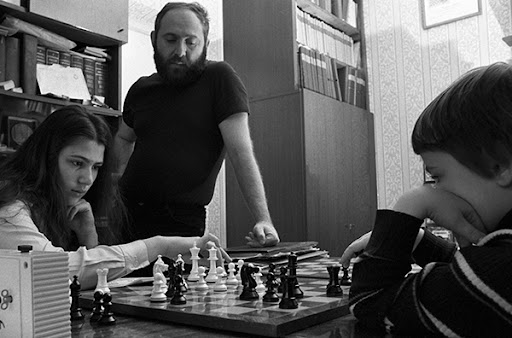
A Hungarian psychologist raised three daughters to prove that any child could become a chess grandmaster through early specialization. He succeeded. Two of them became grandmasters. One became the greatest female chess player who ever lived.
Then a sports scientist looked at the data and found something nobody wanted to hear.
His name is David Epstein. The book is called "Range."
The Polgar experiment is one of the most famous case studies in the history of deliberate practice. Laszlo Polgar wrote a book before his daughters were even born arguing that geniuses are made, not born. He homeschooled all three girls in chess from age four. By their teens, Susan, Sofia, and Judit were dominating tournaments against grown men. Judit became the youngest grandmaster in history at the time, breaking Bobby Fischer's record. The story became the gospel of early specialization. Pick a domain young, drill it hard, and you can manufacture excellence.
Epstein opens his book by telling that story honestly and then quietly demolishing the conclusion most people drew from it.
Chess works that way. Most things do not.
Here is the distinction that took him four years of research to articulate, and that almost nobody who quotes the 10,000 hour rule has ever read.
There are two kinds of environments in which humans develop expertise. Psychologists call them kind and wicked. A kind environment has clear rules, immediate feedback, and patterns that repeat reliably. Chess is the cleanest example. Every game ends with a winner and a loser. Every move is recorded. The board never changes shape. The pieces never invent new ways to move. A child who plays ten thousand games will see most of the patterns that exist in the game, and pattern recognition is exactly what chess mastery is built on.
A wicked environment is the opposite. Feedback is delayed or misleading. Rules shift. The patterns that worked yesterday may be exactly the wrong patterns to apply tomorrow. Most of the real world looks like this. Medicine is wicked. Investing is wicked. Building a company is wicked. Scientific research is wicked. Almost every job that involves a complex changing system with humans in it is wicked.
The Polgar sisters trained in the kindest environment any human can train in. Their success was real and the method was correct. The mistake was generalizing the method to fields where the underlying structure of the environment is completely different.
Epstein's research is what made the implication impossible to ignore.
He looked at the careers of elite athletes outside of chess and golf and found that the pattern was almost the inverse of what people assumed. The athletes who reached the very top of their sports were overwhelmingly people who had played multiple sports as children, specialized late, and often switched disciplines well into their teens. Roger Federer played squash, badminton, basketball, handball, tennis, table tennis, and soccer before tennis became his focus. The kids who specialized in tennis at age six and trained year-round for a decade mostly burned out, got injured, or topped out at lower levels of the sport.
The same pattern showed up everywhere he looked outside of kind environments. Inventors with the most patents had worked in multiple unrelated fields before their breakthrough work. Comic book creators with the longest careers had drawn for the most different genres before settling. Scientists who won Nobel Prizes were dramatically more likely than their peers to be serious amateur musicians, painters, sculptors, or writers.
The skill that mattered in wicked environments was not depth in one pattern. It was the ability to recognize when a pattern from one domain applied unexpectedly in another. That kind of thinking cannot be built by drilling a single subject. It can only be built by accumulating mental models from many subjects and learning to move between them.
The deeper finding is the one that should change how you think about your own career.
Specialists in wicked environments often get worse with experience, not better. Epstein cites studies of doctors, financial analysts, intelligence officers, and forecasters showing that years of experience in a narrow domain frequently produce more confident judgments without producing more accurate ones. The expert builds elaborate mental models that feel comprehensive and turn out to be increasingly disconnected from the actual structure of the problem. They stop noticing what does not fit their framework. They mistake fluency for understanding.
Generalists do better in wicked domains for a reason that sounds almost mystical until you understand the mechanism. They have less invested in any single mental model, so they abandon broken models faster. They are used to being a beginner, so they are not threatened by the discomfort of not knowing. They have seen enough different domains that they can usually find an analogy from one field that unlocks a problem in another. The technical name for this is analogical thinking, and the research on it is one of the most underrated bodies of work in cognitive science.
The single most useful sentence in the entire book is the one Epstein puts almost as a throwaway.
Match quality matters more than head start.
A person who tries six different fields in their twenties and finds the one that genuinely fits them will outperform a person who picked one field at fourteen and stuck to it on willpower alone. The lost years were not lost. They were the search process that produced the match. Every field they walked away from taught them something they later imported into the field they finally chose.
The reason this is so hard to accept is cultural, not empirical. We tell children to pick a path early. We reward the prodigy who knew at six. We treat the late bloomer as someone who failed to launch on time, when the data suggests they were running an entirely different and often more effective optimization process underneath.
The Polgar sisters were not wrong. The conclusion the world drew from them was.
If your environment is genuinely kind, specialize early and drill hard. If it is wicked, and almost every interesting human problem is, then the people who win are the ones who refused to specialize until they had seen enough to know what was actually worth specializing in.
You are not behind. You were running the right experiment all along.
In 458 BC, Rome was on the brink of collapse.
An invading army had trapped the Roman consul and his legion in a mountain pass. Panic spread through the city. The Senate did the only thing they could think of:
They sent messengers to find a 60-year-old farmer plowing his field.
His name was Lucius Quinctius Cincinnatus. He had once been a senator, then lost his fortune paying his son's bail. Now he worked his own four-acre plot just to feed his family.
When the Senate's envoys arrived, they found him sweating behind a plow. They asked him to put on his toga so they could deliver an official message.
The message: Rome was making him dictator. Absolute power. Total command of the army. No checks. No oversight. No term limit.
He accepted.
Within 16 days, Cincinnatus had raised an army, marched out, surrounded the enemy, and forced their surrender. The republic was saved.
He had legal authority to rule for six months. He could have stayed. He could have expanded his power. He could have done what every other ruler in human history did when handed unlimited control.
Instead, he resigned on day 16.
He took off the toga, walked back to his farm, and finished plowing the field he'd left half-done.
Twenty years later, when Rome faced another crisis, they called him back. He was 80 years old. He took command, crushed the conspiracy, and resigned again, this time after just 21 days.
He died poor. On his farm.
2,200 years later, when George Washington was offered a kingship after winning the American Revolution, he refused and went home to Mount Vernon. The reason he was hailed as "the American Cincinnatus" is because Europeans literally could not believe a man who had won would willingly give up power.
King George III, on hearing Washington would resign rather than rule, said: "If he does that, he will be the greatest man in the world."
The lesson isn't that Cincinnatus was humble.
The lesson is that for most of human history, the people most qualified to lead were the ones who didn't want to. And the moment a society starts rewarding those who chase power instead of those who flee from it is the moment the republic begins to die.
Cincinnati, Ohio is named after him.
Most people who live there have no idea why.
You buy a German anvil. It contains 83 moving parts and requires winding twice a day. It's forged from excellent steel, holds tolerances across all three striking faces to within three microns, includes a beautifully indexed horn-adjustment mechanism nobody asked for, and requires a proprietary 11-point spanner should you need to replace the rebound calibration bushing. It runs flawlessly for years, but one day it starts up in limp mode because the onboard anvil-management system detects that it's overdue for its 50,000-strike inspection.
You search AliExpress for a Chinese anvil, and are presented with a multitude of offerings from such household-name brands as DUKXJYIBF, HDBTGMXI, AND UEJQIP. They're all priced to within a few pennies of each other, appear completely identical except for the nameplate, and obviously all came out of the same factory. You text your blacksmith friend to ask if they're legit. He tells you he got one like that from KIXJBU a few years ago, and that it's been great and a terrific deal. You thank him, but KIXJBU seems to have folded so you buy the one from UEJQIP. When it arrives, it feels suspiciously light. You scratch it and realize it's iron-plated aluminum.
You buy an American anvil. It's five times the price of the competition, but it comes from a brand that your great-grandfather used to love. It comes boxed with a warranty registration postcard, twenty pages of safety instructions, assay certificate, and a regulatory slip which lists its FCC certification and ITAR registration. It looks just like your friend's KIXJBU. There's a "Made In China" sticker on the bottom.
You buy a Russian anvil. It arrives coated in cosmoline, wrapped in newspaper from 1974, and weighing 40% more than advertised. The finish looks like it was machined with a shovel. The face is not flat, but somehow this does not matter. You drop it off a truck, accidentally leave it outside for six winters, and use it to straighten a bulldozer blade. It's fine.
You buy a Swedish anvil. It comes flat-packed in a long cardboard box with cheerful Neo-Grotesk lettering and a line drawing of a smiling man assembling it with an Allen key. The instructions contain no words, only pictograms showing the anvil face, horn, waist, feet, and 112 identical-looking fasteners. Halfway through assembly, you discover that the pritchel hole was installed upside down, but only because you used peg B17 where you should have used peg B71. Once assembled, it is clean, stable, and works better than it has any right to. You immediately wonder whether you should have bought two.
You buy a Japanese anvil. It arrives wrapped in rice paper inside a paulownia box, accompanied by a certificate bearing three generations of signatures and a photograph of the first production example being presented to the Emperor. The face has been hand-polished by a seventy-eight-year-old master whose family has made striking surfaces since the Muromachi period. You are given detailed instructions for oiling it with a cloth folded in a specific way. It is the most beautiful object you own. You never quite work up the nerve to strike it.
The MAGA crowd in Washington has decided that since Europeans don’t sufficiently appreciate Trump, the American bases on the continent must go. This is the strategic reasoning of a man who burns down his own kitchen.
American bases in Europe were never a favour. They are the logistical spine of every war the United States fights east of Gibraltar. Ramstein moves the cargo, Aviano launches the jets, Rota services the ships. Without them the Pentagon does not project power into the Middle East. It projects PowerPoint.
The fantasy assumes the alternative is aircraft carriers gliding majestically into the Persian Gulf. That era is ending. A modern carrier is a thirteen-billion-dollar trophy that can be reduced to scrap by a couple of hundred cheap missiles fired from the Iranian coast. China noticed.
The other fantasy is that America simply fights from home. Picture the alternative: twenty thousand transatlantic sorties shuttling spare parts, munitions, fuel bladders, mechanics and replacement pilots from Norfolk and Dover to wherever the war happens to be. A C-17 burns through roughly 35,000 dollars of fuel every hour it flies, and the round trip from the American east coast to the Gulf is the better part of a day. Multiply that by every bolt, every missile, every spare engine. The war becomes a sustained airborne traffic jam with the bill arriving by the second.
So you need land, specifically land near the war. Modern combat aircraft are not Spitfires you fuel up and send off with a wave. An F-35 demands an entire Walmart of spare parts, a small city of technicians, climate-controlled hangars and a supply chain stretching halfway round the planet. Drones need operators, networks, satellites and a steady diet of components no carrier can store. Modern war arrives by container ship and lives in a warehouse.
Close the bases, and Washington loses the warehouses. Lose the warehouses, and the next confrontation with Iran is either fought by phone or fought from Kansas with a flight schedule that bankrupts the Treasury before the first missile lands.
MAGA thinks shutting Ramstein punishes Europe. It punishes America. Europe will be inconvenienced. America will be unarmed.
And so, after a thousand insults, a thousand sneers, a thousand late-night posts about freeloading allies, Europe is quietly drafting the politest letter in diplomatic history. It thanks America for its service. It wishes the troops a safe journey home. It suggests, with great warmth, that Washington might now turn its attention to its neighbours in Latin America, where a fading superpower can busy itself with whatever a fading superpower busies itself with.
Spain had its century. Britain had its empire. The Soviets had their parades. Each ended the same way: as a shadow of itself, with the historians left to argue, volume after volume, about precisely when the rot set in and why nobody noticed in time. America is welcome to join them on the shelf.
If you like what you read, please follow Gandalv on Substack:
https://t.co/2TO5x2O8nI
There's a clay tablet with the founding charter of a 12-partner company on it. Twelve merchants pooled 33 pounds of gold to start the firm. The contract has the partner names, the starting capital, the profit split, and the penalty for cashing out early.
The tablet is nearly 4,000 years old. It was found at a site called Kanesh, in central Turkey. Archaeologists have dug up 23,500 of these clay records there, most of them business documents: receipts, loan contracts, shipping orders, lawsuits. The houses they were stored in eventually burned. The fire baked the clay solid and preserved every record.
The merchants came from Assur, in modern-day Iraq. They loaded donkeys with tin and cloth and walked them 1,000 kilometers across mountain passes to Kanesh, roughly the distance from New York to Atlanta. Each donkey carried about 180 pounds and the trip took two to three months. They came home with silver and gold.
The company ran for twelve years under a merchant named Amur Ishtar. A third of the profits went back to the investors. Pull your share out early and the firm gave you four kilos of silver per kilo of gold, half the normal rate. Locked-up money was meant to stay locked up.
That one company was just a tiny piece. The tablets show a complete economy with partners suing each other in commercial court, husbands writing home about prices, and wives writing back complaining the husband had been gone too long. A woman named Ahatum quietly lent silver to four different men over nine years. People bought up other people's loan documents and used them as collateral for new loans, the same thing Wall Street does today with mortgage-backed securities. One merchant got caught smuggling tin in his underwear to dodge a 10% import tax.
In 2019, four economists from Harvard, Sciences Po, Chicago, and Virginia ran the tablet numbers through a gravity model, the math economists use today to predict how much two countries will trade based on size and distance. The Bronze Age numbers matched modern trade numbers almost exactly. Trade fell off with distance at nearly the same rate it does between countries today. The paper ran in the Quarterly Journal of Economics.
There was no economic theory yet. The idea didn't even have a name. The word "capitalism" wouldn't be coined for another 3,800 years, and Adam Smith was 3,700 years away from writing a sentence about markets. Just a guy named Pushu-ken writing a clay tablet to his business partner about a shipment of cloth, and a woman in Assur recording who owed her how much silver. Capitalism was already there, doing its full job, almost four thousand years before anyone wrote down a theory of how it worked.
America lecturing Europe on prosperity is a broke man in a repossessed Bentley screaming at his neighbour about the hedge.
Your GDP is huge. So is the 40 trillion in debt holding it up.
Your bridges are collapsing, your roads belong in Lagos, and your city centres are dead malls patrolled by fentanyl ghosts and the occasional shooter.
Your life expectancy is stuck in 1974. Your kids learn active shooter drills before the alphabet. Your workers do 90-hour weeks across three jobs before checking out of the planet early.
Your mothers give birth and clock back in the next morning with the umbilical cord still attached. Your big holiday is four days in Orlando.
Europe just quietly wins every ranking that matters, from healthcare to happiness to not dying in an ambulance bay because the deductible was too high. Try it sometime.
The ambulance ride is on us.