Mayo nos invita a reconocer la ciencia que cuida, nutre y transforma vidas. ✨💜
En el Calendario de Cientifcas 2026, destacamos a Sandra Victoria Abril, investigadora, cuyo trabajo se enfoca en hábitos alimentarios, seguridad alimentaria y nutrición en población ecuatoriana.
🤖✨ La inteligencia artificial ya no es una herramienta del futuro: es una oportunidad del presente para innovar, emprender @UIDE
📰 A propósito de la columna “IA para emprender” publicada en Diario El Mercurio. https://t.co/VoRkJ8VwLW
Gracias a cada una de las brillantes colegas de ciencias, que fueron parte de la creación y quienes siguen sumando en la ruta de construcción y avance de lo que hoy es REMCI, nuestra Red Ecuatoriana de Mujeres Científicas ❤️🔥👩🏽🔬🇪🇨🌐
@CientificasEC@mariacsegovia@prisci_muriel
Ecuador no puede seguir postergando el debate sobre la alimentación del futuro.
La transición hacia sistemas alimentarios sostenibles es urgente: dietas más vegetales, conservación de semillas, reducción de desperdicios, apoyo a productores locales
https://t.co/sPDkpbLpio
✨ En el Día del Trabajo, desde REMCI recordamos: la ciencia también se sostiene en lo invisible.
Mentoría, cuidado, gestión y redes -trabajo no remunerado, pero esencial- que transforma la ciencia en Ecuador.
Sigamos visibilizando y construyendo equidad.
#DíaDelTrabajoEc
Free UNDP Online Courses UNDP offers free, self-paced courses on
Climate Action & Sustainability
Biodiversity Finance
Human Rights & Governance
Digital & Future Skills
Open to students, professionals, researchers & entrepreneurs worldwide.Links:Apply: https://t.co/ELUcoOBshs
Course Catalogue: https://t.co/0IDZv0sbjH
Essential skills for career growth & global impact.
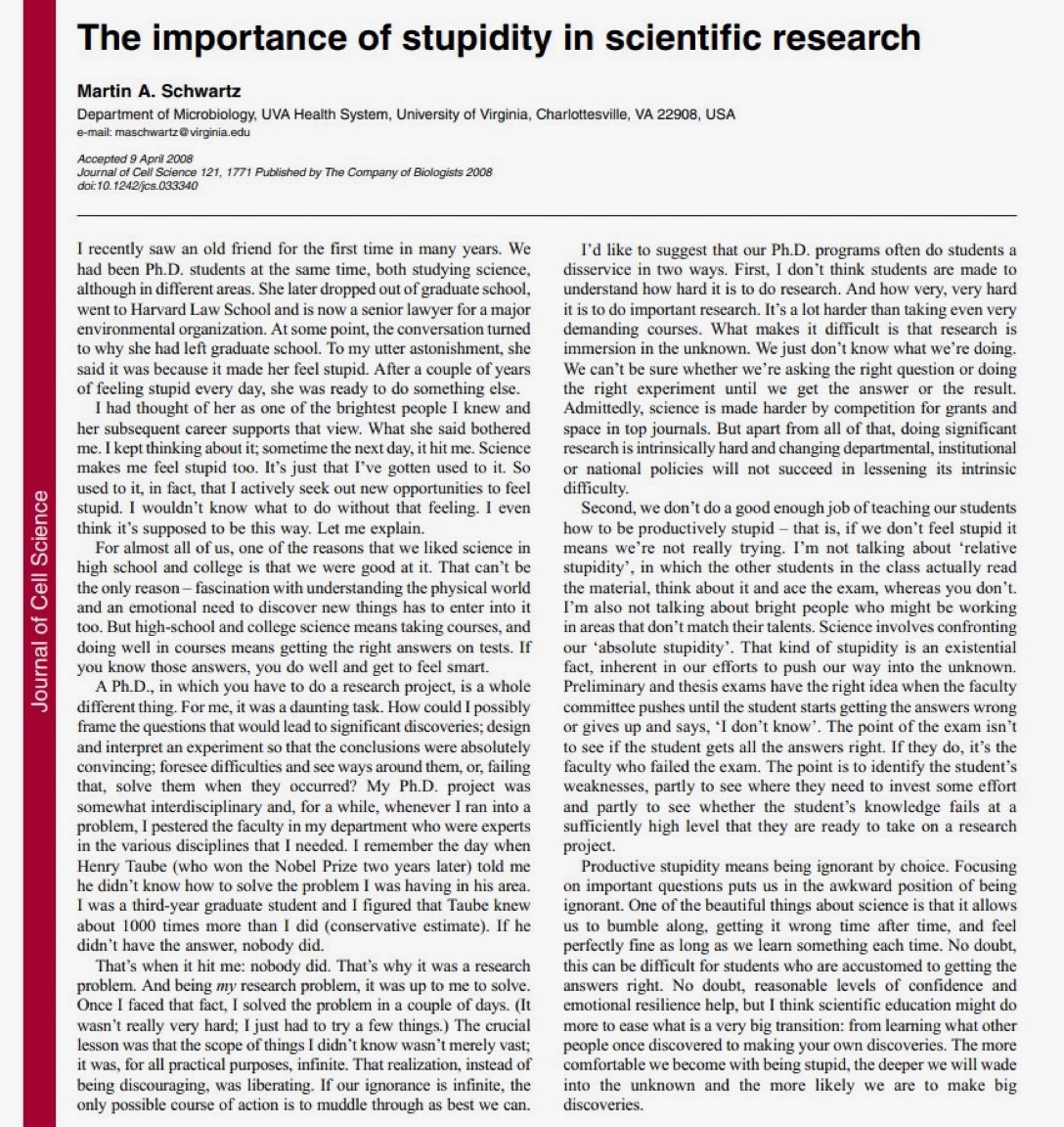
This article should be mandatory reading for every medical student, PhD candidate, researcher—and honestly, for anyone who mistakes expertise for certainty.
“The importance of stupidity in scientific research” sounds provocative, almost offensive. But Martin Schwartz is not glorifying incompetence. He is describing the real operating system of discovery.
Science is not built on knowing.
Science is built on tolerating not knowing.
That distinction matters.
Most of education rewards correctness.
School teaches us to answer.
Exams reward speed, certainty, and precision.
You feel intelligent when you get things right.
Research is the opposite.
Real research begins exactly where competence ends—at the frontier where nobody knows the answer, including the people you thought must know.
That moment is psychologically brutal.
You ask the expert.
The expert shrugs.
You assume you’re missing something.
Then you realize: no—this is the work.
You are not failing.
You are standing at the actual boundary of knowledge.
That feeling—“I must be stupid”—is often not a sign of inadequacy.
It is often the first sign that you are finally asking an important question.
Medicine struggles with this.
We train doctors to avoid uncertainty, to fear being wrong, to perform confidence.
But the best clinicians and the best scientists know how to sit inside ambiguity without collapsing into fake certainty.
This is why AI in medicine also deserves caution.
Systems trained only to reproduce established answers may become extraordinarily good at passing exams while being terrible at discovering what matters next.
Guideline intelligence is not the same as scientific intelligence.
Discovery requires productive stupidity:
the willingness to stay with the uncomfortable,
to look ignorant,
to ask naïve questions,
to be wrong repeatedly without protecting your ego.
Most people want the authority of expertise.
Very few want the humiliation required to earn it.
But progress lives there.
Not in certainty.
Not in performance.
Not in sounding smart.
In the quiet discipline of saying:
“I don’t know… yet.”
And continuing anyway.
For decades, biology textbooks have enshrined a simple rule: DNA is made by copying a template. After one enzyme unzips a DNA double helix into separate strands, another called a polymerase builds a complementary sequence, base by base, for each strand. Presto: two copies of the original DNA.
But new research into how bacteria defend themselves from viruses now shows this synthesis rule isn’t absolute.
Now, a team describes a bacterial enzyme that synthesizes DNA without a nucleic acid template, using its own structure as a guide.
Learn more on #DNADay: https://t.co/ksN5lBxRw3
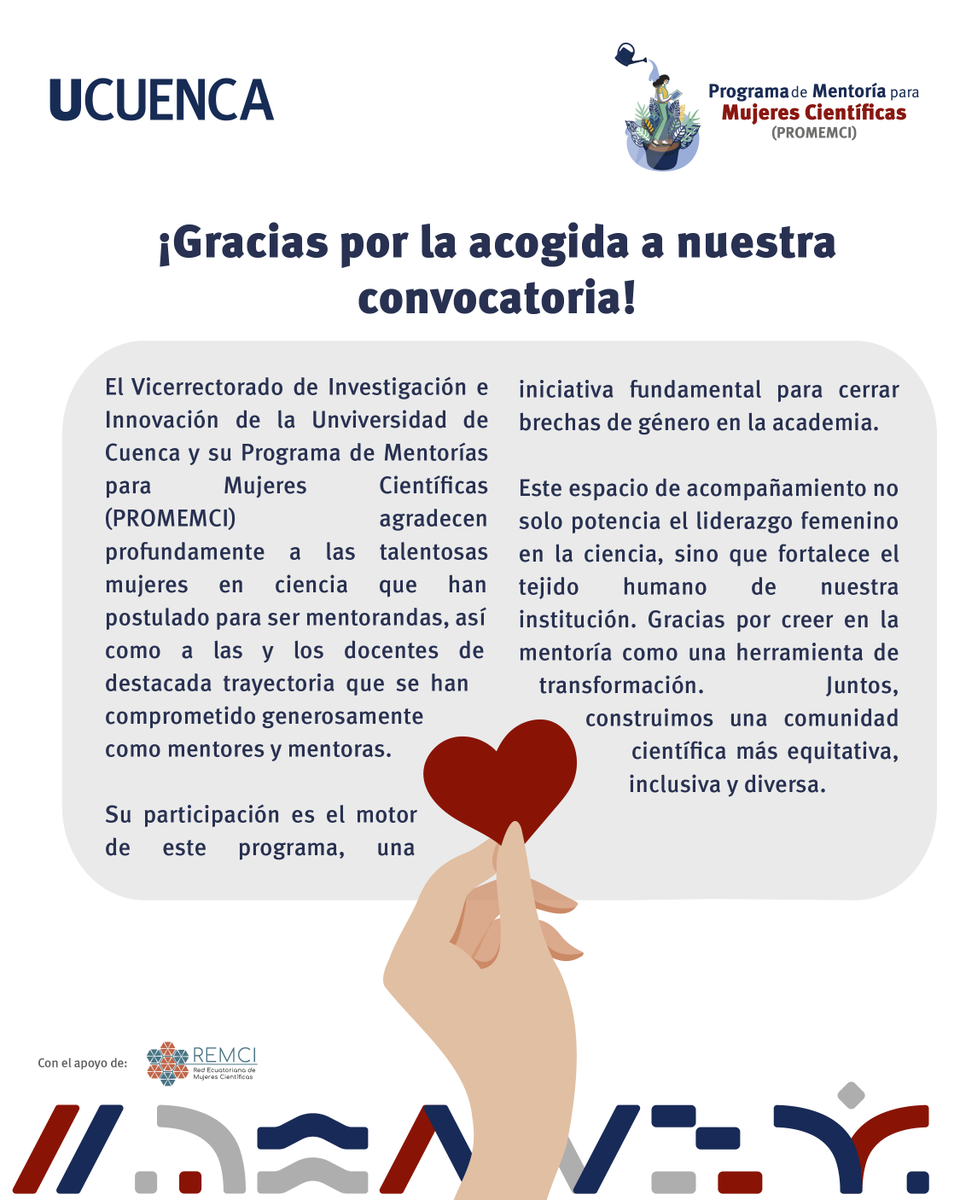
#PROMEMCI | Ha finalizado la etapa de inscripción y postulación de la V Cohorte del Programa de Mentoría para Mujeres Científicas. Agradecemos la gran acogida y el interés por fortalecer la participación de mujeres en la ciencia.
@udecuenca@CientificasEC
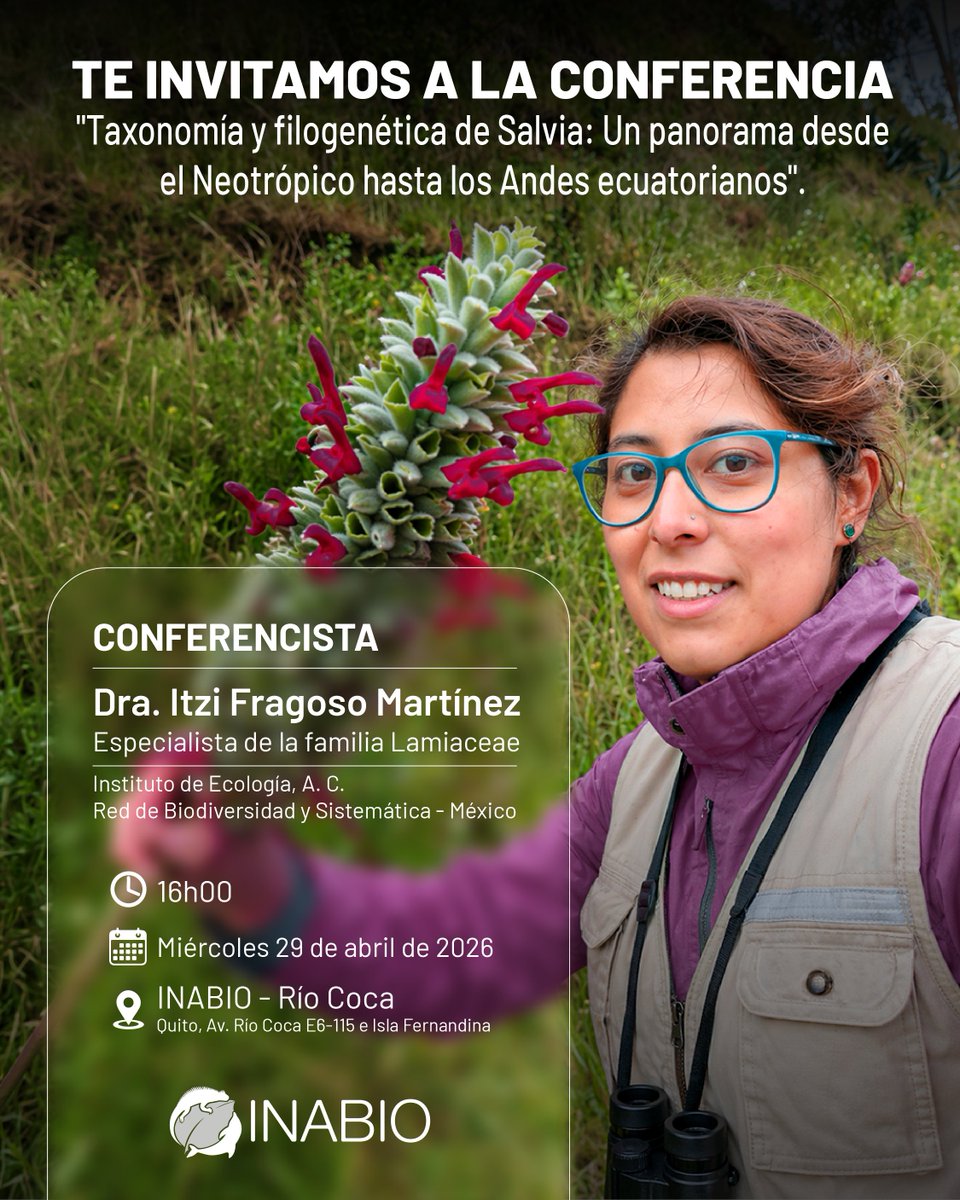
👩🔬🌎Te invitamos a participar en la conferencia: "Taxonomía y filogenética de Salvia: Un panorama desde el Neotrópico hasta los Andes ecuatorianos", con la investigadora Itzi Fragoso.
🗓️Miércoles 29 de abril
⏰16h00
📌INABIO/Sede Río Coca
En el marco del Día Internacional de las Niñas en las TIC, desde la REMCI se reafirma que cerrar la brecha digital de género en Ecuador es una prioridad estructural: garantizar el acceso equitativo a la educación tecnológica es clave para fortalecer una ciencia inclusiva, diversa
La regla 3-30-300 es el estándar moderno de referencia: 3 árboles visibles desde cada casa, 30% de cobertura de dosel arbóreo x barrio y 300 metros de distancia máxima a un parque. Trabajar @espol es un lujo! #SDG15#SDG14#SDG4 Construimos #Resiliencia@cparedesverduga@negro475
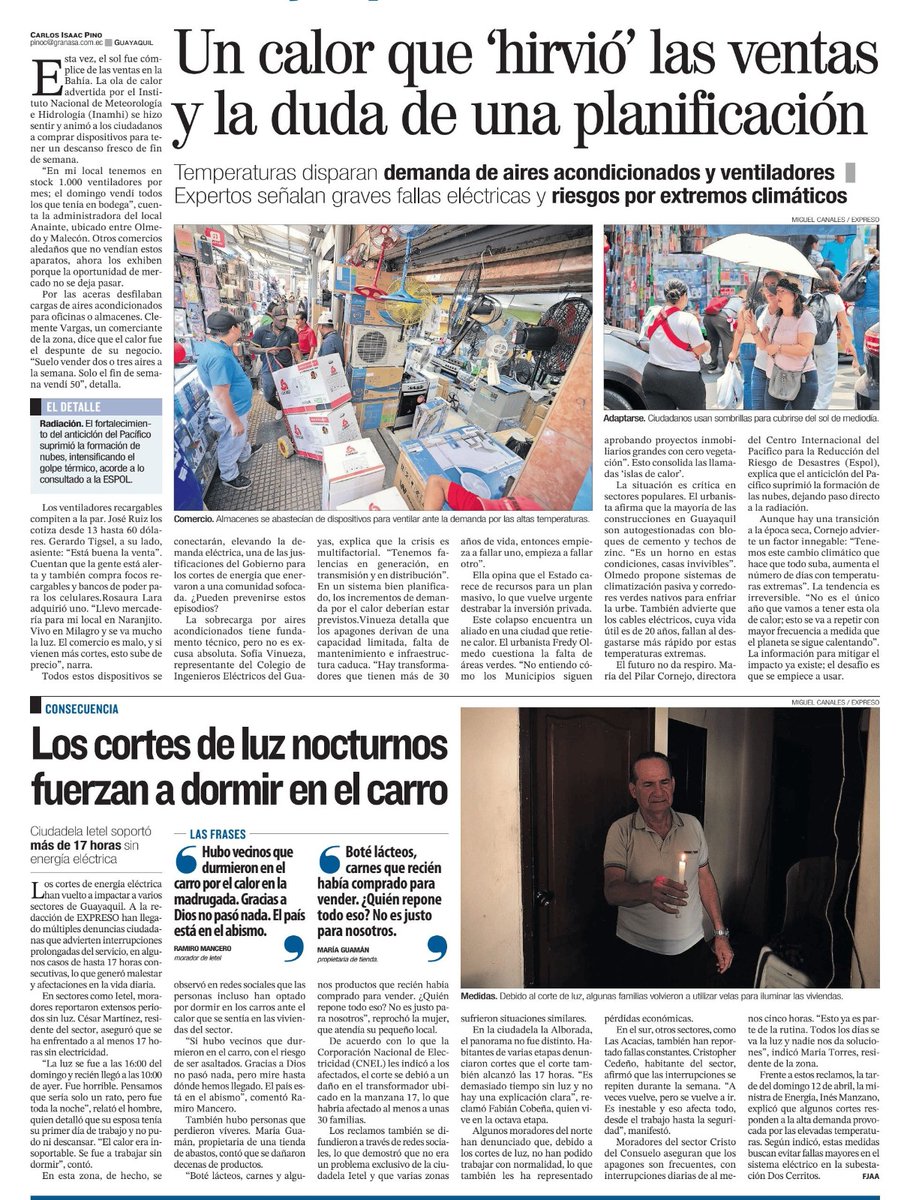
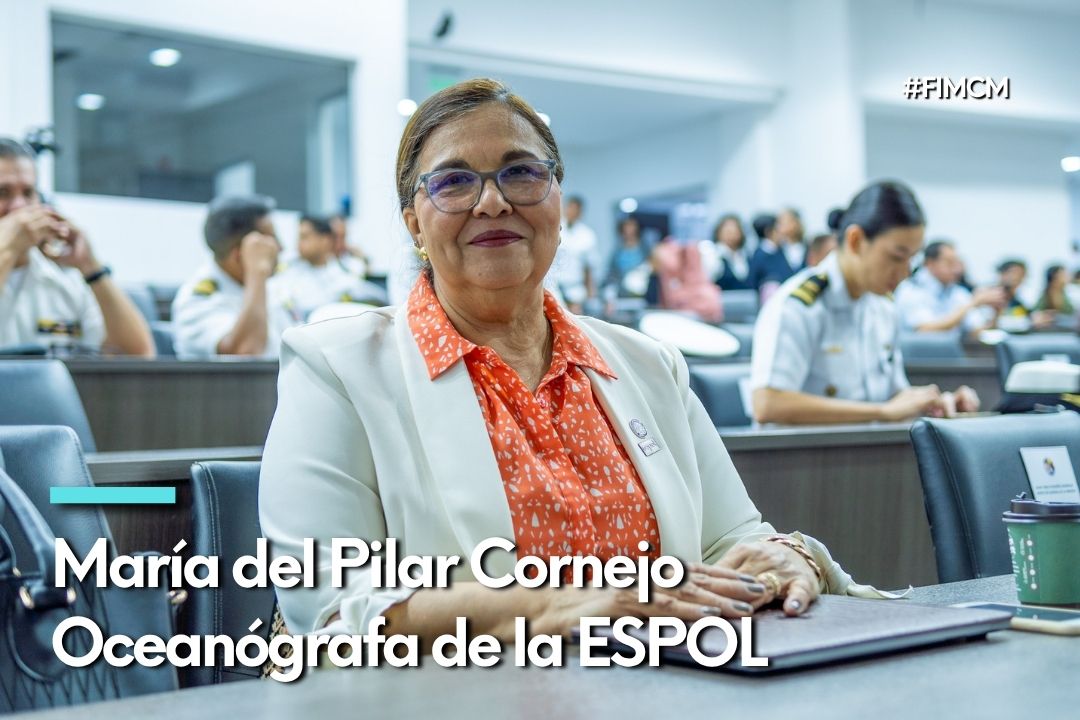
Como parte de la academia en medios, la Ph.D. María del Pilar Cornejo #FIMCM analizó en @Expresoec la ola de calor: 🌡️
"El cambio climático aumenta los días con temperaturas extremas. La tendencia es irreversible".
La info para mitigar impacto existe, el reto es usarla. ☀️
#ESPOL
En el Día del Maestro Ecuatoriano, vale la pena reconocer el impacto de lo que hacemos cada día. Desde nuestras aulas, laboratorios y espacios de trabajo, cada una de nosotras aporta a formar personas, despertar vocaciones y construir futuro.
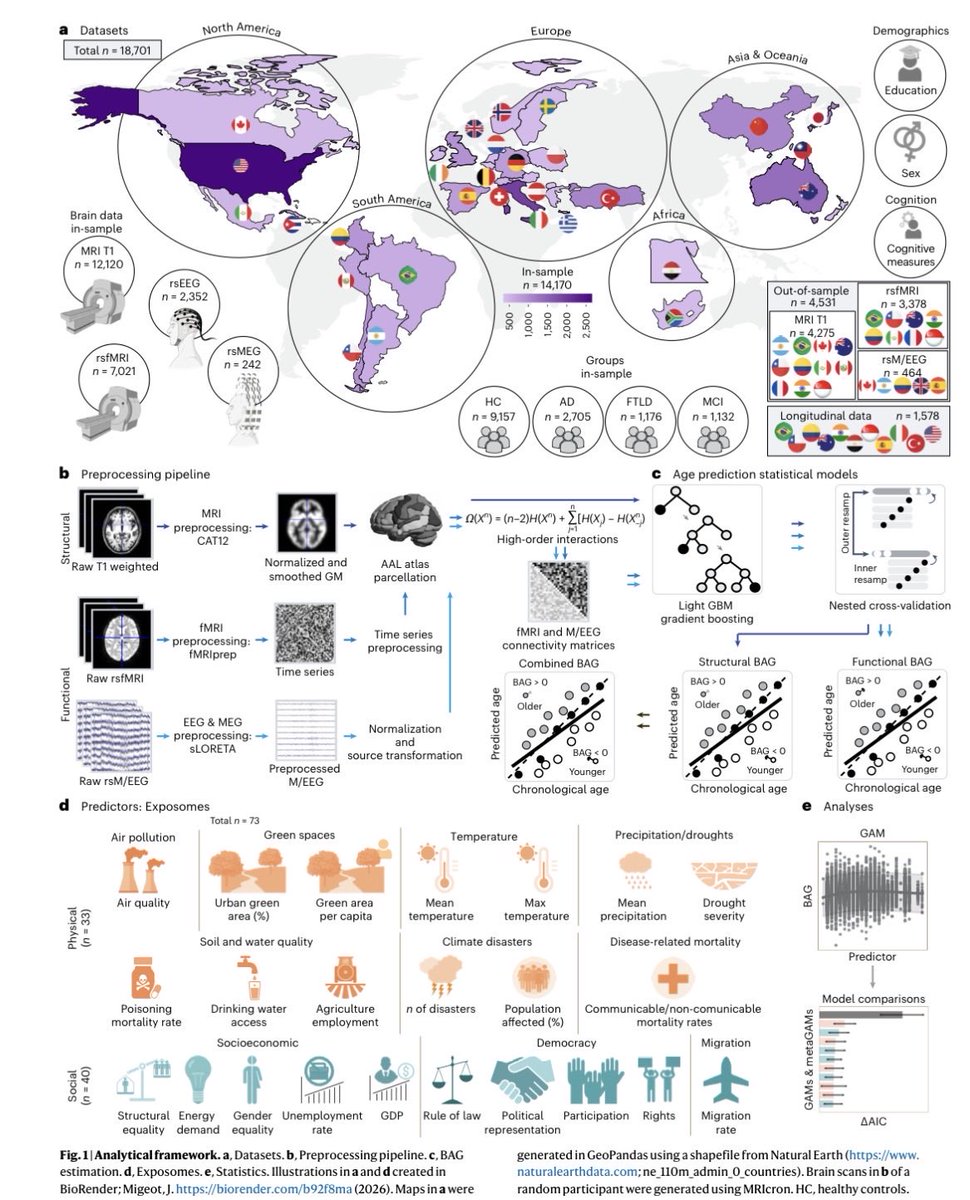
🧠 Tu cerebro envejece más rápido según DÓNDE vives y en QUÉ condiciones.
Nuevo estudio en @NatureMedicine | 18.701 personas · 34 países · 73 factores del entorno analizados con “relojes cerebrales”
🔴 La carga ambiental multiplica ×3-9 el riesgo de envejecimiento cerebral acelerado → supera al propio diagnóstico clínico
🏙️ Exposoma físico (contaminación, temperatura, espacios verdes…) → daño estructural: regiones subcorticales y cerebelosas
🤝 Exposoma social (desigualdad, democracia, PIB…) → impacto funcional: redes frontales y límbicas
El entorno no es un factor secundario.
Es un determinante mayor de la salud cerebral.
👉 https://t.co/nwSJJJdLf8
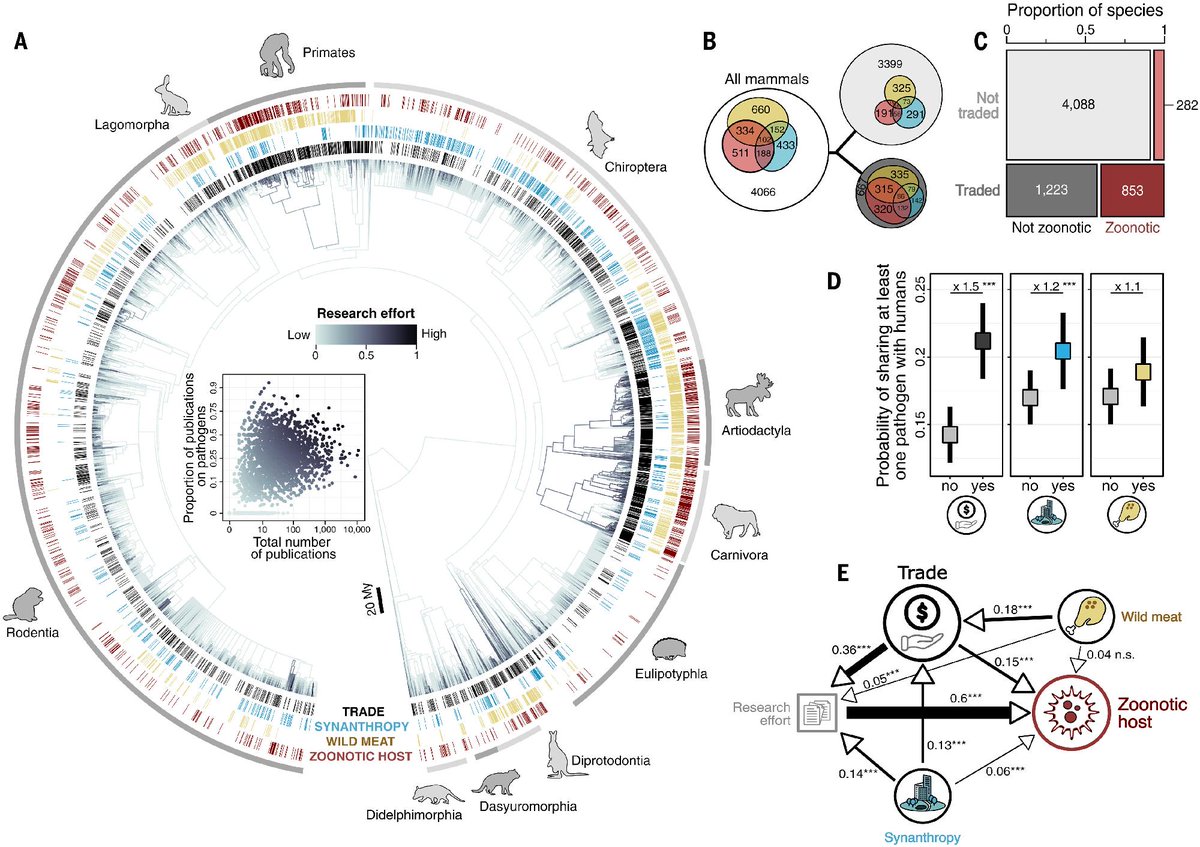
The global wildlife trade—especially in illegal and live-animal markets—is fueling the spread of diseases from animals to humans, according to a new study in Science.
The findings show that traded mammals are more than 40% more likely to harbor human-infecting pathogens, with species accumulating more shared pathogens the longer they remain in the trade.
Learn more: https://t.co/9GsERoW0We
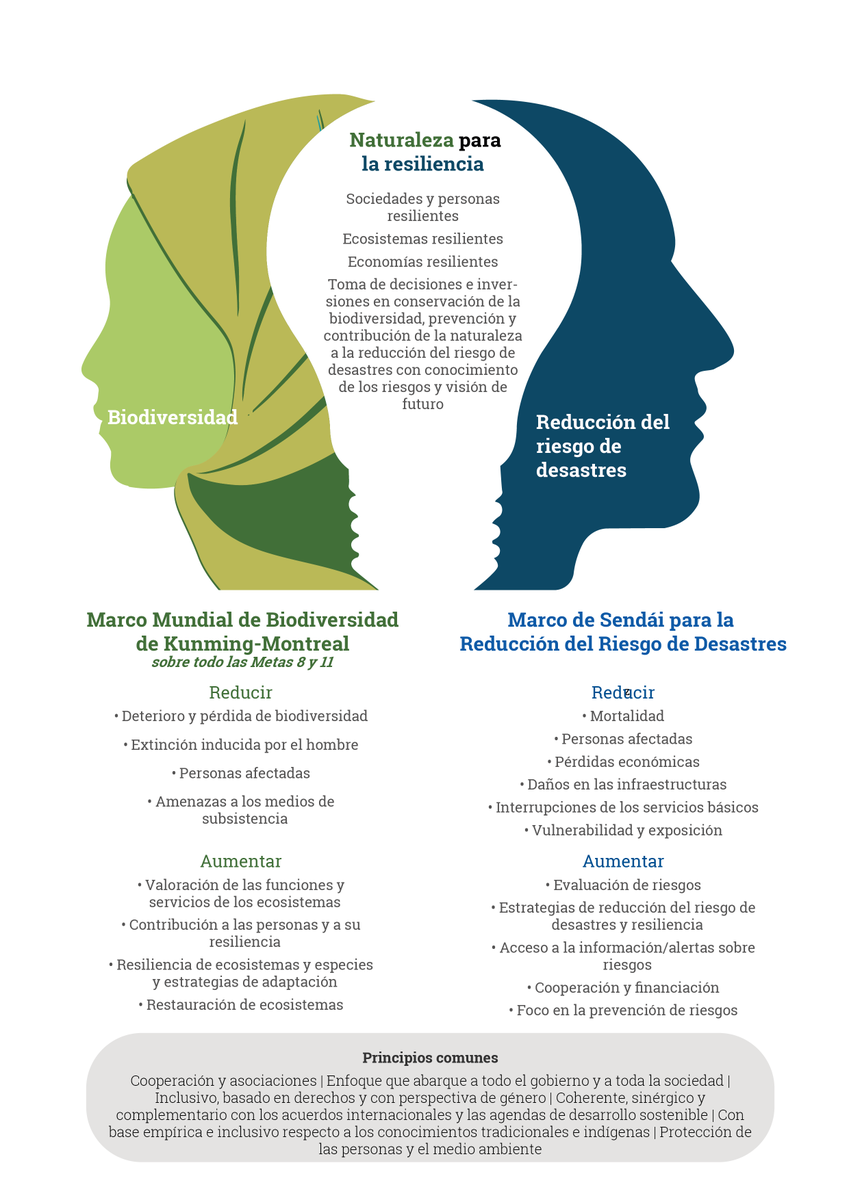
🌱 Guía de UNDRR para integrar biodiversidad, adaptación y #RRD en planes nacionales.
Alineada con el Marco de Sendai, promueve coherencia entre conservación y resiliencia.
💡 Explora ➡️ https://t.co/iju7AfPZiw
#SolucionesBasadasEnLaNaturaleza
🎓 ¡Curso GRATUITO de @FAOCampus!
🌍Planificación geoespacial en proyectos de desarrollo territorial.
Conoce la metodología Mano de la Mano, mejora tus proyectos y comunícalos con mapas.
¡Matricúlate! ➡️https://t.co/aElzWEPq2Q
#HandInHand#FAO#SIG#DesarrolloTerritorial