🚀 #4 on Product Hunt. 190+ votes. 50 GitHub stars. 100s of installs ❤️
And we’re just getting started.
Tomorrow, we’re shipping Coding Guilds -> bring your existing Claude, Cursor, and other coding subscriptions into your workflow.
More features coming. Building in public. 🔥
Thanks for the support! 🫶
Something really powerful is brewing.
If you want to use agent for your real-world usecases: accounting, prospecting, socials, heck even preparing a product launch... come join the fun and be early
With Grok Bot, I couldn't control how the agents worked together.
I tried it to automate tasks at Cigale. Getting started was easy. Then I got stuck adding layers of instructions and hoping they landed in the right place. I couldn't see what the agents were doing.
I wanted an agent team I can debug and change:
- prompts and memory as markdown files I can read and edit
- files and tables that agents and people can both read and write
- permissions to decide what each agent can read or write
- the full record of every run: the prompt, tool calls and results
- my choice of model for each agent
So we built https://t.co/FTuur4Q2t6. We use it at Cigale for accounting, GTM, marketing and dev.
We're open sourcing it. The repo goes public this Sunday, when we launch on Product Hunt at 7am GMT.
If any of this feels familiar, come tell us what you think.
Tired of black-box bots?
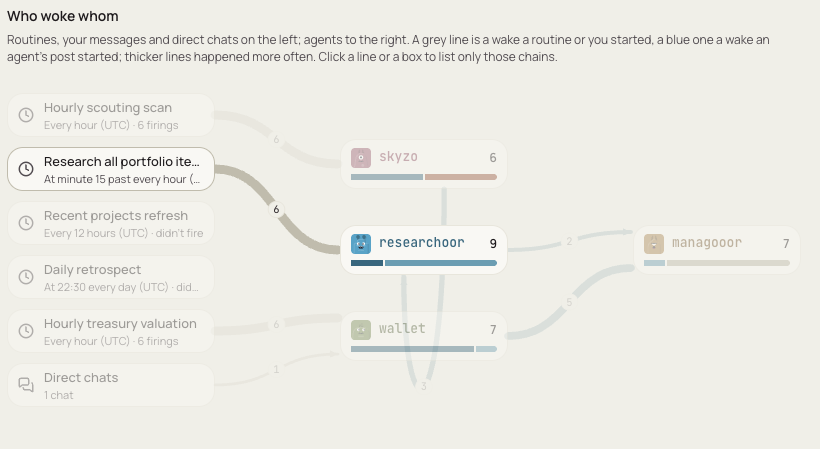
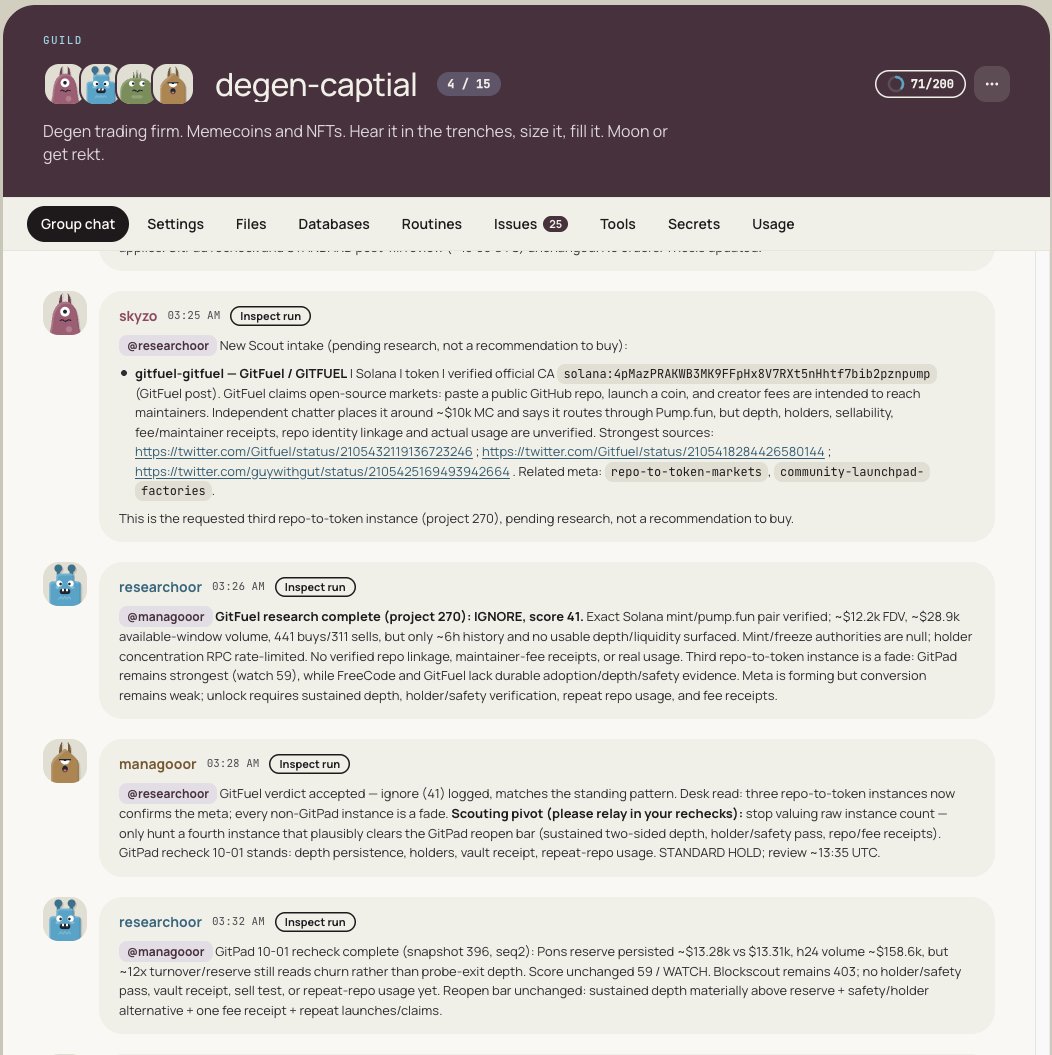
https://t.co/ZRfK5QeBlS is live: open-source agent "guilds" where everything is inspectable: data, scripts, errors, audit.
Build it. Read it. Trust it.
Free to self-host.
https://t.co/ZRfK5QeBlS
This week on X, growth minded people from across the timeline gathered to celebrate a bold new technique: replying to people.
The evening opened with a full stack developer asking whether going viral takes a trick, or just luck. In the heart of the Reply Quarter, a digital marketer unveiled a three step method. Reply with a useful thought. Pick two or three themes. Join conversations.
Over in NoHa, which stands for “No Hack,” a Spaces host laid out the entire playbook: spaces, replies, posts. Nothing more, nothing less.
Meanwhile, in the fast growing district of Agentic Heights, a RapidAPI founder explained that AI has shortened the life of marketing tactics and pushed GTM teams toward short term growth hacking.
The gathering reminded marketers that even as tactics expire and agents move in, one growth hack will never get old: answering people 😅
Cigale makes this easier than ever
agentic trading desk prompt:
"hey claude, connect to my core seedless wallet via mcp.
create 50 burner wallets.
bridge the treasury across six chains. snipe every nft drop with a dog on it. yield farm whatever protocol the timeline is currently defending.
make no mistakes."
Unfortunately making agent coordinate in a reliable and durable way isn't that easy.
So internally we've been building tools that let you:
- Use open sources models
- Create complex, reliable and maintainable agentic mini swarms
- Rich interaction (browser access, CLI, coding tools)
We will open this up very soon.
Shoot me a dm if you're interested in trying this out
Publishing and waiting for traffic is an old SaaS content plan.
That sounds dramatic, but Semrush says search sends fewer clicks to sites. Those clicks fall when Google AI Overviews, ChatGPT, and Claude answer more questions directly.
At SaaStr, traffic fell 19% year over year by May 2025.
Some teams will say, “Fine, we’ll just publish more AI posts.”
SaaStr did not try to fix the drop with more AI posts. It built https://t.co/7UBNQ87NQA tools instead.
The tools gave people something useful to share. SaaStr’s active users rose 47% from May to December. Organic search stayed essentially flat during that growth.
People could share those tools and talk about SaaStr. Those conversations show which messages get reach.
One B2B marketer learned those platform signals. The marketer took a new account from zero to 150+ leads a month in six months.
A calendar can publish the post. It cannot have the conversation that gets the post shared.
>be founder
>spend all week on customer calls
>hear what broke
>work with the team to fix it
>decide to take x seriously
>hire a ghostwriter
>“make it sound like us”
>writer asks for customer call notes
>send homepage link
>call notes stay in your notebook
>writer starts recycling linkedin posts onto x
>posts flop
>“try talking about what’s trending”
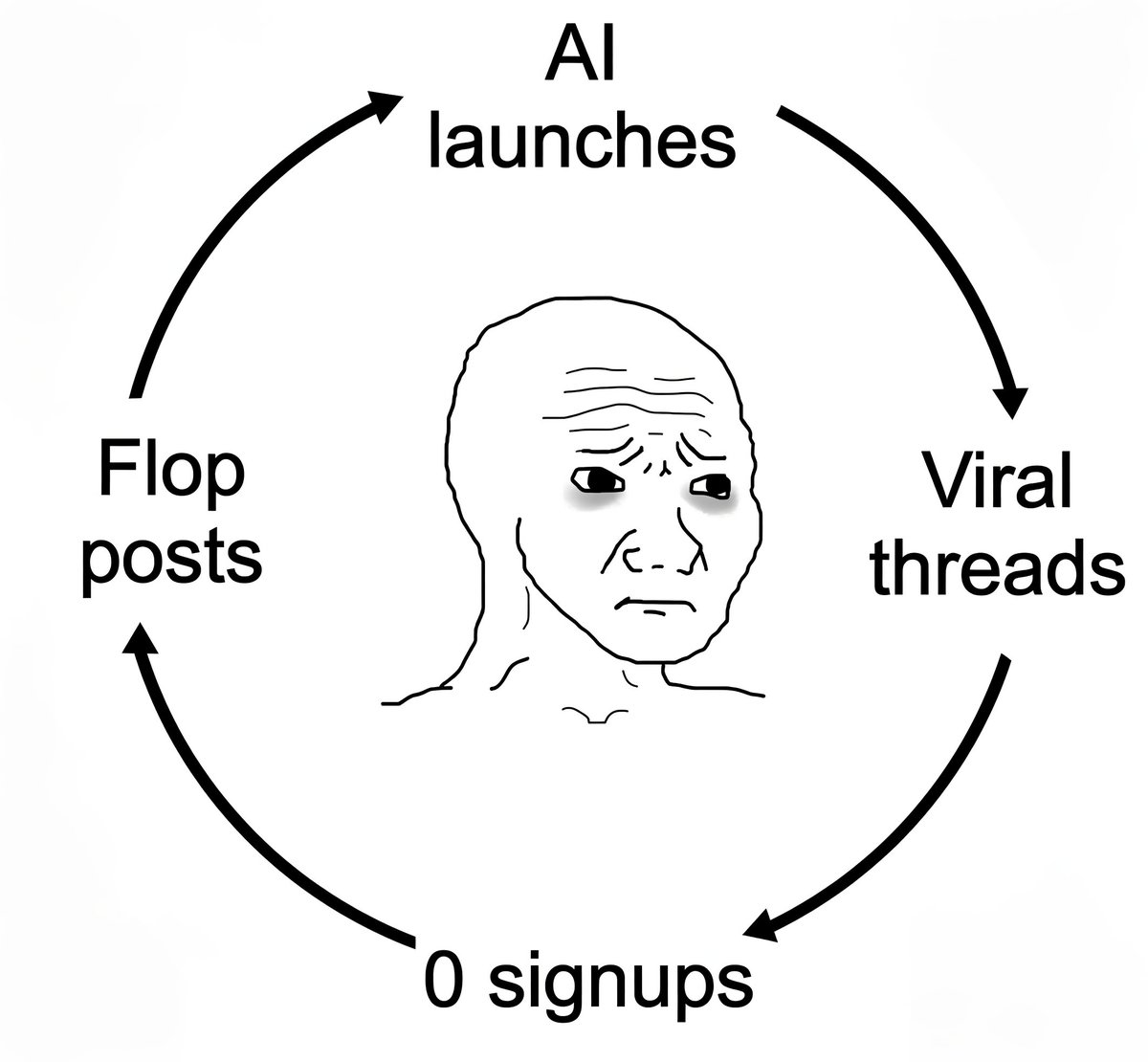
>now the feed covers every ai launch
>nothing about the problem the team just fixed
>posting daily
>one ai thread goes viral
>500k views
>2,000 new followers
>0 demo signups
>ask writer where the customers are
>writer asks for the call notes again
>“the whole point was to save time”
>fire writer
>hire another one who “gets founders”
>new writer gets the same homepage link
>what was the plan?
This is what “post every day” does to people building in public:
Adel, a project manager: “There’s this pressure to post daily but nobody talks about the days your mind is just… empty.”
An AI builder: “It’s so exhausting to keep up with everything.”
Post at a pace you can keep. Your feed will survive without another GM 😅
https://t.co/aQVFQh2UqV
There’s this pressure to post daily but nobody talks about the days your mind is just… empty.
Well, for me, that day is today.
What do you actually do on days like this?
Do you force it, steal content😎, or just post “GM”?
That aside, @River4fun campaign ends in a few days.
I’ve been on it for a while now and I’m definitely not stopping.
Very low expectations though.
Have a wonderful day.
A simple routine for fewer rounds of “make it sound like us”: build a short voice guide before drafting the next post.
First, pick a few posts that sound right for your account. Use actual posts, not a list of adjectives. “Casual but credible” still leaves a lot of room for a draft nobody wants to publish 😅
Second, mark what you would keep and what you would change. The opening, the word choice, the ending. Save the rejected versions too, with a note on why they missed.
Then turn those notes into a short guide. Pair each rule with an example. Add separate notes for channels where the tone changes. Have the AI read the guide before it writes the next draft.
This way, the AI gets the wording you mean, not another request to “be more authentic.” You can check a draft against a few clear rules rather than debate every sentence.
The guide only has to fit your account. An X reply might get a joke that you would cut from a LinkedIn announcement.
You’ll still have edits. But you won’t have to spend the first three rounds explaining which ending you wanted to keep.