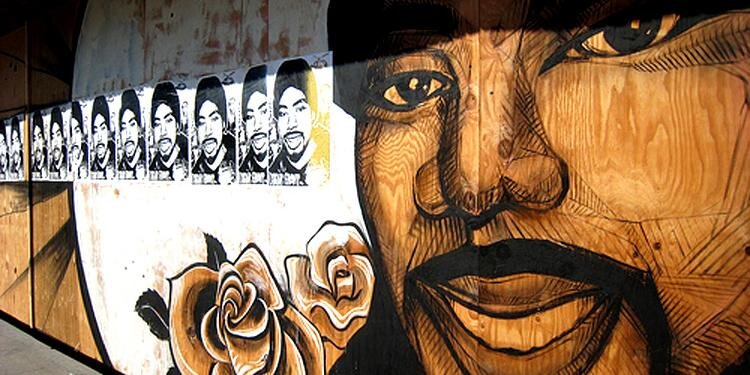
Today’s the 30th anniversary of RATM’S um, ‘memorable’ performance on SNL. There was a fight onstage between our crew and SNL stage hands moments before our performance, wrestling over some upside down American flags which adorned our amps. Timmy C then attacked host/billionarie/presidential candidate Steve Forbes’ family in the dressing room with a wadded up flag. Secret Service flooded the hallways. SNL cut (censored?) our second song and kicked us out onto the sidewalk.
Evil Empire entered the Billboard Album Chart at #1.
If this is an honest question, I’d say: Americans are rooting against America because we facilitated a genocide and followed it with a surprise attack on a girls elementary school followed by attacks on universities, medical centers, more schools, a world famous pharmaceutical research center, a volley ball team, an unfinished bridge we claimed was transporting weapons and then a nuclear power plant. We are now promising endless attacks on civilian infrastructure.
We are hunting and targeting anyone who might be involved in ceasefire negotiations.
Most people do not pay enough attention to have absorbed all the propaganda about the U.S. and Iran. So people coming to this fresh see us for what we are: absolute monsters. And monsters must be stopped. That’s why people are rooting against us and for civilization to prevail.
In the #IranWar, one country has *at least* 1500 civilian dead; another country has 1020 civilian dead; a third country has 22 civilian dead. Guess where the @nytimes is disproportionately focusing their coverage of civilian casualties
#ZionistTerroristIsrael
@elonmusk Dude, look at this from an incentives perspective. It’s already a federal felony to vote in a federal election if you’re ineligible to vote. Why the hell would someone deliberately risk a felony charge… in order to fucking *vote*???
A message to Washington?
In a tightly structured 12-minute address, Ayatollah Imam Sayyed Mojtaba Khamenei moved from familiar rhetoric into something far more consequential. The opening half followed the expected script; revisiting decades of U.S. warmongering rhetoric: sanctions, assassinations, regional conflicts.
But midway through, the tone shifted from retrospective to strategic.
Sayyed Khamenei outlined three concrete demands, each with a defined timeline: a rapid U.S. military withdrawal from the Middle East, a full rollback of sanctions within 60 days, and long-term financial compensation for economic damages.
Then came the ultimatum. Fail to comply, and Iran escalates, economically, militarily, and potentially nuclearly. Not hypothetically, but operationally: closing the Strait of Hormuz, formalizing defense ties with Russia and China, and moving from ambiguity to declared nuclear deterrence.
The timing of external reactions was just as telling. Within hours, both Beijing and Moscow issued statements aligning, carefully but unmistakably, with Tehran's framing. This definitely looked coordinated.
The broader context matters. Sayyed Mojtaba Khamenei represents a different leadership style from his martyred predecessor leader. Where martyr Sayyed Ali Khamenei operated through long-term balancing and controlled escalation, Sayyed Mojtaba appears positioned to deliver faster, more decisive outcomes.
Iran's internal reports are clear, the Islamic Revolution Guard Corps is in no way, shape or form interested in incrementalism. They are pushing for structural change: removing U.S. influence from the region, restoring Iran's military standing, and forcing a re-negotiation of global power dynamics.
And for the first time in decades, Iran practically has the leverage to do this.
Rising oil prices, regional instability, growing alignment with China and Russia, and vulnerabilities in global trade routes have shifted the strategic landscape.
So this was not just a speech. It was a test. A test of whether the United States is willing, or even able, to operate under a new set of constraints.
What happens next will likely define not just the trajectory of this conflict, but the broader balance of power in the Middle East for decades to come.
Today I$rael tried to kill me in a targeted airstrike in southern Lebanon as I was reporting on was the targeting of bridges and the forced displacement of 1 million people, an ethnic cleansing operation on a larger scale than the Nakba
I have absolutely no doubt that this was deliberate. Despite claims there were no warnings ahead of the strike and no notifications sent to the Lebanese Army who allowed us to film
As we have seen in Gaza they want to silence journalists who document and report their war crimes
It is the western powers who provide political and military support for I$rael, arming it to the teeth to carry out genocide in Gaza and ethnic cleansing here in Lebanon. They are not simply complicit, but active participants and should be held accountable for their actions.
But if I$rael thinks today’s strike will silence us and keep us out of the field they are very, very mistaken
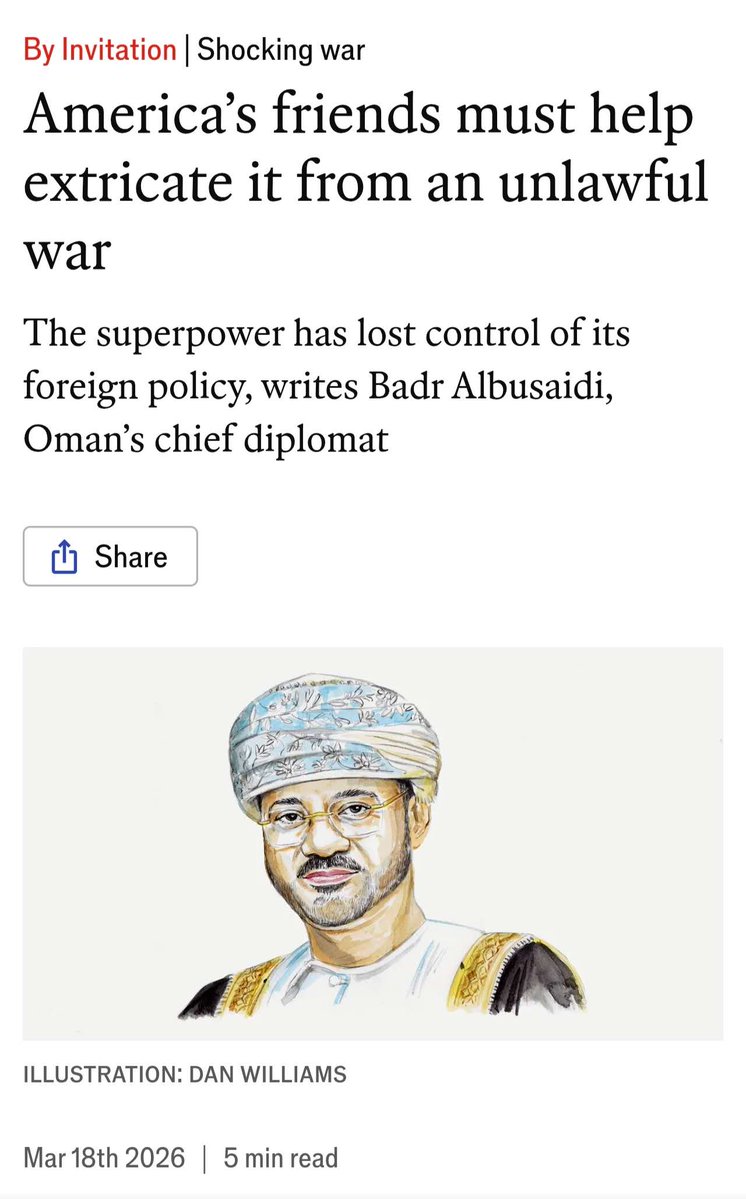
This is probably the most important article of the month: an op-ed by Oman's Foreign Minister, who mediated the talks between the U.S. and Iran, in which he writes that the U.S. "has lost control of its foreign policy" to Israel.
He repeats that a deal was possible as an outcome of the talks (something confirmed by the UK's National Security Advisor, who also attended: https://t.co/XkfSpkMjCf) and that the military strike by the U.S. and Israel was "a shock."
Interestingly, given he is one of Iran's neighbors and given that Oman has been struck multiple times by Iran since the war began (https://t.co/IXNdwD6f3j), he writes that "Iran’s retaliation against what it claims are American targets on the territory of its neighbours was an inevitable result" of the U.S.-Israeli attack. He describes it as "probably the only rational option available to the Iranian leadership."
He says the war "endangers" the region's entire "economic model in which global sport, tourism, aviation and technology were to play an important role." He adds that "if this had not been anticipated by the architects of this war, that was surely a grave miscalculation."
But, he adds, the "greatest miscalculation" of all for the U.S. "was allowing itself to be drawn into this war in the first place."
In his view this was the doing of "Israel’s leadership" who "persuaded America that Iran had been so weakened by sanctions, internal divisions and the American-Israeli bombings of its nuclear sites last June, that an unconditional surrender would swiftly follow the initial assault and the assassination of the supreme leader."
Obviously, this proved completely wrong, and the U.S. is now in a quagmire. He says that, given this, "America’s friends have a responsibility to tell the truth," which is that "there are two parties to this war who have nothing to gain from it," namely "Iran and America."
He says that all of the U.S. interests in the region (end to nuclear proliferation, secure energy supply chains, investment opportunities) are "best achieved with Iran at peace."
As he writes, "this is an uncomfortable truth to tell, because it involves indicating the extent to which America has lost control of its own foreign policy. But it must be told."
He then proposes a couple of paths to get back to the negotiating table, although he recognizes how difficult it would be for Iran "to return to dialogue with an administration that twice switched abruptly from talks to bombing and assassination."
That's perhaps the most profound damage Trump did during this entire episode: the complete discrediting of diplomacy. If Iran was taught anything, it is: don't negotiate with the U.S., it's a trap that will literally kill you.
The great irony of the man who sold himself as a dealmaker is that he taught the world one thing: don't make deals with my country.
Link to the article: https://t.co/FZxtqV3RC4