Masjid al-Nabawi, Banu Najjar & the Grave of Abdullah, the father of the Prophet Sallallahu Alayhi Wasallam
Everywhere where we read Salah today in Masjid al-Nabawi was land that was occupied by a family known as the Banu Najjar. They were a part of the Khazraj tribe. What's interesting is that the Prophet Sallallahu Alayhi Wasallam settled in this area of Madinah Munawwarah because the Banu Najjar were his family. How? His grandfather (Abdul Muttalib)'s mother - and wife of Hashim - was called Salma bint Amr al-Najjariyyah.
Hence, due to Hashim having married a family from Yathrib, the Prophet Sallallahu Alayhi Wasallam was connected to the Banu Najjar from Yathrib. It is why when Abdullah - his father - fell ill in Madinah Munawwarah on a journey back from Sham, he passed away and was buried in the graveyard of Banu Najjar which was in the area shown in the video.
Both Aws and Khazraj are the two tribes of the Ansaar who were staunch enemies of each other prior to the arrival of the Prophet Sallallahu Alayhi Wasallam. Interestingly, Aws is actually a person and Khazraj is also the name of a person, both were brothers! Both were sons of Harithah Ibn Tha'labah, and Harithah's mother's name was Qaylah, accordingly Aws and Khazraj are, at times, referred to as Banu Qaylah.
ZOOM in to the diagram below:
In 2006 a Stanford PhD student published a mathematics textbook that nobody outside academia read.
Google used it to build PageRank. Renaissance Technologies used it to manage $130 billion. Every jet engine flying today solves the same type of problem 50 times per second.
His name is Stephen Boyd. He teaches EE364A at Stanford. His students start at $400K at Citadel, $350K at Two Sigma, and $300K at Google DeepMind. He has been cited over 140,000 times. This is lecture 1.
He opens with one claim.
Everything is an optimization problem.
Choose variables. Define an objective - what you want to minimize or maximize. Add constraints - things that must be satisfied or the answer is completely unacceptable, no matter how close. Find the point with the best objective value that satisfies every constraint.
That is all of engineering, all of statistics, and all of finance in four sentences.
Then portfolio optimization. You have 5,000 assets. You need to choose how much of each to hold. Constraints: budget, maximum concentration per name, minimum expected return. Objective: minimize risk. Boyd says he is not aware of a single quantitative hedge fund that does not solve this exact problem with convex optimization. Not one.
Then the counterintuitive thing that the entire course is built around.
Two problems can look nearly identical. One is easy. One is impossible. It is not obvious which is which until you know what he is about to teach you.
Example: do not hold more than half your portfolio in any collection of 100 names. Convex. Solvable instantly. Do not hold more than 100 names total. Not convex. Genuinely hard. Same portfolio. Same constraint in spirit. Completely different mathematics.
Then the job offer nobody gives you but everybody should.
He tells the room that when they go to an internship, nobody will say this might be a convex problem. They will hand you 400 pages of domain complexity and tell you it is impossible. Your job is to come back the next day and say it is done. One of his students did exactly this. Finished in a week. Was the best intern the firm had seen.
A quant I know rewatched this before their first week at a systematic macro fund. Said it was the first time optimization felt like a skill rather than a topic.
Stanford EE364A. Free on YouTube. The textbook is free online.
bookmark this and watch later - after this lecture every hard problem someone hands you will feel like a question about whether it curves upward or downward
PhD Students – How to write a systematic literature review in 1 day?
A systematic literature review takes 4-6 months.
You can reduce this time.
🎯 Here is how you can write it in 1 hour.
1️⃣ Go to https://t.co/gyKStOIA12
2️⃣ Select Gatsbi reviewer from the drop-down menu
3️⃣ Enter the topic of your literature review
4️⃣ Gatsbi will generate an outline for review
5️⃣ If you are OK with it, click on write manuscript.
6️⃣ Gatsbi will write the literature review for you.
👉 The literature review contains the following parts
✓ Title
✓ Abstract
✓ Introduction
✓ Methodology
✓ Results
✓ Discussion
✓ Conclusion
✓ References
👉 This polished paper also contains
➝ Diagrams
➝ Tables
➝ Equations
➝ Graphs
Once the draft is ready, you can humanize the text.
Once humanized, you can download it in the following formats.
↳ MS Word
↳ Latex
↳ Markdown
After downloading, you can make any changes you want.
In addition to Gatsbi Reviewer, you can also use:
→ Gatsbi Innovator: Generate ideas before writing
→ Gatsbi Writer: Write research papers
🎗️Try Gatsbi today for free: https://t.co/gyKStOIA12
> born in Finland
> studied at University of Helsinki
> created the Linux kernel at 21
> built Git because no existing tool was good enough
> accidentally became the backbone of servers, Android, cloud, supercomputers
> never chased fame, money, titles or hype
> stayed private, consistent, and brutally honest for decades
> still reviews code, still improves Linux, still avoids drama
Is Linus Torvalds the most underappreciated legend of the tech industry?
Over a decade ago, a physicist in Chennai explained why nothing is ever certain until it happens, and it is the exact rule every prediction market runs on today.
NPTEL filmed it. it has been free ever since. 477,000 people have watched it, almost none of them trade.
her point: a quantum system is not one outcome, it is every outcome at once, each carrying a probability, until something forces it to pick. that is a live market. every price is a cloud of maybes waiting to collapse into yes or no.
no trading desk, no terminal. a woman at a green board in Chennai teaching the deepest idea we have about uncertainty.
skip to the board in the first ten minutes. she takes a particle sitting in two states at once and shows why you can only ever know the odds, never the answer, in notation a beginner can follow.
no slides. no app. one green board and a piece of chalk.
a quant i know watched it twice and said it explained his own book better than any finance lecture ever did.
I put the practical aspects of this lecture into practice and developed a strategy that generates income, the results surprised me.
25 days.
$100 → $22,300.
73% win rate.
Sharpe 2.45.
I'm giving away the full configuration of my bot for free. 24 hours only.
Here's how:
>Comment "SEND"
>Like and Follow me
I'll send the complete setup in your DMs.
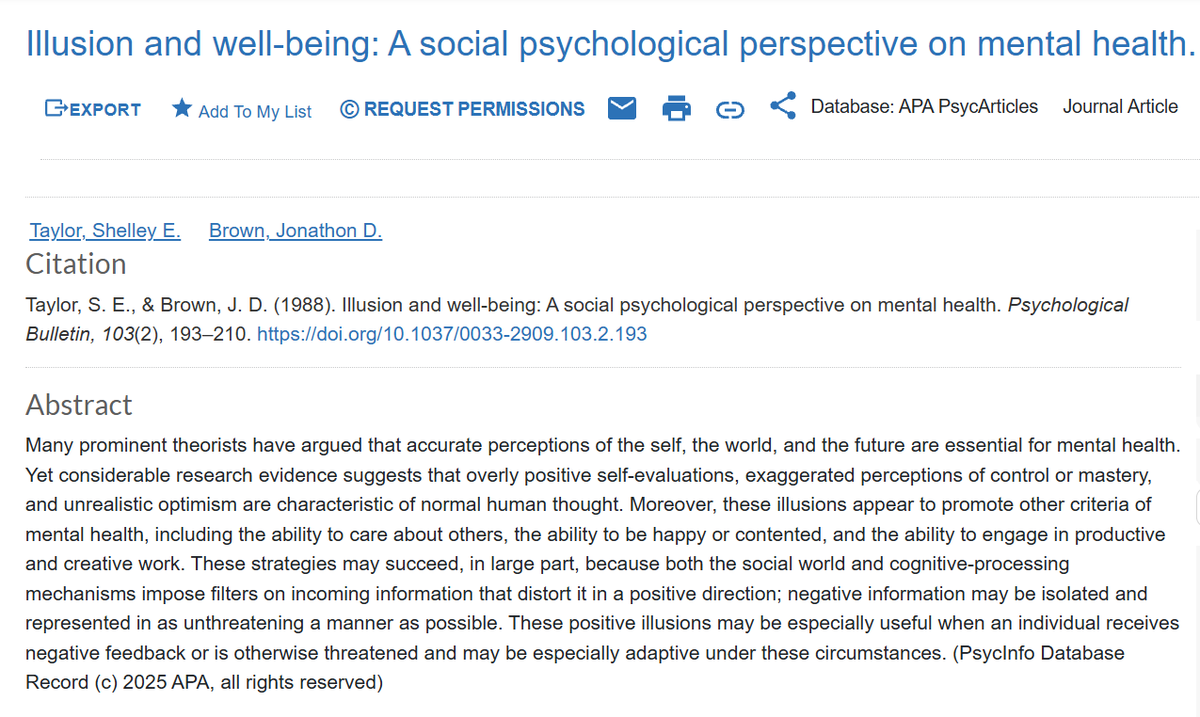
Just finished Jonathan St B. T. Evans' Thinking and Reasoning. Definitely the best I've read from Oxford's Very Short Introduction series. Highly recommend it for anyone interested in philosophy, psychology, and cognitive science.
Anthropic pays $750,000+ a year for engineers who can build LLM architectures from scratch. Stanford taught the entire thing in 1 hour lecture & released it for free.
Bookmark & watch this today before someone takes it down ...
this is insane. i genuinely don't understand why ambitious people aren't shown this lecture before their careers start consuming their entire lives.
clayton christensen spent his career studying why successful companies collapse. in his final class, he asked students to apply the theory to themselves: if you keep allocating your time the same way, what life are you actually building?
he had already seen the answer in his own harvard mba class. everyone looked successful at the fifth reunion; by the 10th, 15th, 20th, and 25th, many were unhappy, divorced, and living far from their children.
work shows you the score immediately. close a sale, ship a product, finish a presentation, earn a promotion, get paid.
an hour with your child may produce nothing you can measure today; it may take 20 years to understand what that hour built. so the next free hour goes back to work, one rational decision at a time.
this is how people build lives they never planned: through hundreds of right decisions that lead in the wrong direction, day after day.
money, titles, and headcount are easy to count. christensen believed a life should be measured by the people who became better because you were there.
he died in 2020.
one question remains: if someone saw only where your time, energy, and attention went this year, what would they think actually mattered to you?
the full 19-minute lecture is in the video below.
Zamzam Water Is Not Safe to Drink... A Claim That Science Failed to Support
In 1971, an Egyptian physician reportedly sent a letter to members of the European press claiming that Zamzam water was unfit for human consumption. He argued that because the area around the Sacred Mosque lies at a relatively low elevation, wastewater could seep into the famous well through underground drainage channels.
As the story spread through newspapers, many Muslims became deeply concerned.
When the report reached King Faisal of Saudi Arabia, He ordered an immediate scientific investigation. Determined to establish the facts rather than rely on speculation, He instructed the Ministry of Agriculture and Water Resources to collect samples of Zamzam water and have them analyzed by reputable laboratories in Europe.
The task was entrusted to the Jeddah Power and Desalination Authority, where engineer Mohiuddin Ahmed, a specialist in water treatment and desalination, was selected to lead the investigation. According to His own account, He had never even seen the Zamzam Well before undertaking this mission.
Upon arriving in Makkah, He was escorted to the well. To His surprise, the centuries-old source that had served millions of pilgrims was relatively small approximately 18 feet long and 14 feet wide. After measuring the well, He asked an assistant to enter the water to estimate its depth. Standing upright, the water reached the man's shoulders, and He was about 5 feet 8 inches tall.
The investigation then turned to the source of the water itself. The assistant carefully searched the bottom of the well, walking from one side to the other without submerging His head, looking for visible pipes, openings or channels. Nothing could be found.
Mohiuddin Ahmed then devised another method. The well's pump was used to remove water rapidly in the hope that a falling water level would expose the entry point. At first, nothing unusual appeared. Undeterred, He repeated the process while asking the assistant to remain still and observe the ground beneath Him.
Moments later, the assistant excitedly signaled that He had discovered something remarkable. The sand beneath His feet appeared to be moving as fresh water continuously emerged from below. As He explored different areas of the well, He found the same phenomenon everywhere. Water was naturally filtering upward through the underground layers from all directions at a balanced rate, explaining why the water level remained consistently stable.
After completing His observations, Mohiuddin Ahmed collected water samples for laboratory analysis in Europe. Before leaving Makkah, He also inquired about nearby wells and was informed that many had dried up over time, while Zamzam continued to flow uninterrupted.
When the laboratory reports were returned, they concluded that Zamzam water met drinking water standards. The analysis also found naturally occurring minerals, including higher levels of calcium and magnesium than are commonly found in ordinary water, along with fluoride, which is known for its role in supporting oral health and helping reduce bacterial growth.
According to this account, these findings contradicted the earlier allegations and the Saudi authorities publicly rejected the claim through the European press.
the lorentz force law is one of the cleanest ways to understand how charged particles move through electric and magnetic fields. an electric field pushes a charge along the direction of the field. a magnetic field does something stranger. it does not push along the direction of motion. it pushes sideways, perpendicular to both the particle’s velocity and the magnetic field. that one detail explains why charged particles curve, spiral, orbit, and get trapped inside electromagnetic systems.
this is why the law shows up everywhere. motors, particle accelerators, plasma physics, mass spectrometers, antennas, fusion devices, cathode ray tubes, and even the earth’s magnetosphere all depend on this interaction. the electric part changes the particle’s energy. the magnetic part changes the direction of motion. together, they describe how charges respond to the electromagnetic structure around them.
the deeper idea is that fields are not passive backgrounds. they shape motion. a charged particle does not just move through empty space. it moves through invisible geometry created by electric and magnetic fields. once you understand the lorentz force, electromagnetism stops being abstract. you start seeing why currents produce forces, why motors rotate, why particles spiral in magnetic fields, and why modern electrical engineering is built on controlling charged motion.
If Muslims understood this, and understood the philosophical ground upon which they themselves stand, many of the insecurities driving our civilizational overcorrections would start to dissolve.
Only then does the question of the way forward become a meaningful one
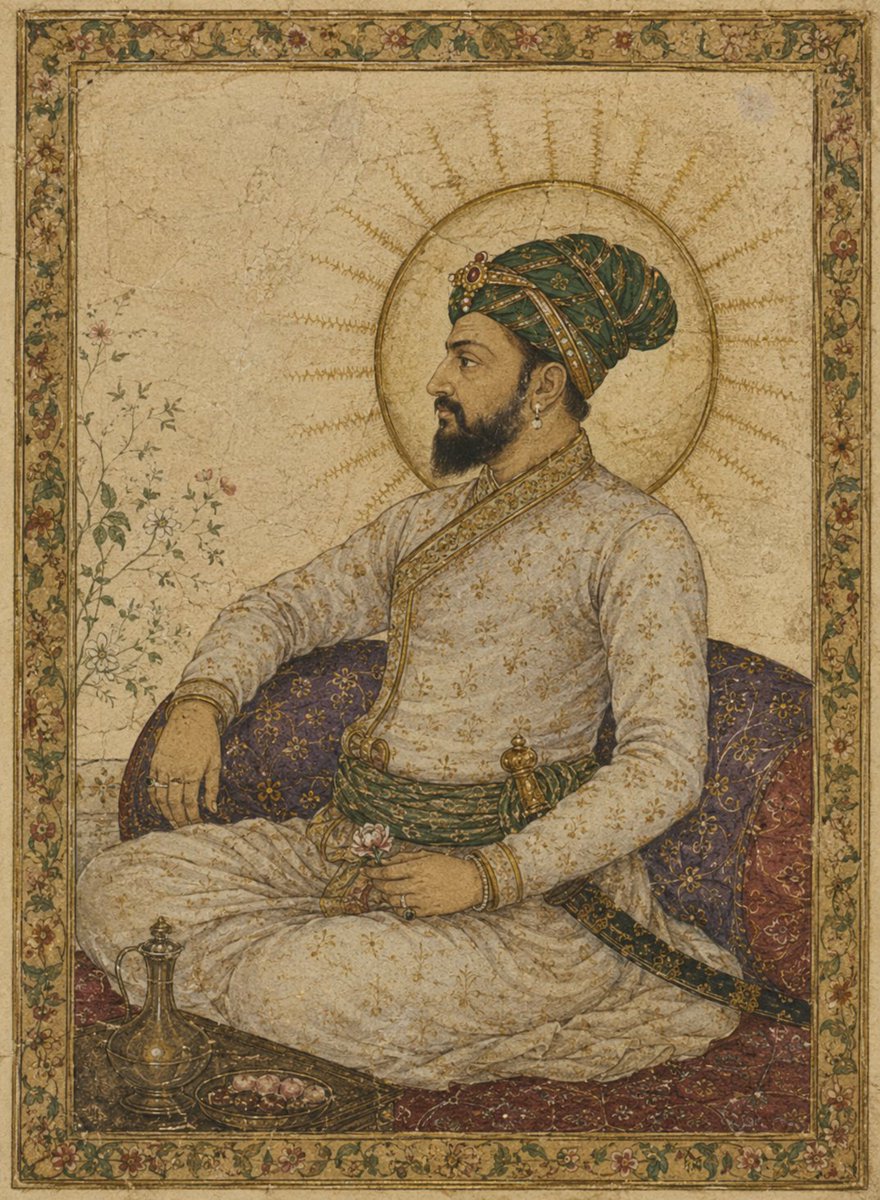
Imad-ud-Din Rayhan: The Hindustani Muslim Who Became the First Indigenous Statesman to Rise as the De Facto Ruler of the Delhi Sultanate and Challenge the Turkic Aristocracy. 🧵
This guy bought a $400 Mac mini and walked into a coffee shop with $2,100 for installing an AI agent that never touches the internet.
I had to rewatch this because the pitch is almost too simple. He shows up, plugs in the Mac mini, installs a local AI agent running entirely through Ollama, done in under an hour. Zero cloud dependency, no API bills, no monthly charges bleeding the client dry. The coffee shop owner gets a private AI system that keeps working even if the WiFi dies, and he walks out with $2,100 for an install that takes less time than a long lunch.
The hardware cost him $400. One deployment and the machine's already paid for five times over. Then he locks in a monthly retainer for support, somewhere around $100-150, which means every client after the first is close to pure margin stacking on top of recurring revenue.
Most people hear "AI business" and think they need to build a SaaS platform or learn to code or raise funding from someone. This skips all of that and goes straight to walking into coffee shops with a Mac mini under one arm.
Not a company that scales to a billion dollars, obviously, but a solo operator clearing a few thousand a month from local installs while everyone else is still arguing about which LLM is best on Twitter.
This is wild.
The mad scientist who predicted the AI boom decades ago down to the exact year it happened just broke the internet again...
He says the next wave of A.I. is starting right now and will forever change humanity's fate:
before you build the real system, build the model.
• aircraft.
• factories.
• robots.
• traffic.
• economies.
• battlefields.
all are too expensive, dangerous, or slow to experiment with directly.
principles of modeling and simulation by john a. sokolowski & catherine m. banks shows how engineers use models to explore reality before committing to it.
a model is not reality.
it is a simplified representation that preserves the behaviors you care about.
good models let you:
• test hypotheses
• compare designs
• predict outcomes
• find bottlenecks
• understand complex interactions
every model is wrong. but some are useful.
the best engineers don’t guess what will happen. they simulate it first.
this Stanford framework is f*cking insane
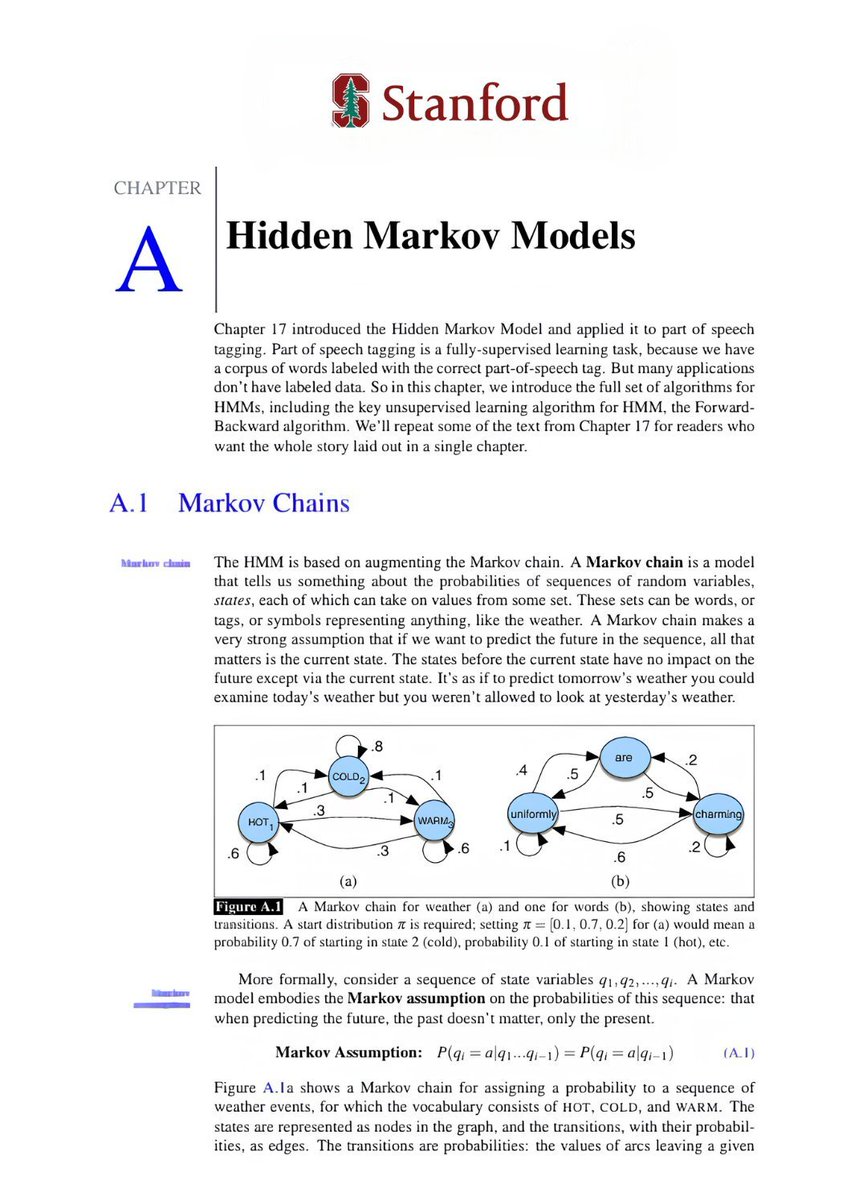
the entire hedge fund secret just got compressed into a 17 page PDF.
Stanford released the complete Hidden Markov Model framework that quants at firms like Jane Street and Two Sigma are known to run, and put it out for free.
the crazy part is this isn't a summary, it's the actual mechanics behind models these desks guard internally.
most people think this stuff stays locked behind institutional walls.
this one hands you the framework directly.
bookmark and read before someone takes it down.
You passed physics in school. A former NASA fellow says that means nothing. You memorized the formulas and never understood a single one.
His proof is the most famous equation on Earth. F equals ma. You have written it a hundred times. And he says you have been reading it backwards your whole life.
It should be a equals F over m. Not force equals mass times acceleration, but acceleration is caused by a force. One is a string of symbols to memorize. The other tells you what actually happens in the universe: push something, it moves. Cause, then effect.
Flip that one idea and equations you hated in school start to breathe. V equals IR becomes current is driven by voltage. Even E equals mc squared stops being trivia and becomes the sentence that told Einstein what mass really is.
The comments are full of people admitting the same quiet thing. Aced physics in high school. Got to university. Realized they never understood any of it. One writes that in his country, the moment you try to actually understand physics, your grades drop, because school only rewards cramming.
You were not taught physics. You were taught to pass a test and forget it. This is the video that shows the difference.