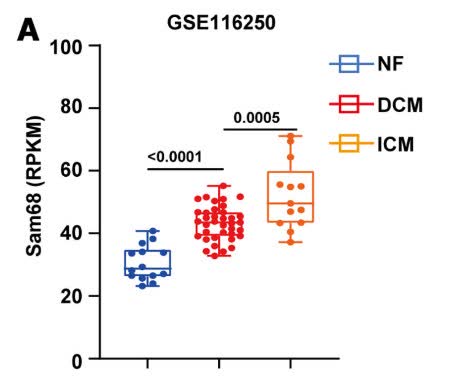
SREBP1 transactivates NHE3 in cardiomyocytes during HFpEF, leading to calcium mishandling and impaired contractility in heart failure.https://t.co/czFVb7JbKi
Alternative splicing of Tropomyosin 1 (TPM1b) exon 9a is a pathogenic mechanism in myofilament disorder and diastolic dysfunction in HFpEF and is mediated by SRPK3. This may represent a novel therapeutic target for HFpEF.https://t.co/vSPCP57Xea
Passing the Torch?: A Next-Generation High-Sensitivity Cardiac Troponin T Assay.
https://t.co/RC3tJzTLFT
Contributions from Baim CSO, James Januzzi and Baim faculty, @CianPMcCarthy.
#BaimInstitute#ClinicalResearch#Cardiology
LVAD support enhances heart recovery by boosting capillaries, reducing fibrosis, and driving fibroblast-to-endothelial switching via c-Myc, revealing new regenerative pathways for HF therapy.🫀@hfdocbhimaraj@kaifu3@na https://t.co/YaiyqEu5CU
In a large CICU validation cohort of predictive biomarkers, FGF-23, GDF-15, & sST2 discriminated cardiogenic shock from non-shock controls, while FGF-23 also distinguished cardiogenic from distributive shock & was independently assoc w/in-hospital mortality @NicholasChiuMD#ACC26
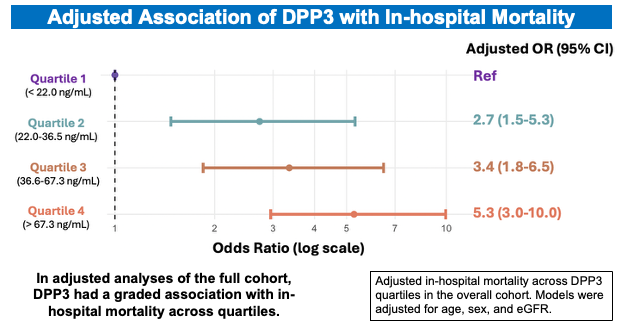
In a broad cohort of CICU patients, DPP3 was elevated in both shock and non-shock states and was associated with in-hospital mortality across the spectrum of CV critical illness. @Gurleen_Kaur96#ACC26
See Annabel Wang present her work, "Apolipoprotein C-III (APOC3) Inhibition in Patients With VS Without Baseline Fibrate Use", in this analysis from CORE (TIMI 72a), CORE2 72b & ESSENCE CS9 – TIMI 73b, in 24 hrs on the Highlighted Original Research Stage @BrianBergmark#ACC26
Analysis of >71K pts from #COMBINE-AF shows pts with paroxysmal AF at lower risk for stroke/systemic embolism and death, but higher risk of bleeding and MI in an adjusted analysis compared to patients with persistent/permanent AF @rgiugliano
https://t.co/iJTYJgvUj5
The Centennial Manuscript – “SEEs in AFib: Data From COMBINE AF” by @sameralsaid et al., out now in @CircAHA, is the 100th paper published which includes data from the #ENGAGE AF-TIMI 48 trial, which concluded in 2013! @rgiugliano
https://t.co/SJl58cojfV
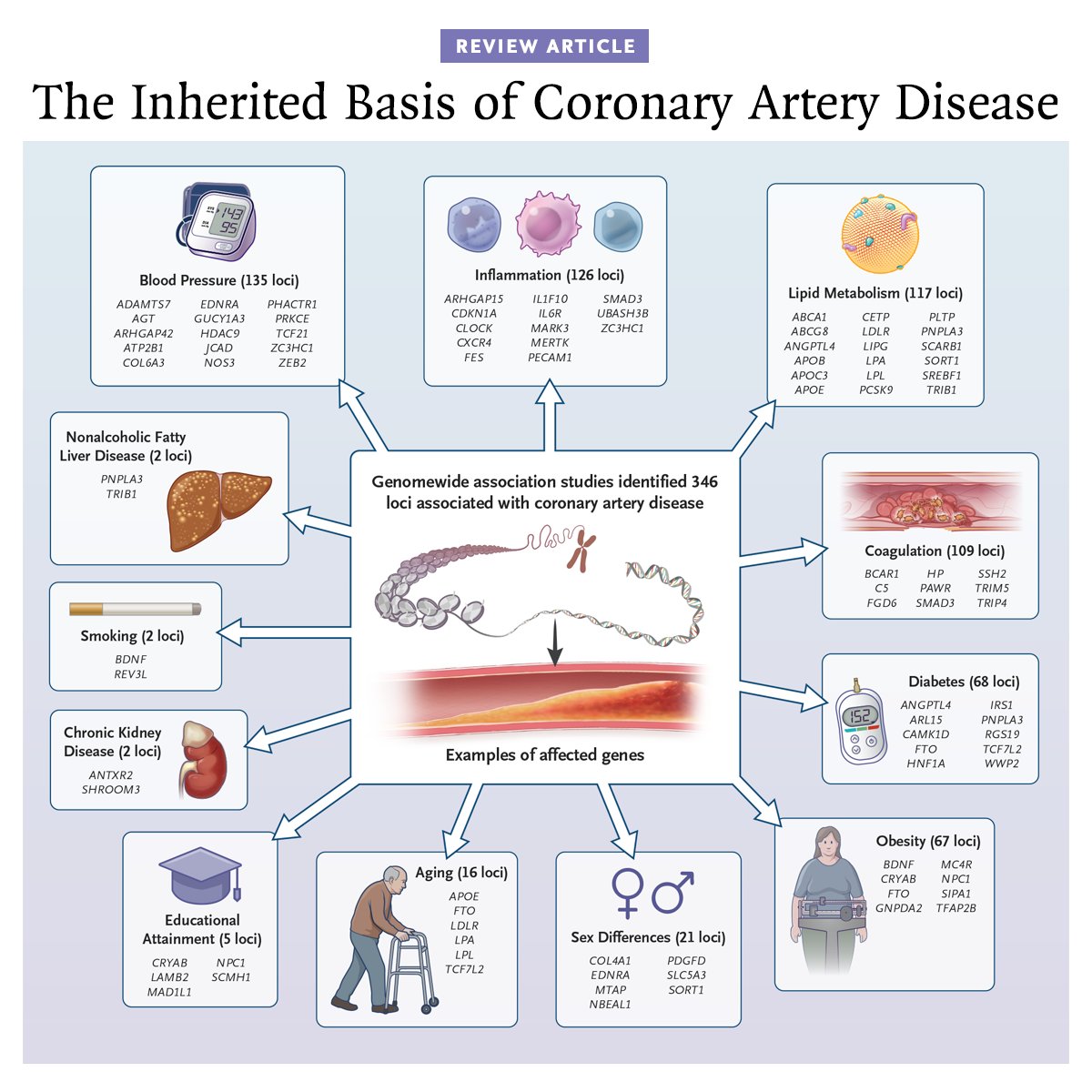
New Review Article: The Inherited Basis of Coronary Artery Disease 👉 https://t.co/eeAlH3mlEL
Coronary artery disease develops from an interplay of behavioral, environmental, genetic, and stochastic factors. Smoking, hypertension, hyperlipidemia, and diabetes mellitus are well-recognized modifiable risk factors for coronary artery disease, which affects almost 1 in 2 men and 1 in 3 women during their lifetime. More than a century ago, Osler posited that inherited factors may cause coronary artery disease after he observed that angina pectoris often clusters in families. Approximately 30 years ago, twin studies indicated that the heritability of fatal coronary artery disease was as high as 50%. Since 2007, large-scale genotyping and gene-sequencing studies have identified hundreds of genetic variants associated with increased susceptibility to coronary artery disease (seen in figure). Protein products of some associated genes already constitute effective treatment targets, and other genes point to currently unexplored disease mechanisms.
An inquiry about a family history of coronary artery disease is routine in the clinical assessment of patients presenting with chest pain syndromes. Heribert Schunkert, MD, Pradeep Natarajan, MD (@pnatarajanmd), and Nilesh J. Samani, MD, review recent discoveries regarding the molecular genetic origins of coronary atherosclerosis and discuss current and potential clinical uses of this information.
Read the Review Article “The Inherited Basis of Coronary Artery Disease” from Universitätsklinikum der Technischen Universität München; Deutsches Zentrum für Herz- und Kreislaufforschung, Partner Site Munich Heart Alliance (@dzhk_germany); and elsewhere: https://t.co/eeAlH3mlEL
Explore the most-cited research of 2025 from the American Heart Association Journals shaping cardiovascular science—from global trends and stroke prevention to AI-driven precision medicine and innovative therapies. Access these influential articles now. https://t.co/svOCFoEiDr
The Guidelines and Guidance Committee is pleased to announce that the guidance manuscript “The Diagnosis and Evaluation of Women and Girls with Hemophilia and Hemophilia Carriers: Guidance from the SSC of the ISTH” is now open for public comment: https://t.co/hx2eVk0633
Extra! Extra! Read all about the ISTH 2026 Congress Chronicle: February edition. Registration is officially open, hotels are now available, and excitement is building for #ISTH2026
Read more: https://t.co/YySQVM4ZUW
Beta-Blockers after Myocardial Infarction with Normal Ejection Fraction | New England Journal of Medicine https://t.co/GPRy7FrDi4 EFが落ちていないと心筋梗塞後のベータ遮断薬の効果は明確ではないね。