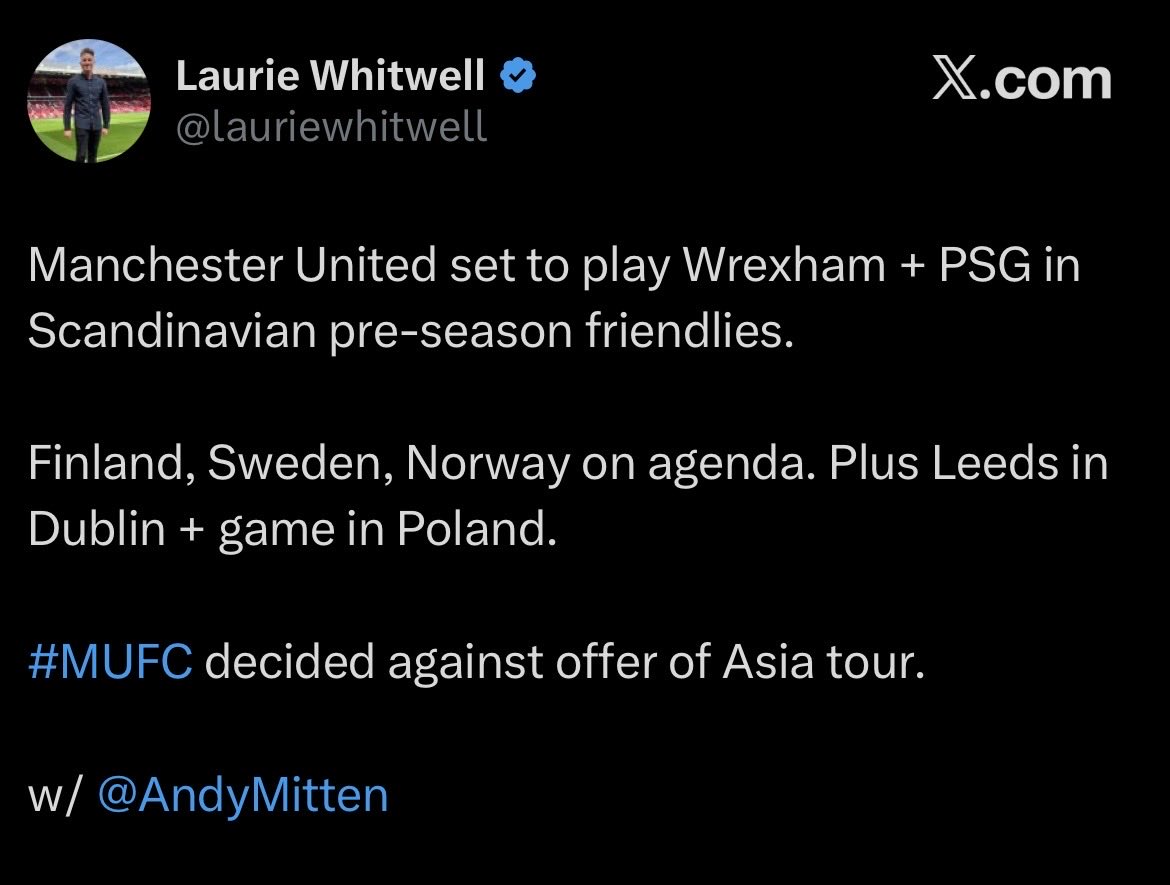
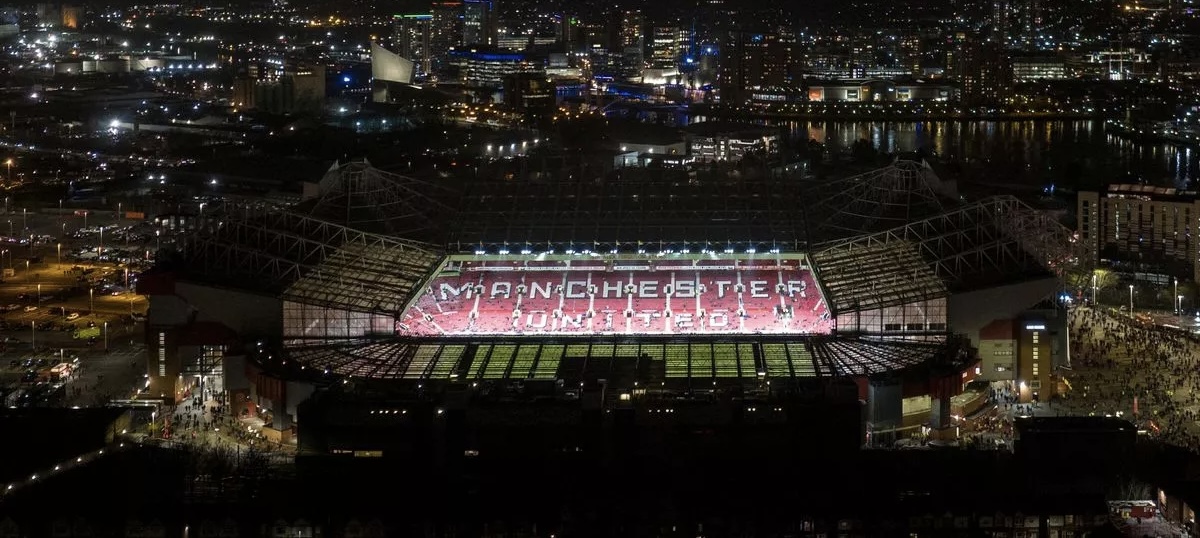
Some members of the billionaire Glazer family have been debating whether to sell their stake in Manchester United FC, after more than 20 years of ownership that has often been blighted by fan protest https://t.co/yn8zjFzVG5
Whilst this drill coaches the importance of timing the scan, which is a skill within itself, along with first touch details. Sometimes no scan is the highest form of preparation that becomes the highest level of disguise. A sense-knowing of pressure.
🚨Xabi Alonso is the first Chelsea ‘manager’ since Jose Mourinho in 2013.
All other appointments after Mourinho were ‘coaches’ until now. [@David_Ornstein on NBC]
343 system first approach at manunited.
an inflexible system which core ideas were driven from pragmatism opposed to a proactive nature which is what the club represents. recruiting players to fit a playbook leads to a capped ceiling, opposed to recruiting players to a philosophy which allows adaptation to different player profiles and still adhering to the club identity.
also the aim to find static overloads opposed to dynamic or 1v1 solutions - the system had changes in shape sure, but still adhering to the same system.
when something (system-coach-manager-player) doesn't fundamentally align to the larger institution (club), there are many ways those ideas will manifest and then be rejected.
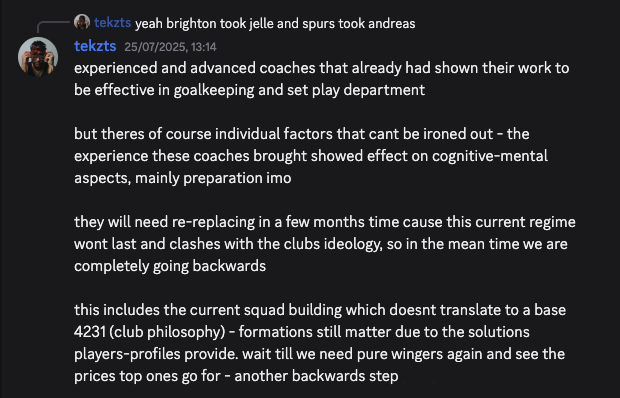
🚨 NEW: Manchester United will be open to adding another coach to Carrick’s staff. Andreas Georgson was a set-piece specialist - this is an area where United are likely to look to add. Carrick trusts the coaches around him: Steve Holland, Jonny Evans, Jonathan Woodgate and goalkeeping coach Craig Mawson. But don’t bet against an addition.
[Andy Mitten, @TheAthleticFC]
Viewing player actions through lag makes believe there are ‘tactics’. Players are the ‘tactics’, acting-reacting in live time through their ability, perception & conditioning. There is strategy, coached collective intent which acts as the guidelines that player behaviour adheres to.
Players are the tactics, acting-reacting in live time.
Live time player action-reaction turn [predefined] lines to shadows. This is where tactics don’t exist - it’s players finding live solutions through their ability, whilst adhering to the coached automatisms within the overall chosen strategy.
Strategy is often silent and not evident or clearly visible through the lens of viewing direct player actions.
As viewers or analysts, we are viewing direct player actions with lag - but this isn’t how players in live time see the game, they just act in the moment, they have no lines.
The task for clubs is to recruit players to the strategies chosen by the coach. Both player and the strategy are innately aligned to the higher-arching philosophy.
It’s a players game.
Definitely. If players are the tactics, and within a player first driven approach - the rushed and vertical actions, distances across units is the chaos created by mixed natures and individual errors at this level.
Although, the coaches must apply concepts (passing/connecting in 3s) to knit and help players think collectively and combine on the pitch - we haven’t seen this since eth.
This is where recruitment has to build cohesive quality to the team and finally maximise the United identity post SAF, opposed to changing it completely as was the [first] attempted idea current regime.
Players are the tactics, acting-reacting in live time.
Live time player action-reaction turn [predefined] lines to shadows. This is where tactics don’t exist - it’s players finding live solutions through their ability, whilst adhering to the coached automatisms within the overall chosen strategy.
Strategy is often silent and not evident or clearly visible through the lens of viewing direct player actions.
As viewers or analysts, we are viewing direct player actions with lag - but this isn’t how players in live time see the game, they just act in the moment, they have no lines.
The task for clubs is to recruit players to the strategies chosen by the coach. Both player and the strategy are innately aligned to the higher-arching philosophy.
It’s a players game.
Whilst this team requires more concepts to protect its limitations, which we saw in the earlier games (over-iso, rondos), a player first approach is the higher ceiling idea, compared to a system first approach at this club.
Despite poor and disconnected performances currently, a player first approach ultimately provides more adaptability whilst remaining strong in your identity and provides more solutions dependant on quality. Giving these players freedom and responsibility allows them to be unpredictable, with a few concepts to connect the teams intentions.
Currently this team is far from a base team which has natural profiles in natural positions (hence 343 IP leading to wide channels being open OP). Therefore the onus is on recruitment to deliver a high technical cohesive team, with league average athleticism. An important balance.
It requires aligned player natures (recruitment) and passing in 3s (coaches) across range of distances to connect effectively. Until then +3 points.
“I think Michael came in with the right ideas of giving the players the responsibility, but also some 𝗳𝗿𝗲𝗲𝗱𝗼𝗺 to take the 𝗿𝗲𝘀𝗽𝗼𝗻𝘀𝗶𝗯𝗶𝗹𝗶𝘁𝘆 on the pitch during the decisions that are needed."
There are other longstanding players with the innate tendency to drop opposed to stepping in and counter pressing. These split second cognitive go/no-go actions are what lead to presses failing. Therefore, players recruited must be innately aligned to clubs predefined principles (counter pressing).
Also the factor of fitness to uphold repeated actions and pressures. When fatigued decision making and speed of those decisions gets affected. This another reason for front end of the press failing with angles, timing, unison.
Both of these listed above lead to a disconnected press. Although the press was very proactive, aggressive and effective for longer duration at the start of 24/25. Amorims press often dropped into a 523 low block which also preserved physical exposure, so they could continue for longer - but this isn’t a proactive approach or aligned to United identity.
United often going into the start of the season with intentions to full/repeatedly press without the capacity to.
Preseason factors such as shorter duration, extensive travel, players arriving late to camp, key signings at the end of the window result in the team being unfit and lacking match sharpness.
This affects execution of strategy-tactics on the pitch.
By the first international break in October this usually stabilises (for all teams). But a preseason closer to home mitigates some of those factors and allows to the squad to prepare better.
An important change long overdue.
An added chance creation concept needed to challenge at T2 level. Not having the players to apply it affects results, performances and looks disorganised - but this approach is needed to go to the next level. Counter pressing is a core principle that needs to be applied and engrained.
424 (used before and inevitably returned to recently) is a very proactive approach aligned to the clubs identity, cause it aims at intercepting the ball opposed to tackling. Meaning you instantly have 4 attackers in on goal.
However, 424 in the high/full press becomes weak due to it broken by attacking on the blind side of the wide presser. 424 in the full press allows more space on the blind side here, but in a mid block that space is much reduced, so 424 is more effective in a mid block.
Regardless, players incapable physically and psychologically bring on different wave lengths will fail where unison is imperative.
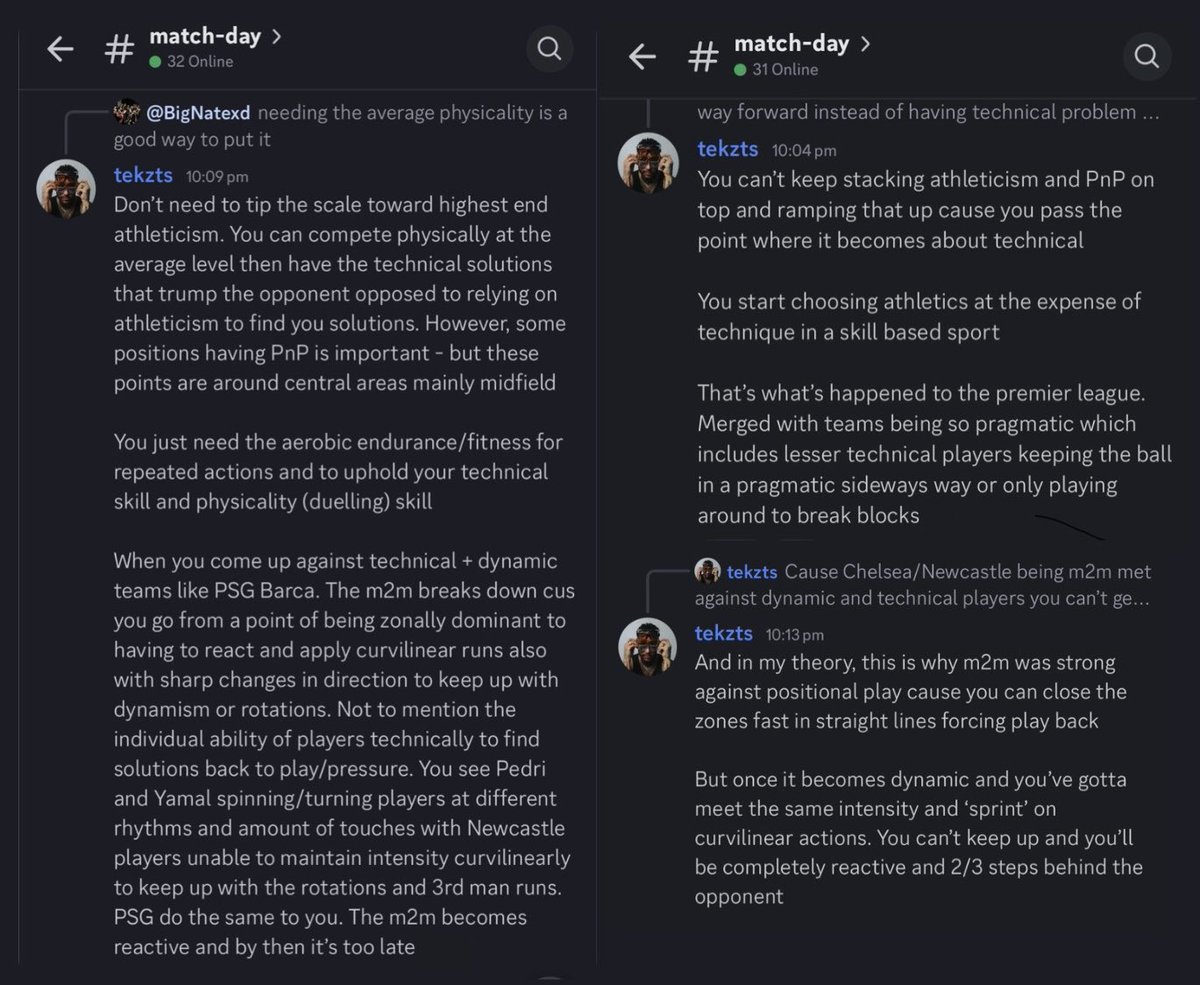
@carr1ngton1 A potential mistake to go for highest end of athleticism at the expense of technical. A league average athleticism will suffice and be effective whilst focusing on highly technical players within a player first approach.
The front end of the press failing merged with player natures not aligned to high/counter pressing and lacking the ability to perform repeated pressures is what has led to spacing issues, failed high presses and counter pressing issues. Same issue, 4 managers (see date below). Still United have regressed in this aspect and were more effective before, with a ‘lesser’ squad.
The athleticism however, should be a league average (which gives United a boost) and not the highest end of PnP as this then tips the scale too far into physical methods to create chances.
It’s important to remain higher on the technical side of the scale, as United’s issues have been breaking blocks. Technical shouldn’t be sacrificed at the expense of highest end athleticism. A league average will be effective.
100% and highlighted this in the 3rd paragraph.
To summarise the aim of the post was to separate the two terms (despite them being linked), to highlight how athleticism without the skill of duelling doesn’t guarantee winning duels and players with lesser athleticism can win/outfox the opponent with skill-intelligence. But also how physical capacity underpins application for outcomes differently in players.
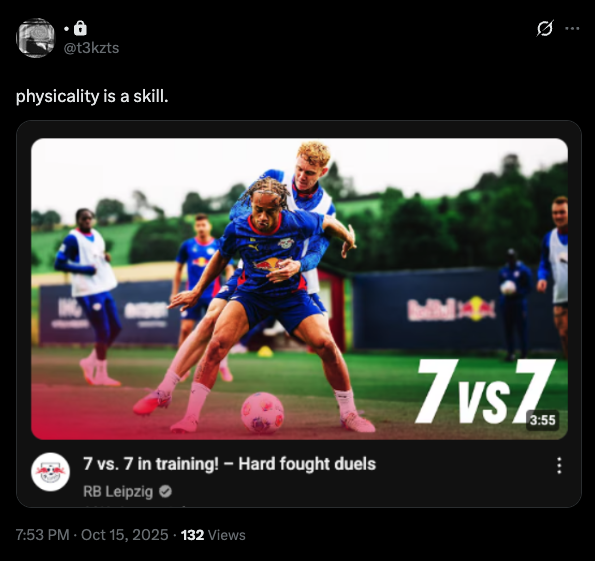
Physicality is a skill.
Protecting the ball, protecting space, anticipating and timing contact (force), body positioning, offering the race and foot patterns mean physicality is a learnt skill expressed through duelling which translates to the pitch both in and out of possession.
These are skills developed through interaction and conditioning with the ball. It’s how a player uses their body against opponents relative to the game and rules.
Often confused with athleticism, the players physical capacity; height, limbs length, speed, pace, power, accel/decel and direction changes. These traits are important as isolated ability but also completely support physicality. However, they do not determine how successful a player duels. The importance of translating athleticism to the pitch is how effectively a player applies skill relative to the opponent, space and situation.
Aerobic capacity is one key foundational element which helps uphold skill, both in and out of possession. The ability to recover from high intensity actions faster is important for repeated actions (application of skill + quality of that skill), and also for philosophies with principles around counter pressing and pressured isolated situations (3v3, 1v1).
Conditioning-Stamina provides access to players skill on/off the ball and athleticism throughout the game. As fatigue develops, it affects the foundations for skill as well as a players decision making. Cognition-perception is another key element to upholding skill. When physical, mental or nervous system fatigue appears, players perception of the situation can decrease in speed of decision and which solution to take - A more technical player would possess more skills in their locker to access within such situations. Fatigue can also affect the execution (technique) of a skill both in (passing/shooting) and out of possession (duelling).
In transitional moments, fatigue affects the decision and then the action taken to either counter press, freeze or drop off. There are few set principles in the game and therefore players natures must innately align to the chosen principles. For example, playing out the back principles require natures engrained with the skillset needed, so under fatigue or pressure they remain to the collective intent.
The clubs philosophy and identity choose these principles which filter down to the strategies applied. The manager, coach and players must align collective and innately to these principles otherwise it breeds chaos or more tactical security (protecting limitations) for effectiveness.
No two players are the same and physicality-intelligence wins duels. Every player has different solutions based of their capacity, to meet the outcome in a skill based sport.
Players are the tactics, acting-reacting in live time.
Live time player action-reaction turn [predefined] lines to shadows. This is where tactics don’t exist - it’s players finding live solutions through their ability, whilst adhering to the coached automatisms within the overall chosen strategy.
Strategy is often silent and not evident or clearly visible through the lens of viewing direct player actions.
As viewers or analysts, we are viewing direct player actions with lag - but this isn’t how players in live time see the game, they just act in the moment, they have no lines.
The task for clubs is to recruit players to the strategies chosen by the coach. Both player and the strategy are innately aligned to the higher-arching philosophy.
It’s a players game.










![UtdXclusive's tweet photo. 🚨 NEW: Manchester United will be open to adding another coach to Carrick’s staff. Andreas Georgson was a set-piece specialist - this is an area where United are likely to look to add. Carrick trusts the coaches around him: Steve Holland, Jonny Evans, Jonathan Woodgate and goalkeeping coach Craig Mawson. But don’t bet against an addition.
[Andy Mitten, @TheAthleticFC]](https://pbs.twimg.com/media/HIRjobdWwAAXkMp.jpg)

![cirotexts's tweet photo. Players are the tactics, acting-reacting in live time.
Live time player action-reaction turn [predefined] lines to shadows. This is where tactics don’t exist - it’s players finding live solutions through their ability, whilst adhering to the coached automatisms within the overall chosen strategy.
Strategy is often silent and not evident or clearly visible through the lens of viewing direct player actions.
As viewers or analysts, we are viewing direct player actions with lag - but this isn’t how players in live time see the game, they just act in the moment, they have no lines.
The task for clubs is to recruit players to the strategies chosen by the coach. Both player and the strategy are innately aligned to the higher-arching philosophy.
It’s a players game.](https://pbs.twimg.com/media/HFvJcoNWYAAFx3l.jpg)