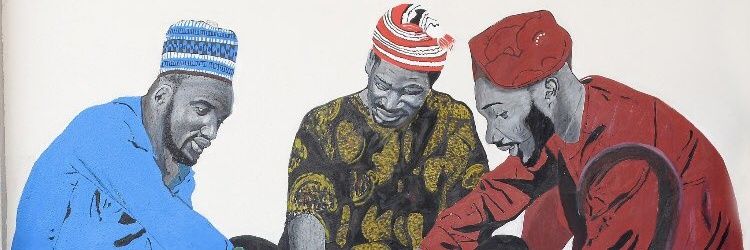
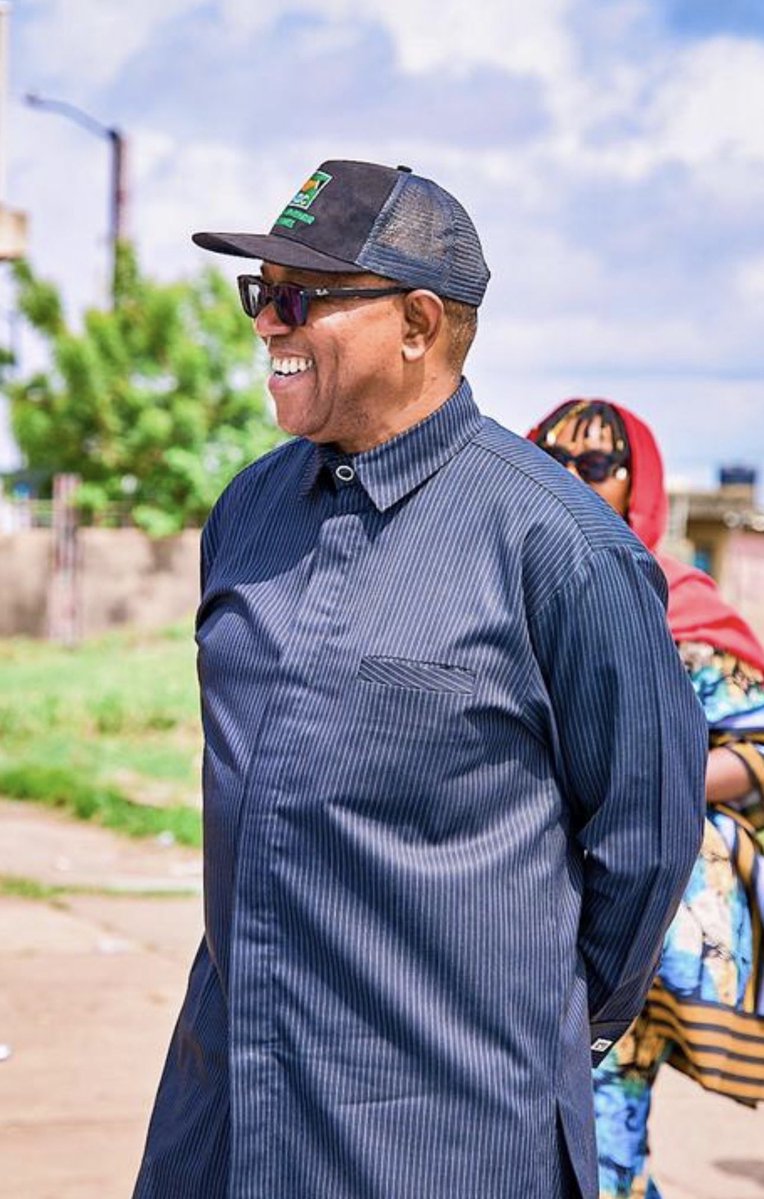
By the time HE @PeterObi becomes Nigerian president come February 2023, we can now integrate Obicracy in our various University Curriculum, man political antecedent speak volumes
#Lagos4ObiDatti
Additional decisive advantages Obi brings:
Proven governance record: As Governor of Anambra, he delivered fiscal prudence, security, and infrastructure with minimal federal support, results Nigerians still remember and trust.
Moral authority and integrity: In a polity scarred by corruption scandals, Obi’s personal and political cleanliness is a powerful differentiator that resonates across all demographics.
Broad coalition-building ability: His demonstrated capacity to work across party lines and ethnic groups will attract defectors, civil society, and even moderate elements within the ruling party, swelling the opposition tent dramatically.
Leaders of the ADC and the opposition movement, the choice before us is clear. We can repeat the mistakes of fragmented candidacies and wasted energy, or we can seize this moment with Peter Obi as our standard-bearer. By rallying behind him, we do not merely oppose Tinubu but we present Nigeria with a credible, unifying, and winning alternative.
The time to act is now. Let us subordinate personal and narrow interests to the greater national imperative. Let us present Peter Obi as the ADC candidate and the face of a united opposition. History will remember this decision as the turning point when Nigeria chose hope over hardship.
Together, we can win. Together, we must win.
In the service of a New Nigeria
A New Nigeria is POssible
Open Letter to the Leaders of the ADC and the Broader Opposition Stakeholders
Dear Esteemed Leaders,
Nigeria stands at a defining crossroads. The incumbent administration under President Bola Tinubu has presided over deepening hardship, mounting insecurity, and a crisis of public trust. The 2027 presidential election offers us a historic opportunity, not merely to field a candidate, but to rally the entire opposition behind a figure who can unify our fractured nation, ignite mass participation, and deliver victory. That figure is Peter Obi.
We urge you, without hesitation, to adopt Peter Obi as the ADC’s preferred presidential candidate and the unifying banner of the opposition. His candidacy is not just strategic but also it is transformative. Here is why it represents our clearest path to victory:
1. National Unity and Healing:
Peter Obi’s appeal transcends ethnicity, religion, and region. An Igbo leader who has already built unprecedented bridges to the North, South-West, and South-South, he alone can heal the dangerous North-South divide that has weakened our democracy for decades. Unity is not a slogan; it is the indispensable foundation for national development. By choosing Obi, the ADC sends an unmistakable message: this is no longer a sectional contest but it is a Nigerian project.
2. Massive Youth and New-Voter Mobilization:
With his energy, digital fluency, and authentic connection to Nigerians, Obi will galvanize millions of first-time and young voters who sat out previous elections. His campaign will be exciting, issue-driven, and hopeful turning apathy into enthusiasm and making 2027 the most participatory election in Nigeria’s history.
3. Issue-Based, Cost-Effective, and Mass-Connecting Campaign:
Obi does not campaign on privilege or money politics. His platform is built on clear, data-driven solutions: security, education, health, and moving “from consumption to production.” His campaigns are lean, transparent, and deeply relatable, allowing ordinary Nigerians to see themselves in the movement. This approach will stretch every naira further and earn the trust of voters tired of expensive, elite-driven politics.
4. Organic Grassroots Strength That Cannot Be Bought:
Peter Obi’s support base is not transactional. His polling-unit agents, volunteers, and foot soldiers come from a committed, organic following that is almost impossible to compromise or rig. Non-political “fixers” will have no votes to sell. This structural integrity is a decisive advantage in an electoral environment where money often decides outcomes.
5. Relentless 8-Month Campaign Machine:
Eight months is more than enough time for Peter Obi. He will campaign every single day from town halls, markets, churches, mosques, universities, and radio stations while others tire or outsource their visibility. His humility and respect for all will attract thousands of passionate workers who will volunteer their time, energy, and networks.
6. Diaspora Leverage and International Goodwill:
Obi’s strong connections with Nigerians in the diaspora will translate into massive financial, intellectual, and advocacy support that will reverberate back home. Simultaneously, his credibility will draw international development partners who are eager to invest in a stable, reform-minded Nigeria, enhancing both campaign resources and post-election governance capacity.
7. Media Dominance and Vision Clarity:
Through consistent engagement on television, radio, and social media, Obi will make the ADC’s vision crystal clear to every voter. His articulate, evidence-based communication style will dominate the airwaves, leaving opponents struggling to match his visibility and substance.
8. Contagious Enthusiasm That Will Fill the Streets:
The excitement Obi generates is infectious. It will put people on the streets, in convoys, and in every corner of the federation, turning the campaign into a national movement rather than a mere political exercise.
@tinyandagod this girl is very dangerous person. I am quite surprised how some igbo folk feel comfortable hearing her and some people denigrate Igbos on space, in the name of politics.
From Pharisee to Tax Collector: Rethinking Tinubu’s Kenyan Comparison
In a recent remark in Yenagoa, Bola Ahmed Tinubu suggested that Nigerians should find solace in being “better off than Kenya and other African countries.” While this may have been intended to soften the impact of economic hardship and rising fuel prices, the comment risks downplaying the severity of the current crisis. It echoes the biblical parable of the Pharisee and the Tax Collector in the Gospel of Luke (18:9–14). A similar warning is found in the Qur’an (53:32), which cautions against self-righteousness.
Like the Pharisee who boasted of his superiority over others to mask his own spiritual void, such downward comparisons serve more as a refuge than a remedy. This validated an earlier dismissive remark by President Ahmed Bola Tinubu during electioneering: “Na statistics we go shop?” Yet statistics remain indispensable - they are the language through which nations understand their condition and chart progress. No country can develop in isolation from measurable realities or without comparing itself with peers. Comparisons, when properly grounded, are not instruments of escapism but tools of accountability. What is objectionable is not comparison itself, but comparison stripped of credible, verifiable data—mere tax collector comparisons that soothe rather than solve.
On key development indicators such as security, the Human Development Index, life expectancy, GDP per capita, literacy levels, and electricity access, Kenya consistently outperforms Nigeria. Nigeria is the fourth most terrorised nation in the world, while Kenya is not among the ten worst. Kenya’s HDI ranking is 143 out of 180 countries, with a coefficient of about 0.630, compared to Nigeria’s ranking of 164 out of 180, with a coefficient of about 0.530. Its GDP per capita is roughly $2,200–$2,300, compared to Nigeria’s $807–$835. Kenya’s poverty rate is about 43% of the population (approximately 23 million people), while Nigeria’s is about 63% (around 150 million people), over six times that of Kenya. Kenya’s life expectancy is about 67 years, while Nigeria’s is about 54 years. The literacy rate in Kenya is approximately 81–85%, compared to Nigeria’s 62–65%.
Kenya’s electricity access is higher, while Nigeria has one of the lowest levels of electricity access in the world. Kenya has about 3.5 million out-of-school children, while Nigeria has about 20 million. Kenya’s inflation rate has been about 4.5% or lower over the past three years, while Nigeria’s has remained above 15% within the same period. Kenya’s exchange rate has been around USD 1 to KES 130 over the past three years, whereas Nigeria’s exchange rate rose from below ₦500/$1 to above ₦1,250/$1 within the same period. Even with developments in the Middle East and rising oil prices, Kenyans have not experienced the sharp increases in petroleum product prices seen in Nigeria.
Across other key indicators, Kenya also performs better. In the end, these indices clearly show that Kenya ranks higher than Nigeria on several development metrics. The standard of living of Kenyans is better than that of Nigerians. If the President considers Kenyans to be suffering despite these stronger figures, then Nigerians are in a far more difficult situation. He should therefore refrain from self-consolation and, in honest reflection, take responsibility for the situation and make a determined effort to drive improvement. This requires a posture of humility, accountability, and commitment to addressing the factors that have slowed Nigeria’s development.
A new Nigeria is POssible. -PO
This release by @inecnigeria followed a meeting involving senior leaders of the Commission, & @NGRPresident, @CourtOfAppealNG, @FederalHigh in the last 60 hours.
I have it on the most impeccable authority that there is a pre-signed resignation letter by Chairman Amupitan. It was a pre-condition for his appointment. Ultimately, that had to be called in aid by those who persuaded him to issue this release. The threat of releasing it did the magic.
It shd be evident to a professor of law & #SAN that is not the business of @inecnigeria to interpret the decision of the Court of Appeal. If they had any doubt, an #INEC governed by good faith shd have gone back to the Court of Appeal to secure an interpretation of the decision.
But that is not where we are now. The country stares down a barrel & only those willing to enable that, make peace with it, or dare it will be able to sniff the stakes in #NigeriaDecides2027.
As for Joash Amupitan....!!
@Elpeeus@MyksonDosSantos The boy doesn't have sense at all. He blocked 🚫 me again.
That toxic girl Avril really washed his head with mumu soap🧼. 😂😂😂😂😂😂😂
@MyksonDosSantos@Elpeeus Bottom barrel reprobate, so dumb. You chickened out real quick. You didn’t prove anything with your badly edited video. Try to have some sense sha. Dan iska
@MyksonDosSantos@Elpeeus This boy is dumb, indeed. That statement was in 2019, when Atiku Abubakar was much younger. If Atiku had won that election, he would be completing his second term now, so get that into your head.
@MyksonDosSantos
Crowd in Kano is not for a man from "Anambra" -that is very silly and condescending from you daft. You can not even win your polling unit for ADC, dan iska