Never understood why masks have become a political issue. For me, triple vaxxed, I’m busy and I want to reduce the risk so I can do my work. I might still catch it because I also want to get on with life. It’s all about statistics. Ideology is pointless when dealing with Nature.
Nope, that’s not how taxes and price works. The price is determined by demand and supply.
Companies charge the highest price they can given demand. A tax levied on *profits* does not affect a company’s cost ie supply.
Taxes on *windfall* profits (like oil and gas) are the most efficient kind of tax there is.
🚨 NEW: Energy Secretary Miatta Fahnbulleh is reportedly set to reject Rosebank for oil drilling in the North Sea
She believes it would do less for UK energy security than Jackdaw as most of its oil would be exported
It’s regen braking - it sucks.
I’m sure most drivers (including me) can’t deal with it well. For-hire drivers need to switch this off until they fully learn the skill - makes me feel ill and I don’t get motion sickness. 🤷🏼♂️
https://t.co/gJ7OYETDhr
I’ve seen some truly terrible new flight displays recently from United and AA, but this pivot-table approach from DL/JFK is genius.
First destination / then flight and time and status / don’t repeat info
Not that hard but so many get it wrong!
Yes, that’s a major issue - short of sounding like some sort of grumpy old man, what can be done? More stringent testing, roll back the mental health extension?
In cases of real and verified hardship, we do need a safety net. Currently the paid NICs vs didn’t pension delta is about £4 a week. How about we make it £100 a week?
Enough is enough.
For years, people have been expected to put up with Avanti’s cancellations, delays, overcrowding, and a service that has failed them time and time again.
So my Labour government is bringing Avanti West Coast into public ownership at the earliest opportunity in March next year.
That means passengers, not shareholders, will come first.
More investment, fewer delays, and a renewed focus on getting the basics right.
We're putting essential services back in public hands and building a railway that actually works for the people who use it.
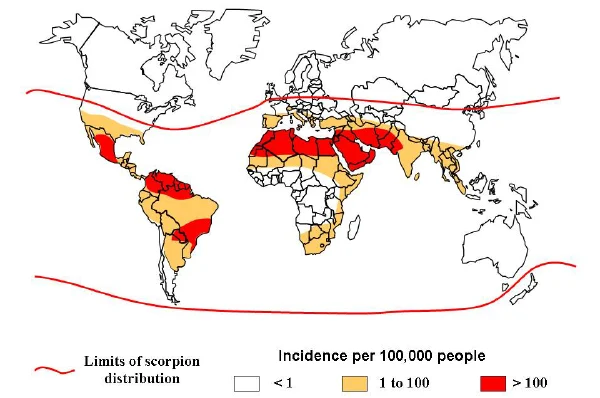
Here is the worldwide range of scorpions. As you can see, they prefer warmer climes.
Where, then, do you suppose the northernmost population of wild scorpions lives? Before today I'd have said Italy or the southern tip of France.
I would have been very wrong indeed.
1/n
“Human beings, who are almost unique in having the ability to learn from the experience of others, are also remarkable for their apparent disinclination to do so.” - Douglas Adams
one of Gen Z’s greatest traits is that they are biologically manufactured to see this for the deep cringe that it is. it’s interesting how central Douglas Adams and Terry Pratchett were to the BookTube of Millennials but are wholly absent from the BookTok of Gen Z.
Mmm
1 iPhone 18 announcement in a couple of days
2 My phone battery has started the inevitable performance decline
Coincidence?
A new…
…battery may be in my near future.
Zack Polanski wants Britain to slam the brakes on new data centres, warning about their impact on water supplies and the electricity grid.
He is right about the pressure. Data centres already consume around 2% of Britain’s grid electricity, and demand will rise sharply as AI develops. Some proposed sites are in entirely the wrong places. Others may end up relying on gas-fired generation because the grid cannot connect them quickly enough. Water use is not yet measured or reported nearly well enough either.
But identifying a real problem does not make a moratorium the right answer.
Data centres are no longer simply warehouses for storing photographs and emails. They provide the computing power behind AI, financial services, medical research, defence systems and much of the modern economy. That is why they are now classified as critical national infrastructure.
If Britain chooses not to build them, the demand will not disappear. The investment - and quite possibly the carbon emissions - will simply move overseas. We would then become more dependent on foreign computing capacity at precisely the moment when data, energy and technology are becoming inseparable from national security.
That would be an extraordinary act of economic self-harm.
The Government believes its AI Growth Zones could unlock as much as £100 billion of private investment and more than 10,000 jobs. Those figures matter. But the bigger prize is ensuring that British businesses, researchers and public services have access to the computing power on which the next generation of economic growth will depend.
The answer is not to stop building. It is to build properly.
New data centres should be directed towards places where power, water and network capacity can genuinely support them. Developers should be expected to invest in additional electricity generation and grid infrastructure. They should disclose their water consumption, use recycled or closed-loop cooling wherever possible and design facilities capable of reducing demand when the electricity system is under pressure.
Speculative projects should not be allowed to clog up the grid connection queue ahead of developments that are financed and ready to proceed. That all needs sorting out. But none of it is an argument for Britain to step out of the global race for AI.
One lesson I learnt from overseeing Britain’s energy security was very clear: when new industries need more power, government has a choice. It can build the capacity required to capture the investment, or ration growth and watch it go elsewhere.
Polanski’s answer to scarcity is the familiar socialist one: stop, ban and ration. It is the politics of managed decline, dressed up as environmental virtue.
Britain cannot afford it. A country that refuses to build the infrastructure of the future will inevitably become poorer, weaker and more dependent on those that do.
That vision is not simply outdated. In the age of AI, it is dangerous.