Creative ideas that Lift U Up! 😊Award winning author of My Feet: An Ode, Ex Dir of The JDF & founder of I LOVE My Feet Day! @ilovemyfeetdays, @jdffeet,
BREAKING: Apple has just suspended all their advertising on this platform after Elon Musk retweeted an anti-Semitic post. IBM pulled out yesterday. This is really good. The pressure on companies is working. Keep urging all companies to pull their advertising from this platform.
I have had a forced rest the last couple of years. From back injuries to being overmedicated on epilepsy medication which gave me a list of terrible side effects.
A story I will share another day.
Today, I want to tell you about one thing I learnt through it all that I will pass on… when the Universe forces you to take a seat you become very conscious how fast the world has become.
I’ll tell you a secret… it’s way too fast 👂🏽
Slow down a little beautiful people.
The world has so much beauty if you take a moment to admire her incredible gifts.
I recently went on the Decoder Podcast to talk about how the Biden-Harris Administration is working to take advantage of the opportunities and minimize the risks of artificial intelligence—and the ways the next generation of AI professionals can help shape the future. Listen now wherever you get your podcasts and go to https://t.co/XCVoVLEAdq to learn more.
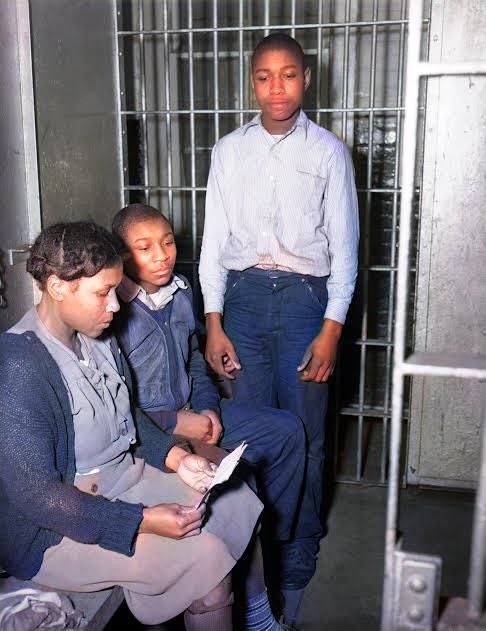
Rosa Ingram and her teen sons were sentenced to death in 1948 after they murdered a white neighbor who attempted to sexually assault their mother.
Thanks to civil rights activists the story gained national press. They were later released on parole for being "model prisoners."
—In 1948 Rosa Lee Ingram, a sharecropper and widowed Mother of four boys, was the center of one of the most-explosive capital punishment cases in history. In 1948 in a one-day trial, Ingram and two of her teenage boys were sentenced to die by electric chair, after an altercation with a White landowner in the state of Georgia.
On November 4, 1947, the landowner reportedly confronted Ingram and three of her sons over livestock entering his land near the small town of Ellaville. John Stratford was armed with a shotgun and pocket knife when he went to have his word with Ingram. Three of Ingram’s boys overheard their mother yelling then rushed over to her armed with farm instruments. Later, the 64-year-old man was found dead by way of blows to the head according to the investigation.
In several accounts and most notably in author Janus Adams‘ “Sister Days: 365 Inspired Moments in African-American Women’s History,” it was said that Stratford struck Ingram in the head with the butt of his rifle after threatening to shoot her mules that allegedly invaded his cornfield. Other historical accounts state that according to later testimony, though, Stratford threatened Ingram with sexual assault before striking her.
Either way, Ingram and her sons, Wallace, 16, and Sammy, 14, were all convicted by an all-White jury to death; Charles, 17, was at the scene but not charged due to lack of evidence.
Although there was an investigation at the scene of the murder, it has been suggested that many who responded to the incident were not officially mandated to do so. As a result, civil rights activists from NAACP branches around the nation leaped in to action to assist Ingram and her boys.
Court-appointed White lawyer S. Hawkins Dykes was aided by the the Civil Rights Congress (CRC) and their fund-raising efforts. Although this move caused some tension with the NAACP, Ingram and her sons were able to get an appeal and their sentences were reduced to life in prison.
National Committee to Free the Ingram Family, led by Mary Church Terrell, was instrumental in continuing to fight on behalf of the Ingram family and worked alongside the CRC and NAACP to ensure their freedom. Working across class and color lines, the case was a rallying cry for women activists and attracted the attention of the media in the North.
These organizations worked tirelessly to keep Ingram’s case alive in the minds of the public, even appealing to President Harry Truman to intervene at one point.
Finally in 1959, the Ingrams were granted parole and released.
The case placed a highlight on the racist and divisive Jim Crow laws of the South and also galvanized African-American women to participate in civil rights activism.
Ms. Ingram lived in Atlanta from the time of her release in prison until her passing in 1980.
🖋️if you love our content, please consider supporting our page on https://t.co/MkzBtV9AwG (follow the ko-fi page too for weekly posts roundup)