The Hidden Danger in Your Food: Synthetic Citric Acid Made from Black Mold
If you suffer from mysterious joint pain, fatigue, digestive issues, allergies, or inflammation that won’t go away, check your food labels right now. The culprit could be “citric acid” — but it’s not from lemons. It’s manufactured from black mold.
Nearly 100% of all commercial citric acid (found in sodas, candies, salad dressings, canned foods, juices, supplements, protein powders, ice cream, and even “natural” products) is produced using Aspergillus niger — a fungus known as black mold.
How It’s Made:
Factories grow this black mold on cheap sugars (corn, molasses, or beets) in massive fermentation tanks. The mold produces citric acid as waste. It’s then filtered, processed, and turned into the white powder you see on labels. This cheap method has been the global standard since the early 1900s.
Throughout its production, trace mold residues, proteins, and metabolites remain. For people with mold sensitivity, allergies, asthma, MCAS, CIRS, autoimmune issues, or weakened immunity, this can trigger serious reactions.
Common Symptoms People Report:
• Sudden joint swelling and pain (often mistaken for arthritis)
• Muscle aches and weakness
• Stomach cramps, diarrhea, or IBS flares
• Breathing issues or asthma-like attacks
• Hives, flushing, headaches, and brain fog
• Crashing fatigue after eating processed foods
A 2018 University of Chicago case study showed patients with repeated inflammatory reactions to manufactured citric acid. Their symptoms improved dramatically once they eliminated it.
Why It Matters:
This additive is in thousands of products — even some organic ones. The FDA lists it as GRAS, but long-term safety studies on the mold-derived version are non existent.
What You Can Do:
1. Read every label and avoid anything listing “citric acid.”
2. Use fresh lemon or lime juice instead.
3. Make your own sauces, dressings, and snacks.
4. Choose cleaner brands and ask companies about their citric acid source.
5. Try a 10–14 day elimination and track your symptoms.
If you have mold sensitivity or chronic inflammation, removing synthetic citric acid could be a game-changer.
Real food. Real ingredients. Your body will thank you.
We spend so much time worrying about the worst case scenario…and it never happens
Spend more time overthinking the best possible thing that can happen…and it will
Howard Lutnick knows that cattle use green water and Data centers use blue water but he thinks Americans are stupid. And to his credit, so many are. But why is the messaging to villainize cattle? Oh, so we can import beef from Argentina. Enjoy!
@Delta what’s going on at MCO? You are holding flights on the tarmac. Shutting off engines and not giving any updates. There is no weather at the airport right now. Been sitting here over an hour.
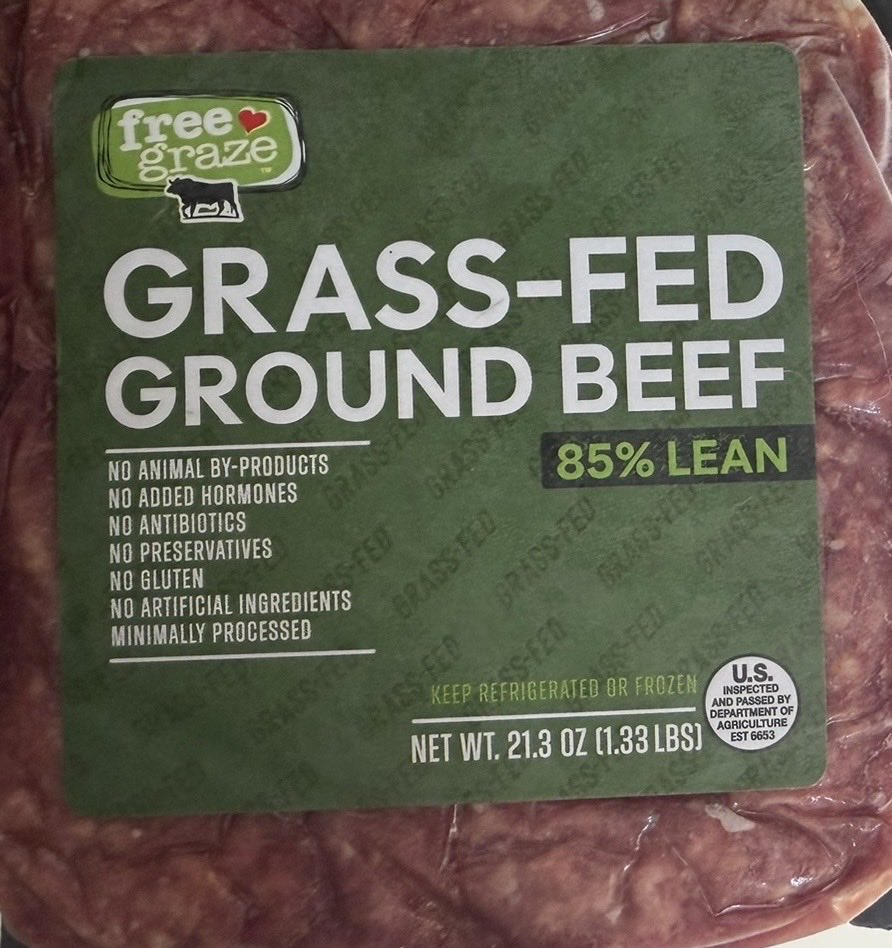
More deep diving into beef @FreeGrazeFoods Grass fed ground beef sold at @Costco Nothing on the label says where they get the beef from. Their website says they buy from all over the world. That’s scary. Why can’t American stores sell American beef?
Avoid Cooking with Aluminum Foil! 🚫
Did you know that wrapping or cooking food in aluminum foil can cause toxic aluminum particles to leach into your food? 🤯
🔥 This risk is even higher with acidic foods like tomatoes, lemon, and vinegar-based marinades!
⚠️ Over time, excess aluminum exposure has been linked to neurological issues and other health concerns.
Healthier Alternatives:
✔️ Use parchment paper instead
✔️ Opt for glass, ceramic, or stainless steel cookware
Would you ditch aluminum foil for a safer option?
So I started deep diving all beef I buy. Found out that @thomasfoods@thomasfarms_au is Halal or Zabihah certified. That is 100% inhumane to the animals. I Will NEVER support that.
@DanielGilr44222@saku_zuckerberg Yesterday at Whole Foods I saw ground beef with very similar labeling but under guise of Whole Foods 365 brand. Same thing; Organic grass fed from Argentina, Uruguay, and Australia. Even if it all is true, I don’t want my meat mixed from three different countries.
If Texas turns blue it will not be because the Democrats offered a better message or were a better option. It will be because Texas Republicans have lost their way and forgotten what they stand for. Republicans simply don't have many real conservatives to vote for anymore.
@AwakenedOutlaw No one has shown any proof that these data centers do not cause environmental harm, noise, light duress to humans and animals within the vicinity of these centers. I used to inspect these centers for insurance companies. They do in fact emit all of those things.
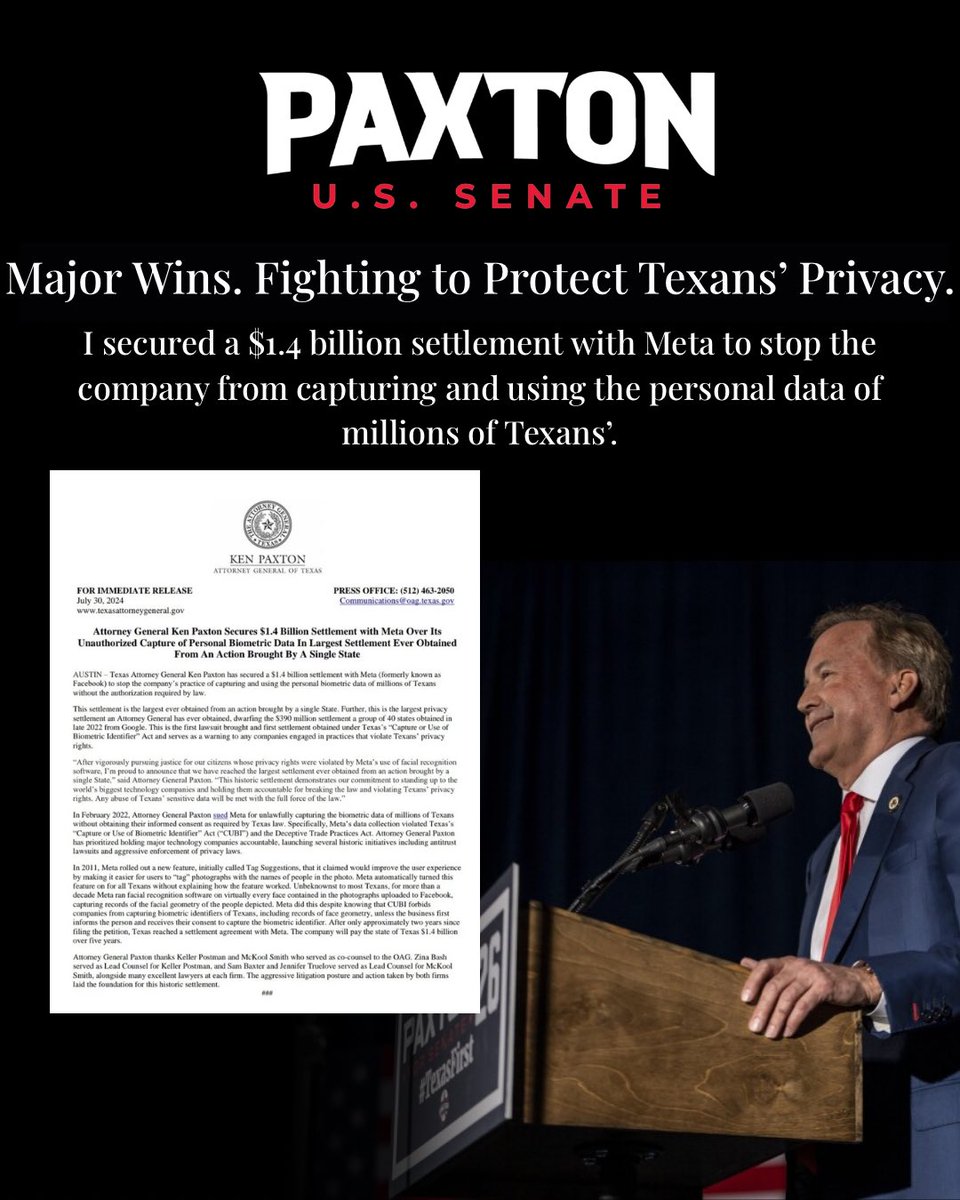
I have always fought to protect Texans’ privacy. In 2024, I secured a historic $1.4 billion settlement from Meta to stop the company from capturing and using the personal data of millions of Texans.
As your next U.S. senator, I will continue fighting to protect Texans’ privacy.
@Julestoyou2020@Costco Oh please stop feeding these to your dogs. They are packed full of chemicals & bad ingredients that are not food. Plus, they are packaged in plastic containers made out of recycled computer parts leaching chemicals into the chicken. I buy whole chickens for my dogs & roast them.
President Trump,
You ought to know that I am one of your strongest supporters. I think I proved it many times.
However, I have to tell you that you are on the wrong side of the issue in regards to our communities not wanting data centers in our rural areas. Do you understand why we choose to live in the rural areas?
There's a particular kind of quiet in rural Texas that you don't find anywhere else — not silence exactly, but a stillness that lets you actually hear yourself think. Out here, the sky isn't just something you glance up at; it's the whole show. It stretches from one horizon to the other, uninterrupted, unclaimed by skylines or streetlights, and at night it fills with more stars than you knew existed — a reminder of how small and how connected you really are.
Sunrises come slow and generous, spilling gold and rose-colored light across miles of open land before the world wakes up. Sunsets do the opposite — they take their time leaving, painting the whole sky in colors that feel almost too rich to be real, like the day itself doesn't want to let go without one last show.
There's room to breathe out here. Room for your thoughts, your family, your faith, your work — without the noise and crowding of city life pressing in on all sides. You can watch weather roll in from thirty miles away. You can raise kids who know what real dark and real quiet feel like, who grow up knowing the stars by name instead of the wifi password.
Rural Texas isn't empty — it's full. Full of sky, full of land, full of the kind of peace that doesn't get sold in a subdivision. It's a life lived closer to the ground and closer to what matters — and once you've watched a sunset stretch clean across an open horizon with nothing in the way, it's hard to imagine wanting anything less.
The quiet you'd go to rural Texas for gets replaced by a constant industrial hum — data centers run cooling fans and backup diesel generators 24/7, unlike farm equipment or traffic that comes and goes. Residents near existing facilities have described a persistent low drone that never stops, day or night, audible for miles in open country where there's nothing else to compete with it.
The same groundwater that fills stock tanks, irrigates crops, and fills your well can get pulled hard by a single hyperscale campus — up to 5 million gallons a day for cooling. In much of rural Texas, that draws straight from the same aquifers families and ranches have relied on for generations, and under Texas's rule of capture, a data center can often pump that water without needing to compensate neighboring landowners.
Those wide-open, star-filled night skies are exactly what industrial-scale facilities erase — security lighting, exterior floodlights, and 24/7 operations mean a data center campus effectively never goes dark. A single large facility can throw a visible glow for miles, turning a horizon that used to hold nothing but stars into one with a permanent artificial haze.
Even without the noise or light, the visual character changes — sunrise and sunset views that used to run clean and unbroken now compete with server buildings, transmission towers, and security fencing that can stretch a mile or more across what used to be open pasture or crop.
Put simply: everything that makes the case for rural Texas — the silence, the dark sky, the unbroken horizon, the water under your own land — is exactly what a hyperscale data center campus consumes or interrupts. That's the core of why the opposition you're seeing isn't really partisan; it's about whether rural life stays rural.
If these are so important, put them in the cities with vacant industrial parks. They can be revitalized. If they are so important to our national security, put them on our military bases.
President Trump, please quit taking our rural land and ranches. We need American beef and American food.
@POTUS@realDonaldTrump
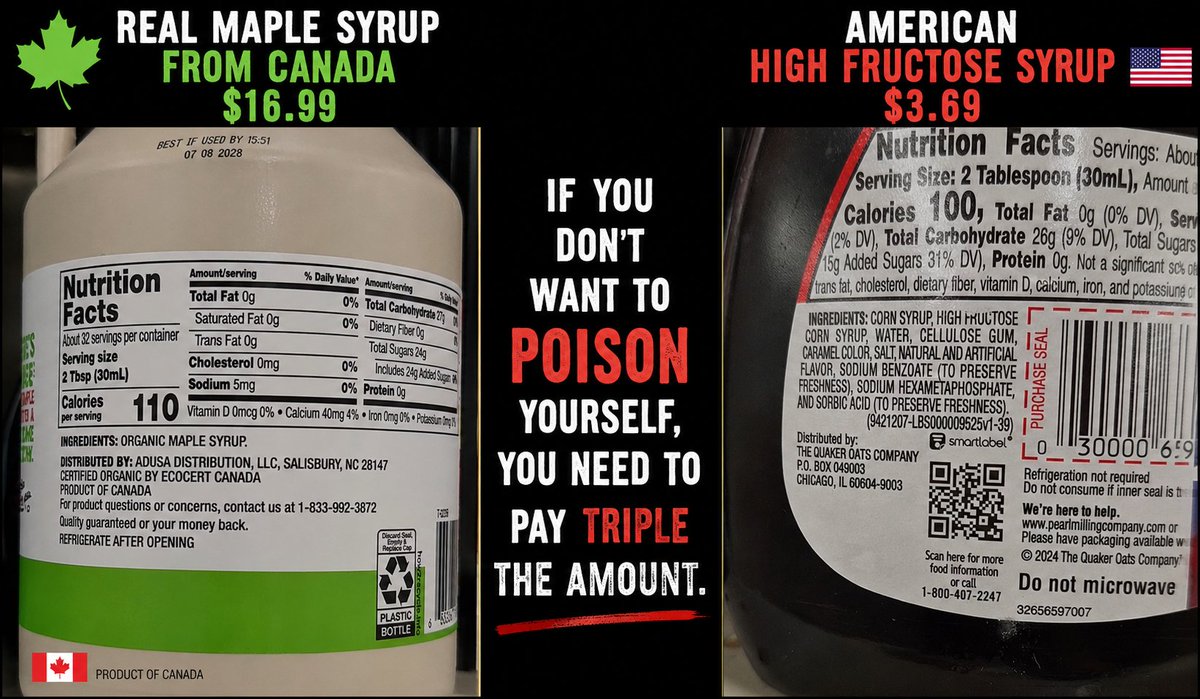
Real food is being priced into a luxury.
$17 for organic maple syrup vs. $4 for a bottle of corn syrup and chemical dyes. They aren’t just inflating the economy, they are systematically making health unaffordable.
If you want the “cheap” option, you have to ingest a chemistry experiment. That is not an accident. That is a policy.
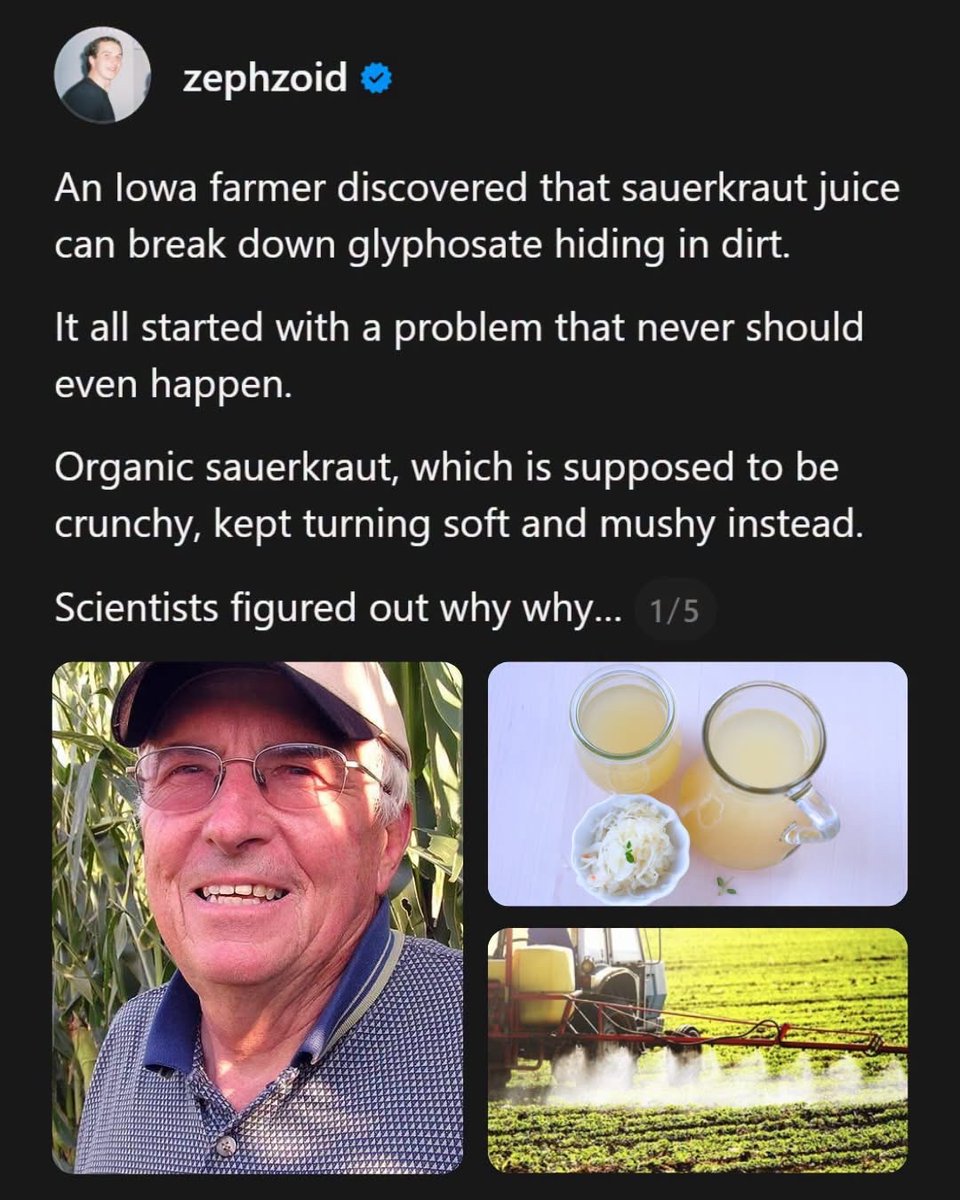
An Iowa farmer just revealed that sauerkraut juice can break down glyphosate hiding in dirt.
This all started with a problem that should never even happen.
Organic sauerkraut, which is supposed to be crunchy, kept turning soft and mushy instead…
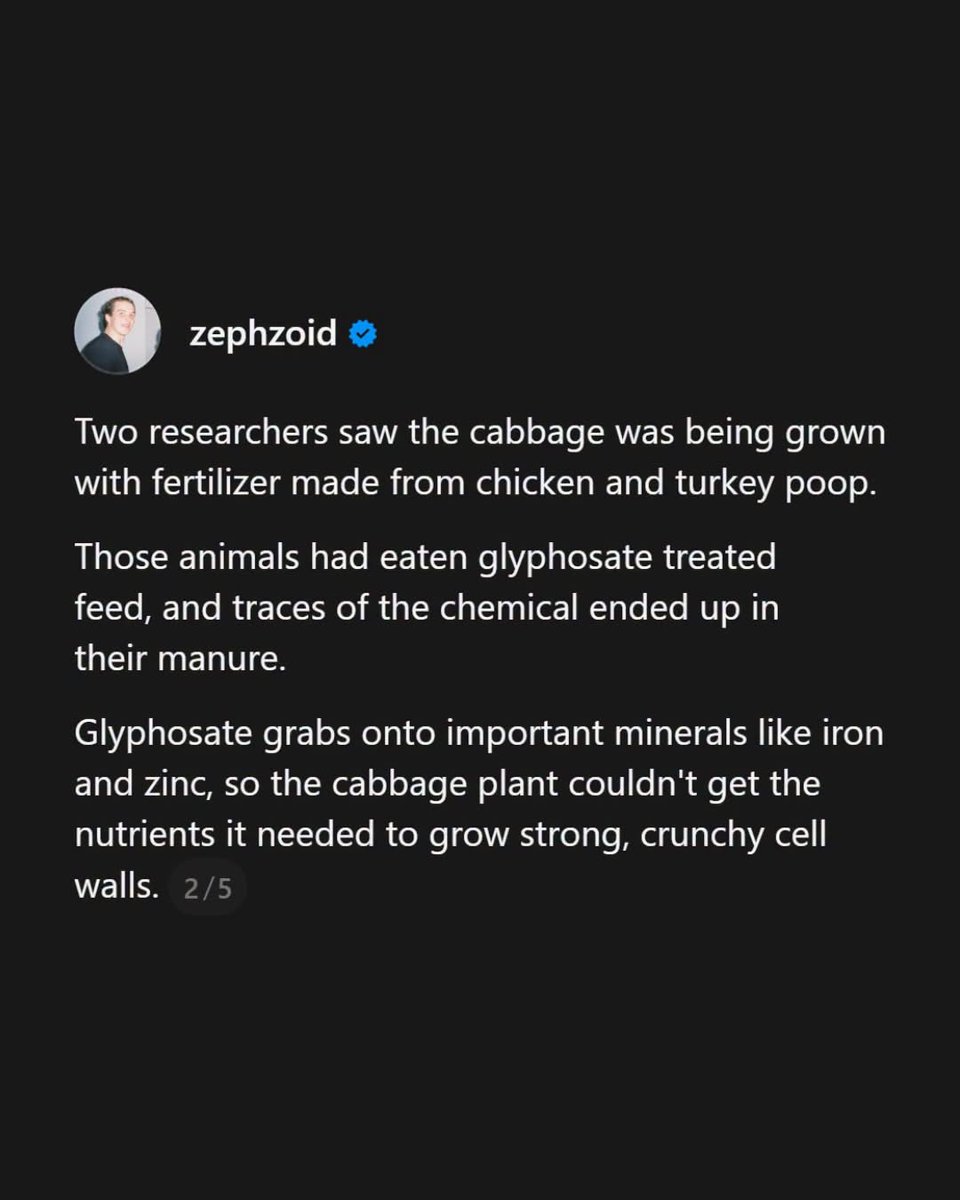
Two researchers figured out the cabbage was getting fertilizer made from chicken and turkey poop.
Those animals had eaten glyphosate treated feed, and traces of the chemical ended up in their manure.
Glyphosate grabs onto important minerals like iron and zinc, so the cabbage plant couldn’t get the nutrients it needed to grow strong, crunchy cell walls.
That’s the part that should surprise you.
Even food labeled organic can get exposed to glyphosate without anyone realizing it.
Then the scientists took the leftover juice from making sauerkraut, full of a helpful bacteria, and poured it onto glyphosate contaminated soil.
The juice broke down 80 to 90 percent of the glyphosate in just 6 to 7 months, and the corn grown there afterward actually grew better too.
A farmer named Michael McNeill confirmed it actually works.
This is an awesome finding, especially when the reality is most farmers in this country are trapped in cycles of dependency, with glyphosate at the forefront of commodity crop production.
Luckily, there are plenty of farmers out there going completely chemical free, and you might be surprised how many you can find near you using the Localize app.
✨ Wait until they find out vinegar with salt and couple drops of dawn will do to the chemtrails 😉🤭
The year is 2026… everyone is microdosing and optimizing..
We spent a decade being told seed oils were "heart healthy."
Now in the very same playbook: we’re slapping "protein-rich" labels on cookies fermented from PET bottles and cornstalks, and branding it innovative.
This is the whole 2026 food-marketing SCAM in one bite — stuff anything with synthetic protein and a health halo just... appears.
Doesn't matter what it started as.
Your body has zero evolutionary blueprint for metabolizing yeast-converted ethylene glycol but I digress.
Eating plastic on purpose was never supposed to be the punchline.
It’s sick.
It’s sad.
Now it's in development.
Very soon it’ll be a pitch deck.
Real food does not require a fermentation tank or a 3D printer but hey, anything to get those protein numbers up, bro.