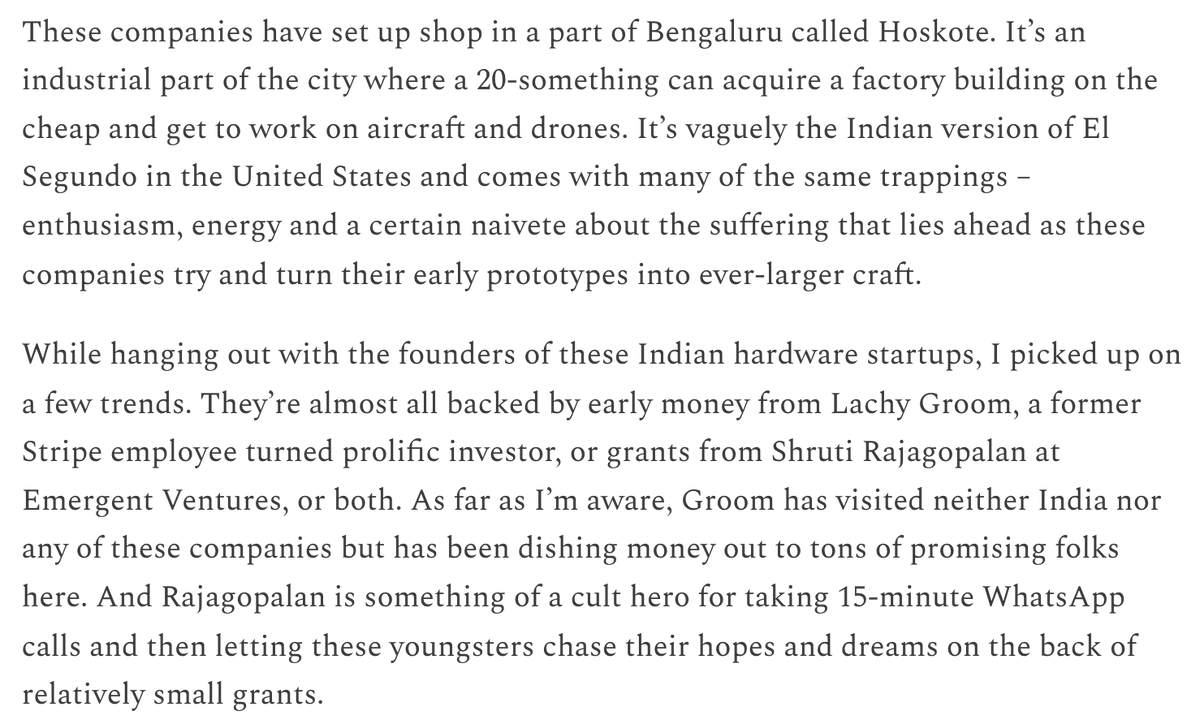
Somehow, @srajagopalan and @lachygroom have managed to fund a hard-tech revolution in India.
There's something rather massive going on, and everyone else has missed it.
Our story - https://t.co/SvpOrKT0Fx
had absolute blast building and bringing this live with team
every single time we onboarded one of the partners to our disbelief both the model and api worked just fine
and incredibly fun working with this group of our amazing very early partner, here for more
Announcing the beta release of the Pi API. We’ve partnered with companies across diverse industries to adapt our models to their robots and applications, from harvesting strawberries to assembling servers. Now we’re opening access to more teams.
Robotics has a distribution problem. Today, Ultra is announcing $62M in funding to solve it, including a $50M Series A led by @hiFramework.
We believe that deployment is the bottleneck in robotics.
It’s relatively easy to make a robot look impressive in a controlled environment. It’s much harder to put a robot into the open world, make it useful, keep it running, earn the trust of the people working alongside it, and do that over and over and over again.
So that’s what we’re focusing on.
What about dis-assembling?
Excited to share some results (more coming next week!) deploying pi0.7 on a AI hardware dis-assembling task partnering with @physical_int. The robot autonomously removes retaining bars, riser boards, and fans with only 1.5 hours of post-train.
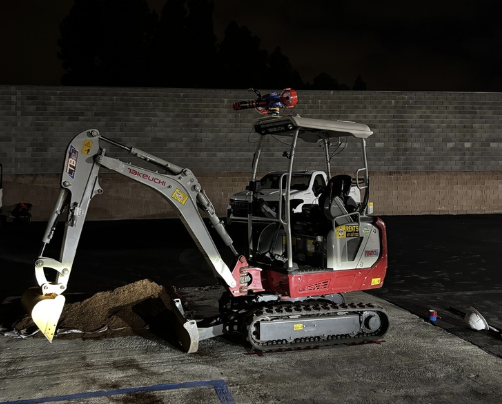
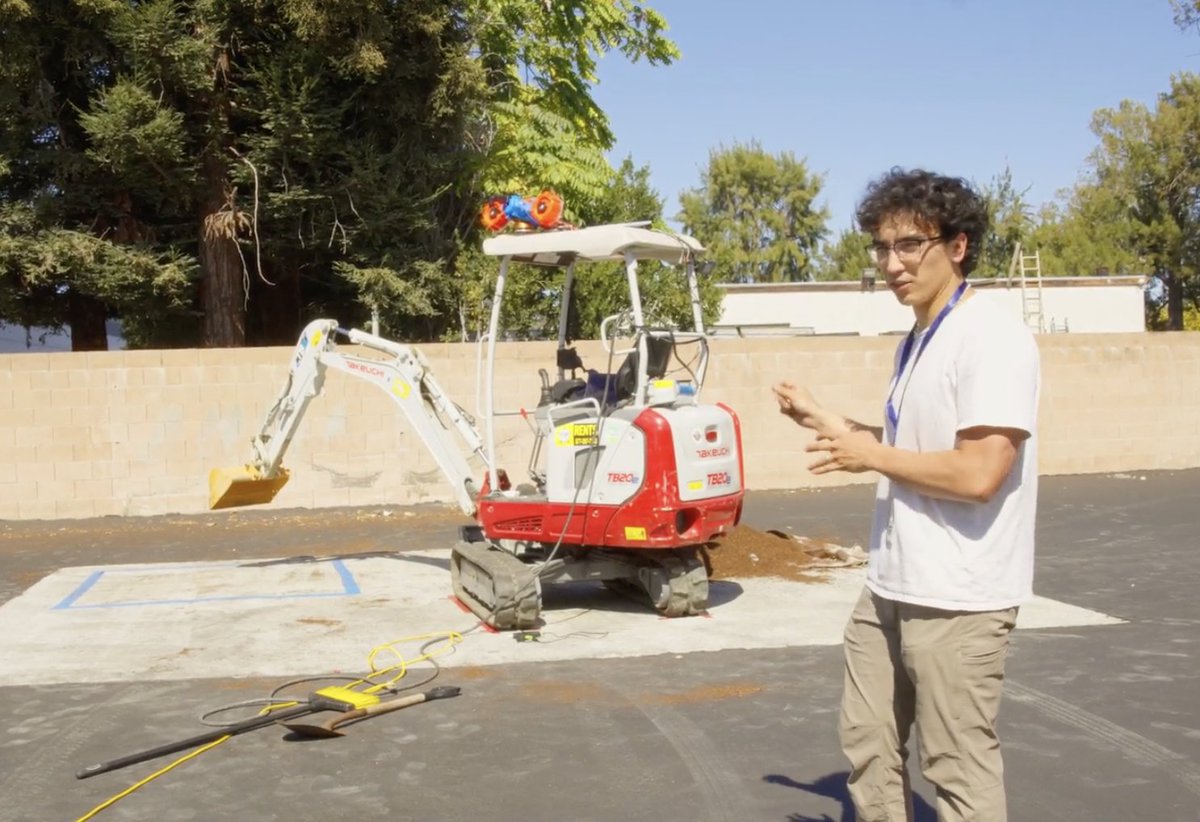
Over the weekend, I put an unreleased checkpoint of π0.7 inside an excavator and placed 2nd at the @ActorLabs + @physical_int 36hr hackathon.
With about an hour of embodied data (3 cameras and joystick values, no joint angles), the policy could continuously move dirt with a single prompt.
This was so straightforward to get working (pi is cooking) we spent the rest of the hackathon mounting a Nerf minigun on the roof. We added a people searching/tracking + firing feature to prevent people from getting too close to the dangerous machinery (ai safety feature).
Here’s how we built it + more details (data collection, hardware hax, sim2real, video of me getting shot)🧵
π is looking to opportunistically hire for a very special role : )
we're growing our contributions to the robotics ecosystem and hiring a scrappy generalist with a deep understanding of robotics & hardware to own this push. it'll be an open mandate to roll up your sleeves to do fun projects and build an incredible community (e.g. sponsoring grants, giving away HW, hackathon ecosystems).
please dm / tag exceptional people who have worked in public!
We finished evaluating π0.7, our new model at Physical Intelligence. What I'm most excited about with π0.7 is that it's starting to show some surprising emergent compositional generalization, being able to both perform complex tasks and learn new tasks just from instructions.
Our newest model, π0.7, has some interesting emergent capabilities: it can control a new robot to fold shirts for which we had no shirt folding data, figure out how to use an appliance with language-based coaching, and perform a wide range of dexterous tasks all in one model!
We’ve developed a memory system for our models that provides both short-term visual memory and long-term semantic memory.
Our approach allows us to train robots to perform long and complex tasks, like cleaning up a kitchen or preparing a grilled cheese sandwich from scratch 👇
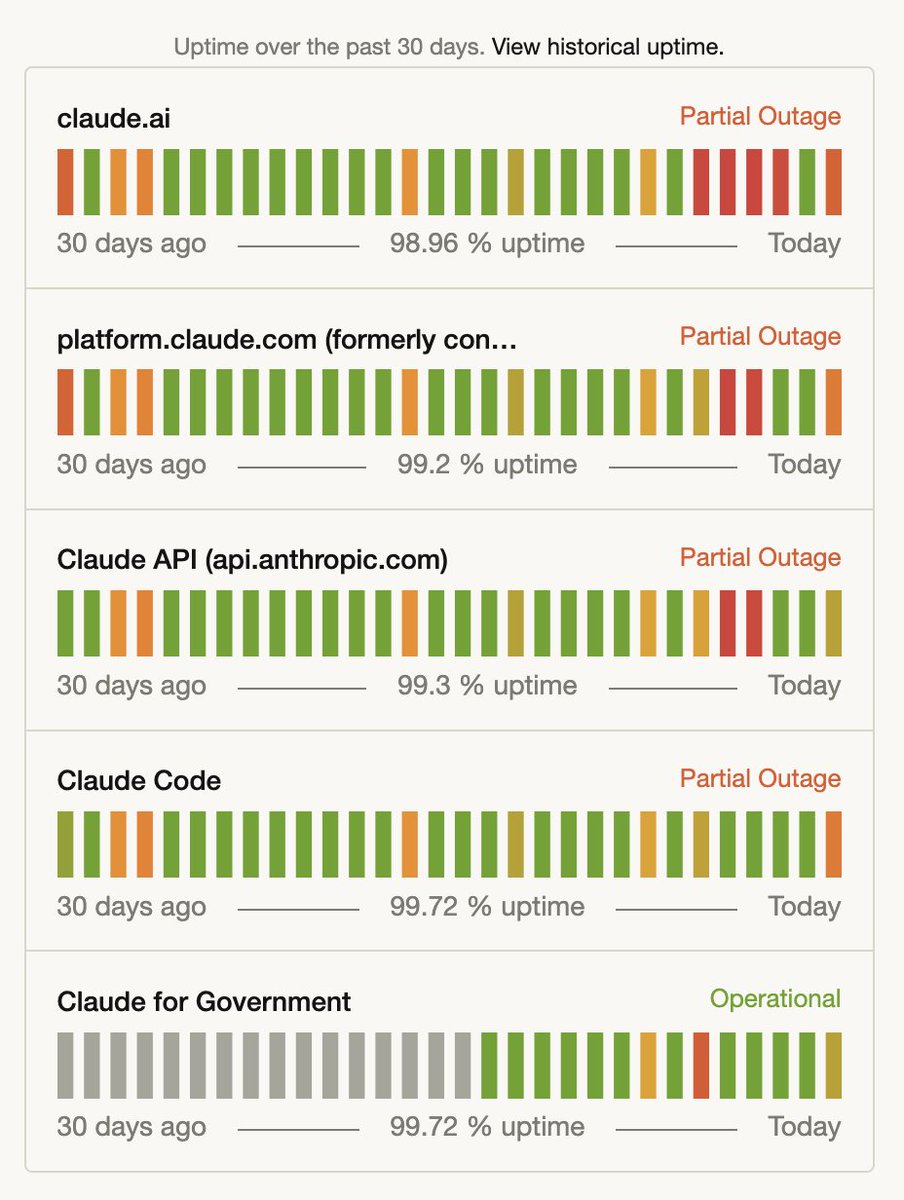
hot take: may be we shouldn't apple same lens of reliability everywhere. anthropic to me is kinda offline tool and some amount of downtime is ok/tolerable for the speed they ship. but again these numbers are awful regardless
On one end, the Anthropic team is a massive user of AI to write code (80%+ of all code deployed is written by Claude Code). They ship amazingly fast.
On the other hand, seeing these beyond terrible reliability numbers suggests there might be a downside to all this speed:
General-purpose AI models are behind some of the most exciting applications we now can't live without. We envision that an analogous “physical intelligence layer” built with models like π0.6 will similarly spur a new wave of applications for the physical world.
We’ve recently begun working with a handful of companies that have deployed their robots to do real-world, useful things.
https://t.co/udVO9fV0PH
Our model can now learn from its own experience with RL! Our new π*0.6 model can more than double throughput over a base model trained without RL, and can perform real-world tasks: making espresso drinks, folding diverse laundry, and assembling boxes.
More in the thread below.