Curious embryo fact 2/25
The amnion is an extraembryonic membrane that enabled animals to reproduce on land.
It is essentially a portable aquarium.
#devbio#embryo#reproduction
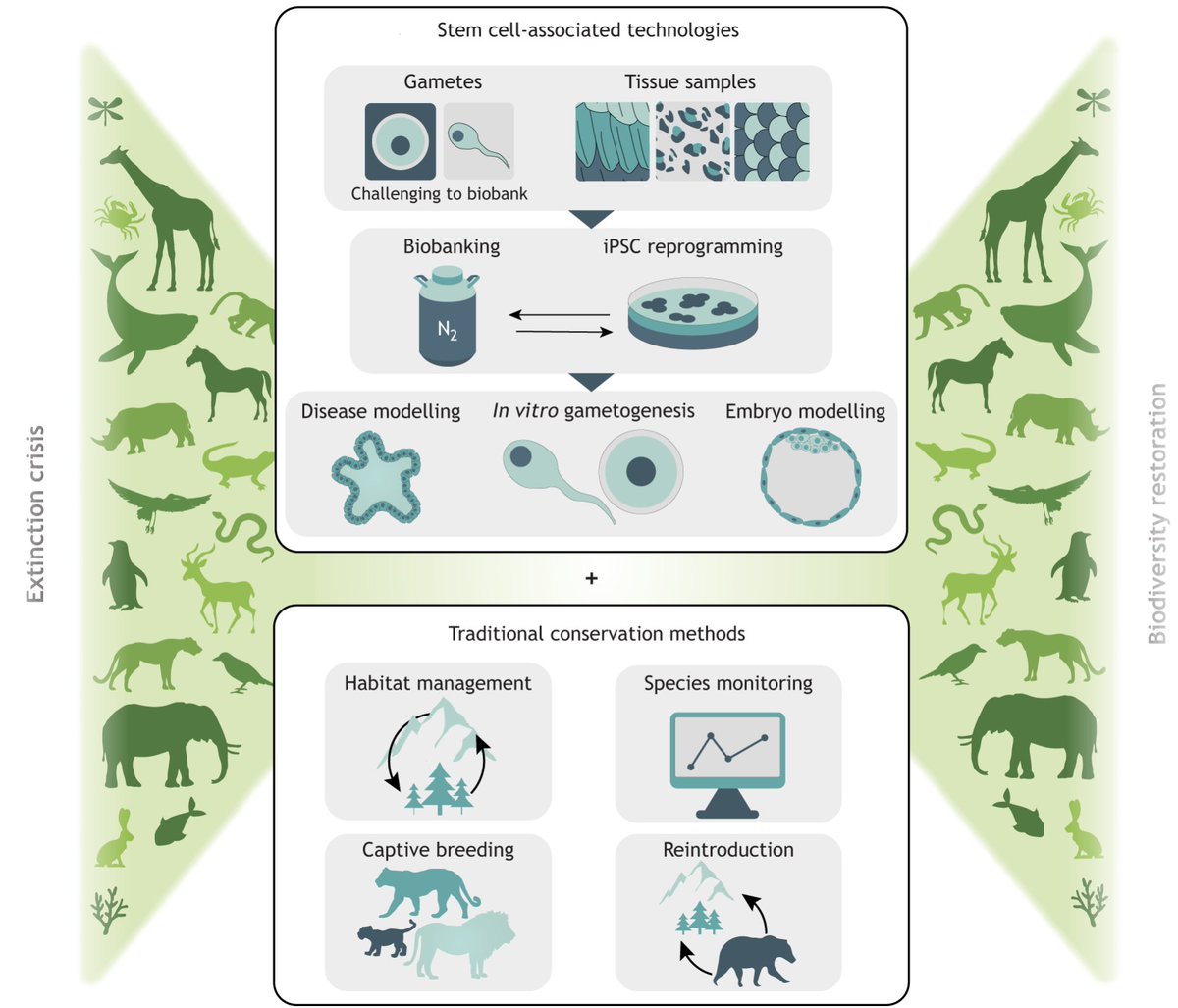
Our spotlight "Advancing stem cell technologies for conservation of wildlife biodiversity" now online in @Dev_journal's special issue on Uncovering Developmental Diversity. It has been an incredible privilege working with this fantastic group of authors!
https://t.co/fgGhmT9lcq
Our study on marmoset and human trophoblast stem cells is now featured in the latest issue of @CellStemCell.
Dive in for "common and uncommon findings" with a preview from Hiroaki Okae - much appreciated!
https://t.co/cq9XPQHul4
https://t.co/lLOHzEB6SC
Very excited to share our latest work on trophoblast specification in the marmoset, a superficially implanting species. Thank you to @d_siriwardena for expanding my horizons beyond the amnion.
@CellStemCell@boroviak_lab@Loke_CTR@PDN_Cambridge
https://t.co/ph9fuDI28f
Online Now! Marmoset and human trophoblast stem cells differ in signaling requirements and recapitulate divergent modes of trophoblast invasion https://t.co/Hw4kr7oM88 #stemcells
I am very excited to share our latest work published in @CellStemCell! We propose the marmoset as a non-human primate model of shallow implantation and have derived trophoblast stem cells that match peri- and postimplantation trophoblast.
https://t.co/BC3W4yTPFV
[1/2]
Marmoset Trophoblast Stem Cells are here!
Delighted with our article out in Cell Stem Cell today!
Please find a short video about our study and its people below!
Congratulations to the fabulous first authors @d_siriwardena and @Cl_munger
https://t.co/6KAJbgZPlD
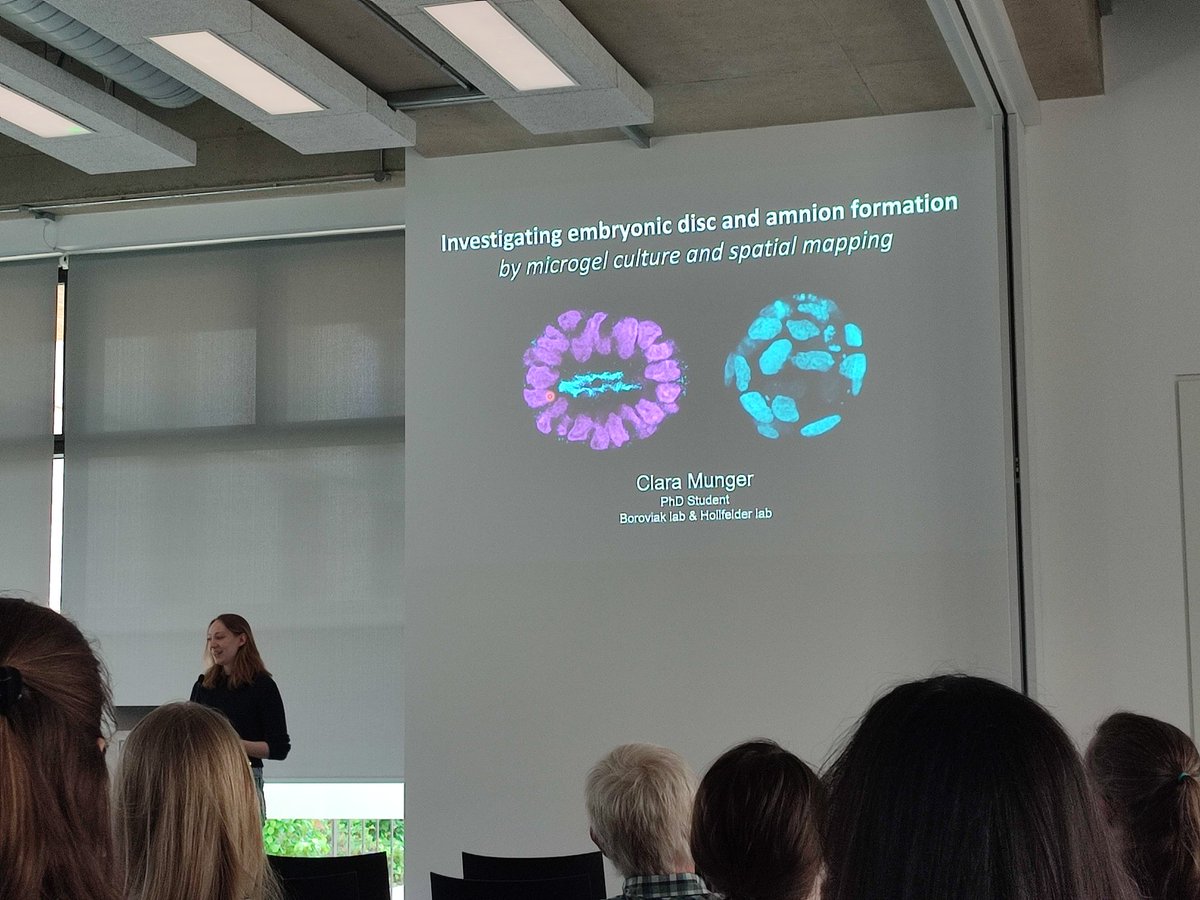
Wonderful breakfast chat on scientific life in general with @francesarnold, moderated by our researchers Lise Boursinhac, Josephin Holstein and Clara Munger. No doubt she has energy enough for a plenary talk this afternoon!
https://t.co/hKE4BruiV9
Nearly 200 visitors came to our @Cambridge_Fest events. We watched High Life and The Pod Generation and talked stem cell based embryo models with @BabrahamInst and @PDN_Cambridge thank you to everyone who came and to all who contributed to make these happen! #ReproductiveFutures
The 2024 GRS Signaling by Adhesion Receptors (July 13 - 19) is now open for applicants!! I am chairing this meeting together with @Valenciathecity in Manchester, NH. A GRC will follow this meeting! Apply and submit your abstract!
https://t.co/RdNsL14W9p
Please retweet! 🙏
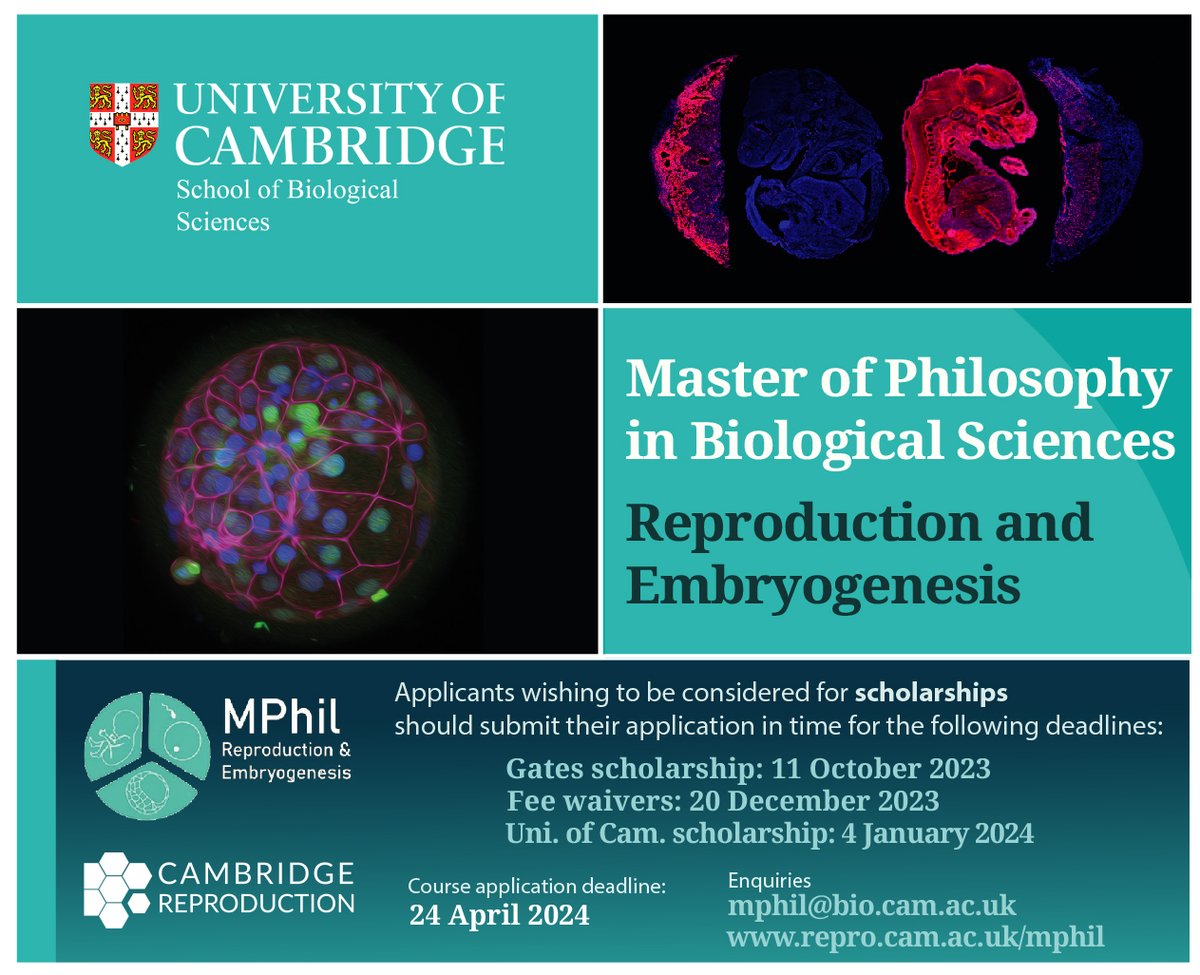
Thrilled to announce our MPhil programme on Reproduction and Embryogenesis at the University of Cambridge!
Apply before the scholarship deadlines and become part of an amazing research community here at PDN and the Centre for Trophoblast Research!
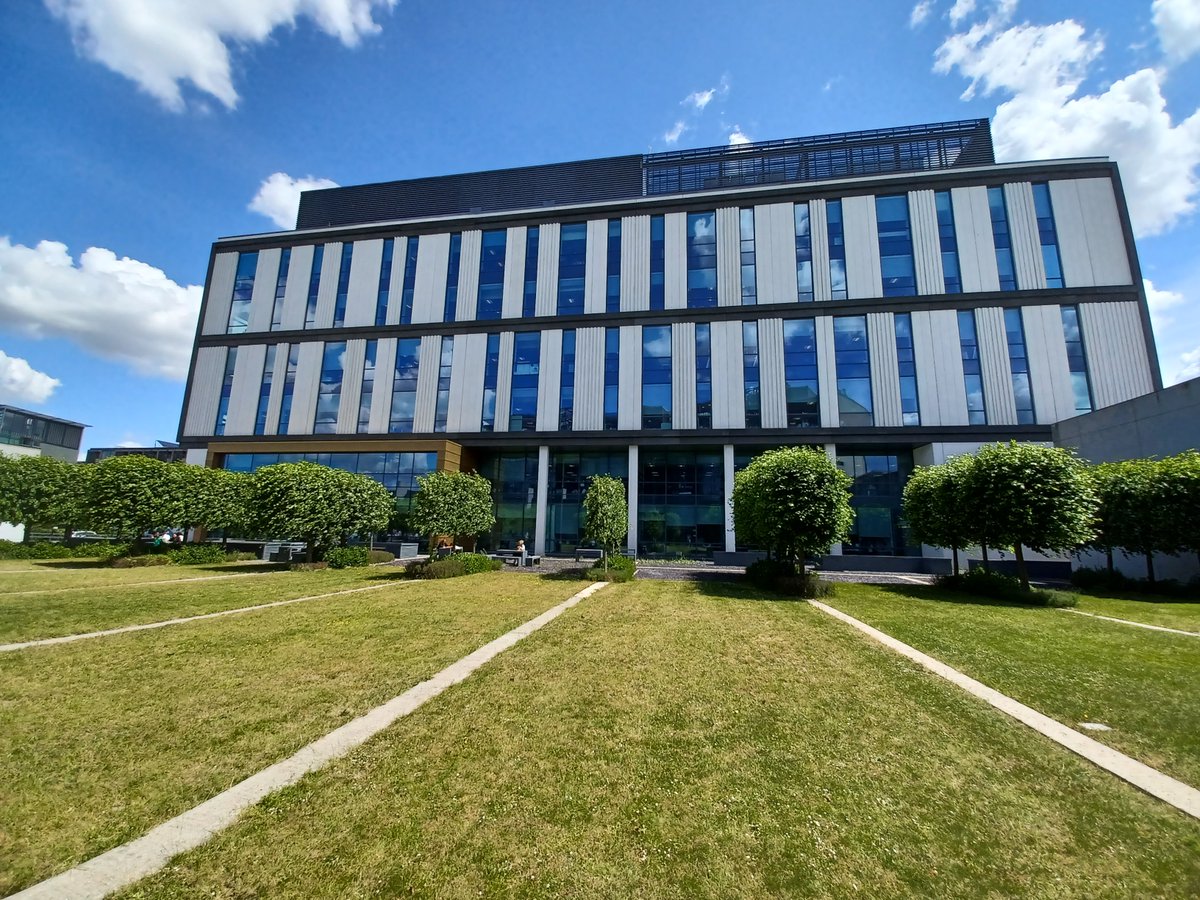
Countdown to launching our second lab site at the Cambridge Stem Cell Institute!
Tremendously grateful to be part of this amazing research centre from the 1st October 2023.
Looking forward to plenty of synergies, exciting technologies and great collaborations!
What is the molecular machinery behind symmetry breaking in the human embryo?
Ask the most interesting questions in the field and pioneer technology to find the answers.
https://t.co/mC12ulTn58
Delighted to share my first Co-first-authorship paper published in @NatureComms!
It’s the result of amazing teamwork especially with @t_n_kohler and @JoachimDeJonghe over the past years. Thank you both for this great collaboration and everyone else involved!
Thrilled to see this project out and very honoured to have been involved! 🥳
Take a look at how microfluidics enabled @t_n_kohler, @AnnaEllermann and @JoachimDeJonghe to uncover new regulators of naïve pluripotency!
Now out in @NatureComms! 🤩 "Plakoglobin is a mechanoresponsive regulator of naive pluripotency"
I can't express how excited I am to see it published!
I think I now have more questions than answers, but I guess that's good when doing science! 😇
https://t.co/1oEPJt6wpx
Our open-access protocol "Generation of liver mesenchyme and ductal cell #organoid co-culture using cell self-aggregation and droplet #microfluidics" is now available @STARProtocols.
Collaboration between @MeriHuchlab and @hollfelderlab🥳
@CellPressNews
https://t.co/YIfja1DX3i
Human PGCs and amnion arise from transcriptionally similar TFAP2A-positive progenitors at the posterior end of the embryo.
And - TFAP2A is crucial for initiating PGC fate!
https://t.co/epIm4WtBdE
Congratulations to all authors, great collaboration with the Surani lab!