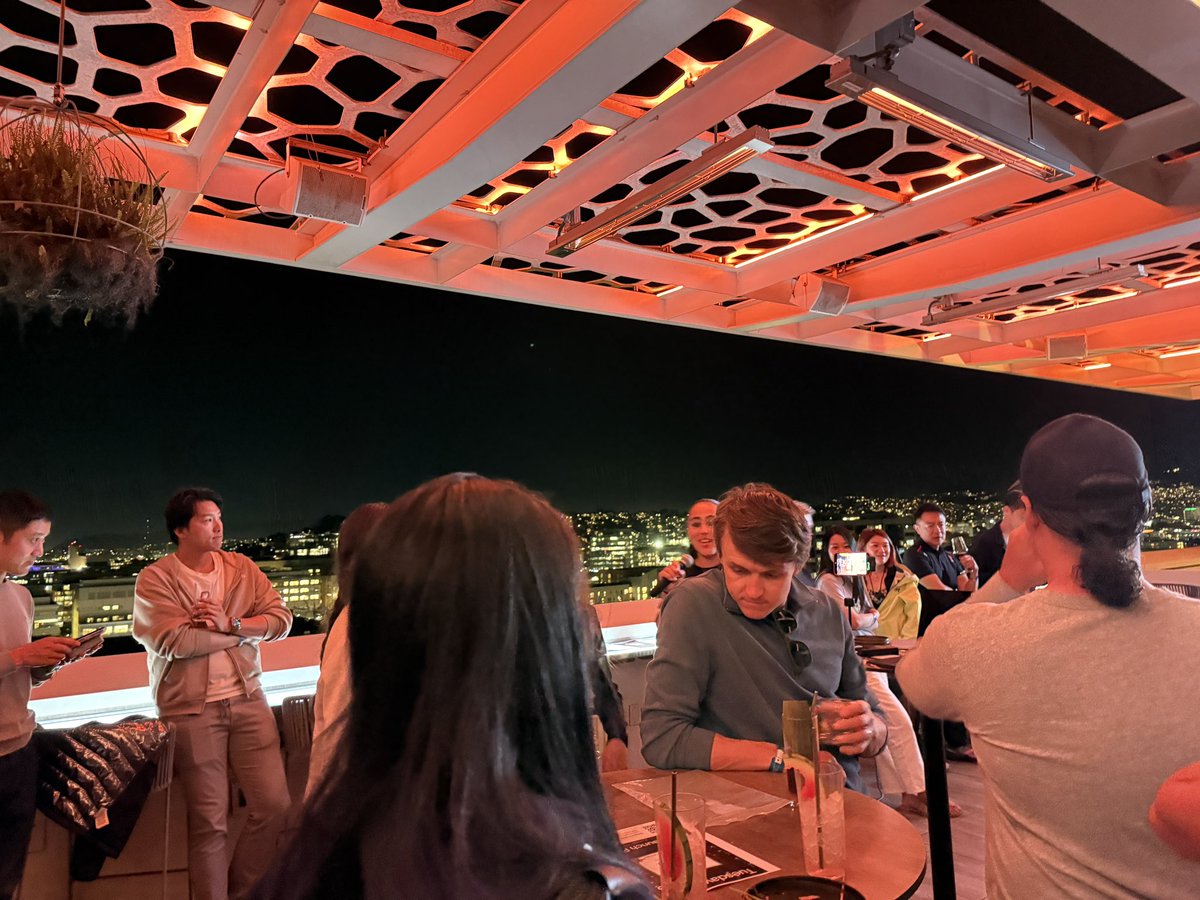
I'm a @typelessdotcom Pro user. I dictate more than I type, mostly to get my exact words down before the thought is gone.
A few versions ago it stopped doing that. Today I dictated 'draft a reply, core points are A, B, C.' I meant to carry that into another agent that has the context for this specific thread, but Typeless took it as an instruction meant for itself. It wrote the email instead, and kept none of what I actually said.
For a company that calls itself 'the voice OS company', I don't think delivering the result is the wrong call. No AI product right now wants to stay a copilot or a feature.
The question is when, and who decides.
When should an AI product/agent start delivering the result instead of staying as a copilot?
And who evals the result was good enough, and is there a way back if it wasn't?
Paying for it doesn't make my problem the roadmap. But I keep thinking: at the point where the intelligence in the product decides it's smart enough, what if it handed me the choice instead? My transcript stays the output, and its generated version sits underneath it as a suggestion. After a few rounds I'd know whether to switch to the agentic version.
Handing permission and evaluation rights back to users isn't a step backward. It might be a smooth way to earn the step forward instead.
My communication habits are starting to get rewired by AI’s context habits.
Something I’ve been following had a new update today, so I opened WeChat to talk about it.
Without thinking, I went straight to the last chat where this topic had come up and just continued from the existing context.
A few messages in, I suddenly realized:
Wait. There’s a person on the other side of this chat!
My old flow was:
something happens → who do I want to talk to? → find that person → start the conversation.
Now it’s becoming:
where does this context live? → find that thread → continue.
Which is exactly how I use AI.
When a topic gets a new update, I go back to the old thread. The context is already there, so I don’t need to reconstruct everything from scratch. Apparently, after doing this long enough, my brain has started adopting the same indexing system.
Not “which person owns this conversation?�� More like “where does this problem’s context live?”
But when the problem gets hard enough, the logic changes again.
I’ll still go find the person I trust most on that problem, even if I have to rebuild the context. Same with AI: simple continuation follows context; difficult problems make me switch to the model I trust most.
So maybe we’re constantly routing between two things:
context and intelligence.
When the existing context matters more, continue the thread. When the problem matters more, bring in the better brain.
We used to think of a conversation as something between two people.
Maybe it increasingly becomes a persistent context instead: the problem stays, humans come in, models come in, each contributing intelligence when useful.
Somewhere along the way, the chat itself went a little open-source…
#HumanObservation
Sora was killed by @OpenAI in March. The company with the best-known model and the most distribution to run it decided a standalone video product wasn't worth the compute. Independent video generation just hit a dead end.
But a category dying is not the same as its value dying. Video generation didn't disappear. It decomposed into three games, and the value across them is wildly uneven.
A feature. The most certain outcome, and already complete. The model gets absorbed into a giant's ecosystem and reappears as a single button threaded across everything they own, the assistant, the video app, the cloud. It is no longer a product anyone opens. It is a capability inside someone else's empire. For the giants, this was never an industry. It was a feature.
A commodity. When the same quality is available from ten vendors and the cheapest model is nearly free to run, no one can charge a premium. That is exactly what happened. API prices are in free fall, roughly 25x between the most and least expensive, while the quality difference between them is tiny. Open-weight models like Wan pushed the floor to zero. And the quality lead has moved on too: @runwayml launched as the benchmark leader in late 2025, but the top of the boards now belongs to names like @Kling_ai and Seedance. The teams winning here aren't running a startup's economics. They own distribution, their inference is cheap, and they can afford to sell video near cost because it feeds a much larger ecosystem. Once that happens, the raw model stops being a business and becomes a utility.
A substrate. This is the one that matters, and the one almost no one outside the field sees coming. A model that generates the next frame of a video is, underneath, doing something close to predicting how the physical world evolves. Push that far enough and it stops being a video tool and becomes a world model: a system that predicts how an environment changes in response to an action. That is the foundation layer for robotics, embodied AI, and simulation. This is where the capital is rushing, because this is where the real value pooled. The same core capability that made pretty clips is being repurposed into the engine underneath the next wave of AI.
Naturally, this is where the stories begin. Half the companies still standing now call themselves world model companies. For most, that is a fundraising story, not a capability. Making a pretty ten-second clip and building an action-conditioned, physically consistent simulator take very different things: the right architecture, far more compute, and a real research pedigree. Pretty pixels are not usable physics. So when a video company rebrands as a world model company, the question is how much of it is real, and how much is just the exit narrative for a business that got commoditized.
One of the companies we've worked with sits on exactly this fault line, and it's the clearest case I've seen of positioning right. From the outside @ViduAI_official looks like a casualty of the reshuffle. It isn't. The tell is the order of operations: its founders shipped one of the world's first multimodal diffusion models before they ever touched video. That is the difference between an architecture company that happened to make video and a video company pretending to have one. Still, architecture alone wasn't enough. It lacked the frontier compute and the embodied ecosystem to make the leap, until a giant stepped in and supplied both, completing the picture. The bet remains unproven, and a real one. But of everyone making this leap, Vidu is one of the most credible attempt I can see.
That is the pattern. Value never dies, it migrates. The ones who survive a reshuffle are rarely the ones who fought hardest to stay put. They saw it move, and got there first.
I wrote recently that impermanence is the only constant. This is what that looks like up close. The cycles never stop, and nothing stays in the wind forever, not even the ones who positioned right. So the one skill that doesn't expire is reading the shift early and standing where it's heading. And the rare few who have watched it happen enough times stop waiting for the path to appear. They draw their own.
The map is redrawing right now. Most people will read about it next year.
Most people see an agency as a service. I've come to see it as a vantage point.
Most of my clients build on the frontline of AI. So I see where capital is flowing, and just as clearly, where it's quietly withdrawing from domains it used to flood. Watch that enough times and you stop seeing companies. You see the shape of a cycle.
I once wrote that I'd stopped chasing consensus, that I wanted to pick one vertical and become time's friend. I still believe it. But choosing the right vertical is not a shield. Even if you choose well, even if momentum carries you somewhere high, none of it means you get to stay in the wind. You will find yourself outside the trend one day. That's not failure. That's the rule.
The constant was never that a vertical climbs forever. It's that the cycles always return. You only get to decide whether the thing you've committed to is worth crossing that pain for, again and again, and staying at the table.