Born and raised in NYC. Wherever I may travel - Always a New Yorker at heart. My passion: History #nuyorican. Inappropriate tweets & people will be blocked
Today in History
November 17th
1998
Died On This Day
Esther Rolle, the acclaimed American actress best remembered for portraying Florida Evans on the groundbreaking television sitcoms Maude and Good Times, died from complications of diabetes in Culver City, California, at the age of 78. Her death marked the loss of a pioneering performer whose talent, dignity, and commitment to positive portrayals of African American families helped transform American television.
Esther Elizabeth Rolle was born on November 8, 1920, in Pompano Beach, Florida, to Bahamian immigrant parents Jonathan and Elizabeth Rolle. She was the tenth of 18 children and grew up in a large, hardworking family that emphasized education, discipline, and cultural pride. Her upbringing profoundly influenced the strong, principled women she would later portray on screen.
Rolle moved to New York City, where she pursued her education and developed an interest in acting and dance. She studied at several institutions, including Hunter College, and became involved in the performing arts. Early in her career, she joined the Negro Ensemble Company, an influential theater organization dedicated to showcasing African American talent and stories.
Her breakthrough came in 1972 when she was cast as Florida Evans, the outspoken but compassionate housekeeper on the CBS sitcom Maude, starring Bea Arthur. Rolle’s performance quickly made Florida a beloved character, leading to the creation of the spinoff series Good Times in 1974.
On Good Times, Rolle starred alongside John Amos as Florida Evans, the devoted mother of a working-class African American family living in a Chicago housing project. The series addressed poverty, unemployment, racism, and family struggles while celebrating resilience, humor, and love.
Rolle became widely respected for insisting that the show portray Black family life with dignity and authenticity. She was particularly concerned about the increasing emphasis on J.J. Evans, played by Jimmie Walker, and his exaggerated comedic behavior. She believed television had a responsibility to present African American families as intelligent, loving, and capable of overcoming adversity.
In 1977, Rolle left Good Times following creative disagreements but returned for its final season in 1978–1979. Her portrayal of Florida Evans remains one of the most recognizable and influential maternal roles in television history.
Beyond Good Times, Rolle enjoyed a distinguished career in television, film, and theater. In 1979, she won a Primetime Emmy Award for Outstanding Supporting Actress for her performance in the television movie Summer of My German Soldier. Her other notable appearances included I Know Why the Caged Bird Sings (1979), Driving Miss Daisy (1989), How to Make an American Quilt (1995), Rosewood (1997), and Down in the Delta (1998).
Her contributions extended beyond entertainment. In 1987, she was inducted into the NAACP Hall of Fame, and in 1990, she became the first woman to receive the NAACP Chairman’s Civil Rights Leadership Award in recognition of her efforts to improve the representation of African Americans.
Rolle was married to Oscar Robinson from 1955 until their divorce in 1975. She had no children. Despite her fame, she remained deeply connected to her Florida roots and her family’s values.
Esther Rolle was laid to rest at Westview Community Cemetery in her hometown of Pompano Beach, Florida.
Her legacy lives on through her unforgettable performances and her determination to challenge racial stereotypes in Hollywood. More than a talented actress, Esther Rolle was a trailblazer who used her platform to demand respect, equality, and authentic representation. Her portrayal of Florida Evans continues to inspire generations, ensuring that her contributions to American television and African American cultural history will never be forgotten.
#OTD
Today in History
November 17th
1558
Died on this Day
Queen Mary I of England died at St. James’s Palace in London at the age of 42, bringing an end to one of the most turbulent reigns in English history. Known to history as “Bloody Mary,” she was England’s first woman to rule as queen in her own right, rather than as the wife of a king. Her death marked the end of England’s last fully Catholic monarchy and paved the way for the accession of her younger half-sister, Elizabeth I.
Mary was born on February 18, 1516, to King Henry VIII and his first wife, Catherine of Aragon. As a young princess, she enjoyed a privileged upbringing, but her life changed dramatically when her father sought to annul his marriage to Catherine so he could marry Anne Boleyn. Henry’s break with the Roman Catholic Church transformed England’s religious landscape and left Mary declared illegitimate, stripped of her title, and separated from her mother.
Following the death of her younger half-brother, King Edward VI, in July 1553, Mary faced a struggle for the throne. Protestant leaders attempted to place Lady Jane Grey on the throne to prevent a Catholic restoration. However, Mary gathered widespread support, defeated the attempt to exclude her, and entered London in triumph. Jane Grey’s reign lasted only nine days before Mary was proclaimed queen.
Mary was crowned on October 1, 1553, at Westminster Abbey. Determined to restore Roman Catholicism, she reversed many of the Protestant reforms introduced under her father and brother and reconciled England with papal authority. Her religious policies soon became increasingly severe.
Between 1555 and 1558, approximately 280 Protestants were burned at the stake for heresy, including prominent religious leaders such as Archbishop Thomas Cranmer. These executions earned Mary the enduring nickname “Bloody Mary,” a reputation reinforced by Protestant writers after her death.
In 1554, Mary married Prince Philip of Spain, who later became King Philip II. The marriage was deeply unpopular among many English subjects, who feared growing Spanish influence. Mary desperately hoped to produce an heir who would secure the Catholic succession, but her pregnancies proved to be false alarms, leaving her without children.
Her final years were marked by disappointment, illness, and political setbacks. In January 1558, England lost Calais to France, ending more than two centuries of English possession of the strategically important port. The loss was a devastating blow to Mary’s prestige.
By the autumn of 1558, Mary was gravely ill, possibly suffering from cancer or another serious disease. The exact cause of her death remains uncertain. With no surviving children, she reluctantly accepted that her Protestant half-sister Elizabeth would inherit the throne.
Mary’s death ended her five-year reign and began the Elizabethan era. Elizabeth I, just 25 years old, would rule England for the next 44 years, restoring Protestantism and overseeing a period remembered for cultural achievement, maritime expansion, and growing English influence.
Mary was buried at Westminster Abbey on December 14, 1558. Nearly 45 years later, Elizabeth was buried in the same tomb. Their shared monument carries an inscription remembering the two sisters, once divided by religion and politics, united in death.
Today, historians recognize Mary I as a complex figure. Although remembered primarily for religious persecution, she also demonstrated extraordinary determination in securing her throne and establishing the authority of a reigning queen in a male-dominated society. #OTD
Today in History
November 17th
1934
Lyndon B. Johnson Marries Lady Bird Taylor in San Antonio, Texas
On November 17, 1934, future United States President Lyndon B. Johnson married Claudia Alta “Lady Bird” Taylor at St. Mark’s Episcopal Church in San Antonio, Texas. Johnson was 26 years old, while his bride was 21. Their marriage began a remarkable partnership that would span nearly four decades, surviving political struggles, personal hardships, and the extraordinary demands of the American presidency.
Lyndon Johnson, a politically ambitious young congressional secretary from Texas, first met Lady Bird Taylor in September 1934 through a mutual acquaintance in Austin. Lady Bird, a graduate of the University of Texas, came from a prosperous family in East Texas. Despite their different personalities, Johnson was immediately captivated by her intelligence, warmth, and quiet confidence. Their courtship moved at an astonishing pace. Johnson proposed marriage during their first date, although Lady Bird initially hesitated, preferring to take more time before making such an important commitment.
After approximately ten weeks of courtship, Lady Bird accepted his proposal. The couple married in a modest ceremony officiated by the Reverend Arthur R. McKinstry. Their wedding reflected Johnson’s impatient, determined personality and the beginning of a relationship that would profoundly influence American political history.
The wedding itself was so hastily arranged that Johnson had not purchased a wedding band. His friend Dan Quill obtained a simple ring from Sears, Roebuck & Company for just $2.50. Following the ceremony, the newlyweds traveled to Mexico, where they enjoyed their honeymoon at the famous floating gardens of Xochimilco.
Lady Bird soon became an indispensable figure in Johnson’s political career. When he ran for Congress in 1937, she helped finance his campaign using money from her inheritance. During World War II, she managed his congressional office while he served in the Navy. In 1943, she purchased an Austin radio station that eventually helped establish the family’s considerable business fortune.
The couple welcomed two daughters, Lynda Bird in 1944 and Luci Baines in 1947. As Johnson rose through the political ranks, becoming a congressman, senator, Senate majority leader, and vice president, Lady Bird remained one of his most trusted advisers.
Their lives changed dramatically on November 22, 1963, when President John F. Kennedy was assassinated in Dallas. Johnson assumed the presidency, making Lady Bird First Lady of the United States. During his administration, she championed environmental conservation, highway beautification, and the preservation of America’s natural landscapes. She also supported her husband’s Great Society initiatives and civil rights efforts.
Their marriage endured until January 22, 1973, when Lyndon Johnson died of a heart attack at age 64. They had been married for more than 38 years. Lady Bird survived him for another 34 years, dying on July 11, 2007, at age 94.
What began as a whirlwind romance in Depression-era Texas became one of the most consequential political partnerships in American history. Lady Bird’s loyalty, business judgment, and independent accomplishments helped shape the legacy of the nation’s 36th president. #OTD
Today in History
November 17th
1973
Richard Nixon Declares, “I Am Not a Crook”
On November 17, 1973, President Richard Nixon made a famous denial. Speaking before Associated Press managing editors at Disney’s Contemporary Resort in Florida, he sought to defend his honesty as the Watergate scandal engulfed his administration. His words became inseparable from the crisis that ended his presidency.
Watergate began on June 17, 1972, when five men were arrested while breaking into Democratic National Committee headquarters at the Watergate complex in Washington, D.C. The intruders were connected to Nixon’s reelection operation. Although Nixon won reelection in a landslide, questions about the break-in, campaign espionage, and efforts to conceal responsibility persisted.
Reporters Bob Woodward and Carl Bernstein of The Washington Post helped uncover connections between the burglars and Nixon’s political circle. In 1973, Senate hearings brought the scandal into American living rooms. Former White House counsel John Dean testified about the cover-up, while presidential aide Alexander Butterfield revealed that Nixon had secretly recorded conversations in the White House. The tapes became crucial evidence.
The confrontation intensified on October 20, 1973, during the “Saturday Night Massacre.” Nixon ordered the firing of special prosecutor Archibald Cox, who was seeking the tapes. Attorney General Elliot Richardson and Deputy Attorney General William Ruckelshaus refused to carry out the order and resigned. Solicitor General Robert Bork then dismissed Cox. The episode intensified calls for impeachment.
Less than a month later, Nixon appeared before the Associated Press editors in Florida. Questions concerned not only Watergate but also his personal finances, including his property holdings and tax arrangements. Nixon insisted he had not improperly enriched himself through public office. He said:
“I welcome this kind of examination because people have got to know whether or not their President is a crook. Well, I’m not a crook. I’ve earned everything I’ve got.”
Nixon hoped the statement would restore confidence in his leadership. Instead, its blunt wording became a defining quotation of the era. The declaration revealed deep public suspicion. A president denying criminality showed the depth of the crisis.
More revelations followed. In April 1974, Nixon released edited transcripts of White House conversations, but investigators continued demanding the original recordings. The House Judiciary Committee opened impeachment proceedings, examining obstruction of justice, abuse of power, and defiance of congressional subpoenas. On July 24, the Supreme Court ruled unanimously in United States v. Nixon that the president had to turn over the subpoenaed tapes.
One recording, made on June 23, 1972, showed Nixon discussing a plan to use the CIA to impede the FBI’s Watergate investigation. The disclosure shattered his remaining support among key Republican leaders. Facing likely impeachment and removal, Nixon announced his resignation on August 8, 1974, and left office the next day. Vice President Gerald Ford succeeded him and later granted him a full pardon for federal offenses he might have committed while president.
Nixon’s “I’m not a crook” remark survives as a symbol of the distance between a leader’s public assurances and the evidence that may emerge through investigation. Watergate reshaped American attitudes toward presidential power, strengthened demands for transparency, and demonstrated the importance of an independent press, congressional oversight, and judicial review. What Nixon intended as a defense of his integrity became one of the most enduring reminders of his presidency’s collapse. #OTD
https://t.co/qCF6IMhUpp
Today in History
November 16th
1959
The Sound of Music Opens on Broadway
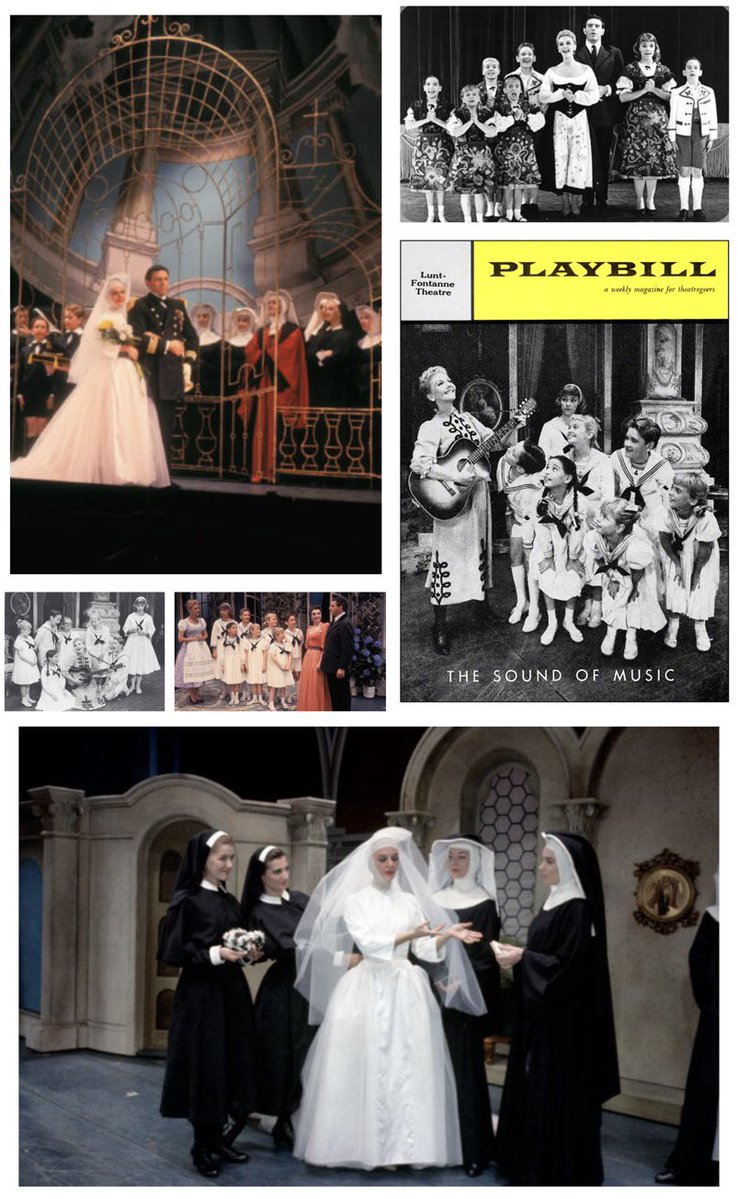
On November 16, 1959, one of the most beloved musicals in American theater history, The Sound of Music, premiered at the Lunt-Fontanne Theatre in New York City. Featuring music by Richard Rodgers, lyrics by Oscar Hammerstein II, and a book by Howard Lindsay and Russel Crouse, the production became a Broadway sensation, running for 1,443 performances before closing on June 15, 1963.
The musical was inspired by the true story of Maria von Trapp, whose 1949 memoir, The Story of the Trapp Family Singers, chronicled her experiences with an Austrian family that eventually fled Nazi-controlled Austria. Originally conceived as a play featuring traditional songs performed by the real Trapp family, the project evolved into a full-scale musical when Rodgers and Hammerstein were approached to provide original music.
The original Broadway production starred Mary Martin as Maria Rainer, a spirited young woman preparing to become a nun, and Theodore Bikel as Captain Georg von Trapp, a widowed Austrian naval officer raising seven children. Maria arrives at the von Trapp household as a governess, gradually transforming the family’s strict atmosphere through music, kindness, and affection. Her relationship with the captain develops into romance against the increasingly ominous backdrop of Nazi expansion into Austria.
The production was directed by Vincent J. Donehue and choreographed by Joe Layton. Its memorable score included songs that would become standards of American musical theater, such as “My Favorite Things,” “Do-Re-Mi,” “Climb Ev’ry Mountain,” “Edelweiss,” and the title song, “The Sound of Music.”
The show held particular significance because it was the final Broadway musical collaboration between Rodgers and Hammerstein. Hammerstein, already suffering from stomach cancer during the production’s development, died on August 23, 1960, less than a year after its opening. His death marked the end of one of the most influential partnerships in theatrical history.
Although some critics considered the musical overly sentimental, audiences embraced its uplifting story and unforgettable melodies. At the 1960 Tony Awards, The Sound of Music won five awards, including Best Musical, which it shared with Fiorello!, and Best Actress in a Musical for Mary Martin. Patricia Neway also won for her portrayal of the Mother Abbess.
The production remained at the Lunt-Fontanne Theatre until November 3, 1962, before transferring to the Mark Hellinger Theatre on November 6. It finally closed on June 15, 1963, completing its remarkable 1,443-performance run.
The musical’s popularity reached even greater heights with the 1965 film adaptation directed by Robert Wise, starring Julie Andrews as Maria and Christopher Plummer as Captain von Trapp. The film won five Academy Awards, including Best Picture, and introduced the story to millions of viewers worldwide.
More than six decades after its Broadway debut, The Sound of Music remains a celebrated achievement in musical theater. Its themes of family, love, courage, resistance to tyranny, and the transformative power of music continue to resonate across generations, securing its place as an enduring cultural classic. #OTD
Today in History
November 16th
1974
Humanity Sends Its First Intentional Radio Message to the Stars
On November 16, 1974, humanity took a historic step toward communicating with extraterrestrial intelligence when scientists transmitted a powerful radio message from the Arecibo Observatory in Puerto Rico toward Messier 13 (M13), a globular star cluster approximately 25,000 light-years from Earth. Known as the Arecibo Message, this transmission became the first deliberate interstellar radio message designed to announce humanity’s existence to a potentially intelligent civilization beyond our solar system.
The event marked an important milestone in the search for extraterrestrial intelligence (SETI) and reflected humanity’s growing curiosity about whether life exists elsewhere in the universe.
The transmission was organized to celebrate a major upgrade to the Arecibo radio telescope, which featured a massive 1,000-foot (305-meter) dish built into a natural limestone depression. Completed in 1963, the observatory was among the world’s most powerful radio astronomy facilities.
The message was developed primarily by astronomer Frank Drake, a pioneer in the search for extraterrestrial intelligence, with contributions from renowned astronomer Carl Sagan and other researchers. Drake had previously formulated the famous Drake Equation in 1961, a mathematical framework for estimating the number of potentially communicative extraterrestrial civilizations in our galaxy.
The Arecibo Message consisted of 1,679 binary digits, represented by ones and zeros. The number was deliberately chosen because it is the product of two prime numbers, 23 and 73. Scientists hoped that an intelligent recipient would recognize this mathematical structure and arrange the information into a rectangular image.
When decoded correctly, the message reveals several pieces of information about humanity and its place in the universe. It includes the numbers one through ten, the atomic numbers of essential chemical elements found in DNA, the molecular components of genetic material, a representation of DNA’s double-helix structure, a human figure, Earth’s approximate population at the time, a diagram of our solar system identifying Earth, and an illustration of the Arecibo telescope itself.
The transmission operated at a frequency of 2,380 megahertz and lasted approximately three minutes. Although extremely brief, the signal was extraordinarily powerful and concentrated into a narrow beam directed toward M13, a densely populated collection of hundreds of thousands of stars in the constellation Hercules.
However, the scientists did not realistically expect a reply. Traveling at the speed of light, the message will take approximately 25,000 years to reach its destination. Even if an extraterrestrial civilization immediately responded, its reply would require another 25,000 years to return to Earth, making the total communication time roughly 50,000 years.
The transmission was therefore primarily a symbolic demonstration of humanity’s technological achievements rather than a practical attempt to establish immediate contact. It also raised profound questions about how civilizations separated by enormous distances might communicate using mathematics, science, and universal physical principles.
The Arecibo Message became an enduring symbol of humanity’s desire to explore the cosmos and understand its place within it. Although the iconic Arecibo telescope collapsed on December 1, 2020, after decades of groundbreaking astronomical discoveries, its historic transmission continues traveling through interstellar space.
More than half a century after it was sent, the Arecibo Message remains one of humanity’s most remarkable scientific gestures: a brief introduction from a small planet, sent across the vastness of the Milky Way in the hope that, somewhere among the stars, another intelligence might one day receive it. #OTD
Today in History
November 16th
1907
Born on this Day
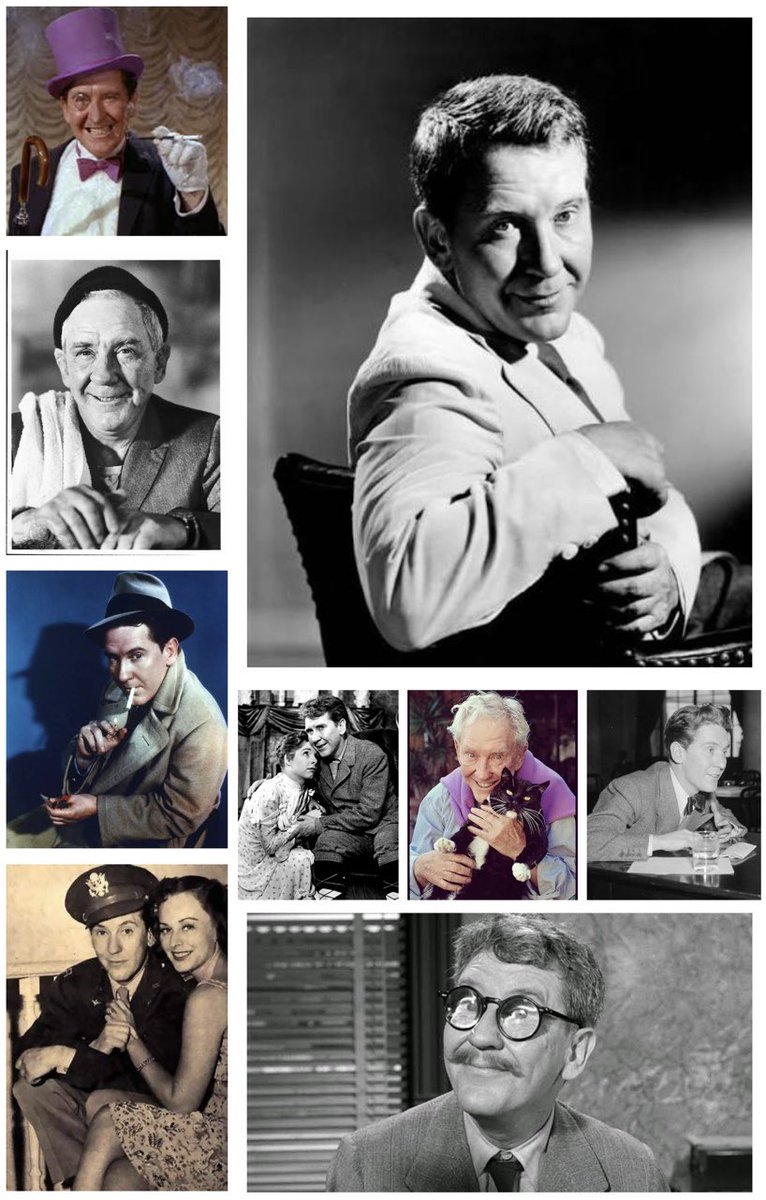
Burgess Meredith was an acclaimed American actor whose remarkable career spanned more than six decades across theater, film, and television. Born Oliver Burgess Meredith on November 16, 1907, in Cleveland, Ohio, he became one of Hollywood’s most recognizable character actors, celebrated for his distinctive raspy voice, expressive performances, and extraordinary versatility.
Meredith grew up in a family that encouraged education and creativity. He attended Amherst College in Massachusetts but left before graduating to pursue his passion for acting. During the early 1930s, he began establishing himself on the stage, eventually earning recognition for his performances on Broadway.
His breakthrough came with the 1935 Broadway production of Winterset, in which he portrayed the troubled young protagonist, Mio. He reprised the role in the 1936 film adaptation, helping launch his Hollywood career. Meredith continued gaining acclaim through memorable performances in films such as Of Mice and Men (1939), in which he played George Milton, and The Story of G.I. Joe (1945).
During World War II, Meredith served in the United States Army Air Forces, contributing to military training and documentary films. Following the war, he returned to acting, although his career faced difficulties during the Hollywood blacklist era because of his political associations and outspoken views.
Meredith experienced renewed popularity during the 1960s when he portrayed the mischievous Penguin in the television series Batman (1966–1968). His theatrical portrayal, complete with a distinctive laugh and elaborate costumes, made him one of the show’s most beloved villains. He also appeared in several episodes of The Twilight Zone, including the celebrated episode “Time Enough at Last.”
In 1976, Meredith delivered one of his most iconic performances as Mickey Goldmill, the tough but compassionate boxing trainer of Sylvester Stallone’s character in Rocky. His portrayal earned him an Academy Award nomination for Best Supporting Actor. He had previously received another nomination for The Day of the Locust (1975). Meredith reprised his role as Mickey in several Rocky sequels, becoming a cherished figure among movie audiences.
His accomplishments extended beyond film. He received an Emmy Award for his performance in the television movie Tail Gunner Joe (1977) and earned recognition for his work as a theatrical director. Later in life, he delighted audiences with his comedic performances in Grumpy Old Men (1993) and Grumpier Old Men (1995).
Meredith married four times and had two children with his fourth wife, Kaja Sundsten. In 1994, he published his autobiography, So Far, So Good, reflecting on his personal experiences and extraordinary career.
Burgess Meredith died on September 9, 1997, in Malibu, California, at the age of 89, following struggles with Alzheimer’s disease and melanoma. His legacy endures through his unforgettable performances, remarkable longevity, and ability to bring humor, vulnerability, and humanity to every character he portrayed. He remains one of the most respected and versatile actors in American entertainment history. #OTD
Today in History
November 16th
1960
Clark Gable died on November 16, 1960, at the age of 59, from a coronary thrombosis (a blood clot in a coronary artery) following a severe heart attack. He died at Hollywood Presbyterian Hospital in Los Angeles, California, just days after completing his final film, The Misfits. His death shocked Hollywood and millions of fans who had admired him for decades. He was laid to rest at Forest Lawn Memorial Park in Glendale, California, beside his third wife, Carole Lombard.
William Clark Gable was born on February 1, 1901, in Cadiz, Ohio, to William Henry Gable and Adeline Hershelman. His mother died when he was only ten months old, and he was raised by his father and stepmother. Growing up in modest circumstances, Gable developed an interest in mechanics and automobiles, but his life changed when he discovered the theater as a teenager.
At 16, he left school and worked various jobs before pursuing acting. His early years were difficult, and he struggled to establish himself onstage. In 1924, he married Josephine Dillon, an acting coach who helped refine his voice, appearance, and performance skills. He eventually made his way to Hollywood, where his rugged good looks, distinctive mustache, deep voice, and commanding personality attracted attention.
Gable’s breakthrough came in the early 1930s after signing with Metro-Goldwyn-Mayer (MGM). He quickly became one of Hollywood’s most popular leading men, appearing in films such as Red Dust (1932), Dancing Lady (1933), and Manhattan Melodrama (1934).
In 1934, he starred opposite Claudette Colbert in It Happened One Night, winning the Academy Award for Best Actor. His greatest role came in 1939 when he portrayed Rhett Butler opposite Vivien Leigh in Gone with the Wind. The film became a cinematic landmark, and his portrayal of the charming, rebellious Southern gentleman earned him another Academy Award nomination. By then, he was widely celebrated as the “King of Hollywood.”
Gable’s personal life was marked by romance and tragedy. He married five times, but his marriage to actress Carole Lombard in 1939 was especially significant. The couple shared a deep affection until January 16, 1942, when Lombard was killed in a plane crash while returning from a war bond tour. Her death devastated Gable.
Later that year, at age 41, he enlisted in the United States Army Air Forces during World War II. He served as an aerial gunner and flew combat missions over Europe, earning military decorations for his service. After leaving active duty in 1944, he returned to Hollywood, although friends and colleagues noticed that he had changed following Lombard’s death.
Gable continued acting throughout the 1940s and 1950s, appearing in films including Mogambo (1953), Teacher’s Pet (1958), and Run Silent, Run Deep (1958). In 1955, he married his fifth wife, Kay Williams. He also fathered a daughter, Judy Lewis, with actress Loretta Young, although their relationship remained concealed from the public for many years.
His final film, The Misfits (1961), starred Marilyn Monroe and Montgomery Clift. Written by Arthur Miller, the film featured Gable as an aging cowboy and was released after his death. His son, John Clark Gable, was born on March 20, 1961, four months after his passing.
Clark Gable appeared in more than 60 films and remains one of the defining figures of Hollywood’s Golden Age. His charisma, unmistakable voice, and memorable performances secured his place in cinematic history. More than six decades after his death, the man known as the “King of Hollywood” continues to be remembered as one of the greatest leading men ever to appear on the silver screen. #OTD
Today in History
November 16th
1981
Luke and Laura’s Historic Wedding on General Hospital
On November 16 and 17, 1981, American television history was made when Luke Spencer and Laura Webber, two fictional characters on ABC’s daytime soap opera General Hospital, exchanged wedding vows in one of the most celebrated events in television history. The two-day wedding attracted approximately 30 million viewers, setting a record for the largest audience ever to watch a daytime soap opera episode. The event became a national cultural phenomenon, demonstrating the extraordinary popularity and influence of daytime television during the early 1980s.
Portrayed by Anthony Geary and Genie Francis, Luke and Laura had captivated audiences with their passionate, complicated, and often controversial romance. Their relationship began under troubling circumstances in 1979, when Luke sexually assaulted Laura at a disco. Although the storyline was subsequently transformed into a sweeping romance, its origins have remained a subject of criticism and debate. Nevertheless, the characters became one of television’s most recognizable couples.
Their relationship unfolded against a backdrop of dangerous adventures, criminal conspiracies, and dramatic escapes. In one particularly memorable storyline, Luke and Laura helped prevent the villainous Mikkos Cassadine from using a weather-control machine to freeze the fictional city of Port Charles. Their adventures combined traditional soap opera romance with action and suspense, attracting younger viewers and expanding the show’s audience beyond its established daytime following.
The long-awaited wedding took place at the fictional mayor’s mansion in Port Charles, New York. Laura wore an elaborate white wedding gown with lace details and a flowing veil, while Luke appeared in a traditional formal suit. Friends and family gathered to celebrate the marriage, which represented the culmination of years of emotional turmoil and suspense.
One of the wedding’s most memorable moments involved the unexpected appearance of Elizabeth Taylor, who guest-starred as the villainous Helena Cassadine. Helena attended the celebration and secretly placed a curse on the newlyweds, promising that their happiness would not last. Taylor’s appearance brought Hollywood glamour to the production and further elevated the wedding’s status as a major entertainment event.
The ceremony also featured an unexpected confrontation with Laura’s former husband, Scott Baldwin, played by Kin Shriner. Scott appeared at the reception and caught Laura’s bridal bouquet, provoking a confrontation that ended with Luke punching him. The incident added another unforgettable dramatic moment to the celebration.
The wedding’s popularity extended far beyond regular soap opera audiences. Newspapers, television magazines, and entertainment programs covered the fictional marriage as though it were a real celebrity wedding. Even Britain’s Princess Diana reportedly acknowledged the occasion by sending champagne to the production. The extraordinary public attention illustrated how deeply audiences had become invested in the characters and their relationship.
The wedding also represented a remarkable achievement for executive producer Gloria Monty, who had helped transform General Hospital from a struggling daytime drama into a ratings powerhouse. By introducing faster-paced storytelling, younger characters, popular music, and adventurous plots, Monty helped redefine the soap opera genre and attract an entirely new generation of viewers.
Although Luke and Laura’s marriage would later face separations, betrayals, and divorce, their 1981 wedding remained an enduring milestone in American entertainment history. Their story helped establish the concept of the television “supercouple,” influencing romantic storylines across daytime dramas for decades.
More than four decades later, the wedding remains a symbol of the golden age of American soap operas. #OTD
Today in History
November 15th
1956
Elvis Presley’s First Film, Love Me Tender, Premieres
On November 15, 1956, rock and roll sensation Elvis Presley made his official big-screen debut when Love Me Tender premiered at the Paramount Theatre in New York City. The event marked a major milestone in the career of the 21-year-old singer, who had already taken America by storm with his electrifying performances, distinctive voice, and groundbreaking music.
Set in Texas during the aftermath of the American Civil War, Love Me Tender tells the story of Clint Reno, played by Presley, the youngest of four brothers. While his older brothers fight for the Confederacy, Clint remains home and marries Cathy, his eldest brother’s sweetheart, after the family mistakenly believes the brother has been killed. When the brothers return, a dramatic tale of love, jealousy, loyalty, and tragedy unfolds.
Originally titled The Reno Brothers, the film was renamed Love Me Tender to capitalize on the enormous popularity of Presley’s hit song of the same name. Released in September 1956, the single became a tremendous success, reaching No. 1 on the Billboard charts before the movie even opened.
Directed by Robert D. Webb and co-starring Richard Egan and Debra Paget, the film was produced by 20th Century Fox. Although Presley had originally hoped to establish himself as a serious dramatic actor, the studio incorporated four musical performances to showcase his extraordinary popularity. Unlike many of his later films, Love Me Tender was primarily a dramatic Western rather than a musical comedy.
The premiere generated extraordinary excitement. Thousands of enthusiastic fans gathered around the Paramount Theatre, hoping to catch a glimpse of their idol. Some had waited overnight, and police barricades were needed to control the crowds. Although Elvis did not personally appear at the opening, the frenzy demonstrated the enormous cultural phenomenon he had become.
Despite mixed reviews from critics, Love Me Tender proved a major commercial success, recovering its production costs within weeks. Its nationwide release followed on November 21, 1956. The film established Presley as a bankable Hollywood attraction and opened the door to a motion-picture career that would include 31 feature films and two theatrical concert documentaries.
The premiere represented more than the beginning of an acting career. It symbolized the growing influence of rock and roll on American entertainment and demonstrated how a recording artist could successfully cross into television and motion pictures.
Seventy years later, Love Me Tender remains an important chapter in the story of the King of Rock and Roll. November 15, 1956, marked the moment Elvis Presley expanded his remarkable legacy from the recording studio and concert stage to the silver screen, helping establish him as one of the most recognizable entertainment icons of the 20th century. #OTD
https://t.co/DOGaxnUnTa
Today in History
November 15th
1887
Born on this Day
Georgia O’Keeffe (Georgia Totto O'Keeffe) was born on November 15, 1887 in
Sun Prairie, Wisconsin, U.S. She was an American painter whose bold flowers, towering cityscapes, and stark desert landscapes helped define American modernism. Born on a dairy farm near Sun Prairie, Wisconsin, she was the second of seven children. Encouraged to draw from an early age, she decided while still young to become an artist. She studied at the School of the Art Institute of Chicago in 1905–1906 and the Art Students League in New York in 1907–1908, winning a still-life prize. Yet she grew dissatisfied with traditional realism, which emphasized faithfully copying appearances.
Her artistic breakthrough emerged amid a wider revolution in art. The 1913 Armory Show had exposed American audiences to European modernism, while American artists were searching for new ways to express the modern world. Influenced by the design principles of Arthur Wesley Dow, O’Keeffe began exploring shape, color, rhythm, and personal feeling rather than literal representation. While teaching in South Carolina and Texas, she produced striking abstract charcoal drawings in 1915. Her friend Anita Pollitzer showed them to influential photographer and gallery owner Alfred Stieglitz, who exhibited them at his New York gallery, 291, in 1916. A solo exhibition followed in 1917.
In 1918 O’Keeffe moved to New York, where she and Stieglitz began a personal and professional partnership. They married in 1924. Stieglitz promoted her work through major exhibitions, but O’Keeffe developed a distinctive artistic identity of her own. During the 1920s she painted skyscrapers that captured the ambition of a rapidly modernizing city, alongside enormous close-up flowers whose curves and colors transformed familiar natural forms into powerful compositions. Critics sometimes interpreted the flowers sexually, an interpretation she resisted. Her 1927 retrospective at the Brooklyn Museum confirmed her growing prominence.
A decisive change came in 1929 when she began spending summers in New Mexico. Its open skies, adobe buildings, mountains, bleached animal bones, and dramatic light offered an alternative to crowded Manhattan. During the Great Depression, she endured emotional strain and a period of illness, including a breakdown in 1933, but resumed painting. Her Southwest imagery became central to her reputation. Rather than merely documenting the desert, she simplified its forms to communicate its scale, silence, and intensity. In 1939 she also visited Hawaii on a commercial commission, creating paintings inspired by its tropical plants.
Major museums increasingly recognized her achievement. The Art Institute of Chicago presented a retrospective in 1943, and in 1946 the Museum of Modern Art in New York organized its first retrospective devoted to a woman artist, featuring O’Keeffe. Stieglitz died that year. After settling his estate, she moved permanently to New Mexico in 1949, dividing her time between Ghost Ranch and her home in Abiquiú. She continued painting desert cliffs, doors, bones, and later aerial views inspired by airplane travel.
As her eyesight deteriorated in the 1970s, she adapted her working methods and received assistance. She died in Santa Fe, New Mexico, at 98. Her legacy extends beyond her unmistakable style: she challenged expectations of women in the art world, insisted on her independence, and showed how close observation of ordinary subjects could produce radically new art. The Georgia O’Keeffe Museum opened in Santa Fe in 1997, preserving and interpreting her work for later generations. #OTD
Today in History
November 15th
1959
In the early morning hours of November 15, 1959, a brutal quadruple murder shattered the peaceful farming community of Holcomb, Kansas, and eventually became one of the most infamous crimes in American history. Four members of the respected Clutter family were murdered in their rural farmhouse by two recently released convicts, Richard “Dick” Hickock and Perry Edward Smith.
The victims were 48-year-old Herbert Clutter, a prosperous wheat farmer; his 45-year-old wife, Bonnie; their 16-year-old daughter, Nancy; and their 15-year-old son, Kenyon. The family was well-liked in the community, and their deaths shocked neighbors who had rarely experienced serious violence.
Hickock had learned about the Clutter family from a former prison cellmate who had worked on their farm. Believing Herbert Clutter kept thousands of dollars in a safe, Hickock recruited Smith to help rob the household. The two men drove hundreds of miles to the farmhouse, expecting to leave with a fortune.
Once inside, they discovered there was no safe. Despite finding very little money, the intruders bound the family members and murdered all four with a shotgun. They escaped with approximately $40 in cash, a pair of binoculars, and a portable radio.
The bodies were discovered later that Sunday morning when family friends arrived to take Nancy to church. The horrifying discovery triggered an extensive investigation led by the Kansas Bureau of Investigation and investigator Alvin Dewey.
A crucial breakthrough came when Floyd Wells, the former prison inmate who had supplied Hickock with information about the Clutters, contacted authorities. Investigators eventually tracked the fugitives to Las Vegas, Nevada, where they were arrested on December 30, 1959.
Both men were convicted of four counts of first-degree murder in March 1960 and sentenced to death. After years of unsuccessful appeals, Hickock and Smith were executed by hanging at the Kansas State Penitentiary on April 14, 1965.
The tragedy attracted the attention of celebrated author Truman Capote, who traveled to Kansas with his childhood friend, writer Harper Lee. Capote spent nearly six years investigating the murders, interviewing residents, law enforcement officials, and eventually the killers themselves.
His groundbreaking work, In Cold Blood, appeared in The New Yorker in 1965 before being published as a book in January 1966. It became a landmark of true-crime literature, blending investigative journalism with the storytelling techniques of a novel.
The case inspired the 1967 film In Cold Blood and the 2005 biographical drama Capote, starring Philip Seymour Hoffman, who won an Academy Award for his portrayal of the author.
More than six decades later, the Clutter family murders remain a haunting reminder of how a senseless act of violence forever changed a small American community and helped transform the way true crime stories are told. #OTD
Today in History
November 15th
1958
Died on this Day
Hollywood star Tyrone Power died of a heart attack in Madrid, Spain, at age 44. He was filming the biblical epic Solomon and Sheba when he became ill during a sword-fighting sequence with actor George Sanders. Power complained of pain, left the set, and collapsed. His death stunned the production team and ended a career that had made him one of the most recognizable faces of Hollywood’s Golden Age.
The tragedy was especially painful because Power’s wife, Deborah Minardos, whom he had married that May, was pregnant. Their son, Tyrone Power IV, was born on January 22, 1959, two months after his father’s death. There was also a sad family parallel: Power’s father, stage actor Tyrone Power Sr., had died after suffering a heart attack in 1931.
Production on Solomon and Sheba stopped after Power’s death. Director King Vidor later cast Yul Brynner in the role of King Solomon and reshot Power’s scenes. The finished film was released in 1959, but Power’s final performance never reached audiences.
Tyrone Edmund Power was born on May 5, 1914, in Cincinnati, Ohio, into a family with deep theatrical roots. His father was a prominent stage performer, and his mother, Helen Emma Reaume, was also an actress. Following the family profession, Power worked to establish himself onstage and in films before gaining his breakthrough in Lloyd’s of London (1936). The film made him a star at 22 and launched his long association with 20th Century-Fox.
Power became famous for his charm, athleticism, and ability to carry romantic adventures. He played the outlaw in Jesse James (1939), a masked hero in The Mark of Zorro (1940), and a daring swordsman in The Black Swan (1942). Yet he wanted to be recognized for more than his appearance. The Razor’s Edge (1946) gave him a thoughtful dramatic role, while Nightmare Alley (1947) cast him as a ruthless carnival mentalist in one of his darkest performances.
His career was interrupted by World War II, when he joined the United States Marine Corps and served as a pilot, flying transport missions in the Pacific. After the war he resumed acting in films and onstage, appearing in productions such as Mister Roberts and John Brown’s Body. Near the end of his life, he delivered an acclaimed performance in Billy Wilder’s courtroom mystery Witness for the Prosecution (1957), alongside Marlene Dietrich and Charles Laughton.
Power married three times: to actress Annabella, actress Linda Christian, and Deborah Minardos. He had two daughters, Romina and Taryn, with Christian, and his posthumously born son with Deborah. Following his death, his body was returned to California, where he was buried at Hollywood Memorial Park Cemetery, now Hollywood Forever Cemetery.
Tyrone Power left behind a body of work spanning romance, adventure, noir, and serious drama. His sudden death on a film set remains a poignant chapter in Hollywood history, but his legacy rests equally on the range of characters he brought to life and the generations of moviegoers who continue to discover his films.
#OTD
Today in History
November 14th
1948
Happy 78th Birthday
Prince Charles Philip Arthur George was born at Buckingham Palace in London, England. He was the first child of Princess Elizabeth, the future Queen Elizabeth II, and Prince Philip, Duke of Edinburgh. His birth marked the beginning of a remarkable royal journey that would eventually lead him to the British throne after more than seven decades of waiting.
Charles was born during the reign of his grandfather, King George VI. When the king died on February 6, 1952, Charles’s mother became Queen Elizabeth II, making the three-year-old prince heir apparent to the throne. In 1958, he received the title Prince of Wales, traditionally bestowed upon the male heir to the British monarchy.
Unlike earlier royal heirs, Charles attended conventional schools rather than receiving his entire education from private tutors. He studied at Cheam School, Gordonstoun in Scotland, and briefly at Timbertop in Australia. He later attended Trinity College, Cambridge, becoming the first British heir apparent to earn a university degree.
On July 1, 1969, Charles was formally invested as Prince of Wales at Caernarfon Castle in Wales. He subsequently served in the Royal Air Force and Royal Navy, training as a pilot and commanding the minesweeper HMS Bronington.
On July 29, 1981, Charles married Lady Diana Spencer at St. Paul’s Cathedral in London. Their wedding captivated an estimated global television audience of hundreds of millions. The couple welcomed Prince William in 1982 and Prince Harry in 1984. However, their marriage deteriorated amid personal difficulties and intense media scrutiny. They separated in 1992 and divorced in 1996.
Tragedy struck on August 31, 1997, when Diana died in a car crash in Paris. Her death prompted an extraordinary outpouring of public grief and renewed scrutiny of the royal family.
Throughout his decades as Prince of Wales, Charles became known for his environmental advocacy, support for sustainable agriculture, preservation of historic architecture, and charitable initiatives. In 1976, he founded The Prince’s Trust, which helped disadvantaged young people gain education, training, and employment opportunities.
On April 9, 2005, Charles married Camilla Parker Bowles in a civil ceremony at Windsor Guildhall. Camilla became Duchess of Cornwall and later Queen Consort.
On September 8, 2022, Queen Elizabeth II died at Balmoral Castle in Scotland at the age of 96, ending her historic 70-year reign. Charles immediately became King Charles III at age 73, making him the oldest person to ascend the British throne. His coronation took place on May 6, 2023, at Westminster Abbey, alongside Queen Camilla, in a ceremony combining centuries-old traditions with elements reflecting modern Britain.
In February 2024, Buckingham Palace announced that Charles had been diagnosed with cancer. Although the specific type was not publicly disclosed, he temporarily reduced his public engagements while receiving treatment. He subsequently resumed many official responsibilities, including diplomatic meetings, state ceremonies, and charitable appearances.
As of November 14, 2026, King Charles III celebrates his 78th birthday and continues serving as monarch of the United Kingdom and 14 other Commonwealth realms. Despite ongoing health challenges, he remains active in public life. His charitable organization, now called The King’s Trust, also celebrates its 50th anniversary in 2026, having supported more than one million young people.
From a newborn prince in Buckingham Palace to a king who waited 73 years for the crown, Charles’s life spans extraordinary changes in British society and the monarchy. His legacy continues to develop through his commitment to public service, environmental protection, charitable work, and the preservation of royal traditions in a changing world. #OTD
#KingCharles
Today in History
November 14th
1776
London’s St. James Chronicle reported that Benjamin Franklin, once admired by leading British politicians, had become a prominent figure in the American Revolution. The newspaper declared: “The very identical Dr. Franklyn, whom Lord Chatham so much caressed, and used to say he was proud in calling his friend, is now at the head of the rebellion in North America.”
The remark captured the dramatic reversal in Franklin’s relationship with Britain. For years, he had worked to keep the American colonies within the British Empire. By late 1776, he was helping establish an independent nation.
Born in Boston in 1706, Franklin gained fame as a Philadelphia printer, publisher, inventor, and scientist. His electrical experiments brought international recognition, while his political experience made him a valuable colonial representative. He spent much of the period from 1757 to 1775 in London, advocating for Pennsylvania and, later, other colonies.
Franklin initially believed that disputes over taxation and colonial rights could be resolved without separation. He opposed Parliament’s attempts to tax Americans without their consent and cultivated allies in Britain, including William Pitt, Earl of Chatham. Pitt criticized coercive policies toward the colonies, although he did not support American independence.
Relations deteriorated as British officials resisted colonial demands. In January 1774, Franklin endured a public denunciation before the Privy Council over his role in obtaining and transmitting letters written by Massachusetts governor Thomas Hutchinson. The episode damaged his reputation in official circles and deepened his disillusionment with imperial politics.
Franklin left London in March 1775 and reached Philadelphia that May, shortly after the battles of Lexington and Concord. He soon joined the Second Continental Congress. Although he had long favored reconciliation, the fighting and Britain’s response increasingly convinced him that independence was necessary.
In June 1776, Franklin joined the committee assigned to prepare the Declaration of Independence. Thomas Jefferson drafted the principal text, and Franklin suggested revisions. Congress adopted the Declaration on July 4, formally announcing the colonies’ separation from Britain.
The Chronicle’s claim that Franklin stood “at the head of the rebellion” was a political characterization, not a statement that he commanded American forces. George Washington led the Continental Army. Franklin’s importance lay in his influence, reputation, and diplomatic abilities.
The conflict also divided Franklin’s family. His son William, the royal governor of New Jersey, remained loyal to the Crown. Revolutionary authorities arrested William in 1776, and father and son never fully repaired their relationship.
By the time the November report appeared, Franklin had already sailed for France. Appointed an American commissioner, he sought loans, supplies, and diplomatic recognition. His celebrity and negotiating skill helped strengthen French support. After the American victory at Saratoga in 1777, France entered a formal alliance with the United States in 1778, transforming the war.
Franklin later helped negotiate the Treaty of Paris of 1783, in which Britain recognized American independence. The newspaper’s astonishment in November 1776 reflected a larger historical irony: a man who had spent years trying to preserve the British Empire became one of the best-known architects of its loss in North America.
#OTD
Today in History
November 14th
1889
American journalist Nellie Bly, born Elizabeth Jane Cochran, embarked on an extraordinary journey that would challenge Victorian-era expectations of women and revolutionize travel journalism. Working for Joseph Pulitzer’s New York World, the 25-year-old reporter set out to circumnavigate the globe in less than 80 days, hoping to surpass the fictional achievement of Phileas Fogg in Jules Verne’s celebrated 1873 novel, Around the World in Eighty Days.
Bly was already famous for her daring investigative reporting. In 1887, she had pretended to be mentally ill to expose the horrific conditions inside New York City’s Blackwell’s Island asylum. Her resulting investigation, Ten Days in a Mad-House, helped inspire reforms and established her reputation as a fearless journalist.
The idea of traveling around the world initially met resistance from her newspaper’s management. Editors questioned whether a woman could undertake such a demanding expedition alone, suggesting that she would require a male escort and excessive luggage. Bly rejected these assumptions, insisting she could travel as efficiently as any man.
On the morning of November 14, she departed Hoboken, New Jersey, aboard the steamship Augusta Victoria. Traveling remarkably light, she carried a small handbag containing essential belongings, money, writing supplies, and personal necessities. Her determination to complete the journey without elaborate preparations became part of her legend.
Her route carried her across the Atlantic to England, through France and Italy, across the Mediterranean and Suez Canal, and onward to Ceylon (modern-day Sri Lanka), Singapore, Hong Kong, and Japan. She then crossed the Pacific to San Francisco before racing across the United States by train.
One of the journey’s most memorable moments occurred when Bly visited Jules Verne at his home in Amiens, France. The celebrated novelist welcomed her enthusiastically, examined her planned route, and expressed admiration for her ambitious undertaking.
Meanwhile, an unexpected rivalry developed. Cosmopolitan magazine dispatched another American journalist, Elizabeth Bisland, on a competing journey around the world in the opposite direction. Bisland departed shortly after Bly, transforming the expedition into a highly publicized international race.
Millions followed Bly’s progress through newspaper reports. The New York World encouraged public excitement by organizing a contest inviting readers to predict her exact finishing time. More than half a million entries were submitted.
Despite storms, transportation delays, and uncertainty over steamship connections, Bly maintained her determination. After reaching San Francisco, she boarded a special train arranged by her newspaper to accelerate the final stage of her journey.
On January 25, 1890, Bly arrived triumphantly in Jersey City, New Jersey, completing her circumnavigation in precisely 72 days, 6 hours, 11 minutes, and 14 seconds. She had beaten Phileas Fogg’s fictional achievement by nearly eight days and finished ahead of Bisland.
Her return sparked enormous celebrations, with cheering crowds, cannon fire, and widespread newspaper coverage. Bly became an international celebrity, and her adventure was subsequently published in her 1890 book, Around the World in Seventy-Two Days.
Beyond establishing a remarkable travel record, Nellie Bly’s achievement challenged prevailing assumptions about women’s independence, courage, and professional capabilities. Her journey demonstrated how expanding steamship and railway networks were transforming global transportation while establishing a lasting milestone in journalism and women’s history. #OTD
Today in History
November 14th
1840
Born on this Day
Claude Monet, born Oscar-Claude Monet on November 14, 1840, in Paris, France, was a pioneering French painter and one of the founders of Impressionism. His revolutionary approach to capturing light, color, and atmosphere transformed the history of Western art and helped establish modern painting.
In 1845, Monet’s family moved to Le Havre, Normandy, where he developed an early interest in drawing. As a teenager, he became known for his caricatures. His artistic direction changed after meeting landscape painter Eugène Boudin, who encouraged him to paint outdoors, directly observing nature.
In 1859, Monet traveled to Paris to pursue his artistic ambitions. He later studied with Charles Gleyre, where he met fellow artists Pierre-Auguste Renoir, Alfred Sisley, and Frédéric Bazille. Together, they challenged traditional academic painting by emphasizing natural light, visible brushstrokes, and everyday subjects.
Monet experienced considerable financial hardship during his early career. In 1870, he married Camille Doncieux, the mother of his first son, Jean. During the Franco-Prussian War, Monet traveled to London, where he encountered the paintings of J. M. W. Turner and John Constable. Their atmospheric landscapes contributed to his developing artistic vision.
A defining historical event occurred in 1874 when Monet participated in the first independent Impressionist exhibition in Paris. His painting Impression, Sunrise, created in 1872, inspired critic Louis Leroy to use the term “Impressionists” mockingly. The name was eventually embraced by the movement, which rejected rigid artistic conventions in favor of fleeting visual impressions.
Monet’s personal life was marked by tragedy. Camille died in 1879, leaving him with two young sons. He later developed a relationship with Alice Hoschedé, whom he married in 1892 following the death of her husband.
In 1883, Monet settled in Giverny, a village in Normandy that became central to his artistic legacy. There, he cultivated elaborate gardens, including a Japanese-style bridge and a water garden filled with lilies. These landscapes inspired some of his most celebrated paintings.
During the 1890s, Monet produced groundbreaking series depicting haystacks, poplar trees, and Rouen Cathedral under changing conditions of light and weather. Rather than portraying subjects as fixed objects, he explored how perception transformed throughout the day and across seasons.
In his later years, Monet suffered from cataracts, which affected his vision and perception of color. Despite these difficulties, he continued painting monumental Water Lilies compositions. Following World War I, he dedicated large decorative panels to the French nation as a gesture of peace, supported by his friend, statesman Georges Clemenceau.
Claude Monet died on December 5, 1926, in Giverny, aged 86. His monumental Water Lilies panels were installed at the Musée de l’Orangerie in Paris in 1927.
Monet’s enduring legacy lies in his transformation of painting from precise representation toward the exploration of perception, atmosphere, and emotional experience. His innovations influenced generations of artists and helped shape the development of modern art.
Verification: The major dates, historical events, family details, artistic achievements, and legacy have been checked against the National Gallery of Art, the Metropolitan Museum of Art, the Monet House and Gardens in Giverny, and the Musée de l’Orangerie.
#OTD
Today in History
November 14th
1922
Born on this Day
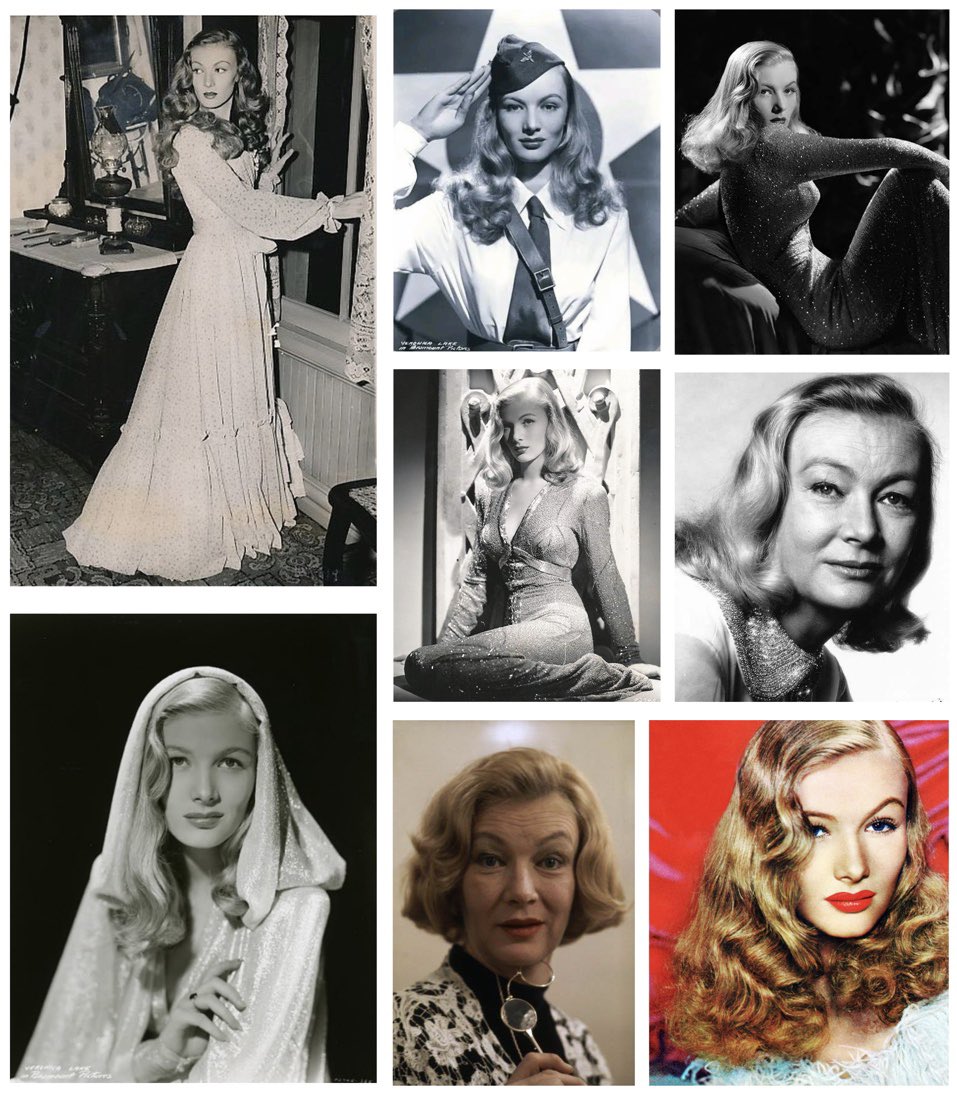
Veronica Lake was born Constance Frances Marie Ockelman on November 14, 1922, in Brooklyn, New York. She became one of Hollywood’s most recognizable actresses of the 1940s, celebrated for her mysterious screen presence, husky voice, striking beauty, and signature “peek-a-boo” hairstyle, with long blonde hair cascading over one eye.
After spending much of her childhood in New York and Florida, Lake moved to California with her family and studied acting. She began appearing in films in 1939, initially using the name Constance Keane. Her breakthrough came with I Wanted Wings (1941), when Paramount Pictures introduced her as Veronica Lake. Her distinctive appearance quickly became a national fashion sensation. During World War II, she even demonstrated a safer hairstyle to discourage female factory workers from wearing loose hair near dangerous machinery.
Lake established herself as a talented performer through memorable roles in Preston Sturges’s acclaimed comedy Sullivan’s Travels (1941) and the romantic fantasy I Married a Witch (1942). She became particularly associated with film noir through her celebrated partnership with Alan Ladd. Together, they starred in This Gun for Hire (1942), The Glass Key (1942), and The Blue Dahlia (1946). Their understated performances and compelling chemistry made them one of Hollywood’s most popular screen pairings.
Despite her remarkable success, Lake experienced considerable personal and professional difficulties. Her life was marked by troubled marriages, family tragedies, financial struggles, and alcohol-related problems. Reports of disagreements on film sets further damaged her reputation within the industry. By the late 1940s, her popularity had declined, and she gradually disappeared from major Hollywood productions.
During the following decades, Lake occasionally performed in theater and television but struggled to regain her former prominence. Financial hardship eventually led her to work outside the entertainment industry, including a period as a bartender. In 1970, she published her memoir, Veronica: The Autobiography of Veronica Lake, offering an account of her extraordinary rise to fame and subsequent difficulties. Her final film was the low-budget horror production Flesh Feast (1970).
Veronica Lake died on July 7, 1973, in Burlington, Vermont, at the age of 50, following complications associated with hepatitis and kidney failure. Although her Hollywood stardom lasted only a relatively brief period, her influence endured. Today, she remains an unforgettable figure of classic American cinema, remembered for her distinctive beauty, captivating performances, and lasting contribution to the golden age of Hollywood. #OTD