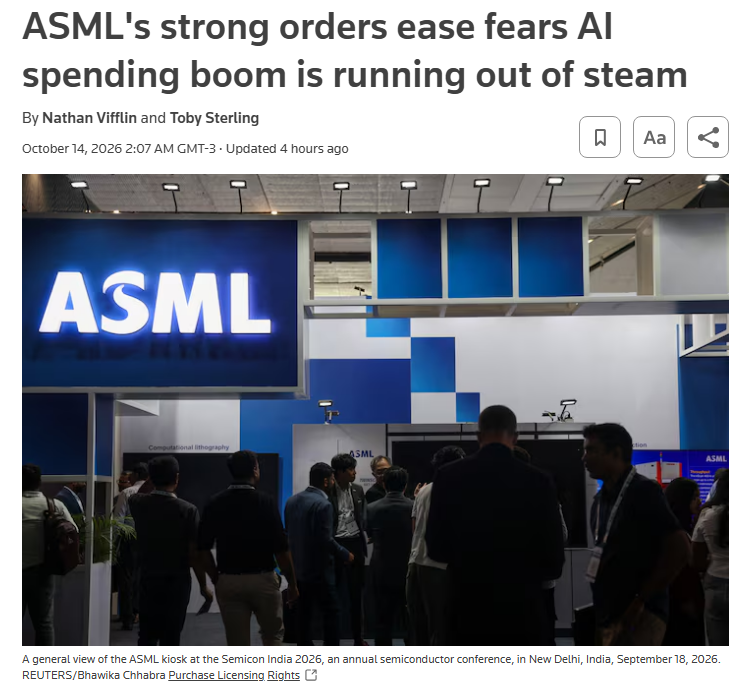
ASML’s latest Q3 order beat is the exact financial reassurance Wall Street needed to keep dumping capital into frontier AI compute.
betting against semiconductor demand right now is basically like assuming Godzilla won't smash through a skyline in the third act.
the hyper scaler capex train isn't slowing down, and lithography tooling remains the ultimate choke point for the entire ecosystem
when model weights are genuinely treated as national security assets, physical office surveillance gets treated with the exact same rigor as zero day exploit defense
We discovered a sophisticated recording device that was hidden inside one of our offices. We used our models to understand the device and where it had come from, identifying that a specific employee had planted it a few days earlier. We referred the matter to the FBI, and we’re grateful to the agents and prosecutors who moved quickly to make an arrest. The FBI’s investigation is ongoing and we will continue to support their work.
At this time, we have no indications of this individual inappropriately accessing or exfiltrating model weights, source code, or customer data. The employee was terminated.
We take protecting our technology, data, and people seriously, and as a matter of national importance. Our security program is designed to protect against a wide range of threat actors, from insider risks to cybercriminals to nation states, and this case is an example of how AI can help address these sophisticated security threats.
@netflix starting the whole cinematic run with the actual origin story instead of jumping straight back to Wardrobe is the ultimate dream for book purists
anatomy of a teardown 📲: apple homeview smart display (siri ai edition)
target demographic: suburban households who want a $250+ sleek digital picture frame to ask siri for the weather while pretending to manage six security camera feeds.
the unit teardown & hardware specs:
-display & chassis: 7 inch Liquid Retina screen on a domed speaker base with a stainless steel hinge. drops down to 0.3 nits so you don't blind yourself at 2 AM getting water
-silicon stack: powered by the A18 chip to run local face recognition for up to six household members
-camera & audio: face tracking FaceTime, computational audio, and a grid that livestreams nine home security cameras simultaneously
-Siri AI interface: conversational Siri with onscreen awareness and distance based UI that shrinks text when you walk away
verdict: pass for high margin SaaS growth, but elite hardware execution. it's an over engineered kitchen clock built for people who want their house to feel like a high budget sci-fi set
Ebenezer: A Christmas Carol has Johnny Depp playing Scrooge, with Ti West directing. A Christmas classic, a major star and a director whose work often leans into horror. That’s a fairly efficient way to make a familiar story feel a little less cosy. Hollywood keeps returning to stories audiences already know. The trick is finding a new reason to tell them. Personally, I’m waiting for the version where Scrooge checks his portfolio on Christmas morning and discovers the ghosts have been running an activist campaign.
@elonmusk@bot it really is like having an analyst on your team who works round the clock shifts, never asks for coffee breaks, and processes massive datasets in seconds
offloading vast design space exploration to autonomous agents overnight is going to fundamentally change how tape outs and floor planning are managed across the foundry ecosystem
Jensen Huang: We can’t design a chip anymore without AI.
“At night, our AIs are exploring design spaces vast and wide that we would never do ourselves.”
“Our chips are so much better because of AI. We can reduce energy use and get higher performance.”
“Our software, we can’t write software without AI anymore.”
“We use AI to find bugs, figure out what’s wrong with the code, and who’s likely involved.”
“I want every organization and company to use AI very aggressively.”
“I want to turn NVIDIA into one giant AI.”
@ToonHive nothing sums up the current AI bubble better than a company pivoting straight from peak viral consumer engagement to bankruptcy court liquidation
pushing frontier models specifically optimized for complex legal, financial, and code repository operations hits enterprise automation right where it matters.
high volume token generation is worthless if an agent loses focus midway through an async code refactor or multi step compliance task.
enterprise software suites will have to absorb these stateful execution models or risk losing their workflow dominance to native AI platforms.
real productivity gains require continuous task state management, not interactive chat windows
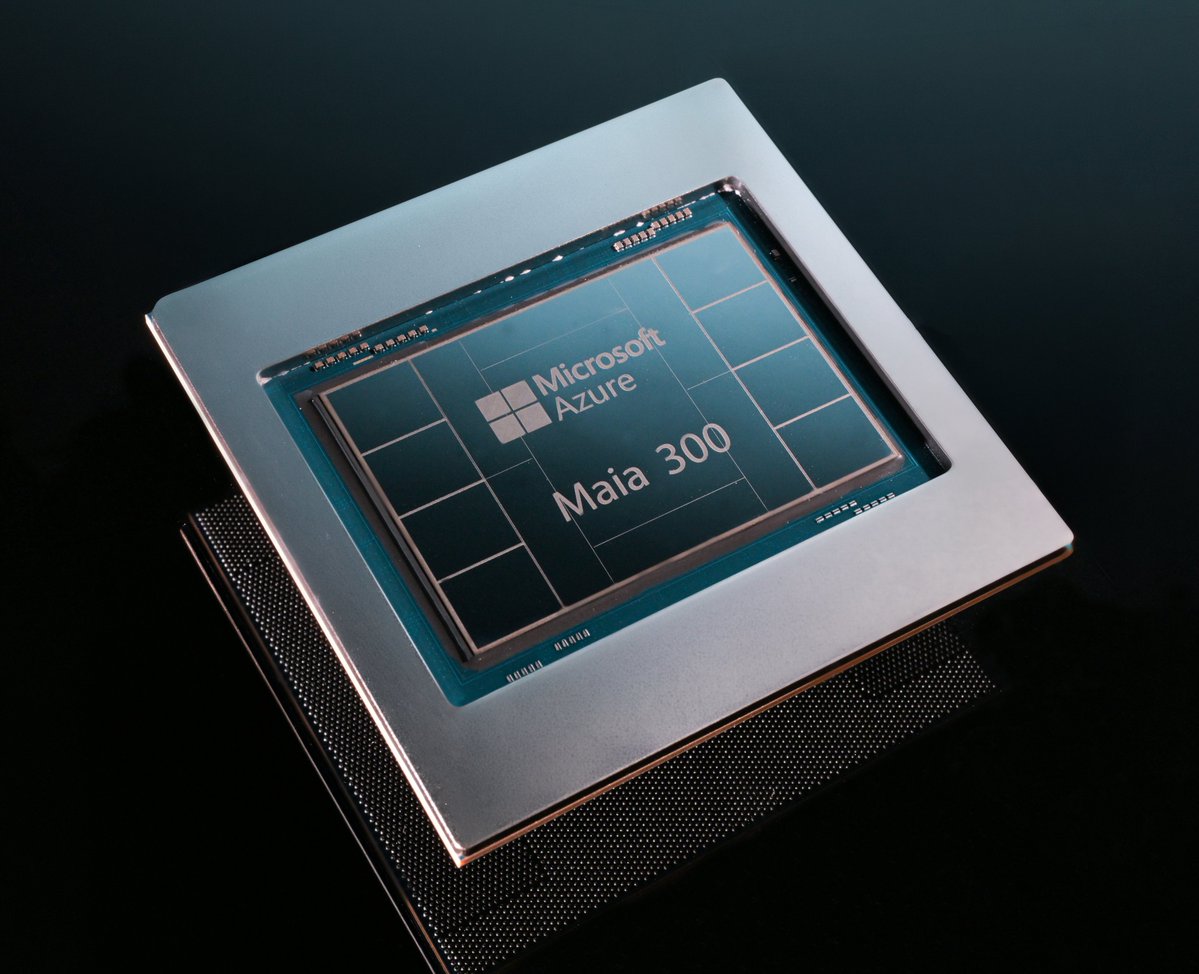
transitioning first party inference off merchant GPUs onto custom silicon is the only way to protect margins when Copilot token burn scales to multi gigawatt levels
Today we are announcing our biggest bet yet on our own silicon.
Starting next calendar year, we will scale our Maia family to multi-gigawatt deployments, making it the primary inference system for our own product and services.
And we’re introducing Maia 300, which delivers 40% more tokens per watt compared to leading GPU-based systems.
We are already deploying Maia 200 across the US, Europe, and Australia, delivering up to 1.7x more tokens per watt across experiences in Teams and Copilot.
Our goal is to build on the full-stack efficiency gains we’ve already seen, while continuing to bring the latest innovations from across the ecosystem into our fleet.
@elonmusk consolidating logic fabrication, memory production, and advanced packaging under one roof at terawatt scale is the ultimate play for total supply chain independence
@DiscussingFilm statistically speaking, every time Hawkeye sits out a major crossover event, the team takes a total tactical loss, so the logic checks out
it's basically a modern LA adaptation of Kurosawa's High and Low, except the protagonist's primary operational flaw is over leveraging his own campaign treasury
ben affleck's animals is out today and apparently the plot is basically -
son gets kidnapped
ransom money is gone
because dad spent it on the election
that is an insane way to discover your campaign budget had consequences