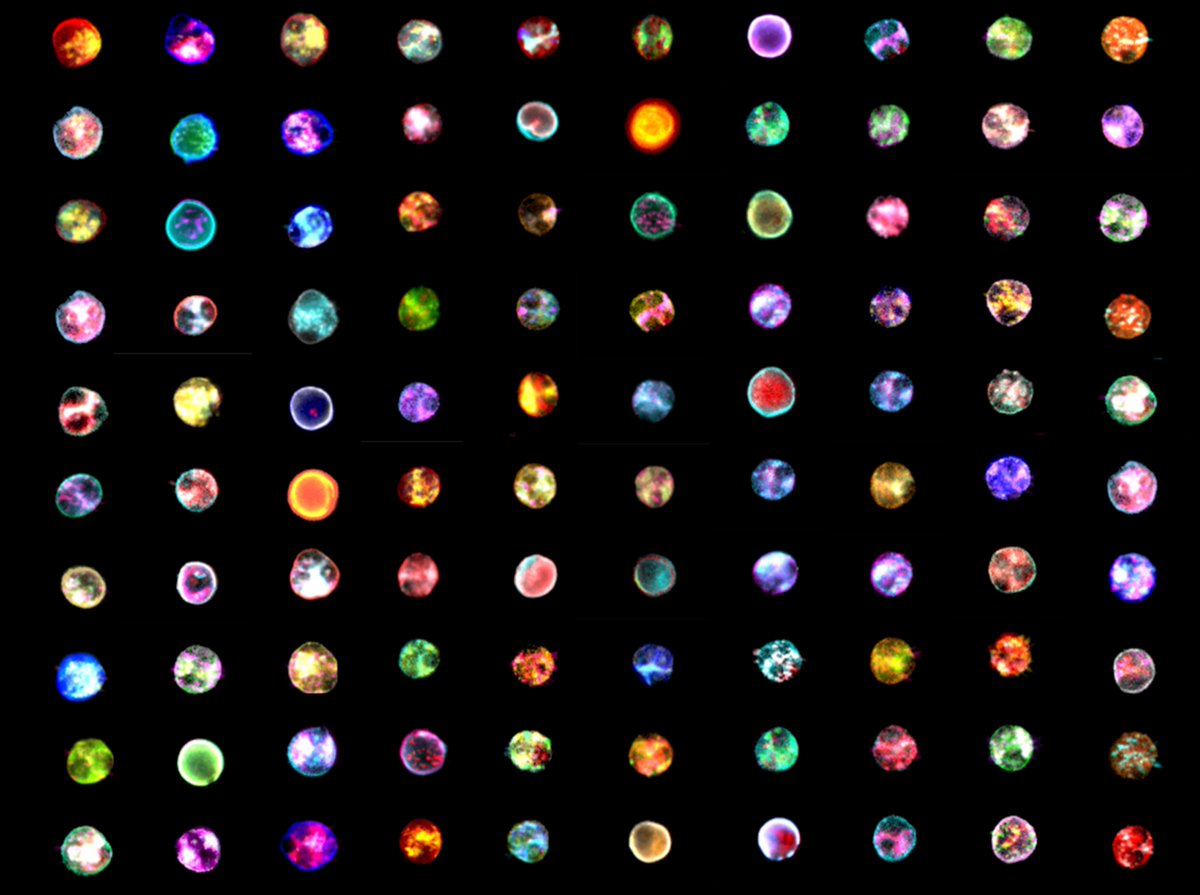
The @Brandon_Faubert lab is investigating how alterations in the metabolism of cells can affect tumor growth. We visited the lab to learn more about their work. #cancermetabolism#UChiCancer50#NothingWillStopUs
Final “Pitch” talks of our Translational Approaches in Cancer Research class with valuable feedback from Eleonara and Amanda from @CBC_ChiBiomed and @BarbaraLKee Thanks to @UChicagoCCB Big shoutout to @acerobed for being a great TA this quarter.
Today, CCB students, faculty, and friends visited the Illinois Holocaust Museum & Education Center @ihmec. Thank you to the docents for the tour, Dr. Wei-Jen Tang for organizing the event, and to @DiversInclBSD for the support.
“Remember the Past, Transform the Future.”
@feridbalci@JasmineP7278@eLife To answer your other question, I’m no expert in that specific area but quickly reading that paper, it seems to happen through a process called “entosis.” This happens when protein bridges connecting cells contract and one cell essentially eats the other. It’s wacky!
@feridbalci@JasmineP7278@eLife Hello! So cell division as a process does generally happen in the same way across circumstances but it has many many steps that if any of them become unregulated, it throws off the whole process. Think of it like dominos, all of them important but separate.
@JasmineP7278@eLife For example, chemotherapies target cells that are dividing a lot, hence why it works against cancer. The issue is that many other normal cells types are also dividing, which also get killed - hence the toxicity and how harsh it is on the patient.
@JasmineP7278@eLife Of course! Yeah that’s the trick of it. Many currently used treatments exploit that idea, the cancer just gets smart and figures out how to grow without whatever it is targeting. Not all hope is lost! with machine learning/AI growing in the field, who knows!!
@JasmineP7278@eLife So: we will never find a “cure” (at least in my opinion) but will further optimize the ways we treat to be specific to each cancer type, and even more, each individual. 3/3
@JasmineP7278@eLife That’s why many things are said to “cause” cancer because there are many things that could potentially change your cells into uncontrollable growing machines but overall the likelihood is actually rare. Due to the nature of this variability, we can’t treat them all the same.