In an exclusive interview with CNN, Lebanese President Joseph Aoun tells CNN's Christiane Amanpour his message to the IRGC and Iran. https://t.co/V3msdvKCG1
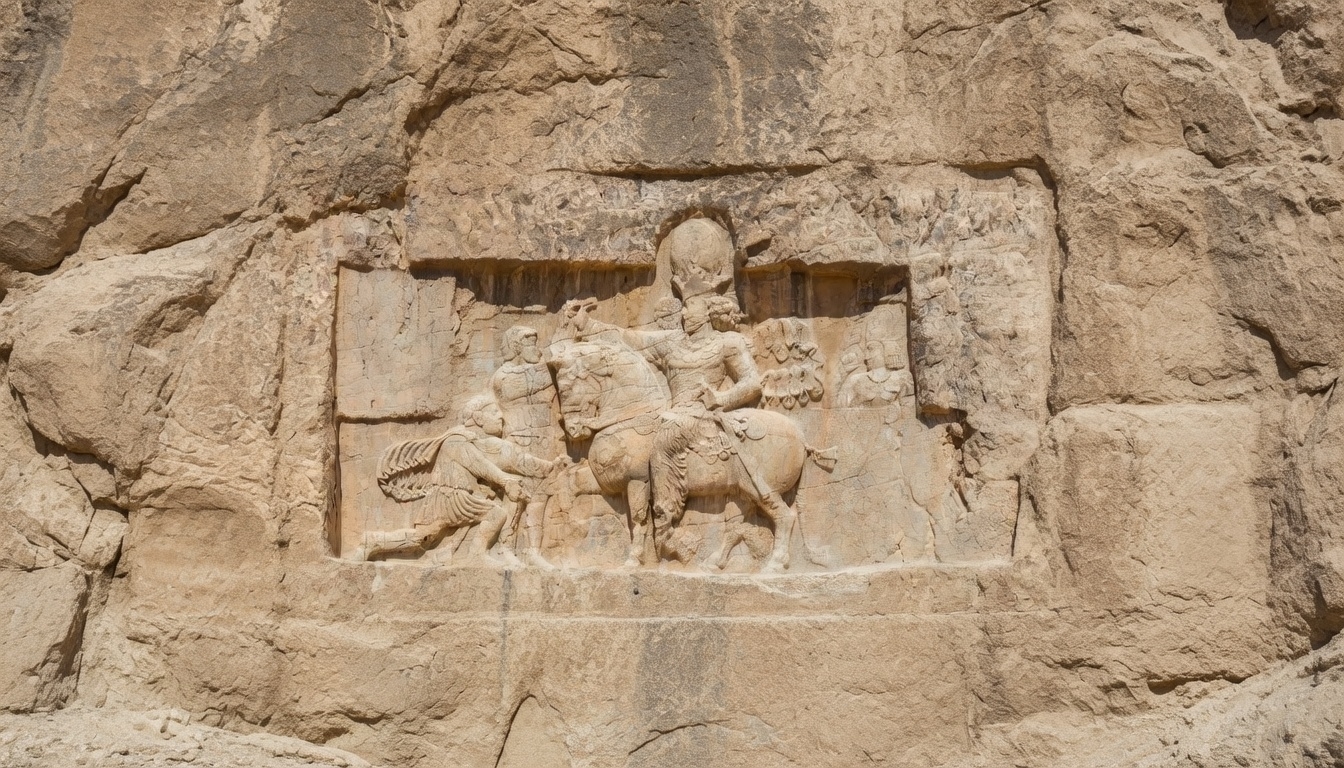
در جواب حرفهای پطرس، سفیر بیزانس، که میگه «ما رومیها همیشه دنبال صلح هستیم» یزدان-گشنسپ، سفیر ساسانی، میگه: «شما رومیها همیشه جنگ شروع میکنید، بعد وضعیت که حساس میشه، اولین کسانی هستید که درخواست صلح میکنید و بعد ادعای برتری اخلاقی میکنید!»
It’s all talk. Just withhold foreign aid to Israel for a month and they’ll stop bombing their neighbors - instant peace, the Strait of Hormuz can be opened, and gas drops $2 a gallon. Israel has been, and continues to be, the biggest welfare recipient from American tax payers.
I agree.
We spend a tremendous amount of time thinking about downside risk, stress testing scenarios, and building protections accordingly. In our view, $ASST is not over-amplified. If anything, we believe it remains under-amplified relative to the opportunity set Bitcoin presents.
It’s important to understand that risk management is a constraint, not the objective.
The goal for Strive’s common equity, $ASST, is to outperform Bitcoin and maximize long-term shareholder returns.
Importantly, we are not trying to optimize away every last basis point of risk. There is a meaningful difference between reducing the probability of failure from 10% to 1% and reducing it from 0.02% to 0.01%. The latter may technically cut risk in half, but from an expected value perspective it is immaterial if the tradeoff is materially lower upside.
This philosophy informs every major capital allocation decision we make. We start by protecting against outcomes that could permanently impair shareholder value. Once that threshold has been met, our focus shifts to maximizing expected value.
In our view, risk is not measured solely by the probability of loss. It is also measured by the opportunity cost of failing to fully participate in a highly asymmetric outcome.
That is why we intentionally have no debt, maintain substantial dividend reserves, and run amplification aggressively. We seek to eliminate risks that could permanently impair shareholder value so that we can maximize amplified participation in Bitcoin’s upside.
We believe Bitcoin’s return distribution will continue to be highly asymmetric to the upside. If there is a meaningful probability that Bitcoin compounds dramatically over the coming decades, the optimal capital structure is not the one that sacrifices substantial upside to marginally improve an already remote downside outcome. It is the one that preserves resilience while maximizing participation in that upside.
This is also why we are focused on acquiring as much Bitcoin as we can while it remains below $100,000. We believe Bitcoin is likely to be substantially higher over time and that periods where Bitcoin trades near its 200-week moving average are precisely when amplification should be run as aggressively as prudently possible.
We think in probabilities, expected values, and equity compounding. If you optimize around fixed income math, you should expect fixed income returns.
We built the company we personally wanted to own: an engine designed to maximize Bitcoin per share growth, outperform Bitcoin, and maximize shareholder value across a wide range of bullish Bitcoin outcomes.
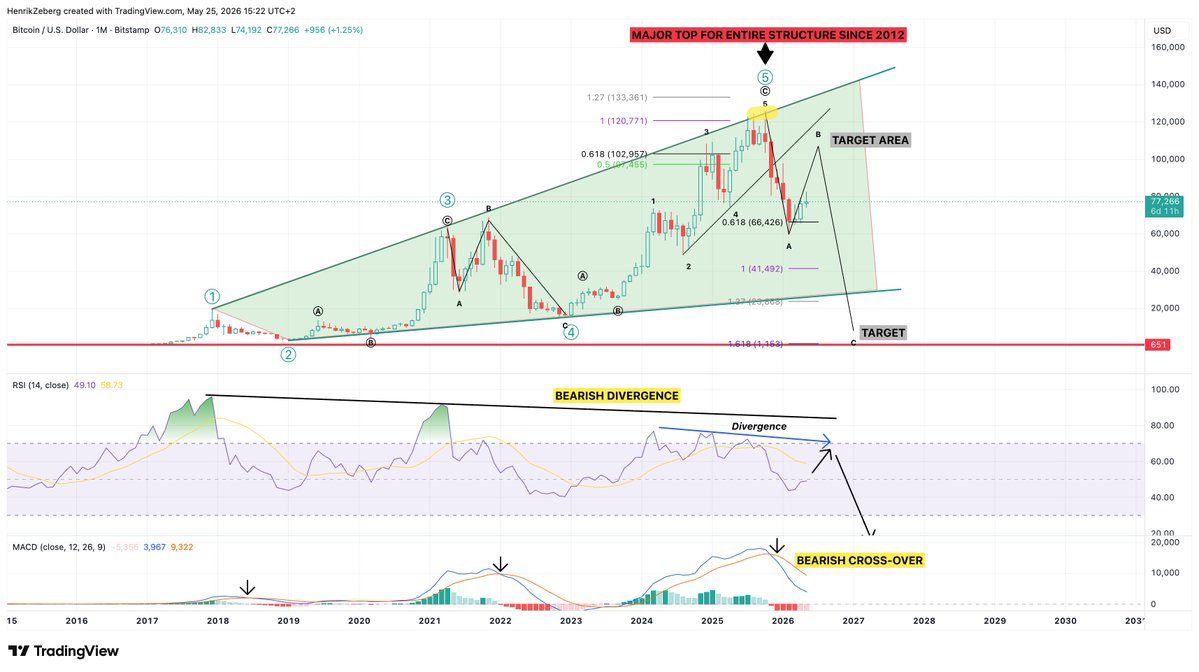
Dude, at least learn the basics and count the waves correctly.
Here is a free introductory document on Wave Theory if you can't afford to buy the book.
https://t.co/CdTtcFkQ6W
@nntaleb Attack despite ceasefire. Attack in the middle of negotiation, multiple times. Even killing the negotiators. This is back to the rule of the jungle.
If I were the Shah of Iran in the 1970s or the Supreme Leader today, I would annex Iraq and the southern coast of the Persian Gulf to restore the great Persian Empire. This is the only way to bring lasting peace and stability to the Middle East and the world.
Roger Penrose, Nobel Prize-winning physicist and mathematician, explains why we should stop calling it AI and start calling it "artificial cleverness":
He believes the entire field is mislabelled, and the label itself is doing damage.
His objection is simple but cuts deep:
"The name is wrong. It's not artificial intelligence. It's not intelligence. Intelligence would involve consciousness. Well, if it's a machine, it's not conscious."
For Penrose, people have confused raw computing power with genuine understanding.
"People have lost the plot. They've lost it in the power of computing. The thing is that computers have got so powerful that they've lost the thread of what they're doing. But I think consciousness is something different. It's not computational."
He believes the term itself has hypnotized people into a category error:
"People are so hypnotized. The trouble is that AI is a bad term. It means artificial intelligence. Now intelligence in my view is conscious. That's what intelligence is about."
So he proposes a rename. Artificial Cleverness. AC instead of AI.
To illustrate the distinction, Penrose draws on his experience teaching mathematics:
"You have mathematics students. Some of them understand what they're doing. Some are just clever. They can repeat what they've learned. They know how to do it very cleverly. They can calculate very well, but they don't necessarily understand what they're doing."
That gap, between calculating well and actually understanding, is the gap Penrose sees between today's machines and genuine intelligence.
Cleverness can be manufactured. Consciousness, in his view, cannot.
So the question worth sitting with: when we call a system "intelligent," are we describing what it does, or quietly assuming something about what it is?