As an experiment I asked Fable 5.2 to drive $10K in new MRR for Voiceflow - all on its own. No guidance, no human intervention.
To my surprise, it worked. Fully autonomous.
In less than 24 hours it was able to drive $10K in new MRR for Anthropic.
No jobs, no insurance for employees, no 401Ks for workers, no power, no innovation, no future.
You saved an abandoned, empty lot. And somehow you are proud of it.
This is an example of a policy that sounds good on paper (stick it to the credit card companies!) but will immediately create a ripple effect that politicians refuse to acknowledge. The cap will make it impossible to lend money profitably to a HUGE percentage of America. If this goes through, the people most in need of access to credit will just be cut off. They won't benefit from paying less. They'll just get cut out of the system.
This is the part most dashboards hide. Many failed payments are not lost customers. The card was fine, but the bank said no. That is a false decline, and you can often recover it with smarter retries. Our portfolio company Revaly (https://t.co/jXKHqy4cLq) does exactly that. Count recovered revenue separately from true churn, and your MRR gets honest fast.
Sometimes you see a graph that stops you in your tracks
October makes September look like a rounding error 👀
Never seen anything like this in my decade as an investor…
It’s remarkable that @OSFICanada and @FinanceCanada force Canadian banks to spend billions on AML practices, while turning a blind eye to the money laundering going on just across the street from said bank.
My latest column for the @TorontoStar: Unless they are made to fear homeowners or the courts, home invaders will keep home invading -
It's not that complicated.
We need to toughen Canada’s Youth Criminal Justice Act and adopt the doctrine of Castle Law.
https://t.co/Us6CNy65zG
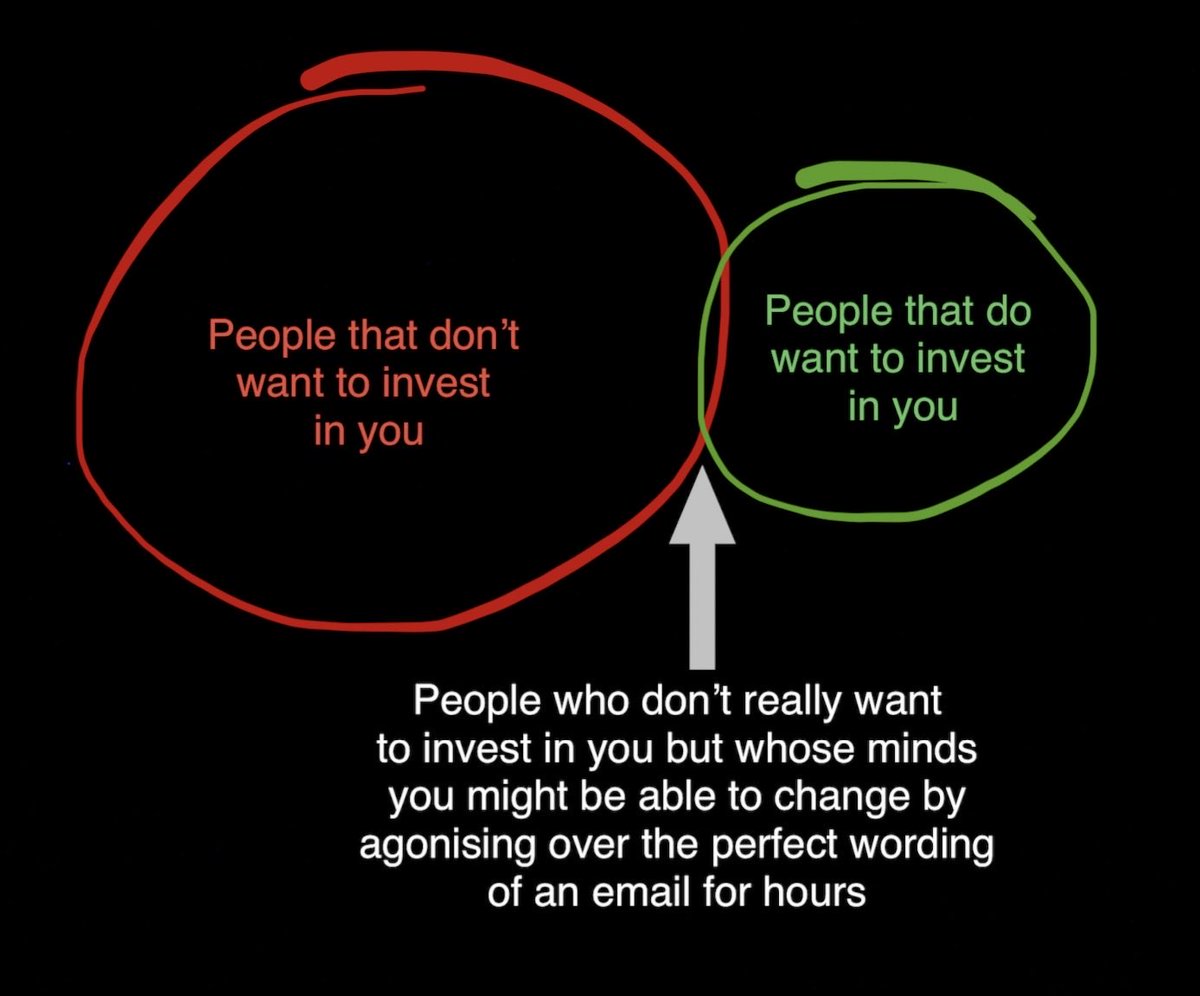
I sometimes help early stage @YCombinator founders with fundraising advice. They often send me two drafts of an email with tiny differences in wording, asking which is better. My advise is almost always the same: It doesn’t matter.
Then I try explain some version of the diagram below. In a fundraising process, you are mainly tying to quickly identify which of the below buckets investors are in. It’s a much better use of time filtering more investors to find the right hand bucket, than agonizing over the middle bucket for hours.
Revolut: Europe's most valuable startup ($200B) just showed the world its AI strategy.
Every company will end up copying it.
At the start of this year, Revolut leaned on the frontier labs. Its 2,000 engineers used Claude Code and Codex, and some burned $1,000 to $10,000 a month each. The bills kept climbing, and the returns weren't there.
So Revolut switched its default to an open-source model called GLM. All it needs is GPUs, which it rents from Together AI.
The results, by Revolut's own count:
- The bill is about a tenth of what it paid OpenAI and Anthropic
- Engineers get unlimited tokens instead of spending caps
- Coding time is down 60% and lead time is down 70%
That's the chart below.
Revolut still uses Claude and GPT, but only as "the exception," for the tasks they do best. Everything else runs on open source.
So here's the question I keep coming back to: how many use cases can companies really justify sending to frontier models?
My answer is very few. Plenty of companies still route everything to OpenAI and Anthropic today. For how long?
I think open source ends up handling the vast majority of corporate AI work, and frontier models get a short list of the hardest jobs. That's a problem for labs whose revenue forecasts assume unlimited growth.
If you appreciate unpopular takes, follow me @m0xt_ for more.