What is likely to happen to #crypto demand in the near-medium term? Check out an overview of Ana De Sousa’s research: https://t.co/IiM8ZhSPZS | #Fintech#Cryptocurrency
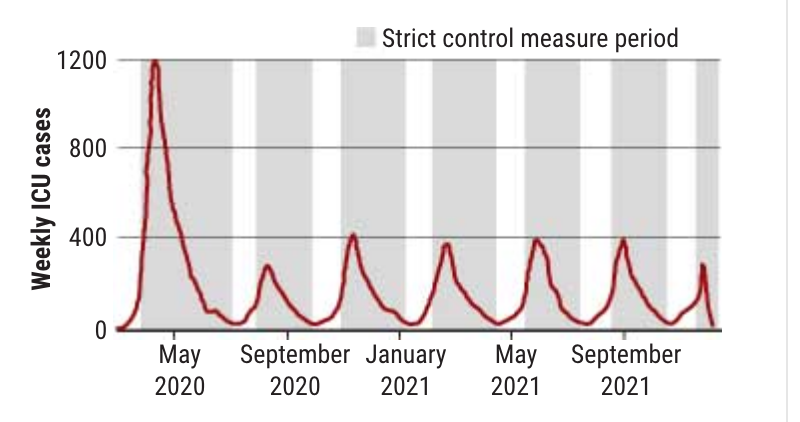
If policy makers are stuck with frequent, long periods of lockdown, it will kill business and consumer confidence. No one can plan. No one will invest. We lose many $trillions.
If we spent $100 billion on testing, can contain the virus with no lockdowns.
Sounds cheap to me.
The central warning of 2008, write Carmen Reinhart and Vincent Reinhart, is that countries should never grow complacent about the risk of financial disaster.
https://t.co/eEjUnPp8kt
.@miteshspatel of @PennNudgeUnit has had many successes just by changing default settings. For instance: “We found that just by changing the default from 30 pills to 10 pills, it cut unnecessary opiate prescribing in half.” https://t.co/62pbfjr8aV
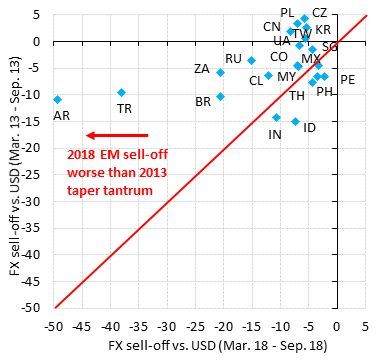
The EM sell-off was at its peak one year ago and far worse than the 2013 taper tantrum. There were just too many cross-currents buffeting EM, from trade tensions, RMB weakening, sanctions to idiosyncratic imbalances, which made things worse than 2013. It feels the same now...
This Working Paper analyzes how political parties across the ideological spectrum in #G20 countries have leaned more nationalist since 2008 and shows how economic nationalism is more widespread than previously thought. https://t.co/0CdWbfLbgA
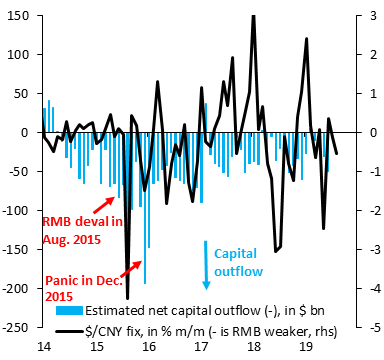
Both China and the US have an inventive to deescalate. The US Achilles heel is the stock market, which has fallen whenever RMB devaluation fears set in. China's Achilles heel is capital outflows (blue), which could pick up again if devaluation expectations build in a serious way.
Allowing the yuan to depreciate hurts Chinese consumers and the effort to put China on a more sustainable growth path. And it could cause problems for businesses in China that have borrowed in dollars ... (1/2)
.@FT's @gilliantett explains the new barter economy: "There's a swap of data for services, which is not actually being mediated by money at all."
Watch the full episode: https://t.co/TXsqEUyoWu
"Two Views of the International Monetary System" https://t.co/4lGrXaaxGv is out, in Intereconomics. I couldn't help but call them the Harvard view and the Berkeley view...
India's non-banks are raising new risks and emerging from the shadows. Find out more in our latest "Pacific Exchange" blog: https://t.co/TZ9sx5RXGZ | #India#Asia#shadowbanking
In our latest "Pacific Exchanges" #podcast, we sit down with Nick Lardy of @PIIE to talk #China and the diminished role of its private sector. Listen to the latest episode here: https://t.co/OBI2xUMBRD | #Asia#Economy#Credit
Can Korea move beyond government-backed small business lending? Take a look at our latest "Pacific Exchange" #blog for more: https://t.co/nks5CxYJ3z | #Asia#Korea#SmallBusiness
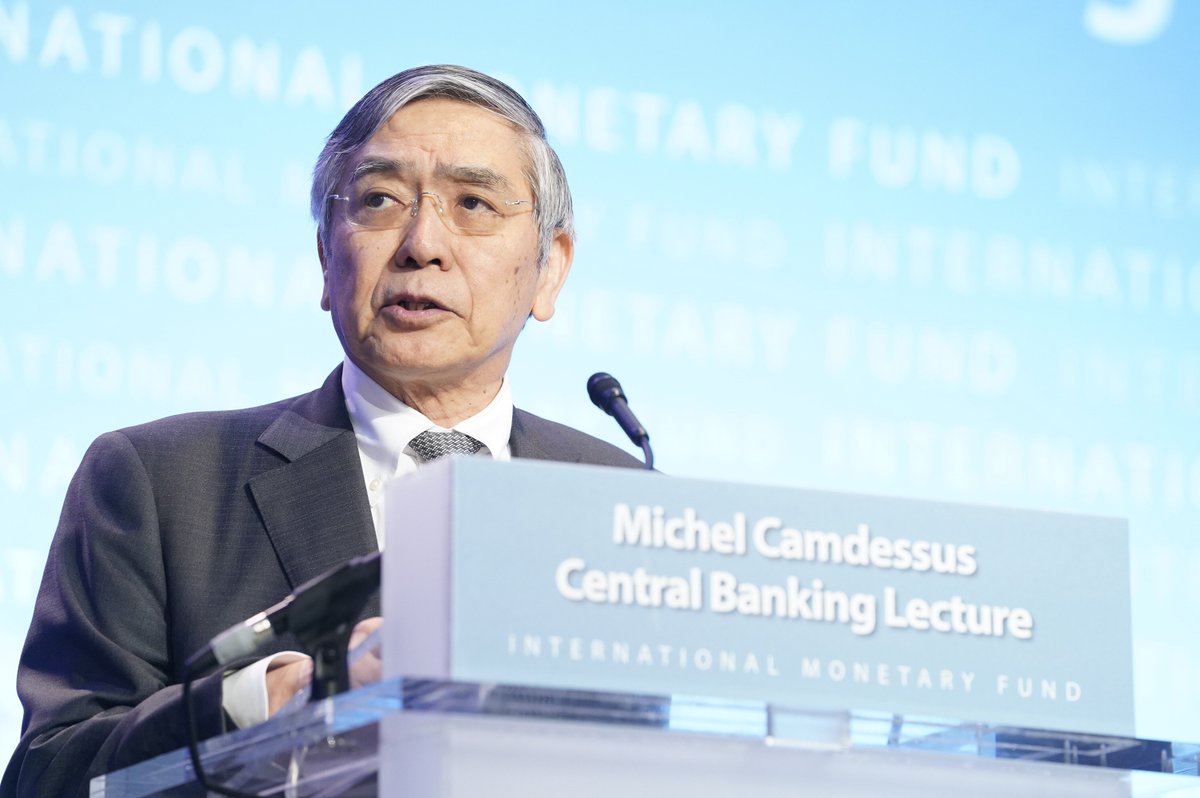
Governor Kuroda: I believe that #Japan's experience of a long battle against deflation would provide a case study for other central banks in conducting monetary policy going forward. https://t.co/MG9IsA4ZZ2 #Camdessus2019
In light of my July 3 post on Italy, a shout-out to Fabio Ghironi, who has a thoughtful Vox Talk on the state of the Italian economy here https://t.co/ZfX6DIzFxR
Tusk to Putin:
"Whoever claims that liberal democracy is obsolete, also claims that freedoms are obsolete, that rule of law is obsolete & human rights are obsolete...
What I find really obsolete are: authoritarianism, personality cults, the rule of oligarchs."
#G20#G20Summit
Thank you again to all the great volunteers who help out at today's Women Uniting for Financial Literacy event. I'm sure they loved every minute of it as well as the students attending. We look forward to our next time to help the next generation of financial professionals.