Today marks the 50th consecutive day of record-breaking global ocean temperatures.
Sea surface temperatures in the key El Niño monitoring zone have risen faster since New Year's Day than in any year on record.
We are on pace for the strongest El Niño on record (reliable records began in 1850).
2026 will more than likely be the second-warmest year on record globally, with 2027 virtually guaranteed to be the warmest year on record.
A NOAA divulgou oficialmente hoje o início do El Niño. Além disso, divulgou as previsões de probabilidades de intensidade pros próximos trimestres - abaixo. Nossa primavera e verão serão muito provavelmente num contexto de Niño muito forte (alguns chamam de "super" rsrs)
Flooding risks will rise across the U.S. into June as a slow-moving, omega block pattern takes hold.
This weekend, tropical moisture from the sultry Pacific and western Atlantic will be wrung out over the northern Rockies.
Southern downpours will likely worsen later next week.
NOAA’s latest projections indicate that a powerful, potentially record-breaking El Niño is rapidly developing in the Pacific and could push global weather patterns into dangerous territory.
Sea surface temperatures in key regions of the equatorial Pacific are forecast to climb as much as 4.5°F (2.5°C) above average by late 2026, rivaling the strongest El Niño events on record.
El Niño occurs when unusually warm water spreads across the central and eastern Pacific, weakening trade winds and dramatically altering global atmospheric circulation. The consequences are far-reaching: some areas face extreme rainfall, devastating floods, and intensified tropical storms, while others endure severe drought, heat waves, wildfires, and agricultural losses. Fisheries can collapse, disease patterns often shift, and food security is frequently threatened worldwide.
What makes this event particularly concerning is that it is emerging against the backdrop of a planet already at or near its warmest levels in recorded history due to human-caused climate change. Superimposing a strong El Niño on this elevated baseline is expected to significantly amplify extreme weather events.
Scientists have drawn comparisons to the catastrophic 1877–1878 El Niño, one of the most destructive in modern history, which triggered widespread droughts, famines, and disease outbreaks that claimed millions of lives globally.
While forecasts still carry uncertainty and the final intensity will depend on how ocean conditions evolve, current models are increasingly alarming. If the projections hold, the developing El Niño could serve as a severe stress test for societies and ecosystems already strained by climate extremes.
The Amazon is closer to collapse than we thought. New research warns that with just 1.5–1.9°C of global warming plus 22–28% deforestation, 62–77% of the rainforest could shift into a dry, degraded state. Stop destroying the Amazon!
https://t.co/2QL192DAel
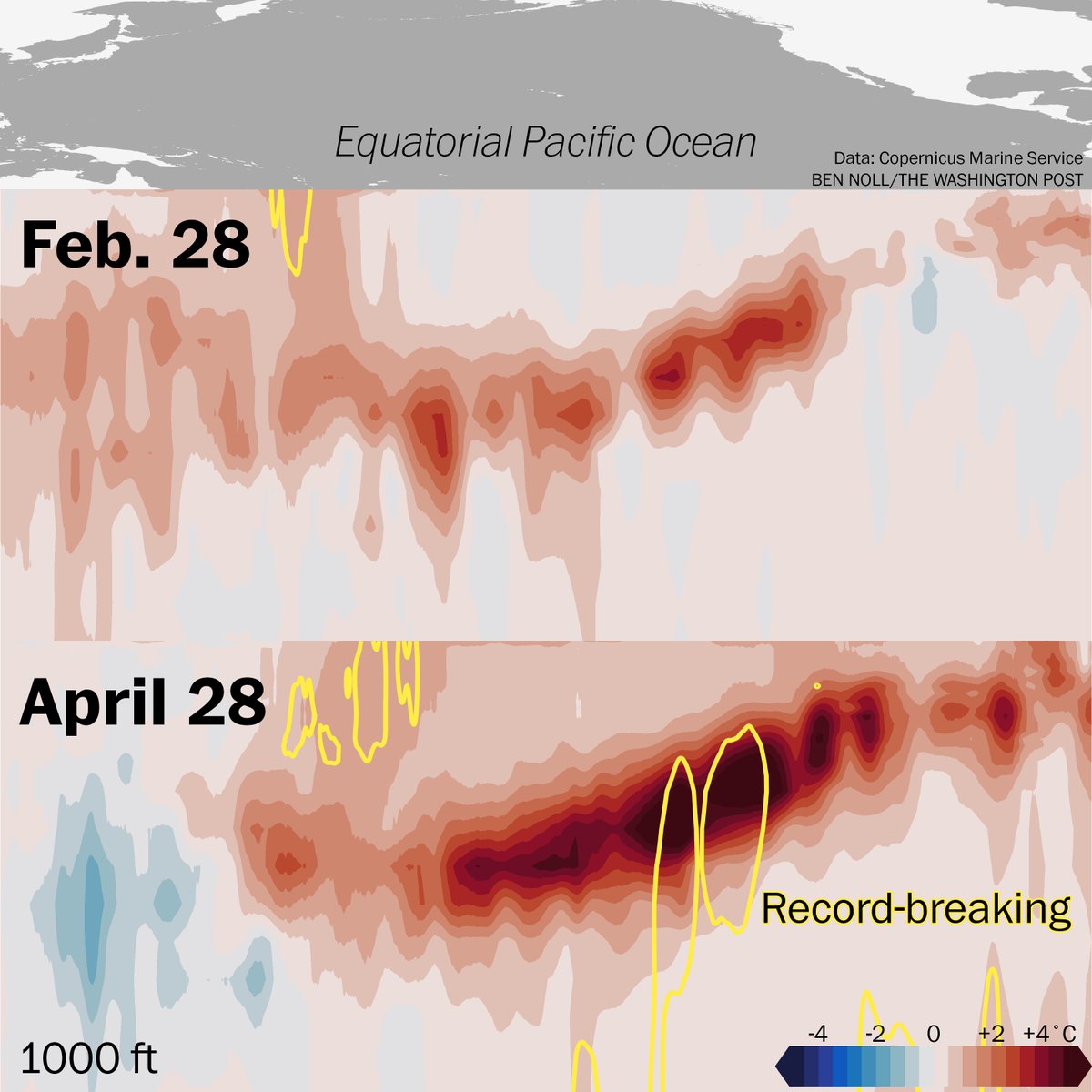
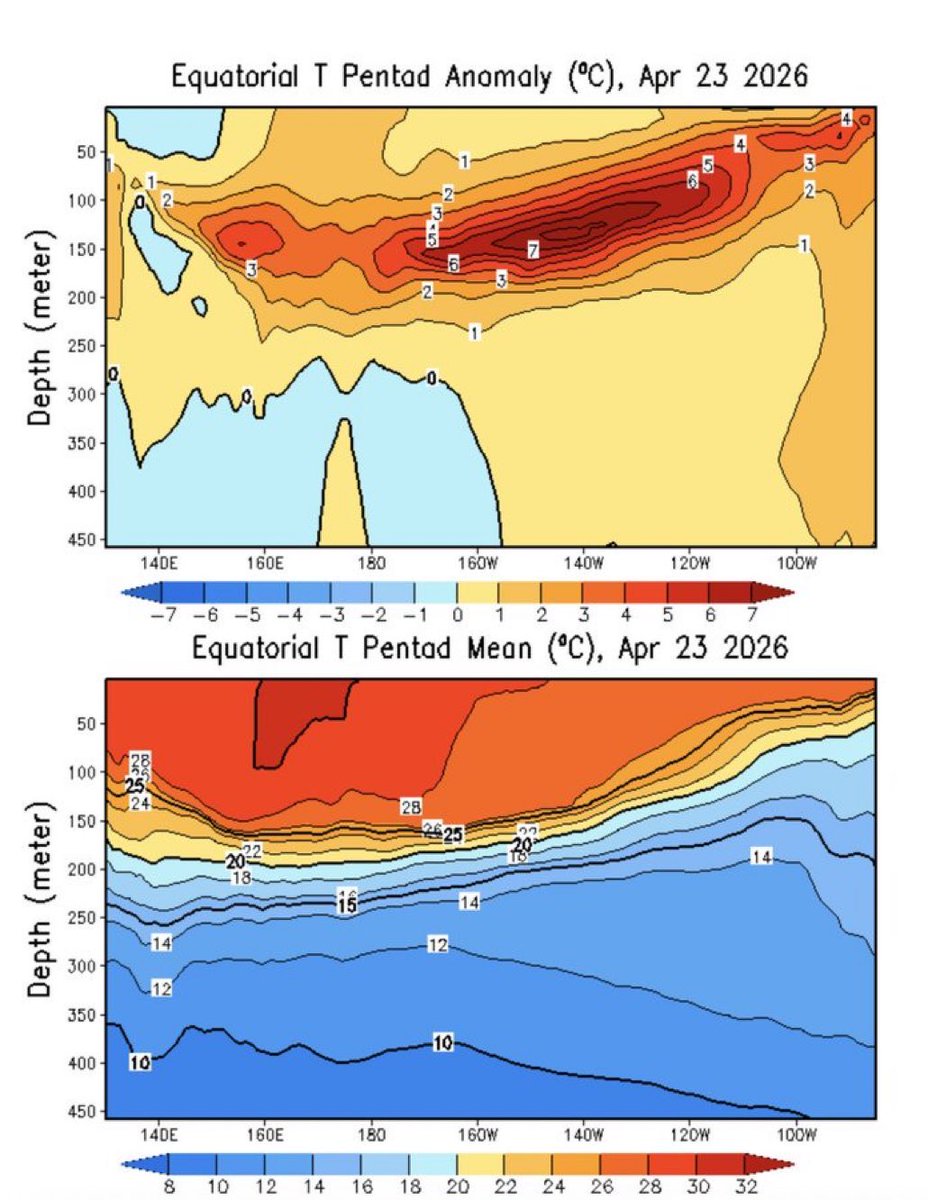
Super El Niño: A freight train of warm water continues to chug across the subsurface Pacific Ocean.
The level of warmth is record-breaking in some areas, peaking around 7˚C (13˚F) above average.
This heat should lead to more intense El Niño projections in May model updates.
The climate crisis is on the verge of a catastrophic threshold.🤔🔥
A "Super El Niño" Is Coming And It Could Trigger Global Climate Chaos
https://t.co/G7AhGCrgvZ
O Governo Lula decidiu que vai agora privatizar um monte de hidrovias. É o maior número de PPPs da história do Brasil. Nunca antes na história do país, a burguesia devorou tanto patrimônio público. Mas não pode chamar de política neoliberal.
E não dá para culpar o Congresso…