One element that explains at least in part the different reactions in the US and in Europe and Latin America to the FIFA scandalous red card deal is that most of us (Europeans and Latin Americans) really care about the game (let’s call it football at this point) - Americans do not. We care so much that to us football often represents a metaphor of the game of life .. corruption in football is corruption in life - it cannot be taken lightly - by all means.
my #liberation day, one year anniversary, retrospective.
three themes:
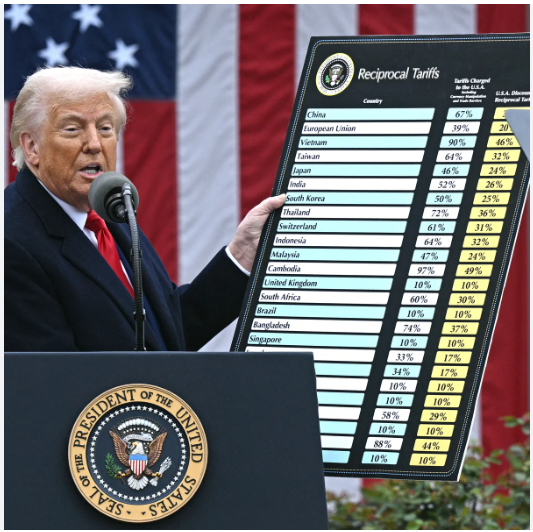
1) #tariff levels turned out **not** to be as large as was initially thought.
2) #AI investment (and trade) boom masked any #tariff induced weakness in the US economy
3) We have not seen the full impact of #tariffs on inflation.
Los precios deben reflejar la escasez y la externalidad. La subida de los precios de la bencina y el diésel están reflejando lo primero. Pero quizás sea un buen momento de sincerar también lo segundo.
El @GiorgioJackson debe ser el wn más intelectualmente deshonesto de la política chilena. Llega a dar rabia la tremenda cara de raja.
Bonvalet lo caló al toque.
Let me explain why I believe modern economics is such a powerful tool for understanding the world. I’ll do this by discussing a great paper by Simone Cerreia-Vioglio, @UncertainLars, Fabio Maccheroni, and Massimo Marinacci, “Making Decisions Under Model Misspecification,” published in the Review of Economic Studies a few months ago.
Imagine I want to drive from UC San Diego to UCLA, but I’ve never driven that route before. I need to build a “model of the world” to guide me, which we usually call a map. Maps are simplified representations of reality. They can’t include every detail if they’re to be useful. Borges, in his short story On Exactitude in Science, makes this point beautifully. (In practice, I don’t draw the map myself—I use an app—but someone still had to make it.)
Because maps simplify, I can’t fully rely on them. Maybe last night’s storm knocked down a tree and closed a street, or there’s construction and the ramp off the highway in LA is shut down.
This uncertainty matters. Suppose I’m driving to UCLA for an important talk at 11 a.m. If the ramp is closed, I might need 15 extra minutes. When should I set my alarm to arrive on time, while still getting enough sleep to give a good talk?
The problem is that I can’t assign precise probabilities to all these contingencies. How likely is the fallen tree? Or new roadwork? Even the best traffic apps can’t capture every disruption, and some might happen after I’ve already left.
In economic terms, my “model of the world” (the map) is misspecified—and no matter how hard I try, I can’t fully fix that.
But sitting down and crying about misspecification doesn’t answer my basic question: when do I set the alarm? Too early, and I’m exhausted. Too late, and I’m late.
Simone and his co-authors offer a way to think about this. They start from the idea that we often hold several structured models of an economic phenomenon, grounded in theory. For example, a central bank might use a standard New Keynesian model and a search-and-matching model of money.
Yet, aware that each model is misspecified by design, the bank adds a protective belt of unstructured models—statistical constructs that help it gauge the consequences of misspecification.
The beauty of the paper is that it provides an axiomatic foundation for this protective belt (and even generalizes it to include a Bayesian approach). It shows that if a decision-maker’s preferences meet certain conditions —reflecting both rational and behavioral features— then those preferences can be represented by an augmented utility function that formally accounts for misspecification.
Crucially, we don’t assume that augmented utility function; we derive it. We start with general, plausible properties of preferences and prove that they imply such a representation.
That’s real progress. Instead of writing endless critiques of expected utility or rational expectations (as many have done for decades, with little to show), we now have a formal way to reason about misspecification—precise definitions, clear boundaries of validity, and awareness of what we still don’t know.
Take, for instance, a brilliant Penn graduate student on the market, Alfonso Maselli
https://t.co/rl2gu95V7t
His job-market paper pushes this frontier further. He studies cases where a decision-maker not only faces model misspecification but is also unsure which model best fits the data and can’t assign probabilities to them—what we call model ambiguity. In my example, the central bank is unsure whether the New Keynesian or the search-and-matching model fits better, and it worries that both might be incorrect.
If you read Simone et al. or Alfonso’s paper, you’ll see how misguided—and, frankly, cartoonish—many of the recent criticisms of economics on X have been.
First: the idea that economists don’t understand math or have “physics envy.” The math in these papers is subtle and advanced—utterly different from what physicists do (neither better nor worse, just distinct). An engineer transitioning into economics would find these tools unfamiliar.
Second: claims of ideological bias are unfounded. I have no idea about the political views of the authors, and I’d be surprised if anyone could infer them from the analysis—beyond vague guesses about typical academics.
Third: This has almost nothing to do with what one learns as an undergraduate, or even in first-year graduate school. If your knowledge of economics stops at an intro textbook, it’s best not to pontificate on the field’s frontiers.
Fourth: Is this science? Debating that word’s boundaries is pointless; every definition of “science” breaks down somewhere.
The Germans solved this long ago with the idea of Wissenschaft—the systematic pursuit of knowledge, whether of nature, society, or the humanities. By that measure, modern mainstream economics is clearly a Wissenschaft: a disciplined, cumulative, and highly useful effort to understand how the world works. Simone and his co-authors have demonstrated that beyond any reasonable doubt.
¡100 años de historia!
Un 22 de agosto de 1925 se publicó en el Diario Oficial el Decreto de Ley que creó el Banco Central de Chile. Hoy se cumplen 100 años desde su creación, una institución clave en la historia económica del país.
Por esto, te queremos invitar a conmemorar este centenario con nosotros y a conocer más en https://t.co/1iobEeEmFc o en https://t.co/GD2wAaomrm
#Centenario #bcch100años #BancoCentral #Economía #Chile
📄 En La Tercera, Juan Escobar y Alejandro Corvalán —director y director alterno del Instituto Milenio MIPP— publicaron una carta al director acerca de la decisión de ANID de cerrar centros de excelencia científica, basada en el caso del MIPP.
🔗 https://t.co/jXYvsv4JeV
¡Una moneda, cien años de historia!
El Banco Central de Chile dio a conocer una moneda de $100 para celebrar su centenario, que comenzará a circular desde el 21 de julio de 2025.
Esta moneda mantiene el mismo valor y tamaño, pero con un diseño especial que celebra los 100 años de historia del Instituto Emisor.
Te invitamos a conocer más en https://t.co/1iobEeEmFc
Fui consultado sobre el impacto de la pandemia del COVID sobre el mercado laboral en Chile en un artículo que apareció en El Mercurio.
Como otras personas que han revisado las cifras del INE, constato que el efecto es importante.
Pese a que no soy un economista especializado en comercio internacional, escribí algunas ideas en relación a lo ocurrido con el alza de las tarifas por parte de la administración Trump en Estados Unidos, las que fueron publicadas por @ciper aquí https://t.co/onEYisFAvk
Se los resumo:
¿Tienen razones para festejar la reforma de pensiones...
el oficialismo?:
- Sí, por razones electorales y no por razones ideológicas
la derecha?:
- Sí por razones ideológicas y no por razones electorales
#NadieSabeParaQuienTrabaja
So, what’s going to happen? Probably a third recession. Here are some scenarios (I can think of a thousand more):
1.Scenario 1: Cheap immigrant labor is kicked out → pressure in the labor market → inflation goes up. Tariffs increase and a trade war ensues → more inflation. The Fed tightens. In the meantime, the Department of Government Efficiency (DOGE) causes all sorts of service interruptions—halting Social Security payments, disrupting Medicare, causing planes to drop from the sky, etc.—leading to a recession.
Trump takes full responsibility and reverses course… ehhh, more likely he looks for scapegoats. He fires Musk and turns on the Fed, starting by firing Powell. Since Trump has declared he knows more about interest rate policy than anybody in the world, he demands slashing policy rates to zero. We end up with an Erdogan-like situation of historically high inflation. Powell’s firing and a purge at the Board of Governors end up in the courts. Meanwhile, the stock market is cratering and the recession worsens. Desperate to divert attention, Trump invades Greenland, only to meet fierce resistance from polar bears. As midterms approach, Trump tries to tinker with the elections, but if he’s unsuccessful, Republicans are wiped out of Congress and Trump is impeached.
2.Scenario 2: Large cuts in government spending and a tariff war lead to a steep drop in production, so we start seeing deflation instead of inflation. Trump and Musk declare everything is going according to plan, claiming “deflation is clearing the rottenness out of the system”—something long overdue.
The stock market is in free fall, unemployment soars to a historic high, and banks start collapsing. At that point, DOGE realizes it had abolished the Federal Deposit Insurance Corporation (FDIC) and closed the Fed’s discount window, triggering a full-on bank run. Banks collapse and defaults hit new highs as the real value of debt increases with the falling price level. Trump blames the bankers, continues his revenge tour, and starts indicting lots of people for various economic crimes—unless they arrange a side deal at Mar-a-Lago.
3.Scenario 3: Musk gets bored of DOGE and Trump gets bored of Musk—who exits the White House with an ancient Roman salute. Everyone else grows tired of Trump. Most of the tariff bluster is withdrawn in response to a violent market reaction. Trump begins losing interest in this whole “President” thing. He starts playing more and more golf, strongly encouraged by everyone to put his focus and energy into improving his golf game.
Durante el día, la mayoría de la energía en Chile va de norte a sur. En la noche, es al revés. Todo depende de una sola gran línea de transmisión. Una sola. Falló hoy y dejó a todo el país sin electricidad. Lo mismo pasó hace 15 años. Nuestra fragilidad eléctrica es extrema.