“It is in the interest of tyrants to reduce the people to ignorance and vice. For they cannot live in any country where virtue and knowledge prevail.”
— Samuel Adams
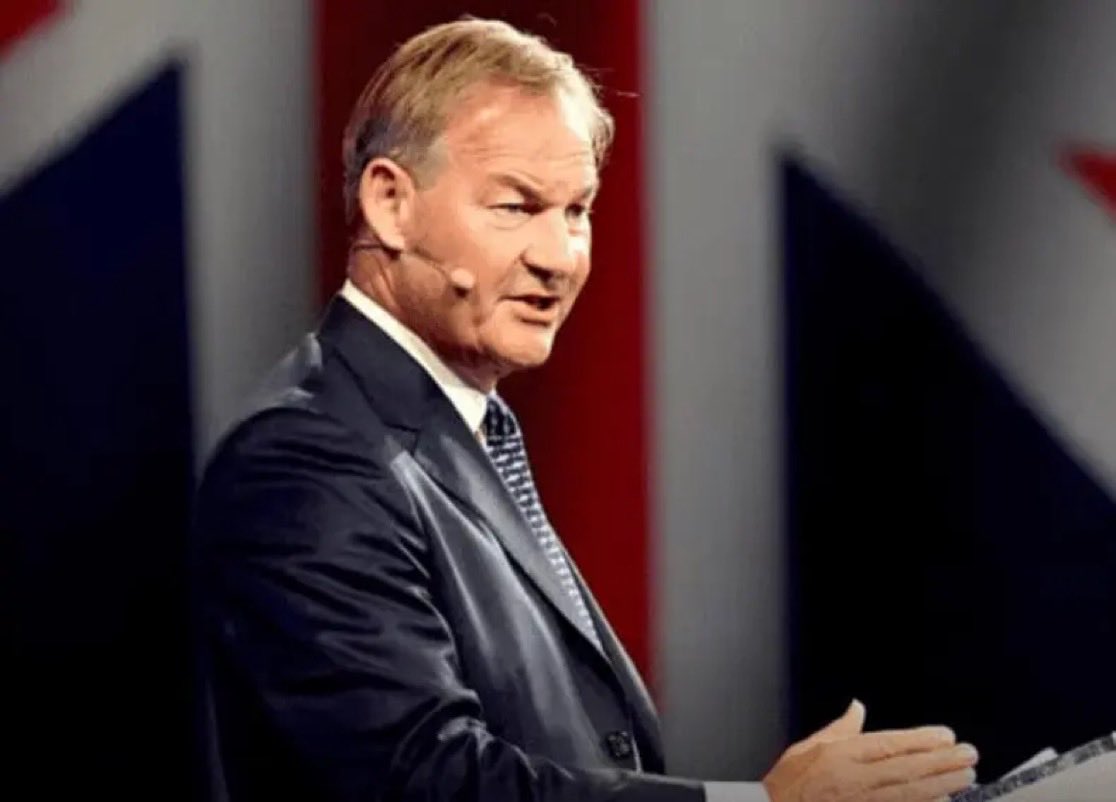
Thanks to everyone who reposted this post and the clip of Lord Monckton dismantling the climate narrative.
This is probably the most important post I’ve ever made. It cuts through the noise and exposes how climate policy has been shaped and driven by the UN, EU and successive UK governments—with Blair and Obama playing pivotal roles in taking the agenda global.
The implications are enormous.
If the public has been sold a narrative rather than the full truth, we have every right to ask who constructed it, why, and who ultimately benefits.
Keep sharing it. The more people who see the evidence, the harder it becomes to ignore. 👊🏽
There is a simple way to cut through the political noise surrounding Reform MPs: look at what they actually do inside Parliament.
The parliamentary record reveals a striking difference between Rupert Lowe and Nigel Farage.
Since entering the Commons, Rupert Lowe has submitted 2,568 written questions, compared with just 20 for Nigel Farage.
Lowe has also supported 56 Early Day Motions, compared with 12 supported by Farage.
But the most significant difference is perhaps what happens beyond the chamber.
Lowe is a member of the Public Accounts Committee, one of Parliament’s most important mechanisms for scrutinising government spending and administration.
The committee does not simply debate politics. It questions government departments, accounting officers, permanent secretaries and senior Civil Service officials about how taxpayers’ money is being spent and whether government programmes are actually working.
Lowe has participated in PAC inquiries covering areas including:
• the asylum system
• Civil Service shared services
• government compensation schemes
• government use of data analytics
• external consultants
• Whole of Government Accounts
• police productivity
• probation
• clinical negligence
• defence investment
• British Steel
• Sizewell C
• Northern Powerhouse Rail
• research infrastructure
• large-business tax compliance
• government-sponsored museums and galleries
• NS&I’s transformation
• Ofwat
The committee’s published attendance figures recorded Lowe attending 17 of 25 meetings — 68% — in the period covered by its February 2026 statistics.
That matters because these are occasions when MPs can question the people actually running government departments.
Farage, by contrast, has no formal Commons committee membership recorded for this Parliament and has therefore not participated as a committee member in Public Accounts Committee investigations.
None of this is an argument about who is more popular, who gives the better speech, or who attracts more attention on social media.
It is a question of parliamentary activity.
If we want MPs to hold government to account, we should look at questions asked, committees attended, inquiries participated in and officials scrutinised — not simply television appearances or social-media posts.
And there is one important qualification to the figures.
The parliamentary pages describe the 56 and 12 figures as Early Day Motions supported. They should therefore not be presented as 56 motions personally tabled by Lowe versus 12 personally tabled by Farage.
But even with that distinction, the contrast in written questions and committee scrutiny is substantial:
#Rupert Lowe
2,568 written questions
56 EDMs supported
Public Accounts Committee member
17/25 PAC meetings recorded as attended
#Nigel Farage
20 written questions
12 EDMs supported
No formal Commons committee membership
No PAC inquiries participated in as a committee member
The broader point is simple:
Judge politicians by what they actually do with the parliamentary machinery available to them.
On that measure, #Rupert Lowe’s parliamentary record deserves considerably more attention than it receives.
The West does not necessarily need fewer moral principles.
It needs a deeper understanding of what it means to act morally.
Kant gave us universal principles.
Mill gave us consequences.
Nietzsche asked what our values do to human beings.
Aristotle gave us practical wisdom.
Perhaps the future of the West depends upon recovering all four questions:
Is it right?
What will it cause?
What kind of people will it produce?
And will it help us flourish?
I’ve explored this in my new essay:
The Moral Challenge of the Liberal West: Why Good Intentions Are Not Enough.
#Nietzsche #Kant #Aristotle #JohnStuartMill #Philosophy #PoliticalPhilosophy #WesternCivilisation #Substack #MoralPhilosophy
https://t.co/5xCr9m82yc
🛡️ The Save Europe Act was recently discussed on one of the UK’s biggest podcasts @lotuseaters_com .
We’re grateful to our national organizer @MrHreviews drawing attention to the importance of joining the movement and encouraging others to get involved.
Watch the full stream here:
https://t.co/Cfft89Gomo
🛡️Excited to see the Save Europe Act being discussed on one of the UK’s biggest podcasts @lotuseaters_com.
Our national organizer for UK @MrHreviews joined the conversation to share insights into the campaign.
Watch full stream here:
https://t.co/mwsVK1UUv8
Only an ideology requires its adherents never to learn.
If a policy repeatedly produces outcomes contrary to what was intended, changing the policy isn’t necessarily a betrayal of your principles.
It may be the most moral thing you can do.
The refusal to learn from reality isn’t moral courage.
It is intellectual cowardice.
#Nietzsche #Philosophy #Politics #Ideology #PoliticalPhilosophy #WesternCivilisation
https://t.co/jKXzgJRnie
We would never judge an engineer solely by his intentions.
If the bridge collapses, we don’t say:
“But he really wanted it to stand.”
We judge the bridge by whether it stands.
Why should politics be different?
A government can have noble intentions and still produce disastrous outcomes.
At some point, reality gets a vote.
#Politics #Philosophy #Nietzsche #PoliticalPhilosophy #Government #CommonSense
https://t.co/jKXzgJRnie
A good intention does not make an action good.
Kant taught the West to place enormous faith in universal moral principles.
Nietzsche asked a more uncomfortable question:
What kind of world does your morality create?
Intentions matter.
But they are only the beginning.
Reality matters too.
Good intentions begin morality. They do not complete it.
#Nietzsche #Kant #Philosophy #PoliticalPhilosophy #WesternCivilisation #MoralPhilosophy
https://t.co/jKXzgJRnie
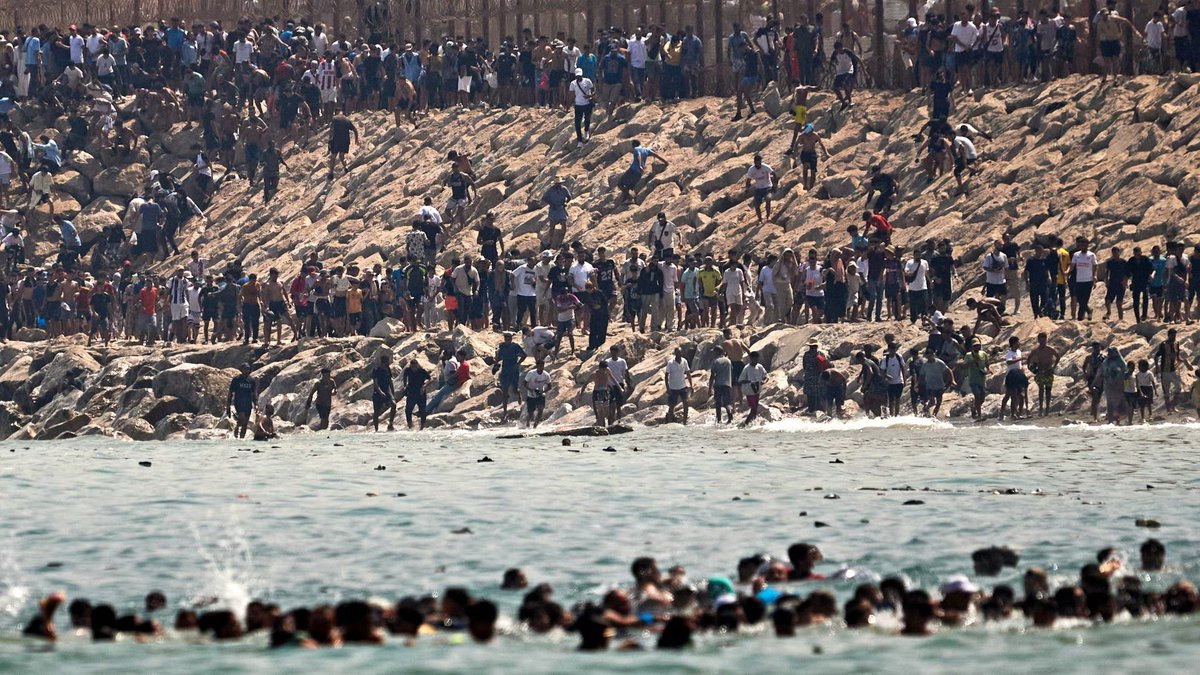
🚨BREAKING: Ceuta Hospital has revealed that five girls under the age of 14 have been admitted over the last week suffering from cases of extreme rape
On average, Ceuta records 3–8 rape reports a year, including adult victims.
This is MASSIVE cover up.