I tested Gemini 4 Neon vs Opus 5.5 for autonomous AI research:
I gave each model Andrej Karpathy’s autoresearch, an H100 and a full night. No human in the loop.
For context, autoresearch gives an AI a small but real GPT training setup. The AI does its own research, edits the training code, runs the training, and keeps the change if the model got better beyond a threshold.
Key Results (detailed in linked repo):
- Neon improved the model 1.76× as much as Opus on the held-out data.
- eon's model learns ~2.3× faster than Karpathy's original; Opus's ~1.6×.
- Neon: 35 experiments, 4 kept, $35.
- Opus: 60 experiments, 6 kept, $27.
- Neon's single best idea (a ~20-line "bigram memory") was the biggest jump of the night, about 2× Opus's best single change.
Interesting Observations:
- The "kind of ideas" models tried were different Neon made big, architecture bets (n-gram memory, mixture of experts, custom kernels). Many missed, but its hits were huge.
- Opus ran more standard sweeps and kept combining near-misses into small wins.
- Neon reflected on its own results. After the bigram memory worked, its reasoning said "why limit this to just bigrams?" and it extended the idea to 3- and 4-word memory. Both kept.
- Neon grew the model from 50M to 1.66B params using cheap lookup tables, while using less GPU memory than Opus's version. It found free capacity inside the same 5-minute budget.
- As mentioned by @PatrickToulme earlier, GDM doesn't nerf Neon on AI research, and this overnight run def didn't look nerfed.
Code + all 95 experiments and full results linked below.
Sidenote: this is completely independent of my work at Meta and is a passion project.
Nvidia's board of directors has reinstated co-founder Jensen Huang as chief executive, 11 days after he resigned following revelations of two extramarital affairs. Addressing staff at Nvidia's Santa Clara headquarters on Monday, Huang stated he intends to be a better CEO the second time around.
The chip maker's board stated it received input from senior U.S. government officials and is confident Huang's reinstatement poses no national security risk. The decision followed pressure from Silicon Valley, Wall Street investors, and the White House.
President Trump told CNBC he spoke directly and indirectly with the board and worked with Vice President JD Vance and Treasury Secretary Scott Bessent on the matter. According to a U.S. official and another person familiar with the conversations, Vance worked over the weekend to persuade the board to reinstate Huang after Trump and his national-security team concluded Huang was not a security threat.
Source: Wall Street Journal
#Nvidia #CorporateGovernance #TechPolicy
The U.S. is investigating potential Iranian involvement in cyberattacks against up to 50 energy tankers carrying oil, liquefied petroleum, chemicals, and other explosive substances, according to U.S. officials. Russia is also viewed by U.S. authorities as a possible culprit.
Some targeted vessels received bomb threats and warnings in Farsi not to load U.S. products, raising concerns about potential explosions, collisions, oil spills, or disruptions to critical maritime routes. Officials say attackers are exploiting a vulnerability in Fortinet FortiGate routers used in the maritime industry. In recent weeks, U.S. Coast Guard cyber-protection teams boarded at least four ships approaching U.S. ports to mitigate threats.
However, a Trump administration official stated the U.S. has not found evidence of Iranian involvement, describing only four attacks as a minor nuisance. Iran and Russia did not respond to requests for comment.
Source: Wall Street Journal
#Cybersecurity #MaritimeSecurity #Energy #Geopolitics
CrowdStrike has agreed to acquire cloud-security firm Zscaler in an all-stock deal valued at $43.9 billion, combining two of the cybersecurity sector's largest vendors. The agreement pairs CrowdStrike's endpoint-security software for computers, servers, and devices with Zscaler's cloud-delivered network-security technology. Following the announcement, CrowdStrike shares fell 8.9% on Monday while Zscaler shares rose 18%.
The merger reflects growing pressure on security companies to rethink models built around separate products as artificial intelligence accelerates attacks, helps adversaries discover vulnerabilities and automate intrusions, and enables AI-powered tools to perform functions previously handled by stand-alone products. CrowdStrike CEO George Kurtz stated that attackers exploit gaps between disconnected security technologies, a problem he expects to worsen as AI agents become more capable. Zscaler CEO Jay Chaudhry, who will join CrowdStrike's board and continue leading Zscaler, said autonomous AI agents operate continuously at machine speed and could cause significant damage if compromised.
Source: Unknown
#Cybersecurity #MergersAndAcquisitions #ArtificialIntelligence
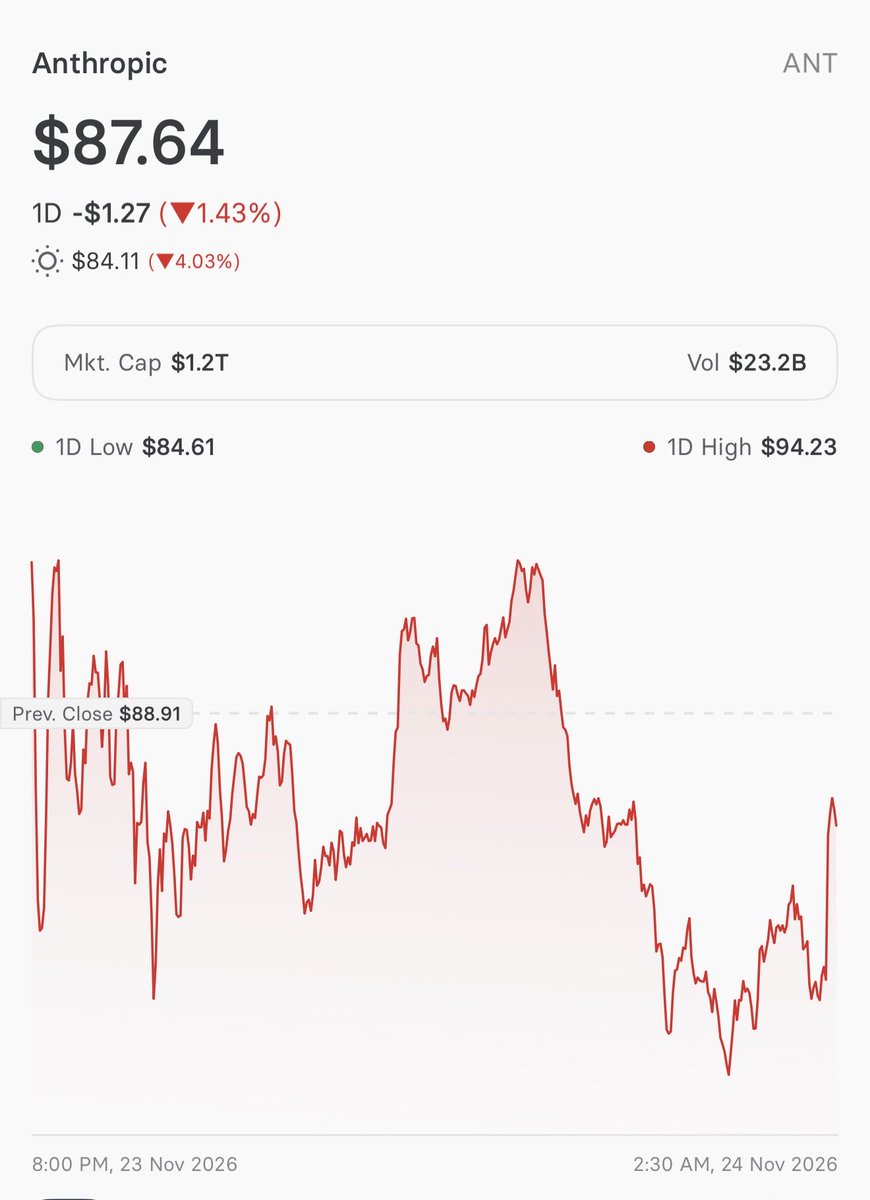
Anthropic's IPO—the largest in history—is drawing scrutiny over the timing of its overallotment option, or "greenshoe," according to a Financial Times analysis. After gaining 17% on day one to close at $97.17 above its $83 offer price, shares fell 8.5% on Friday to $88.91, coming within 5 cents of the IPO price. Underwriters exercised the full greenshoe after just one day, generating an additional $12.2bn for Anthropic. The article notes that this early exercise removed banks' ability to support the stock in subsequent sessions, amid a 19% offering size increase, up to 315mn shares (worth about $26bn) eligible for day-one sale, and shares declining from an initial $115 peak. Morgan Stanley, responsible for stabilisation, received no commission on the greenshoe, with all $12.2bn going to Anthropic, indicating the company likely approved the move to maximise fundraising while capital markets remained open.
Source: Financial Times
#Anthropic #IPO #Markets #Tech
The European Commission is set to propose the Quantum Act, requiring public authorities to favour EU-controlled businesses or specific partner countries when awarding quantum technology contracts. The initiative links industrial policy with economic security and technological sovereignty to build domestic tech champions and avoid repeating the bloc's reliance on US firms in AI and cloud computing.
Key figures from the report:
- Market share: About one-third of global quantum companies are based in the EU, compared with roughly a quarter in the US and 5% in China, though the US and China hold higher shares of quantum patents.
- Public funding (last year): The EU announced €8.6bn, compared with €5.3bn in the US and €13.5bn in China.
- Private investment: US quantum start-ups received roughly €7bn, compared with €1.1bn in the EU, according to Commission estimates.
The plan also includes a European quantum platform for shared infrastructure access, specialised innovation hubs for start-ups, and equity financing arrangements to attract private capital.
Source: Financial Times
#QuantumTechnology #TechPolicy #EuropeanUnion #IndustrialPolicy
CrowdStrike has agreed to acquire cloud security company Zscaler in an all-stock deal valued at roughly $44bn, potentially marking the largest transaction in the cyber security industry.
Key facts:
- Deal terms: Subject to regulatory and Zscaler shareholder approval, the acquisition is projected by CrowdStrike to expand its potential market by more than $185bn by 2029.
- Valuations: CrowdStrike's market capitalisation stood at $235bn at Friday's close after roughly doubling this year, though shares fell 10% in pre-market trading on dilution concerns. Zscaler's market cap was $32bn after losing nearly a third of its value over the past 12 months amid slower sales growth.
- Context & implications: CrowdStrike focuses on endpoint protection, while Zscaler secures network access. William Blair analysts stated the combination would create a formidable platform competitor to Palo Alto Networks and Microsoft, pressuring narrower standalone vendors to consolidate as AI reshapes the sector.
Source: Financial Times
#CyberSecurity #MergersAndAcquisitions #Tech #EnterpriseTech
Novartis CEO Vas Narasimhan has rejected claims that AI will cure cancer within 10 years, arguing it will take a decade to reduce the drug-development process by four years.
Narasimhan, who is also an Anthropic board member, said the tech industry applies an "engineering mindset," whereas clinicians and pharmaceutical firms recognize that only about 5% of what goes on in the human body is understood. He noted this limits AI's ability to learn and predict compared to coding or language.
His remarks contrast with Anthropic CEO Dario Amodei, who stated AI will cure cancer and Alzheimer's within a decade, and DeepMind founder Sir Demis Hassabis, who said last year AI might solve all diseases in a similar timeframe.
Novartis uses AI across its pipeline, seeing the most success in pre-human drug discovery, where it could cut up to two years from a phase averaging four years. Within a decade, Narasimhan expects AI to reduce total drug development from an average of 12 years to eight years, and hopes it could raise clinical success rates from 8% to 12%.
Source: Financial Times
#Pharma #AI #Healthcare #DrugDevelopment
Amazon's plan to build an AI data centre hub in Ohio is threatened after state voters backed 21 ballot measures to slow development, according to Financial Times research and Regbase data.
Three proposed Amazon projects—accounting for roughly $17bn in planned spending (excluding chips and equipment) and 1.8 gigawatts of power—are affected by midterm election restrictions. Amazon plans to invest $23bn in Ohio by 2030 as part of its $220bn AI infrastructure capital expenditure.
Nationally, 19 additional measures targeted at least 10 gigawatts of proposed capacity amid resident concerns over opacity, air pollution, and noise. Three sites in Maine and Ohio have been abandoned this year, a $4bn Wilmington project faces continued opposition, and developer Prologis has filed suit over a Trenton site.
To address transparency concerns, Microsoft, Amazon, Google, and OpenAI have moved to end non-disclosure agreements with local officials.
Source: Financial Times
#DataCentres #AIInfrastructure #TechPolicy #CloudComputing
Financial authorities in China, South Korea and Taiwan have introduced measures to stem steep equity declines as AI-linked shares sell off, pushing all three markets into technical bear territory with main indices down more than 20 per cent from recent peaks.
The downturn reflects growing concern over the durability of the AI boom following large Big Tech capital outlays and the election of anti-data centre candidates in this month's US midterms. Market value losses have reached trillions of dollars:
- South Korea's Kospi has lost over $1.8tn since its June peak, with volatility amplified by leveraged bets on Samsung Electronics and SK Hynix.
- Taiwan's Taiex shed more than $500bn last week.
- Mainland China's CSI 300 and Hong Kong's Hang Seng have lost over $600bn combined since late September.
In response, China's state-backed funds bought a record $13.8bn in shares on Friday, while Shanghai and Shenzhen bourses lowered margin requirements and cut trading fees—moves analysts at Haitong Securities and Citic Securities estimate could attract $60bn. Taiwan banned short selling below the prior day's close, and South Korea is preparing a stabilisation fund.
Source: Financial Times
#AsianMarkets #Equities #AI #Semiconductors
Mercedes-Benz has become the first carmaker to gain German certification for its advanced assisted driving software, putting it on track to deploy the technology early next year ahead of rival Tesla.
Developed with Nvidia, Mercedes-Benz's MB. Drive Assist Pro was approved under the "Level 2" framework for "hands-off, eyes on" technology requiring human driver monitoring, under a UN framework adopted in June that the EU plans to adopt early next year.
Separately, Tesla won approval from Italy last week for its supervised software, renamed "Tesla Assisted Driving" amid regulatory concerns. Tesla now has backing from 12 EU countries, short of the 15 countries covering 65 per cent of the bloc's population required for EU-wide approval in a vote expected in December.
Meanwhile, Chinese carmakers are targeting Europe's autonomous vehicle market: Xpeng aims to launch its system in Europe in Q1 2027, Aito plans to enter in autumn next year, and Li Auto plans to enter Norway and the Netherlands in early 2027.
Source: Financial Times
#AutonomousDriving #Automotive #EURegulation #EVs
1. Blog - How to isolate multi-tenant workloads on Google Cloud with cell-based architecture and shuffle sharding - https://t.co/2ov2DeCApW
2. Gemini based VoiceAI with PSTN Indian phone number integration demo - https://t.co/SSy8qGWrp0
3. Gemini 3.8 Live and 3.8 Live Extended Thinking demo - https://t.co/LoejLHeRNF
𝗦𝘁𝗼𝗽 𝗽𝗮𝘆𝗶𝗻𝗴 𝗴𝗲𝗻𝗲𝗿𝗮𝘁𝗶𝘃𝗲 𝗟𝗟𝗠𝘀 𝘁𝗼 𝘁𝘆𝗽𝗲 `{"𝗼𝗸": 𝘁𝗿𝘂𝗲}` 𝘁𝗼𝗸𝗲𝗻 𝗯𝘆 𝘁𝗼𝗸𝗲𝗻.
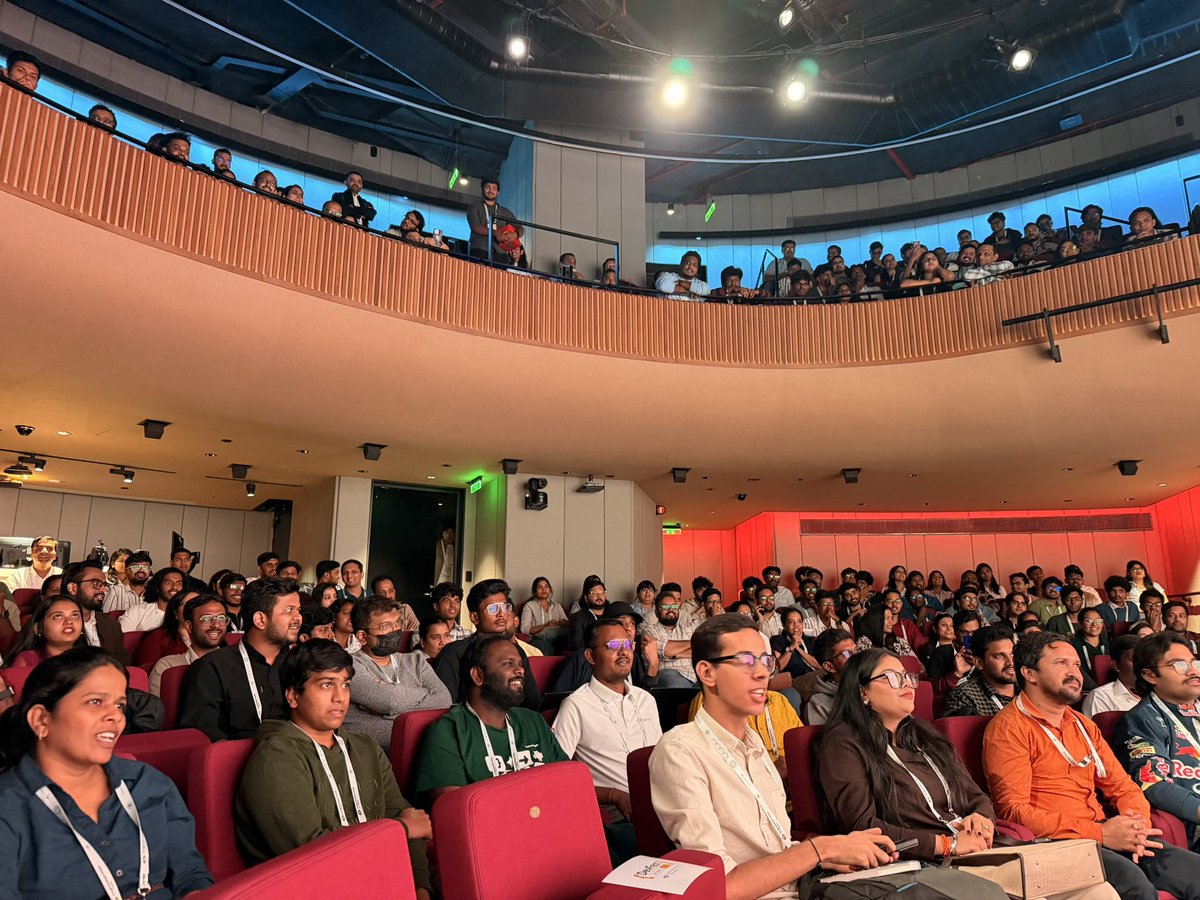
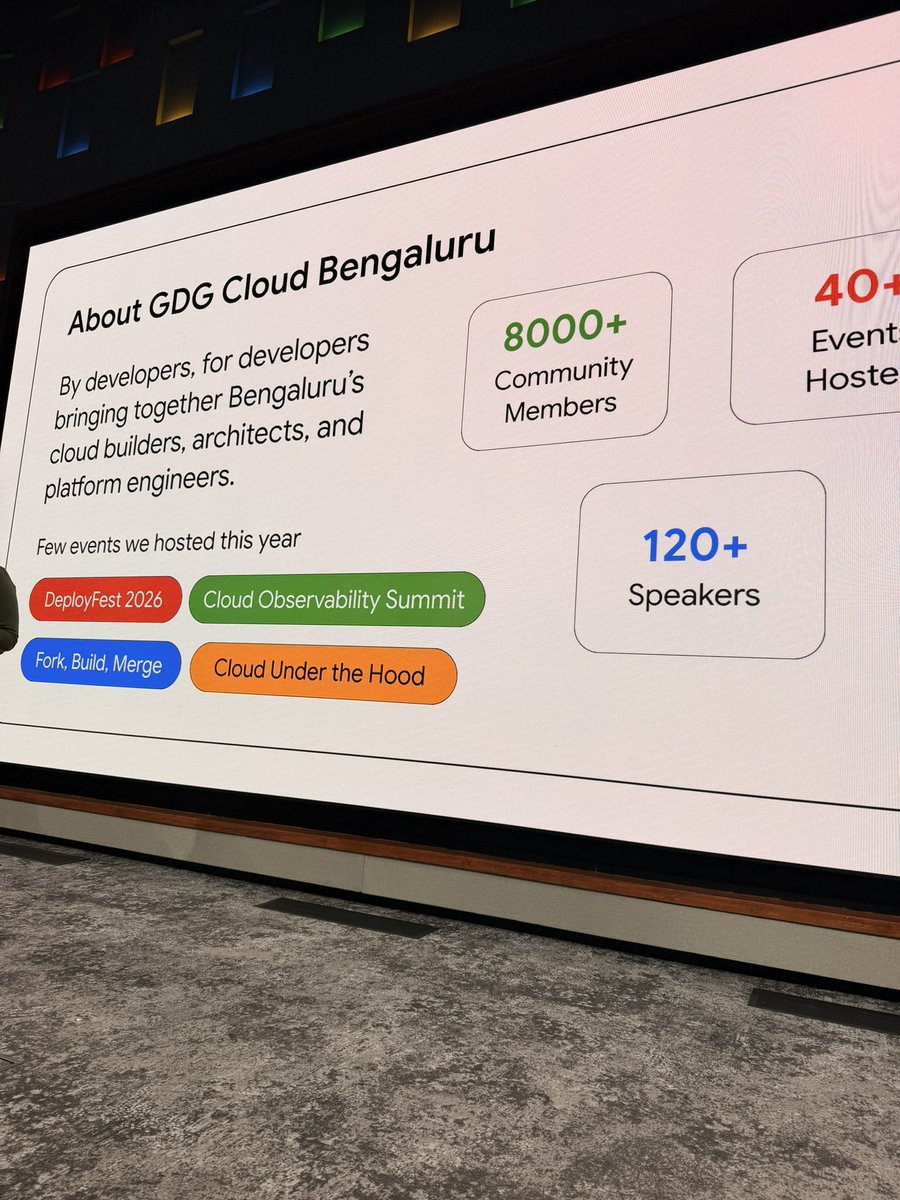
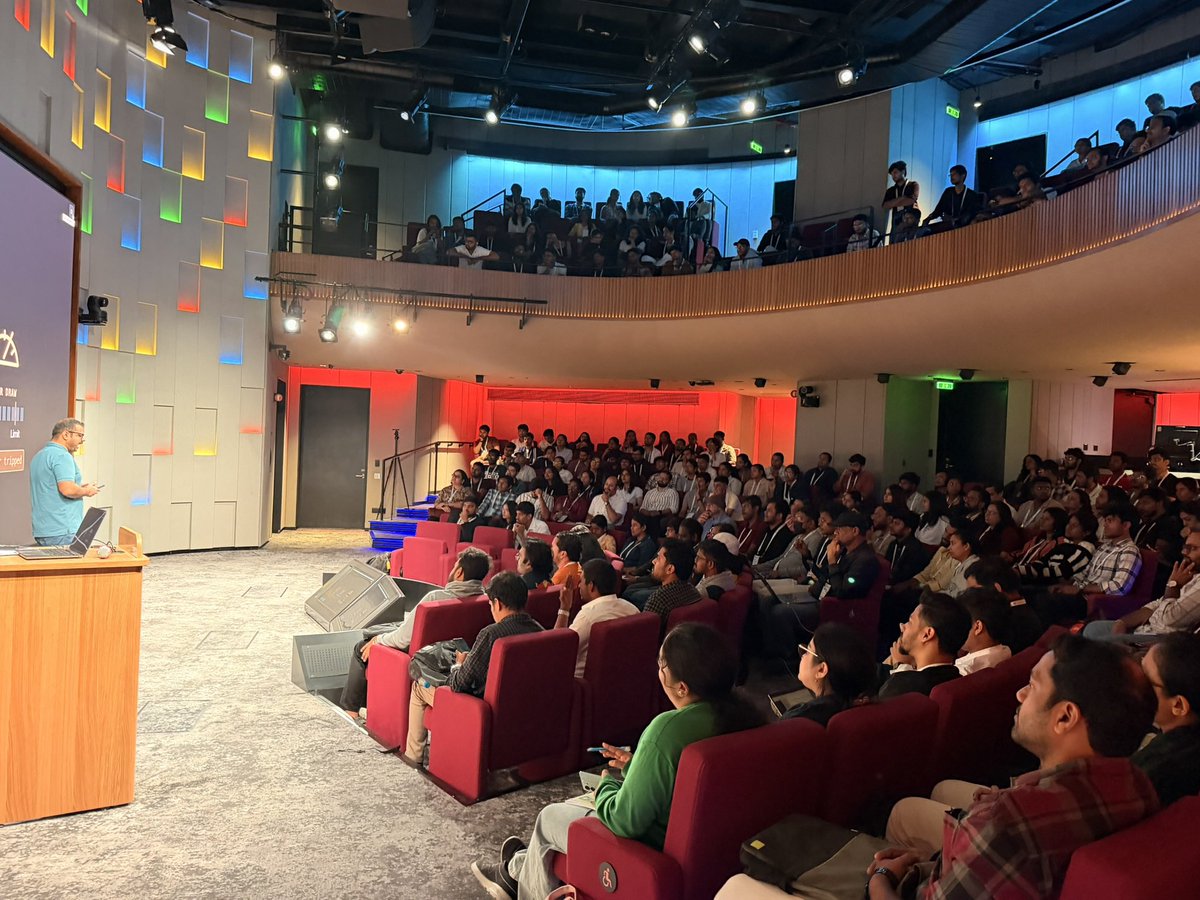
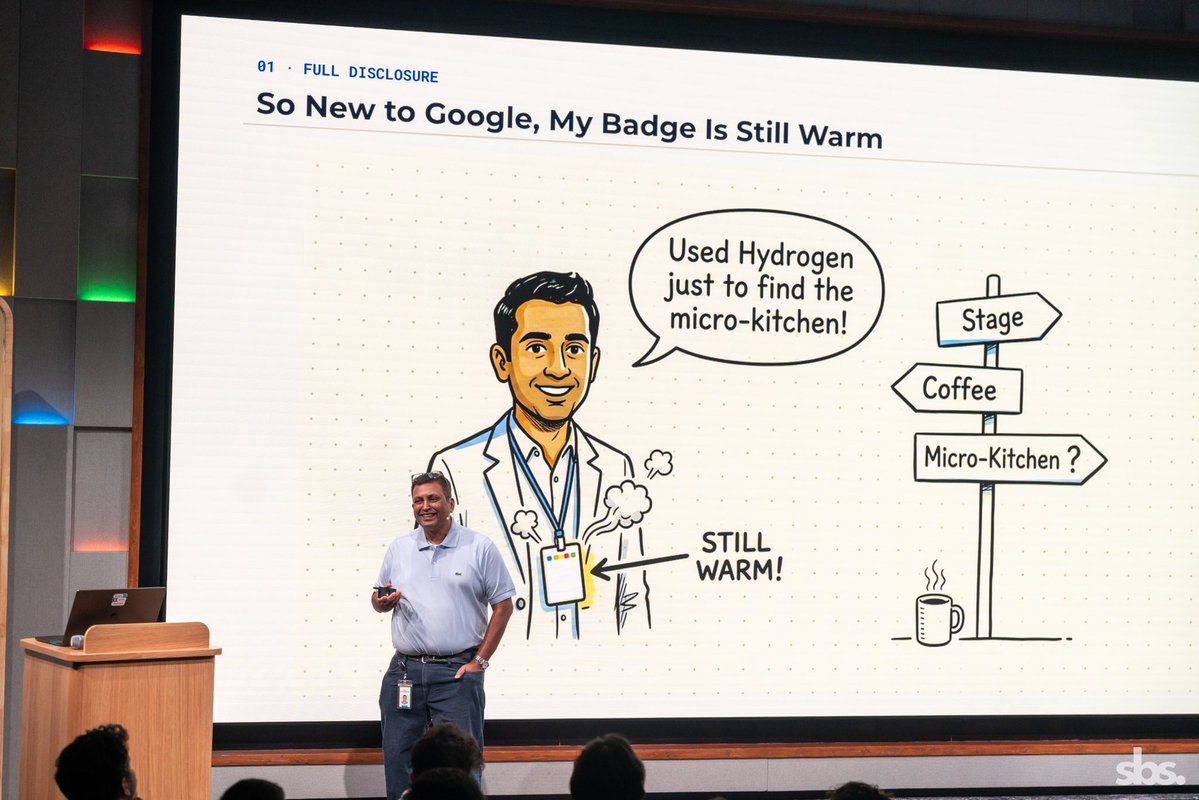
At GDG Cloud Bengaluru DevFest Bengaluru on Saturday at the beautiful and iconic Google's Ananta campus, I walked a packed room of engineers and students through what production AI architecture looks like when you move past single-model demos.
Using a simulated Diwali flash-sale outage at a fintech called MonsoonPay, we traced how an end-to-end Google Cloud stack—from AI and data analytics to live debugging—isolates root causes without burning latency or budget.
A few architectural patterns from the session:
• 𝗣𝗶𝗰𝗸 𝘁𝗵𝗲 𝗿𝗶𝗴𝗵𝘁 𝗲𝗹𝗲𝗺𝗲𝗻𝘁 𝗳𝗼𝗿 𝘁𝗵𝗲 𝗷𝗼𝗯: Not every step needs a heavy reasoning model. We mapped workloads across a "Periodic Table of Agents"—pairing fast everyday execution (Hydrogen) with frontier orchestration (Gemini 4 Neon), long-horizon stability, and live voice.
• 𝗦𝗰𝗼𝗿𝗲 𝗿𝘂𝗹𝗲𝘀 𝗶𝗻 𝗼𝗻𝗲 𝗽𝗮𝘀𝘀, 𝗻𝗼𝘁 𝘁𝗼𝗸𝗲𝗻-𝗯𝘆-𝘁𝗼𝗸𝗲𝗻: On 50 live compliance and routing checks, the Gemini Decisions API ran in 283 ms with $0 output tokens—22.4x faster than Flash and 55x cheaper than Hydrogen.
• 𝗭𝗲𝗿𝗼-𝗰𝗼𝗽𝘆 𝗱𝗶𝗮𝗴𝗻𝗼𝘀𝘁𝗶𝗰𝘀 𝗮𝗻𝗱 𝗵𝘂𝗺𝗮𝗻 𝗴𝗮𝘁𝗲𝘀: Using dual-track voice (Gemini 3.8) alongside Google ADK 2.0, we joined 10k Spanner commits with 40k BigQuery Iceberg Envoy logs in 170 ms with zero copies, pinpointing a choked 64-slot Envoy queue while keeping `require_confirmation=True` on production PRs.
• 𝗥𝗲𝘀𝗶𝗹𝗶𝗲𝗻𝗰𝗲 𝗯𝘆 𝗱𝗲𝘀𝗶𝗴𝗻: Given recent cyber incidents and large-scale outages, we closed on why cell-based architecture remains foundational for containing blast radius when systems fail.
The conversations with attendees before and after lunch were the highlight—Bengaluru's tech builders ask sharp, practical questions about cost, latency, and reliability in production. Grateful to the GDG Cloud Bengaluru organizers and my Google Cloud colleagues for putting together a high-energy event.
Code and slides from the keynote: https://t.co/qcFuwLy3W3 , other relevant links in the comment including the VoiceAI demos using Gemini Live models.
Production AI systems win on disciplined architecture, not model size alone.
#CloudArchitecture #Gemini #GoogleCloud #GDGCloudBengaluru #DevFestBengaluru
TRAFFIC ADVISORY |🚦
Heavy traffic expected due to work-from-office across companies.
⏰ Peak: 8–11:30 AM & 4:30–8:30 PM
📍 ORR (Kadubeesanahalli, Devarabeesanahalli, Karthik Nagar) & HAL Old Airport Rd (Marathahalli Bridge)
Plan ahead & carpool. #BengaluruTraffic
🚨 Exclusive: Pixxel picks Bengaluru over Andhra for satellite manufacturing
Bengaluru-based hyperspectral major Pixxel will set up its satellite manufacturing factory, GigaPixxel, on the outskirts of the city, sources told Moneycontrol.
With a built-up area of 250,000 sq ft, the plot is located close to Kempegowda International Airport.
It will initially allow the parallel production of around 50 satellites, with the startup planning to scale to 100 satellites simultaneously.
An initial deadline for inauguration of GigaPixxel, which is under construction, has been set for March or April 2027, sources said.
The development comes at a time when the four southern states - Karnataka, Andhra Pradesh, Telangana and Tamil Nadu - are locked in a fierce competition to secure investments
Break by @AihikS and @ChristinMP_
https://t.co/MPj71lluDk
Bengaluru will witness power outages across several areas from Nov 24 to 25 due to emergency maintenance works by KPTCL & BESCOM.
On Nov 24, outages from 10am to 4pm will affect Wilson Garden, Shantinagar, Richmond Road, Jalahalli, Abbigere, Kogilu, Kattigenahalli & surrounding areas.
On Nov 25, disruptions during the same hours will affect Banashankari, Padmanabhanagar, Horamavu, Hennur, HBR Layout, Kammanahalli, Lingarajapuram and surrounding areas.
Gulf investors have been major beneficiaries of Anthropic's record-breaking public listing, with estimates placing their combined stakes at around $100 billion.
Key details from the market debut of the Claude parent company:
- Abu Dhabi's MGX is sitting on $20 billion in paper gains, according to a Bloomberg report.
- Hussain Sajwani, chairman of real estate firm DAMAC, stated his Anthropic stake is now worth around $3 billion.
- Qatar invested in Anthropic in the last three rounds, and another Abu Dhabi entity has indirect exposure to the company.
MGX and the Abu Dhabi Investment Council are at the top of the gainers list.
Source: The Morning Context
#Anthropic #AI #Markets #MiddleEast
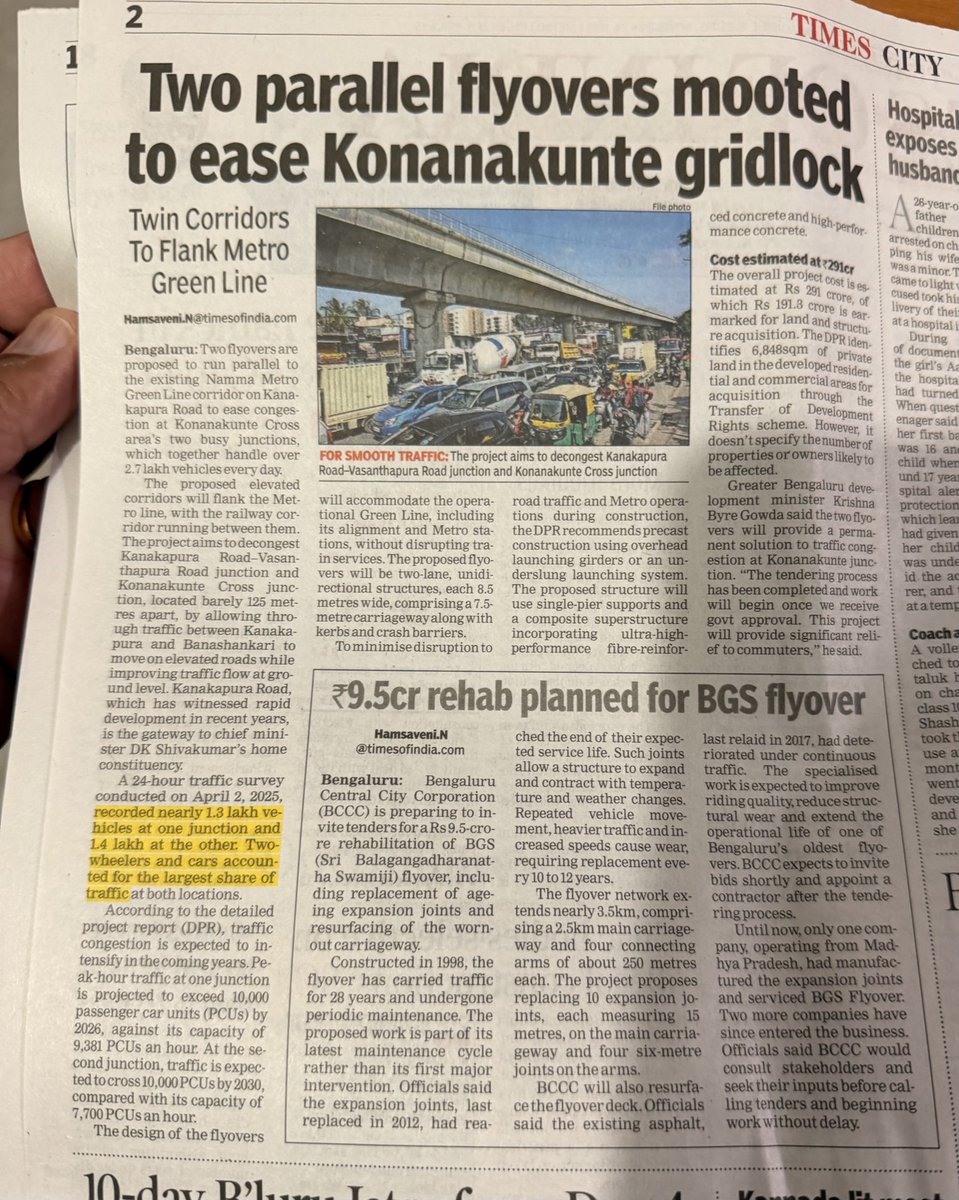
Two parallel elevated flyovers are proposed along Bengaluru's Kanakapura Road to flank the Namma Metro Green Line and ease congestion at two junctions near Konanakunte Cross, located 125 metres apart.
Key figures from the Detailed Project Report (DPR) and an April 2, 2025 traffic survey:
- Daily volume: Over 2.7 lakh vehicles across both junctions (nearly 1.3 lakh and 1.4 lakh respectively), led by two-wheelers and cars.
- Projections: Peak-hour traffic at one junction is projected to exceed 10,000 PCUs by 2026 (capacity: 9,381 PCUs/hr), and at the second by 2030 (capacity: 7,700 PCUs/hr).
- Cost: Estimated at Rs 291 crore, with Rs 191.3 crore earmarked for acquiring 6,848 sqm of private land via Transfer of Development Rights.
- Design: Two-lane, unidirectional structures (8.5m wide) built using precast methods to avoid disrupting Metro services.
Greater Bengaluru development minister Krishna Byre Gowda stated that tendering is complete and work will begin following government approval.
Source: Times of India
#BengaluruInfrastructure #UrbanMobility #TrafficManagement #PublicTransport
Fertility specialists in Bengaluru report a rise in enquiries from women planning pregnancy or undergoing IVF about GLP-1 weight-loss drugs such as semaglutide and tirzepatide. Dr Anu Sadashiv B of Milann Fertility stated that nearly one in five women with obesity or PMOS seeking IVF in the past two years have asked about these drugs.
While doctors note that weight loss can improve insulin sensitivity and restore ovulation in women with PMOS, specialists state there is no convincing evidence that GLP-1 drugs improve egg quality, embryo development, or IVF pregnancy rates.
Key clinical cautions reported:
- Washout period: Semaglutide is generally stopped at least two months before conception, with manufacturers recommending three months.
- Reproductive window: For women over 35, nearing 40, or with low ovarian reserve, delaying egg retrieval for weight loss can critically reduce viable eggs.
- Procedural risk: Delayed gastric emptying increases the risk of aspiration during egg retrieval under sedation or anaesthesia.
Source: Times of India #Healthcare #Fertility #IVF #GLP1