📢 Calling all cannabis researchers !📢 The Center for Medicinal Cannabis Research at UCSD is seeking proposals for studies exploring the efficacy and safety of cannabis and cannabinoids.
Funding Available:
➡️ Up to $275,000/year for 3 years (Primary Projects)
➡️ Up to $150,000/year for 2 years (Pilot Projects)
Key Dates:
➡️ Letter of Intent: March 3, 2025
➡️ Full Application: April 28, 2025
Learn More & Apply: https://t.co/IbpKrZcvHd #MedicalCannabis #CannabisResearch #CannabisEducation
The Center for Medicinal Cannabis Research (CMCR) at UC San Diego is encouraged by the @US_FDA decision, reported in the New York Times on 11/20/24, to approve a @MAPS clinical trial studying the safety and efficacy of high-potency smoked cannabis for treating PTSD in military veterans. CMCR hopes that this approval signals a continued rebalancing of Federal priorities to increase exploration of therapeutic benefits of cannabis rather than focusing primarily on its potential harms. The approval of a trial that involves smoked cannabis acknowledges that whereas smoking may not be a recommended mode of medication administration, this is the manner many veterans prefer, therefore heightening the real-life significance of this research.
As an academic research center conducting clinical trials using cannabis and cannabinoids to address a variety of health-related conditions, the CMCR recognizes the significant challenges researchers face in this field. Securing the necessary approvals is a time-consuming process, occasionally bringing problematic protocol changes, and complicated by the status of cannabis as a Schedule I drug. Additionally, the cannabis available for research is typically less potent than what is accessible in dispensaries. Conducting clinical trials with products similar to those available in real-world settings are crucial to fully understanding both the benefits and risks of medicinal cannabis use.
https://t.co/z1IVHGdEe8
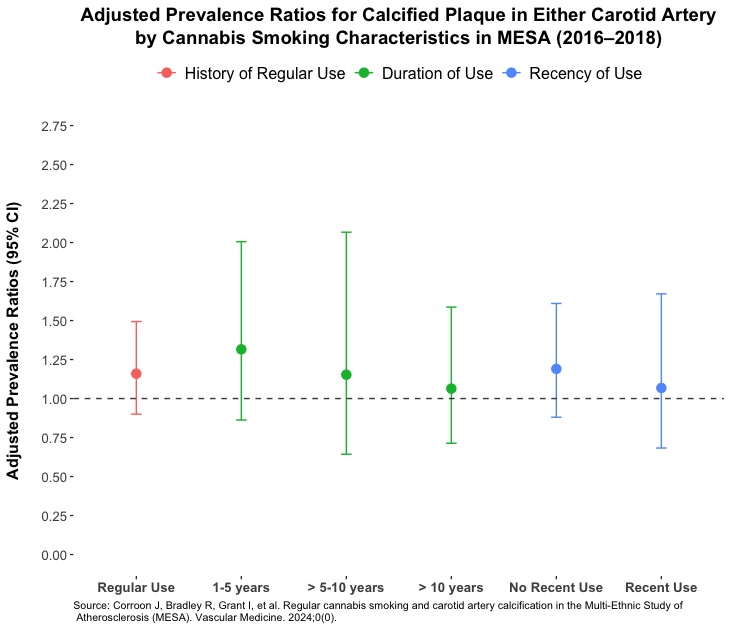
🚨 New research from Drs. @jcorroon and @iagrant / @cmcr_director. A cross-sectional study found no association between regular cannabis smoking and the presence or extent of calcified plaque in carotid arteries, as measured by plaque volume and density, and Agatston score. Findings were consistent regardless of duration or recency of cannabis smoking. https://t.co/y5tnxG0HRg #MedicalCannabis #CannabisResearch #CannabisEducation
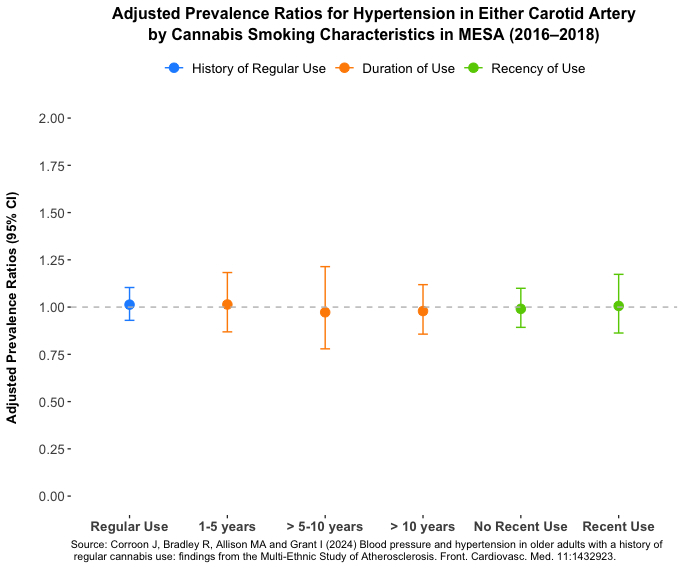
🚨 New Study Alert 🚨 A new publication by Drs. @jcorroon and @iagrant (@cmcr_director), reports that a history of regular cannabis smoking, including the duration, recency, or cumulative joint/pipe years, was not associated with higher blood pressure or an increased prevalence of hypertension in a racially and ethnically diverse sample of older adults. https://t.co/ZHO2DaOfic #MedicalCannabis #CannabisResearch #CannabisEducation
🚨New publication from Drs. @jcorroon, @iagrant (@cmcr_director) and others finds no association between regular or recent cannabis smoking and the presence or extent of calcified plaque in carotid arteries.