As governor of the decade, the @THISDAYLIVE Award humbles me. I dedicate the award to the people of Anambra State for believing in me and to all Nigerians for standing with me through the travails to recover my stolen mandate.-PO
https://t.co/mv89YqFp7L
I think that political elite in this country really do not believe in free, fair, and transparent election. They just want to buy the votes of the people. They want to replace the people as the sovereign, and it is very unfortunate.
- Festus Okoye, Former National Commissioner for Information and Voter Education, INEC
#CTVMorningBrief
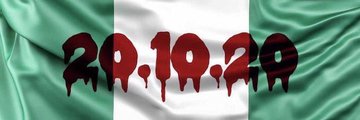
ENDSARS LEKKI TOLL GATE: NEVER FORGET OCTOBER 20, 2020
Today, October 20, 2026, marks the sixth anniversary of the Lekki Toll Gate shootings, a painful reminder of the price Nigerian youths paid in their demand for a better country.
On that fateful night, peaceful #EndSARS protesters were met with gunfire. Lives were lost, many were injured, and the nation was left with questions about justice, accountability, and the sanctity of human life.
We must never forget. We must never normalise injustice.
As we remember the victims, I reaffirm my belief that a New Nigeria is possible—a country where citizens are protected, not brutalised; where young people are heard, not silenced; and where government power is exercised with responsibility and respect for human rights.
Nigeria must become a nation where no citizen is punished for demanding good governance and a better future.
May the souls of the departed continue to rest in peace. May their sacrifice strengthen our resolve to build a Nigeria where this tragedy will never be repeated.
A New Nigeria is POssible. A Nigeria where every life matters. -PO
In case you are not keeping track of all the taxes that will be enforced after the elections:
1. Personal income tax (PIT/PAYE)
2. Pay-As-You-Earn (PAYE)
3. Value Added Tax (VAT)
4. Companies Income Tax (CIT)
5. Development Levy
6. Capital Gains Tax (CGT)
7. Withholding Tax (WHT)
8. Stamp Duties
9. Tax on Rental Income
10. Tax on Investment Income
11. Presumptive Tax
12. Global Minimum Tax
13. Property and State Taxes/Levies
14. Customs and Import Duties
15. 5% Fuel Surcharge
You go vote abi you no go vote?
On October 20, 2020, Jennifer Igwe, a reporter with NTA 2, Lagos, a channel that is funded by the federal government, told the world that how she and her camera crew escaped the shooting was a miracle. Same government chose to lie to Mohammed by shouting ‘Photoshop’. #EndSARS
Is she aware that the foreign reserve is now at a record high?
Also is she aware of the macro economic gains?
Perhaps, she’s not aware of the major Lagos coastal highway that will change her life.
Nigeria's debt interest payments exploded to N7.7 trillion in the first half of 2026 a jaw-dropping 124.2% of total revenue of N6.2 trillion. In plain English: the government paid N1.5 trillion more in interest than it even earned.
Omo, the country is paying debt with borrowed oxygen. A fiscal crisis is no longer looming; it has arrived.
I’ve never seen a country so determined to make life miserable for its own citizens as Nigeria.
I’ll say it again, tinubu is the worst thing that has ever happened to this country.
I’ve never been so worried about my future and my life as i am right now.
Celebrating Macroeconomic stability Amidst Increasing Poverty!
The recent World Bank report which noted improvements in few macroeconomic indicators such as economic growth and revenue generation should not be misinterpreted and mispresented by the incompetent President Bola Tinubu led APC Government as evidence that the standard of living of Nigerians is improving. Nigerians and even the World Bank know that the criteria for economic development is whether poverty is declining, whether jobs are created for our youths, and whether we are reducing acute inequality. In the case of Nigeria under President Tinubu the answer is no. So-called ‘economic stability’ has not resulted in higher living standards, improved employment opportunities, and reduction of poverty and inequality across Nigeria.
An economy is not truly stabilized simply because government revenue increases, foreign reserves strengthen, or GDP grows. Stability exists when citizens can afford food, obtain healthcare, provide education for their children, and live with dignity.
What comfort does higher revenue offer a mother who cannot provide her children with a nutritious meal? What does higher government revenue mean to a family forced to choose between purchasing food and paying for medicine? What benefit do celebrated reforms provide when ordinary Nigerians continue to bear intolerable costs and hardship?
In the report titled, ‘Beyond the Federal Purse: How Higher Revenues Reshaped State Priorities’, The World Bank noted that the Federal Government spent a whooping N7.7 trillion on debt interest payments alone in the first six months of 2026 from January to June. This represents about 124.2% of our total revenue of N6.2 trillion within the same period with debt interest payment exceeding revenue by about N1.5 trillion. How do you explain the unsustainable debt crisis even with exponential increase in revenue that we have had since 2023?
. Imagine a situation where borrowing and revenue have exponentially increased but expenditure on capital projects reduced by about N700billion in the first half of this year. In comparison, the APC led Federal Government spends about 11 times more on interest payment than on capital projects. The explanation is clearly attributed to reckless borrowing, corruption and incompetence of the President Bola Tinubu led APC Government.
President Bola Tinubu and his incompetent team must recognize that intentionally presenting and projecting incomplete economic statistics cannot replace the critical measure of how reform impacts on the welfare of the people. A government cannot expect citizens to applaud statistics while they struggle to survive the effects of its policies. How do you celebrate when about 140 million Nigerians are classified as multi- dimensionally poor with a recent UNDP report listing Nigeria as one of the countries where gains made in reducing poverty have been reversed.