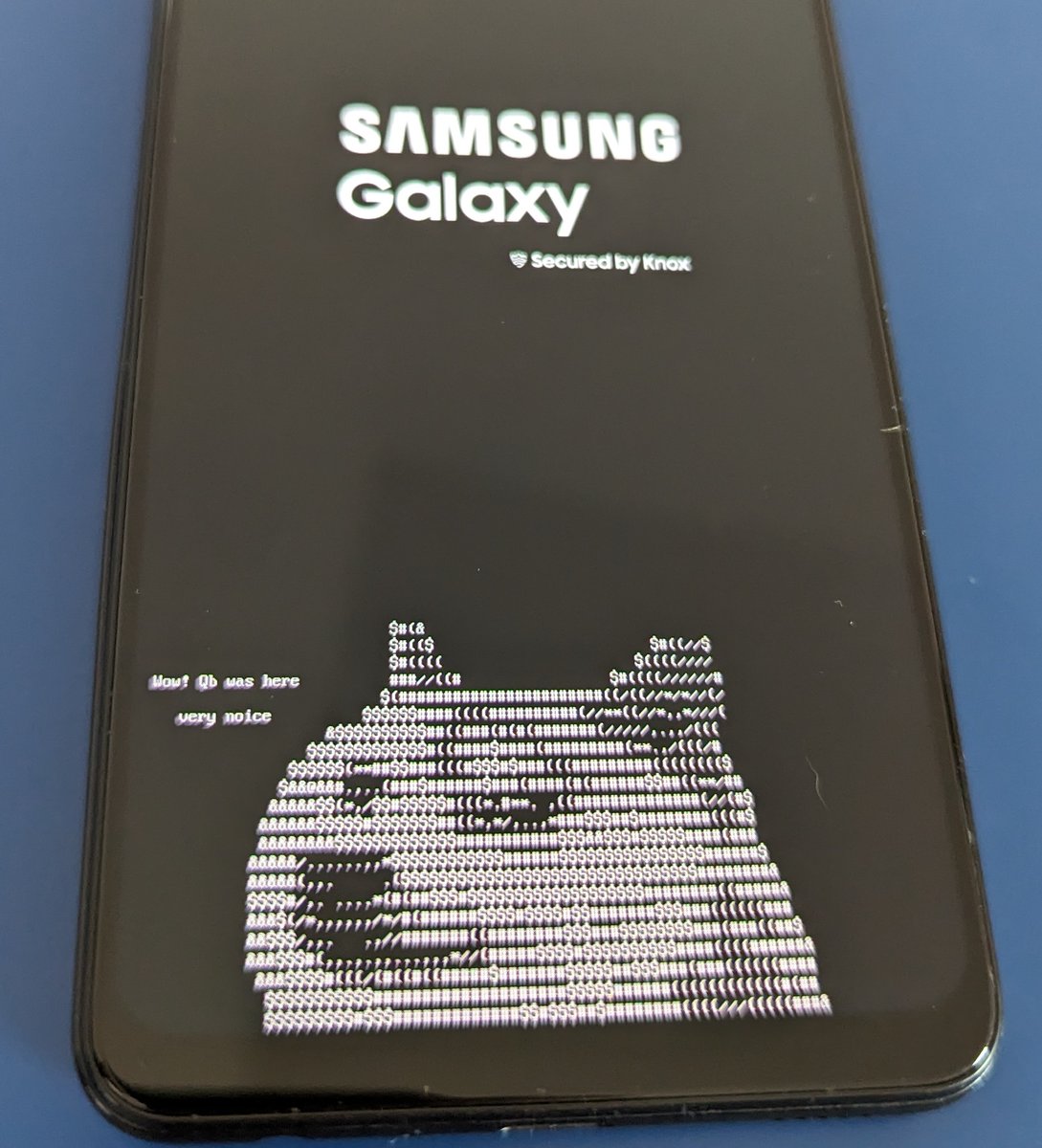
> Cellebrite does support, for example, Pixel 9 devices BFU. Meanwhile the screenshot indicates Cellebrite cannot unlock Pixel 9 devices running GrapheneOS BFU.
https://t.co/WmFTbx6mco
Hi @GrapheneOS, what do you do more to harden screen lock authentication in Pixel?
Mechanical keys were never secure. But RFID electronic key is not secure either. Cars should not have a physical key at all. All modern cars should only have a cryptographically secure keyfob backed by Distance Bounding Protocol and a monotonic clock inside.
It's infuriating when luxury cars are stolen like this despite having a mini-PC running a fully-fledge OS which controls everything. It is as powerful as smartphones. If phones can be made so secure that you can't do anything without unlocking it, cars can be made as secure too.
Someone who is buying a luxury car doesn't care about the price so there is no excuse for not hardening its security. Its security should be as impenetrable as android & iOS. Cars are not supposed to start without authentication.
@arter97 I like the design of storage encryption in android. Its only drawback is, there is no way to backup FBE keys for adoptable storage so if your SoC is severly damaged, your data on SD card can no longer be decrypted.
This is the very important £10 note. I withdrew it using my EMV debit card WITHOUT GIVING A PIN!
Crazy, huh??? A pretty worrying attack we're working on and credit cards are next in line!
Some cool research is coming up.
Secure boot bypass on Samsung Galaxy A series. Secure boot chain is executed before Android Verified Boot verifies vbmeta. You can achieve root and can also flash custom images without unlocking the bootloader and it will still pass Play Integrity hardware backed attestation.
Better late than never!
The slides of our talk "Attacking Samsung Galaxy A* Boot Chain" at @offensive_con can be found here: https://t.co/P6gtwDftBp
The video is also available: https://t.co/RnGuJHOIJA
Still looking for those elusive data encryption keys on your Samsung A* series phone?
Don't worry! Join security researchers @max_r_b and @DamianoMelotti today at 5pm at @offensive_con to learn how to break Secure Boot and tamper with your phone enough to get those pesky keys.
@phhusson@quarkslab@max_r_b@DamianoMelotti@offensive_con This would require compromise of TEE. Bypassing the secure boot bypasses the hardware backed play integrity attestation as well because for TEE, bootloader is never unlocked so it never fails device integrity while also having root access due to compromised bootloader.
Plans to literally "hack the planet" foiled due to 500ms of latency that Andres instinctually investigated.
The latency was due how the malicious code parsed symbol tables in memory.
https://t.co/WNExkhVbTx
@phhusson@warraagal ciphergoth from the android security team confirmed that android is using VerifiedBootState as one of the parameters to derive Key Encryption Key that decrypts FBE keyblob. I think it's only Pixel.
https://t.co/wlro1Qahfc
@co_apprentice@warraagal Measured boot already exist in Android, in uh 14-launched SoC? But it doesn't allow using it for encryption, it's here only to enforce Google monopoly, just a more secure key attestation. Using it to derive an encryption key isn't done by google and they have no plan for it \
@phhusson@warraagal I want to read more about this. It seems to be different from secure boot chain followed by AVB 2.0 in android boot process. What is it called? If it lands in production android devices, will it work together with secure boot + AVB or does it replace both of them?
@MishaalRahman@themobileindian How much additional storage Samsung A/B storage is occupying compared to their A-only? Everyone suspected that the size of their ROM was the reason Samsung didn't move A/B.
@godslittlemacro Modern devices and specially android & iOS devices, having physical access is not enough to assume the compromise of the device. At rest per-file encryption and secure boot still protect the device from physical intrusion. Sniffing SPI bus does not work on integrated TPM chip.
@GrapheneOS So, instead of letting app devs to do key management for their app on their own, iOS just standardized this approach by creating a "Complete Protection Class Keys" that can be evicted and app devs can mark their data which should be encrypted by this key. (5/6)