@4golfonline I’ve been listening to too many Ryder Cup takes and I have a potential solution for the envelope rule. No envelope. No substitute. If a player can’t go on Sunday you either forfeit the whole point or the captain plays. Thoughts?
If you get 1 percent better each day for the next 48 days you'll be 61 percent better on Sat, Oct 28.
"Wait - why isn't it 48 percent?"
Because improvement compounds.
But be careful, this doesn't mean harder hard days. A smart recovery day makes you better.
#consistencyiskey
There are 48 days until Sat, Oct 28.
There will be no magic workouts in the next 48 days, but you can make a small step towards having a great race each day.
- Run hard when you're asked to
- Do all the "little" things that aren't as fun as running
- Prioritize sleep
Let's go!
XC is a team sport, yes?
And how do you help your team? By being the best runner you can be.
So don't skip the "little things" and make sure to get plenty of sleep.
Your teammates are counting on you.
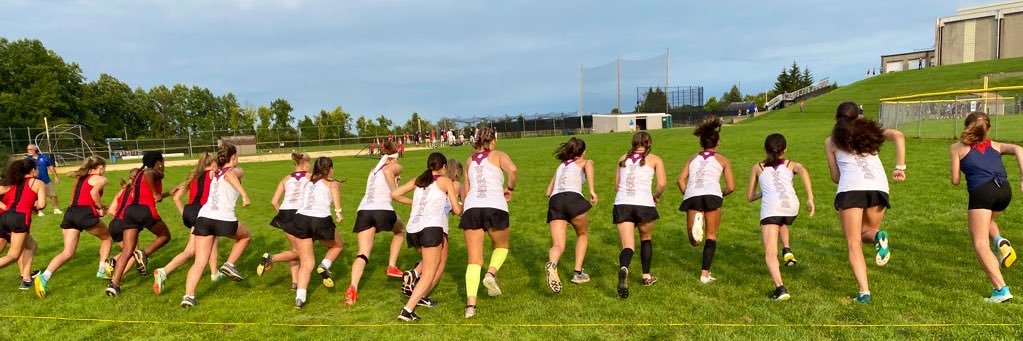
#BHSGXC competed in their first race of the season on Saturday at the Wilton Invite. Some promising early season times in the heat and humidity. First year sophomore Hana Yuen lead the way for the varsity. Next race is 9/12 at BHS against JB, Brookfield, and ND @BethelSports
Good results take consistency, not heroic efforts.
A focus on outcomes pushes us towards heroic efforts. The big workout, launch, or sales push. But success is not determined by a great day. It comes from stacking month after month of solid days.
Consistency compounds.
Fartlek Workouts for High School XC
Rationale
Fartlek is a Swedish term that means “speed play” and there is little doubt that fartlek training is a simple and effective way to gain fitness.
A “true” fartlek is a workout where the athlete is oscillating between multiple paces. We’ll simplify things and go back and forth between just two efforts. We’ll have an “on” portion and a “steady” portion. The crux of our fartlek workout is that the “steady” portion is faster than your athlete’s easy run pace.
To simplify things, we’ll use 5-minute segments. The workouts will be at least 15 minutes and could be as long as 40 minutes.
We’ll start doing 2 minutes on/3 minutes steady. A couple of weeks later you can have kids do 3 minutes on/2 minutes steady. This change is significant and is much more challenging than the first fartlek workout. We won’t do 4 minutes on/1 minute as this is a killer workout and by the time an athlete can handle this, we’re better off doing some 5k race pace workouts.
This is our first workout where the skill of running by feel is crucial. In fact, many runners won’t be able to execute a fartlek workout the right way in their first (or second) attempt. The reason is that learning how fast they should run during the on portion and then running a solid steady portion (and not slowing to easy running pace) is challenging.
You are not going to assign paces, but rather you’ll give these two guidelines. Tell them...
Steady is a pace that is faster than your easy run pace. But just a touch faster.
Let’s dial in the steady pace first, and keep the on portion very controlled.
Today, the on portion should be just slightly faster than the steady portion. I’m looking for a very subtle increase in pace. After a couple of sets, you can gently speed up the on portion. You’ll probably be running closer to the pace you could run today for a 5k cross country race.
Please don’t look at your watch to see what pace you’re running. Just use your watch to time the segments.
This workout is simple conceptually, but it’ll take a few attempts to learn how to dial it in.Again, the key today is to keep the on portion “controlled.”
Frequency
Fartlek workouts are so effective that doing them weekly all summer would be sound. We won’t do one weekly in the XCTS, but the workout is extremely effective, and is underutilized by coaches (because it’s so simple?).
In the first and third week of practice in the XC Training System I assign a fartlek workout, then we sprinkle them in the training throughout the rest of the summer. I tend not to use them during the season, as we’re racing, we’re doing race pace workouts, and when we can we’ll get in a progression run or a 30-90 fartlek. But in the summer, a fartlek is a staple workout.
Distance or Time
Fartleks are always run by time in my system. A new athlete might do 1 minute on, 2 minutes steady, and do that for just 12 minutes. An upperclassman can get a fantastic workout from 30-40 minutes of 3 minutes on, 2 minutes steady.
Intensity
We covered what “steady” and “on” feel like above. What your athletes need to understand is that this workout is hard. They should finish saying...
Farther or Faster (or both)
“I had one more 5-minute set in me, but I don’t know if I had two.”
A fartlek workout should be so challenging that they could have run a bit farther, but not much farther. We don’t need them to say they could have gone faster. We’d rather them finish saying they could have done 1 more set, no problem, and kept the steady portion truly steady.
Common Mistakes
This one is simple: running easy or slow on the steady portion.
The crux of this workout is running steady between the on portions. A motivated athlete is going to want to run faster during the on portion; the key is that they need to run steady and not easy when the on portion ends.
When an athlete can execute 25 minutes or more of fartlek running, they are internalizing what it means to run by feel. And that’s why it’s such a powerful workout: the athlete gains fitness while learning a crucial skill.
Read about all the workouts I use in the summer with athletes here: https://t.co/ti8eOGXMVI
If you adopt a mindset "If I just accomplish this, or just do that, THEN I'll be fulfilled" you are in for a rude awakening.
There is no arriving. The human brain did not evolve for it.
Enjoy the process.
Dig where your feet are.
Here are a list of over 60 CT TF athletes competing at the NCAA DI level. But just as important 110 who are competing at the DII and DIII level with more names on the way. https://t.co/lYnhsXEPkQ
Dear Athletes,
The time will come when fall will ask what you did all summer … and it will never lie. It will be obvious who committed and who coasted. Who challenged themselves and who cheated themselves. Who raised their level and who risked their role.
Sincerely,
The Truth
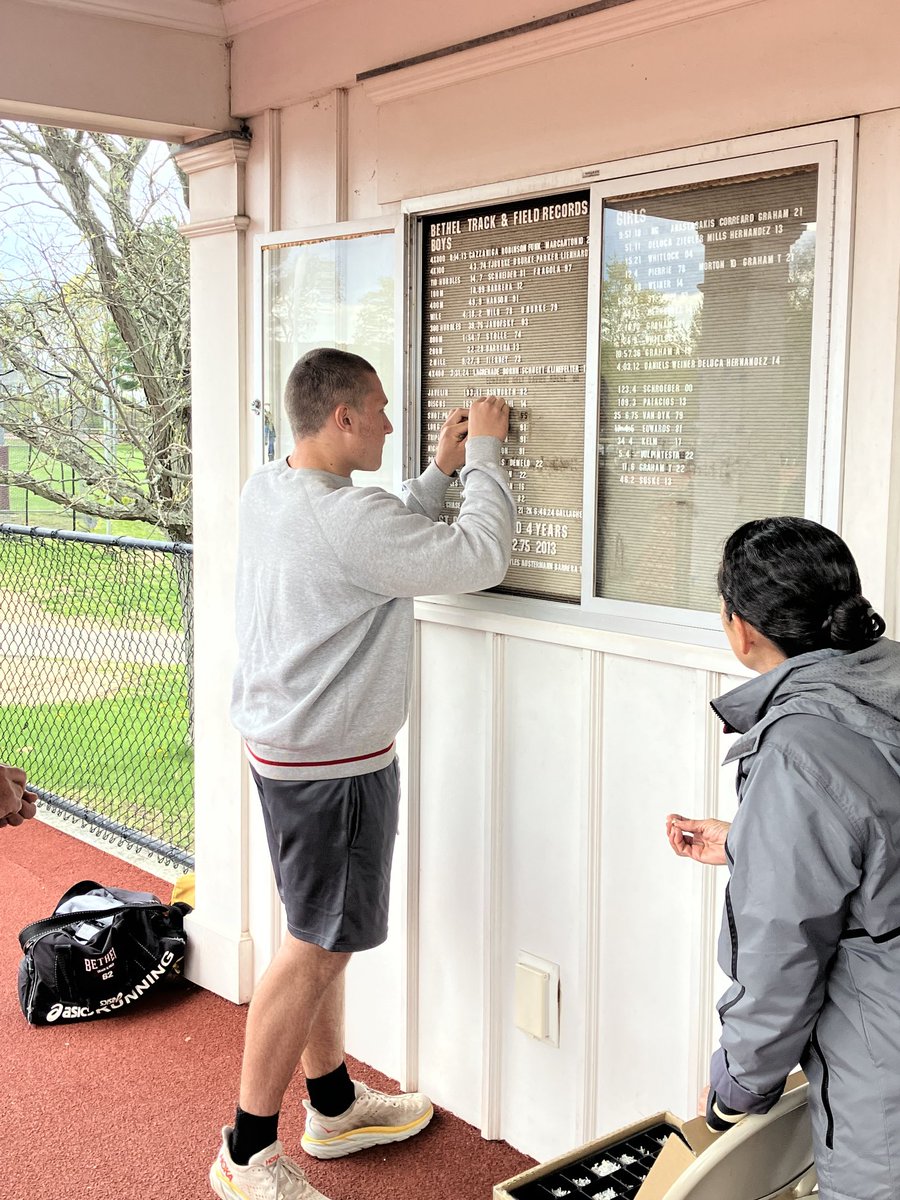
Congratulations to Rosie Volpintesta for coming in 2nd in 100 hurdles and Talia Graham for coming in 2nd in pole vault at New England Championships this weekend.
In preparation for Cross-Country do your best to RUN everyday. When trying to decide which day to do hills or strides or spend time in the weight room it is not nearly as important as it is to just RUN. When going on family vacation do your best to take your legs with you.