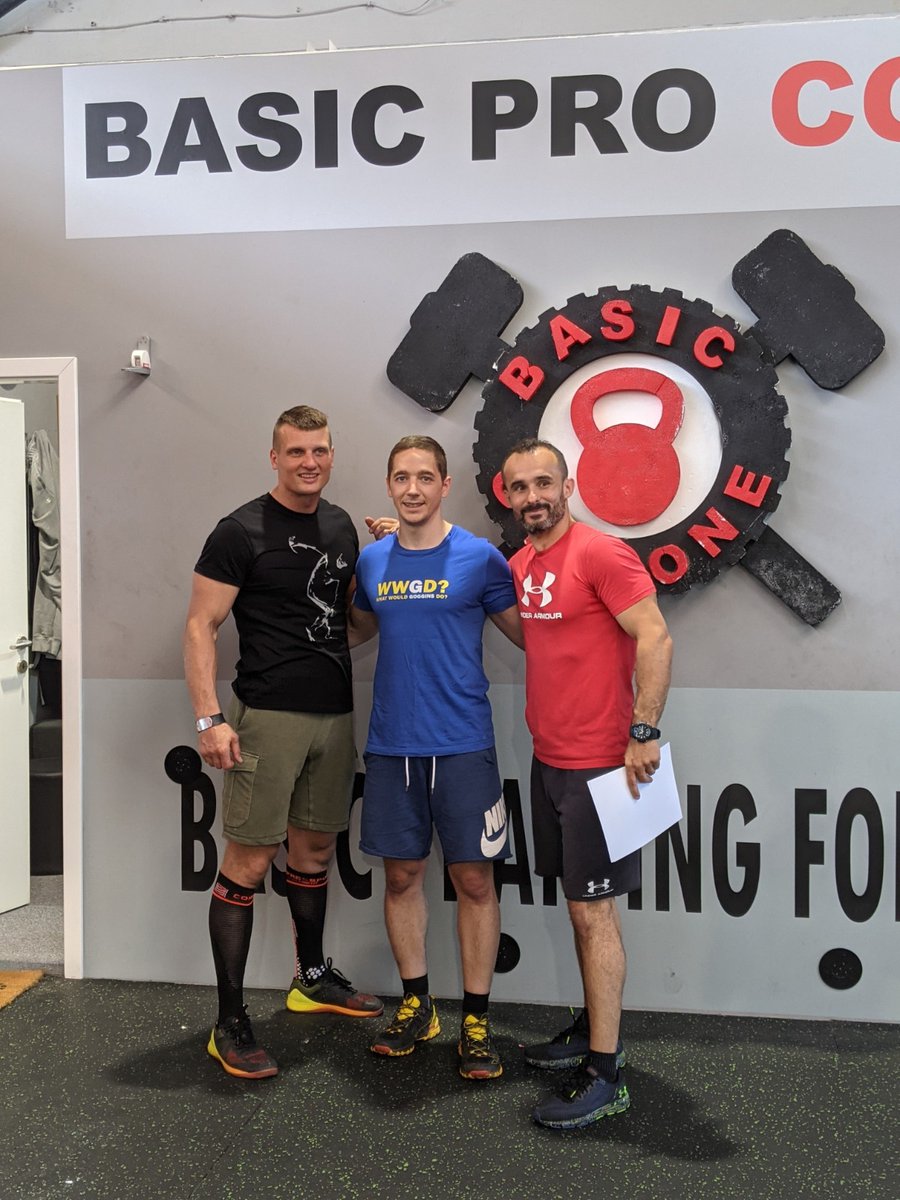
Već više od sedam godina pratim put Franje Maškarina i mogu reći da je pravi primjer kako se upornost, rad i želja za učenjem na kraju uvijek isplate.
Prvi put smo se povezali preko YouTubea, dok je radio teške fizičke poslove u Njemačkoj. Unatoč zahtjevnom poslu, nije tražio izgovore. Tražio je znanje, tražio je način kako napredovati i kako jednog dana raditi ono što zaista voli.
Kroz godine smo ostali u kontaktu, razgovarali o treningu, edukaciji i razvoju, a onda je došao trenutak kada je odlučio ozbiljnije krenuti svojim putem. Korak po korak ulagao je u svoje znanje, educirao se i gradio posao. Dok je još bio u Njemačkoj, uspio je razviti kvalitetan online coaching sustav, a nakon toga donio je hrabru odluku vratiti se kući na Rab i tamo krenuti graditi ono o čemu je godinama razmišljao.
Nije otišao u veliki grad niti tražio lakši put. Vratio se na svoj otok i tamo pokrenuo posao, nastavio razvijati online coaching te uspješno izgradio i rad uživo. Upravo zato njegov uspjeh ima još veću vrijednost. Pokazao je da se i u manjoj sredini mogu napraviti velike stvari kada postoji jasna vizija, upornost i spremnost na rad.
Ono što posebno cijenim kod Franje je što njegov rad nije usmjeren samo na poslovni uspjeh, nego na stvarnu promjenu ljudi oko sebe. Pokrenuo je brojne hvalevrijedne aktivnosti kojima potiče djecu na kretanje, pomaže odraslima da usvoje zdravije navike i motivira starije osobe da ostanu aktivne. Na taj način radi veliku stvar za Rab, za svoj otok i za cijelu lokalnu zajednicu.
Još jedna stvar koja me uvijek impresionira je njegova osobna transformacija. Brojne utrke, trailovi, izazovi, kupanja u ledenim jezerima i stalno pomicanje vlastitih granica pokazuju da živi ono što prenosi drugima. Nije samo trener koji govori ljudima što trebaju raditi, nego osoba koja svojim primjerom pokazuje kako se živi aktivan i zdrav život.
Uz sve to, Franjo je prije svega obiteljski čovjek, suprug i otac. Osoba pozitivne energije s kojom je uvijek ugodno razgovarati i provoditi vrijeme. Cijenim što zna saslušati, prihvatiti savjet, otvoreno razgovarati i uvijek tražiti način kako biti još bolji.
Iako je već napravio jako puno, uvjeren sam da su njegove najveće stvari tek ispred njega.
Franjo, hvala ti na svemu što radiš za ljude oko sebe. Drago mi je što surađujemo i još draže što se kroz sve ove godine razvilo iskreno prijateljstvo i međusobno poštovanje.
Why I'm leaving Berlin after 8 years
-Girlfriend gets regularly sexually harassed in public
-Massive amounts of drug addicts all over the city
-People are highly political but uninformed
-Clan crime is tolerated, not combatted
-Half of the city smells like urine
-Endless construction sites
-Crime is increasing a lot
-Winter too long and cold
-Nobody wants to work
-Dog poo everywhere
-Not cheap anymore
-Streets are dirty
-Grumpy people
All these things are "tolerable" as a single, but once you have children everything changes. I want my children to be able to grow up in a clean and safe environment, have walkable areas, a vibrant food scene, affordable housing, strong public transport and respectful public behavior.
Unfortunately something like this doesn't exist in Germany.
It's not a Utopia, it exists, and I'm going there.
Deportation NATO.
A Restore Britain Government would initiate the first steps across Europe and the wider West to establish a collective border security coalition: a kind of Deportation NATO, as it were.
Its chief purpose would be to deploy collective leverage – an organised, explicit, and escalatory chain of measures, from visa sanctions to lifetime re-entry bans, that member states apply in concert to secure readmission agreements and operational cooperation.
Consider how much tougher the measure would be if we had an international system in place to ensure that such bans apply not only in the case of Britain, but in as many Western countries as possible.
The NATO-like principle at work is clear: a lifetime ban from one member state means a lifetime ban from all.
There is no reason why the same collective clout cannot also intensify the power of various other penalties like remittance taxes, trade sanctions or visa cancellations.
Done once hard enough, it would not need to be deployed twice.
If a country persistently refuses to accept its own nationals, the coalition will move through a pre-agreed escalation ladder:
(1) naming-and-shaming
(2) moving quickly to visa restrictions
(3) suspension of non-essential travel
(4) trade and tariff measures
(5) restrictions on remittances/dividends
(6) diplomatic pressure
(7) for the most intransigent states, coordinated refusal to admit nationals into coalition territories.
The objective is simple: make non-cooperation politically and economically unbearable for the recalcitrant state until it agrees to practical readmission arrangements.
Multilateral weight magnifies cost.
Sanctions from a single country are easier to absorb, but a unified bloc of economies and travel markets creates systematic and severe pressure.
Coordinated restrictions would also close loopholes whereby nationals bypass one state’s measures by moving to another jurisdiction. All delivered alongside the credible and proven threat of action.
A ladder published in clear terms reduces negotiation uncertainty and removes the advantage of hoping political fatigue will make sanctions temporary. The use of these levers must be governed by legal authority and parliamentary oversight.
The coalition’s designation process must be transparent and evidence-based to withstand diplomatic and legal challenges.
Britain is uniquely placed to lead such a coalition. Initial membership would likely consist of nations already aligned on border enforcement, intelligence cooperation, and migration control: the United States, Canada, Australia, New Zealand, France, Germany, Italy, Denmark, the Netherlands, and Greece.
Several Central and Eastern European states (notably Poland, Hungary, and the Czech Republic) have already voiced support for tougher deportation frameworks and would likely join.
Collectively, this bloc would represent the overwhelming majority of the Western world’s desirable destinations for economic migration, giving it immense leverage over recalcitrant states.
I’ve spent the last decade working nonstop online and as a street-level activist warning about the Great Replacement and advancing the idea of Remigration.
We’ve had real impact. But it’s not enough.
In 2026, I will found the Institute for Remigration: a European NGO based in Vienna with one clear mission to unify, strengthen, and scale the vision of remigration across Europe.
A serious, scientific foundation combined with creative PR and spectacular events, that’s my forte.
The foundations are already there.
A core team of experienced organizers, designers, researchers, and PR professionals.
A potential office in Vienna.
A concrete plan.
With five flagship projects, we aim to shift the debate decisively, already this year.
What we need now is funding.
Twenty years ago, the moment wasn’t ripe.
In twenty years, it may be too late. The window is now.
Let’s act today and build a serious, professional lobby for remigration.
We are ready, when you are.