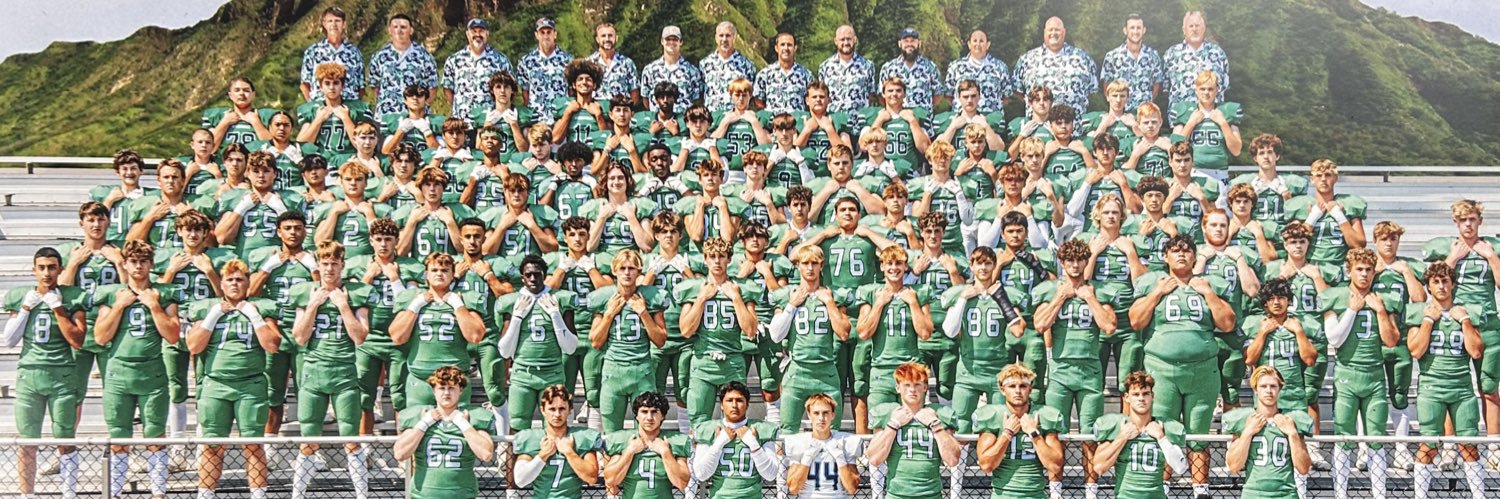
"The culture of your program is established and reinforced in the weight room.
Tough teams win. Tough people win in this game.
But it's also about shared sacrifice, building confidence, details, and accountability.
All of those things are what wins."
PLAYERS: Good teammates have each other's backs. They support one another. They fill in the gaps for each other. One person's weakness might be another person's strength. They understand that they individually play different roles so that together they can have a complete team.
Huge congrats to @BraydenBart11 on being recognized as the NFL Way to Play high school award for his diving catch against @LSHSVikingsFTB for week 16. The catch will be featured tomorrow morning Dec 24thon the Good Morning Football show on the NFL network @nflplayfootball
Too good to not share…
Great information today about culture from @bebetterleaders
“The behavior you ignore becomes permission.”
+1🤘🏻���🏻
https://t.co/bUTMVWzcLn
Mountain West Coach of the Year Jason Eck (@Coach_Eck) frames leadership the right way:
-Create environments people want to be part of.
-Hire for energy and character.
-Use the work to develop people, not just performance.
That approach scales far beyond football.
COACHES: Every single day you have to fight for the culture that you want. You have to compete for the hearts and minds of your players. You have to intentionally inspire those that you lead. It's not always easy but it will always be worth the effort.
-Finally, can we please get rid of the tiers Kingco? If you want to do tiers in the future, please keep teams with their own classification. Thanks!
Feel free to ask any questions today and I’ll answer to my best ability.
#wafbscores
The behavior of the people you lead is a byproduct of their personality, the culture, and their interpretation of the culture.
Strong cultures are clear and consistent. They leave little room for interpretation. In these environments, everyone knows what’s expected, and when actions don’t align with team standards, they will be held accountable.
Weak cultures, on the other hand, are vague and inconsistent, leaving people to interpret what matters on their own. These environments promote me-first instead of team-first behaviors.
As a leader, you are constantly shaping the strength of your culture, whether you realize it or not. The clarity of your standard and the extent to which you allow people to deviate from it communicate what is acceptable and what isn’t.
Every time you allow gossip, finger-pointing, or cliques to form, you set the conditions for selfishness. Conversely, when you break down walls, encourage hard conversations, and foster connection, you send the message that no one is bigger than the team.
As a leader, consider these questions:
- Are my standards clear or open to interpretation?
- Am I rewarding and reinforcing the right behaviors?
- Am I tolerating things that quietly erode the culture?
If you assume people will “figure it out,” they won’t. The strength of your team will always mirror the strength of your standards. In the end, people don’t just follow what you say; they follow what you tolerate.
Team culture succeeds or fails because of one mindset:
Think and act as if the entire culture depends on you—your standards, your decisions, your actions, your interactions.
If people on the team don’t think and act with this mindset, no other culture strategy can overcome it.