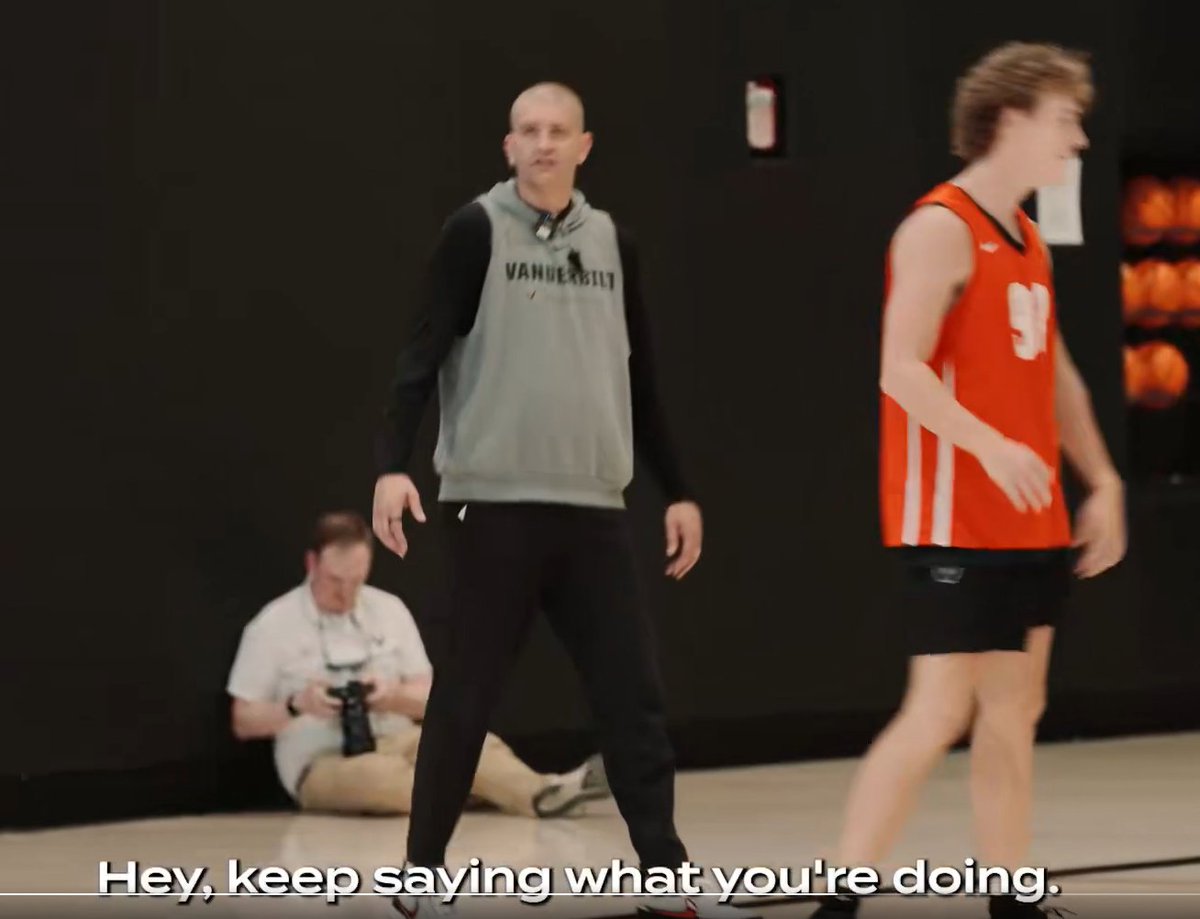
"Team-Talk" is easy, but young players don't know how to talk or what to say. Give them the cheat sheet, hold them accountable - and it will grow organically
1) On DEF:
"Say what you see" (screen, help, skip, etc)
2) On OFF:
"Say what you're doing" (fill, quick, up, etc)
#BQAI
If you watched your
1. Missed shots
2. Turnovers
3. Amount of standing watching the Ball
4. 1st 2 steps to the offensive glass, running the floor and in recovery defensively
5. How quick you get back on D after a turnover, missed shot or non call.
You’d get better QUICKLY
Basketball Skill doesn’t just happen
It’s a product of hours and hours of hard work
Steve Nash’s routine
10x Jab & shoot
10x One dribble pull ups (Right/Left)
10x Hesitation pull ups
10x Step backs
10x Spins
10x Runner
10x High layups
50x 3's
FTs
One of the biggest misconceptions in high school sports is that coaching is primarily about practices, games, and wins.
The reality is that coaching has become one of the most challenging roles in education because coaches are expected to wear dozens of hats while being evaluated from every direction.
Every parent, player, administrator, and community member often has a different expectation of success.
One family wants college recruiting to be the priority.
Another wants playing time.
Another wants winning.
Another wants player development.
Another wants discipline.
Another simply wants their child to enjoy the experience.
The challenge is that those goals frequently conflict, and coaches are often expected to satisfy all of them simultaneously.
Most coaches are balancing far more than what happens between the lines. They manage team culture, player conflicts, parent concerns, academics, transportation, fundraising, budgets, equipment, scheduling, eligibility, social media issues, and the emotional needs of teenagers.
At the same time, every roster includes athletes with different abilities, goals, motivations, and commitment levels. Some dream of college athletics. Some are trying to make varsity. Some simply want to belong. Building one program that serves all of them is incredibly difficult.
Perhaps the greatest challenge is decision-making.
Who starts?
Who plays?
Who sits?
Who travels?
Who gets moved up?
Who gets cut?
Every decision creates opportunity for one athlete and disappointment for another. Even well-intentioned decisions can be viewed as favoritism or politics when seen through the lens of an individual family.
Recruiting adds another layer of complexity. Coaches are expected to help athletes pursue college opportunities while also managing the needs of an entire team. Supporting one athlete can sometimes raise questions from another family about their child’s opportunities.
Social media has amplified many of these challenges. One lineup decision, one difficult conversation, or one emotional moment can quickly become public discussion, often without the full context.
There are also pressures many people never see.
Pressure from administrators to represent the school well.
Pressure from parents to provide opportunities.
Pressure from athletes to help them achieve their goals.
Pressure from communities that often measure success by wins and losses.
Pressure to retain athletes in an era of increasing transfers and movement.
And all of this occurs while coaches are trying to develop young people, not just athletes.
What makes coaching difficult is not that people don’t care.
It’s that everyone cares deeply, but often about different things.
Parents focus on their child.
Players focus on their opportunities.
Administrators focus on the school.
Communities focus on results.
Coaches must somehow balance all of those interests while making decisions they believe are best for the team.
As a former college coach, athletic director, and high school administrator, I’ve learned that most coaches are not trying to hold athletes back, play favorites, or make life difficult for families. Most are simply navigating competing priorities, limited resources, and difficult decisions while trying to do what’s best for kids.
Because at its core, coaching has never really been about managing games.
It’s about managing people.
And that’s what makes it both incredibly challenging and incredibly important
Allen iverson in tears having to be consoled, after losing to the pacers in the 2nd round in 2000. It was the 2nd straight yr the pacers sent ai home in the 2nd rd
Ai would bounce back in 2000-2001 winning mvp, beating the pacers finally, in route to the nba finals.
Coaching high school basketball is believing in a group of players before the results show up.
It’s seeing more than who they are today. It’s seeing who they can become with guidance, discipline, and confidence.
The job is bigger than basketball.
Teach effort.
Teach attitude.
Teach togetherness.
You’re building people first, players second.
#Coaching #Basketball #Leadership #PlayerDevelopment #cmdcoachinglab
“You guys make it about the wins and losses. 25 years from now, I want them to pick up the phone and call me because they need me. I’m there for them.”
The life of a coach is an investment in people, not just points.
Build a legacy that outlasts the jersey.
Start the school year right. If you are going to quit something, quit:
Complaining
Blaming others
Taking shortcuts
Procrastinating
Being afraid to fail
Doubting yourself
Unhealthy habits
Focusing on negatives
Living in your comfort zone
Saying I can’t/I won’t/I don’t
Giving up
If your team isn’t practicing this hard, they are leaving some in the tank
Champions make practice so hard that the game seems easy
(Via @_ChesterFrazier 🎥)
Kenny Dillingham didn't mince words after day two of ASU fall camp:
"Don't be mad going 5-7 ... 6-6 ... 3-9 ... Somebody has to go those records. We didn't practice bad. We didn't practice with passion ... It was a good practice for a bad team."
@DevilsDigest
One of the best Assistants in the country
@chambershoops
Will Wade’s right hand man is detailed, & the ultimate grinder
Chambers was given a lot of the credit for the Defense and Game Plans at McNeese State - Very sharp
Will be a Head Coach soon 🐺