Every year, I share this video of French caretakers who take sand from Omaha Beach in Normandy, and scrub them into the letters to give them the gold coloring.
They do this for all 9,386 US soldiers who died.
France also gave us this land as American soil. #MemorialDayWeekend
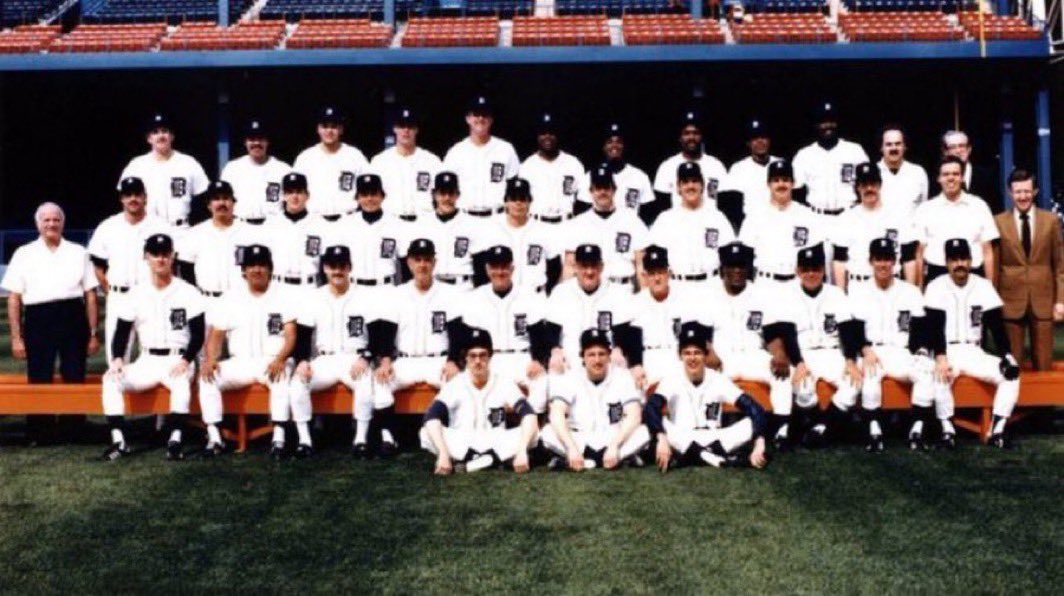
1984 Detroit Tigers (WS champs)
- No one scored or drove in 100 runs
- No one reached 175 Hits
- No pitcher won 20 games
- No pitcher recorded 150 strikeouts
104-58 and 7-1 in the postseason
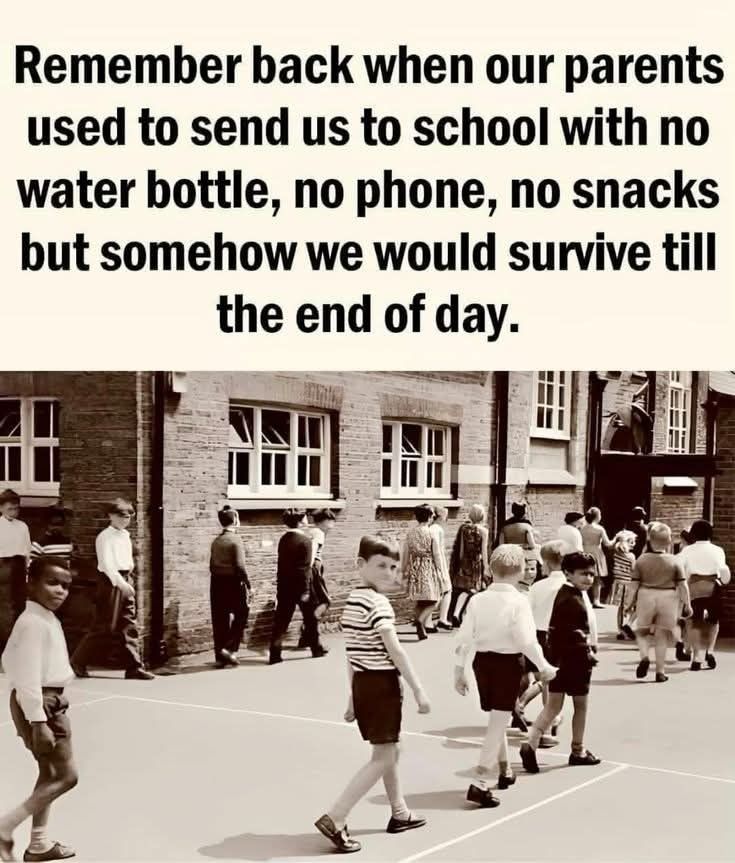
These kids weren’t born this way. We did this to them. We handed them devices during the darkest days of the pandemic and told them it was “education.” We normalized constant connectivity as “engagement.” And now we are shocked that they cannot sit through a 50 to 90-minute class without phantom vibrations pulsing in their pockets.
I am begging you, please, for the love of God and these kids, let us return to what actually worked.
Give them paper textbooks again. Real books with spines that crack when you open them, pages that smell like 1997, margins where they can scribble their thoughts and doodles in pencil.
Let them underline, circle, argue in the white space. Let them feel the weight of knowledge in their hands instead of the weightless scroll of a screen. Hand them pencils, actual wooden pencils, and watch their handwriting slow down long enough for their brains to catch up. The research is clear, but more than that, my daily experience is undeniable… when the screens go away, something in them wakes up. They remember more. They argue more passionately. They sit longer with hard ideas. They endure.
And for the love of everything holy in education, institute a complete, bell-to-bell ban on cell phones. Not “in your bag on silent.” Not “face down on the desk.” Not “only for emergencies.” Banned. Collected at the door, locked away until the final bell. Because every single time that tiny rectangle vibrates in a pocket, it rips another thread from the fragile fabric of their attention. We are not preparing them for the “real world” by letting them live in their pockets; we are training them to be terrible humans, distracted, shallow, unable to listen, unable to wait, unable to be present. They deserve better. They deserve to be here, fully, with us.
I am not anti-technology. I am pro-child. I am pro-future. And right now our students are being robbed of the ability to think deeply, to read deeply, to feel deeply. Their eyes are tired. Their spirits are restless. Their minds are starving for something real in a world that keeps feeding them pixels.
Please. Let us give them back the classroom they deserve. Let us give them paper, pencils, and the quiet dignity of undivided attention. Let us save them from the very devices we once thought would save them.
Because if we don’t act now, we won’t just lose their focus. We will lose them.
Schools should more consistently expel students who continually disrupt learning.
States should require those students to transition to structured online programs instead of returning to school.
Tom Izzo with the best defense of old school coaching, against the softening culture of wussies and lawsuits, I have ever heard from a major sports figure…
🔥💪❤️👏🇺🇸
You know what doesn't work? Differentiation
Recent studies show no noticeable gains, especially compared to simple classwide explicit instruction
It spreads teachers thin, drives burnout
It's a buzzword backed by popcorn science
So scrap it. And simplify
#differentiation
It’s Time to Do Away with Standardized Teacher Evaluations
Teacher evaluations are starting to look a lot like standardized testing for students.
We built both for accountability.
We were told both would improve outcomes.
They didn’t.
The Bill & Melinda Gates Foundation MET study showed we got better at identifying differences between teachers.
That’s it.
It didn’t lead to widespread improvement in teaching. It just gave us a more organized way to sort people.
Same thing happened with testing.
It didn’t suddenly make kids better learners. It changed behavior. Schools adjusted to the system. More focus on what’s measured. Less on what’s not.
Teacher evaluation follows that same path.
Put a rubric in place, and people start thinking about the rubric. What gets checked gets attention. Everything else fades.
Charlotte Danielson built her framework for reflection and professional conversation.
We turned it into scoring, which it was never designed to do.
Now it’s less about getting better and more about where you land.
And here is part of the problem, in education, when something doesn’t work, our instinct is to add more.
More walkthroughs.
More categories.
More data.
More forms.
We keep stacking layers on top of a system without ever stopping to ask a simple question:
Is this even the right approach?
Not “How do we improve it?”
But “Should we be doing this at all?”
Because if the foundation is off, adding more just makes it more complicated. Not better.
Now we’re talking about running that same system through AI.
Faster write-ups. Automated feedback. Cleaner reports.
Still the same system.
We built it for efficiency, not for people. So it does what it was designed to do. It standardizes. It documents. It creates consistency.
It doesn’t develop professionals.
After years of refining this—more structure, more detail, more time—we’re still not seeing the kind of improvement that justifies it.
At some point, you stop tweaking and admit the idea itself might be off.
And here’s the reality—many of the highest-performing systems in the world don’t even use a standardized teacher evaluation model like we do.
It’s time to do away with it.
Keep feedback.
Keep accountability.
Lose the system built on rubrics, checklists, and scores.
Replace it with leadership that actually helps people get better. Aspirational Conversations. Coaching. Knowing your teachers well enough to support them.
If teachers are professionals, they shouldn’t be evaluated like this.
And most people in schools already know that.
On this day in 1997, Darren McCarty got revenge on Claude Lemieux as Fight Night at the Joe went down in the history books.
Happy Turtle Day, Hockeytown. 🐢 #LGRW
Parents,
Stop texting your kids during class while they’re at school. If it’s that important you can call the main office. But now you’re taking away from my classroom time and the time of 35 other students because you can’t follow the rules and law yourself. So knock it off.
Thank you for your attention to this matter.
Respectfully
Mr. Akers
During one of the worst losing streaks of my career, our team president walked into my office.
Keli McGregor. One of the best men I've ever known.
He could have come to vent. To question my decisions. To ask hard questions.
Instead, he said: "Cut to the chase, Clint. What's next?"
I looked him in the eye and gave him two words: "Shower well."
The Colorado Rockies were struggling badly that year.
Pregame preparation was solid. Scout meetings, early work, attention to detail. All of it was there.
But at game time, the tires were flat.
I told Keli: the game did everything it could to us today. We just couldn't meet its demands.
Now it was time to reset.
"Shower well" means exactly this:
• Watch the frustration circle down the drain
• Shampoo, rinse, repeat and get the grime of today completely off your mind
• Walk out clean, go home, and actually rest
Leave it at the ballpark. The game is over. There's nothing left to solve tonight.
Keli nodded. Asked if he could share it with the whole organization.
I said sure. And then it hit me. This isn't just for baseball.
Bad day at the office. Grumpy boss. Missed deadline. Traffic on the way home.
You can carry all of that through your front door.
Or you can shower well.
I've never seen a single problem get better because someone dragged it home with them.
The reset is a discipline. Same as preparation. Same as showing up.
Either we win. Or we learn.
The only real loss? When you don't take a single thing out of a hard day.
So tonight, whatever kind of day it was, shower well.
Tomorrow is a new at-bat.
What does your reset look like? I'd love to hear it.