Curt Cignetti talking about why he values academics when evaluating prospects. Good stuff here for anyone who wants to play college sports. Via IU Athletics. #iufb
"There's too many teams looking at the scoreboard..
Teams get ahead by 14 points and start playing like shit..
How about playing with some level of consistency and playing to your standard" ~ Coach Saban
#CollegeGameDay
A THREAD: I was the Niners sideline reporter on this day. During the game, I saw Vernon Davis going to the locker room and when I asked him why, he said “Coach kicked me out”…
Vernon Davis says Mike Singletary called him out in front of the entire NFL, and says years later he thanked him for it
“At the moment, I’d say I was selfish and not selfless because I was young. In my young mind, I’m thinking, ‘Who does this guy think he is? They brought me here to make plays and help this team win. I’m Vernon Davis. Why are you sending me to the locker room? I can help this team win. I don’t need to go to the locker room. Who do you think you are?’ That’s what I’m saying in my mind as a young guy coming into the league.”
“But now, as I look back and assess the situation, Coach did me a solid. He did me a favor. Him being there was a blessing in disguise because I needed that. I needed to have that moment of being benched and going to the locker room. I made a boneheaded mistake. I got a penalty. I hit a guy, I believe I hit him under his chin, and Coach benched me. Coach knew me. He’d been there since I got drafted, so he knew how I was. He watched me, and he was just tired of my foolishness, wasting time getting penalized.”
“So I go to the locker room. I do exactly what he tells me to do. I didn’t say anything. He came to me and said, ‘Come see me tomorrow.’ I didn’t know he was going to do what he did on television. I was at home lying in bed with my kid’s mom watching TV, and this pops up. I’m like, ‘Wow.’ At the moment, I felt like he threw me under the bus. I was thinking, ‘Why would he do this? Why would he do that? This guy’s crazy.’”
“I knew right away that when I walked into that facility tomorrow, I didn’t know what was going to happen. I was furious, but I was also afraid of Coach Mike Singletary because I knew he wasn’t a pushover. He stood up in practice one day and said, ‘I’ll fight all of y’all until I win. You might beat me, but I’m going to get back up. I’m going to keep on fighting.’ Such an old-school guy. But I love that dude. I love that dude, man.”
“We had a heart-to-heart, man, and from that day, from that moment, I got it. I knew exactly what he wanted me to do, and I knew what I needed to do for myself. If I wanted to stay on this team and if I wanted to be a leader for my teammates, I had to change my ways. I had to change my attitude. Thankfully, because I had him, I was able to be the player that we saw for the next 11 or 12 years. Because of him and what he did for me. Tough love. Nothing but respect.”
“I don’t know verbatim exactly what he said, but it was somewhere along the lines of, ‘Son, you have to change. You can do better. What you did out there, we can’t have that on this team. Son, I know what you can be. You can be great. You can be the best tight end in the NFL, but you’ve got to change.’ From that moment, I started crying. I shook his hand. I said, ‘Okay, Coach. I got you.’”
“I love him. He’s like a father figure, a brother. He’s all of that, man. I reached out to him when I was writing this book. I was like, ‘Coach, I’d love to have you do the foreword for this book.’ He said, ‘It’d be an honor.’ I was like, ‘Wow, that’s amazing.’”
"What we've created is rat poison on steroids."
Nick Saban talking about the current landscape of college football from a coaches perspective.
" If you don't have intensity, you can't maintain focus, you can't really play with discipline, you don't play smart, and all these things lead to inconsistency in performance.
It's different between wanting something and being committed to it, and I think we have a lot of conditional commitments to teams now in college sports.
Guys are worried about how much money they make. I talked to one coach who's on a bye week this week. He says he's talking to agents, all week instead of focusing on coaching his team.
So really what we've created is rat poison on steroids in terms of guys' ability to be able to stay focused and lock on what's important to having good performance and lock out things that affect the performance."
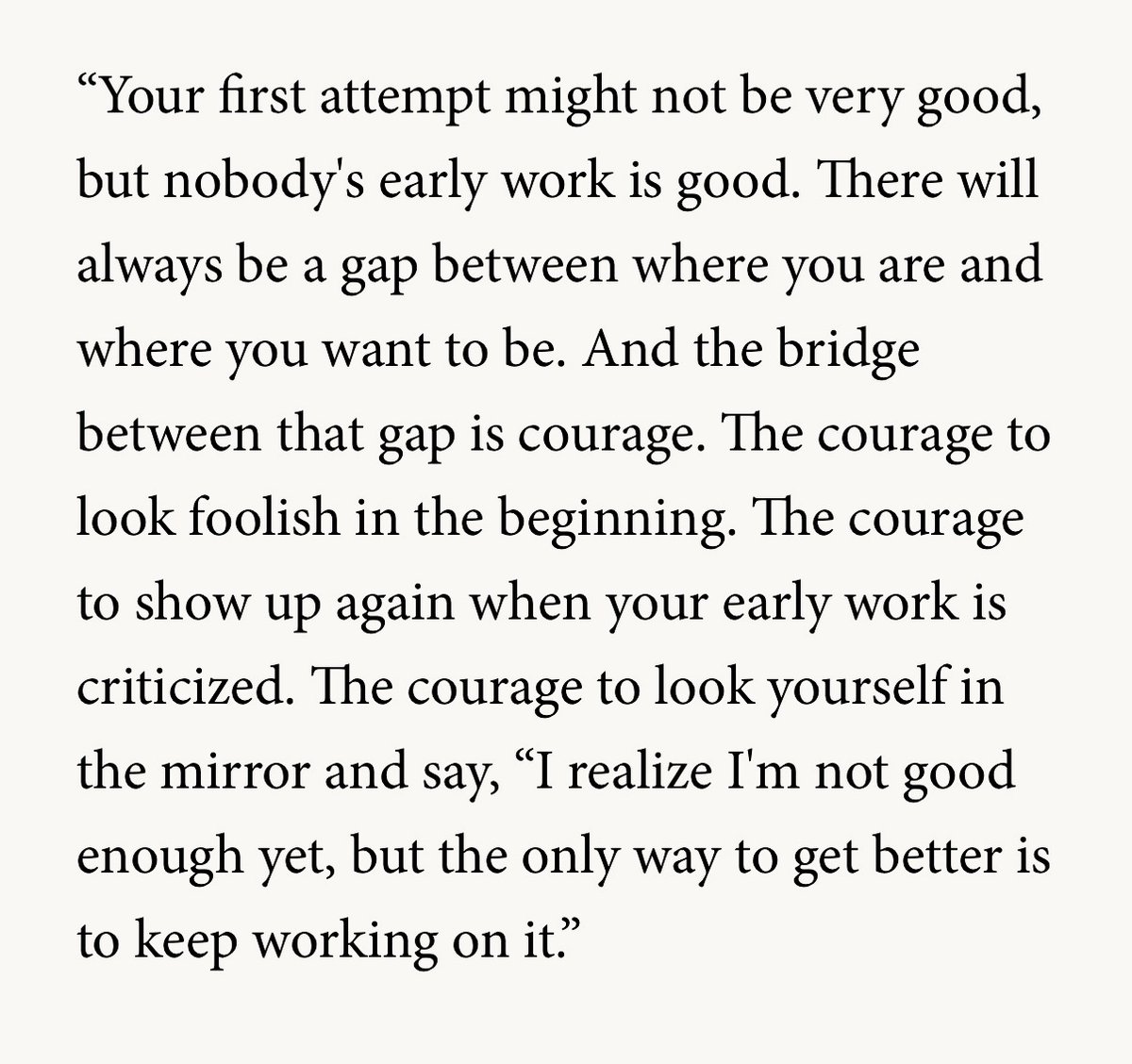
“Almost” becomes dangerous when you start accepting it.
You can recognize progress and still demand better.
Learn from what went right.
Take responsibility for what went wrong.
Do the work to close the gap.
Being close should fuel your preparation not become your excuse.
🎥 Kevin Sjuts
Nick Saban says his mother taught him the mindset that eventually shaped Alabama’s dynasty, it’s not about beating the other guy, the competition is always you
“Accountability was really important. If you had a job to do and you didn’t do it exactly right, you were going to do it over again. So you learned how to be accountable. One thing my parents always emphasized was it wasn’t about winning or beating the other guy. It was about, did you do it as well as you were capable of doing it?”
“We won 30 games in a row when I was in high school and won a state championship, and that was never good enough. I asked my mom once, ‘Why is it never good enough?’ She said, ‘It’s not about winning the game. It’s not about beating the other guy. It’s about: did you do it as well as you’re capable of doing it?’”
“So that makes you kind of a perfectionist, because the competition is always you. It’s always you.”
“The other thing that instilled in me was I never had what I call relief syndrome. It’s kind of human nature that if you do something of significance, you think you’re supposed to be able to rest on your laurels.”
“Players would win a big game and say, ‘Can we have Monday off practice? We get rewarded for winning this big game.’ Well, I’m thinking about how we’re going to win the next game. Did we play well enough in that game to win the next game, and what do we need to improve on?”
“You can never be perfect, but you’re always trying to close the gap on perfect. I think great competitors, whether it’s Kobe Bryant, Tiger Woods, Michael Jordan, those guys could always take the next challenge. It didn’t matter how much they won or what they did.” Pasted text
A TEAM BECOMES DANGEROUS WHEN:
The stars perform.
The reserves prepare.
The veterans teach.
The newcomers listen.
The captains serve and hold people accountable.
The coaches maximize the team's potential.
And everyone values winning.
That’s when talent becomes a
DANGEROUS TEAM.
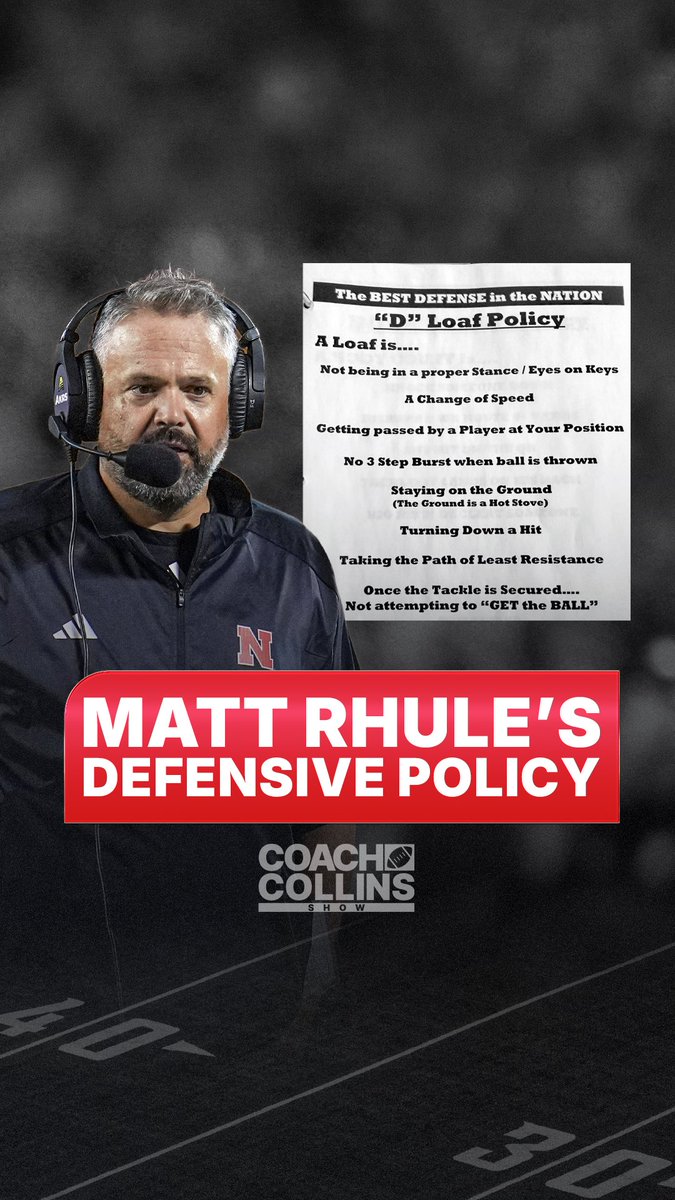
My guy @CoachMattRhule & i created the “LOAF” policy 30 years ago.
The idea was simple: if we wanted to be the hardest-playing defense in college football, we needed a way to actually measure effort.
Bad stance. Changing speeds. Staying on the ground. Taking the easy path. Not finishing to the BALL. All LOAFs.
Three decades later, I pulled up the Nebraska tape to see if it’s still alive and well. 👀🏈
#CollegeFootball #NebraskaFootball #Huskers #GBR #CFB
Leadership isn't just meeting the standard yourself.
It's refusing to stand by while your teammates fall below it.
Leadership requires more than setting an example.
It requires the courage to hold others accountable.
This is how I always viewed coaching.
Every season is different. Different players. Different strengths. Different challenges.
My job wasn’t to force every team to look the same.
My job was to get the absolute most out of the team and talent we had.
For me, that came down to three things:
1. Build the culture.
2. Develop leaders.
3. Find the strategy that gives THIS team the best chance to win.
You don’t coach the team you wish you had.
You coach the team you have.
Great coaching is figuring out what your team can become, and then helping them get there.
DeSean Jackson explains why star players should be disciplined harder than everyone else on the team
“Man, I think accountability is first and foremost the ultimate. That’s number one in anything you do. Being a coach now and kind of going back to when I was playing, I understand from a coach’s perspective why my coaches were the way they were on me. Because when you’re a player, you don’t understand, you just think you can do it however you want to do it.”
“You got attitudes, you mad, like, ‘Give me the ball,’ this, that and the third. Or like, ‘Why my coach being so hard on me? Why he disciplining me for this and that?’ So when you’re a star player, you got to get disciplined a little harder. Because if the team sees the star player being disciplined and being yelled at and certain things that you know he’s not going to let you do, then it’s like everybody got to fall in line.”
“So I feel like now that I’m in this position, you got to own up to the accountability. Like when you’re wrong, you’re right, you’re late, every little thing. Because I think a lot of people don’t understand how hard it is being a professional athlete. And then football, we play once a week, the amount of work leading up to the game determines the wins and losses on Saturdays or Sundays, whenever you’re playing.”
“Going back, I really didn’t understand that. I was like, ‘Man, my coach tripping about practicing on Tuesday. The game ain’t till Saturday. I’m trying to make it to Saturday.’ But if you bullshitting all the way through the week and you just think you’re going to show up on Sunday or Saturday and it’s automatically going to be right, you’re fooling yourself. So the respect for the work leading up to the game, I respect it a lot more now.”