Tune in Monday at 9:40 PDT for my first ever GDC presentation! 🤩
Branching Out: Watch Dogs Legion‘s Architecture for Group AI Behaviours
We'll be online for a live Q&A after the talk
#GDC21#UbiGDC
Next week at #UbiGDC: Christopher Dragert and Patrick McKenna shed light on the modular #AI architecture used to develop the rich, open-world experience of Watch Dogs: Legion.
The junior dev asked the senior dev “why are you pushing this code with no abstraction? What if you want to change it in the future?”
The senior dev responded “then I will change it in the future”
In that moment the junior dev was enlightened
@boris_brave This blog post details Planetary Anihilation’s engine design that really leans into it. https://t.co/8TqEdA47iA
Spoiler: everything is a curve 🤯
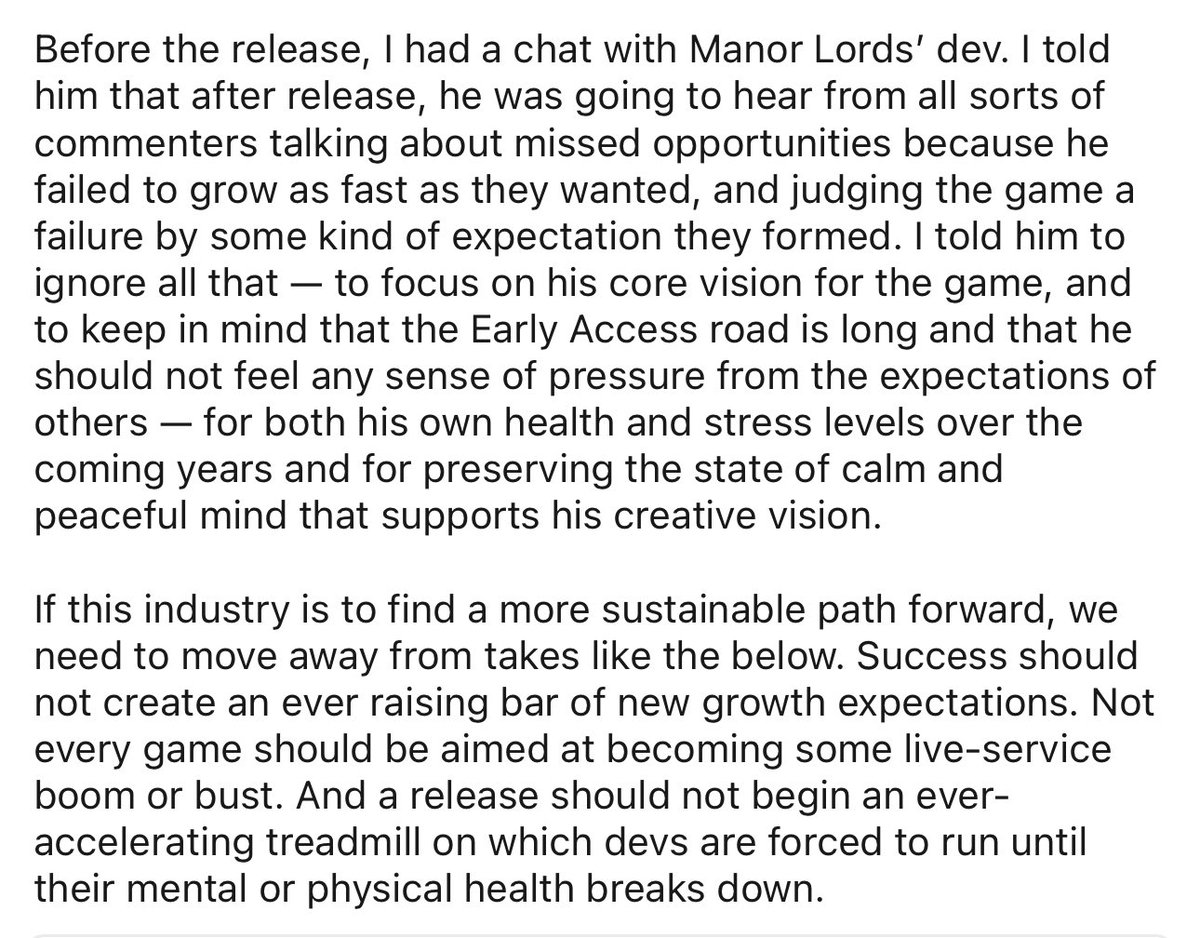
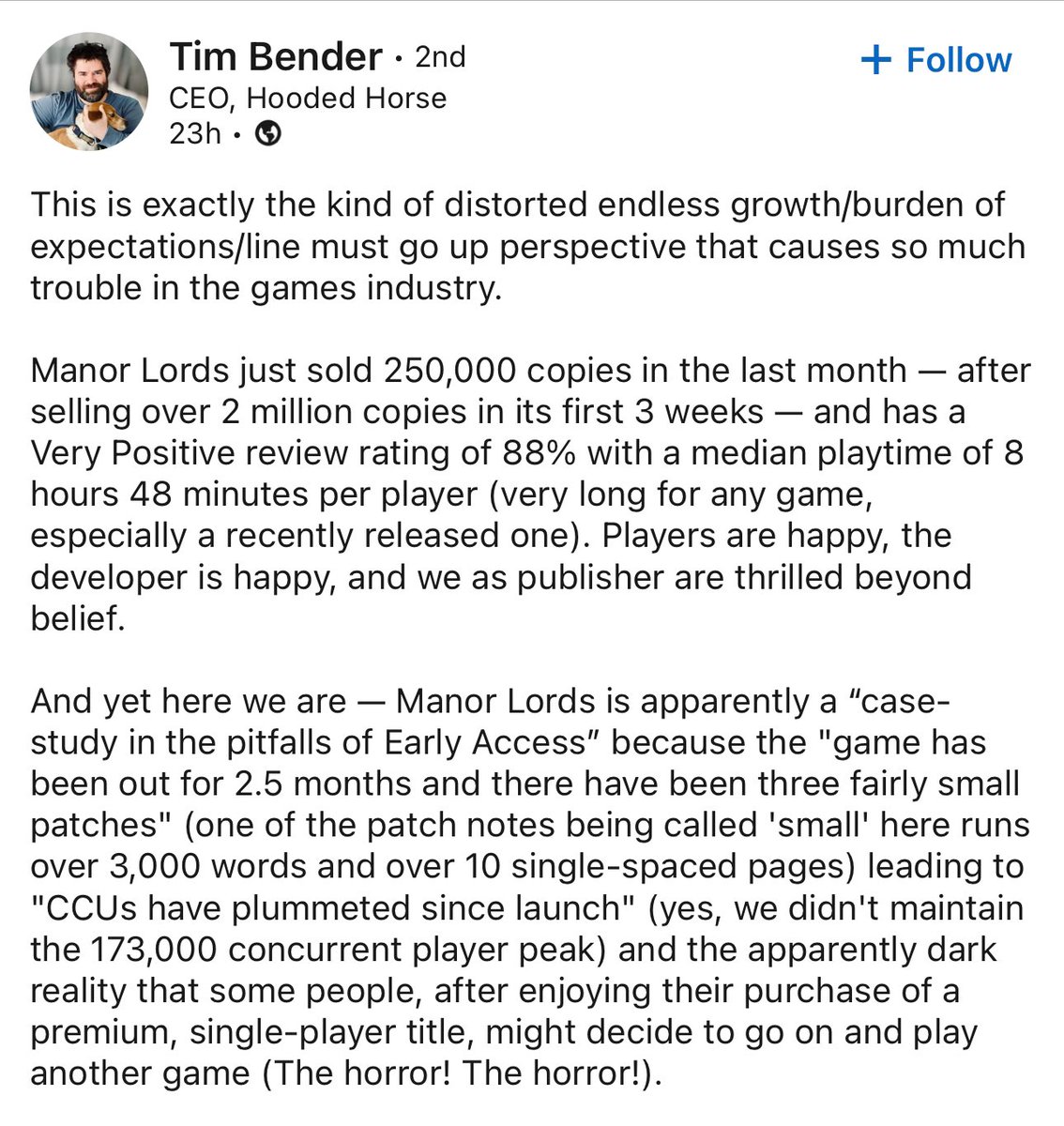
Tim Bender, CEO of Hooded Horse, with a fantastic response to someone saying “Manor Lords is a pretty interesting case-study in the pitfalls of Early Access”.
I didn’t think Hooded Horse could get any cooler but here we are 👑
To celebrate the launch of our PlayStation Programming course at https://t.co/UOBQ3XLr0T, we are *GIVING AWAY* a PlayStation miniature from @Retroldtech.
To put a number in the bag, simply retweet this post! 🙂
@stevesaylor Ergonomics. I love a numpad, but I love my body more. With a full size keyboard either my keyboard is centred and my right arm is hyper-extended to mouse, or the mouse is in a neutral position and I have to shift my whole body to the left to type. TKL moves both towards centre.
@MIT_CSAIL Can’t decide between ‘compilers’ w @_rsuvorov or ‘semantics of programming languages’ w @johyphenel. It’s been a hot second, but fond memories
@lisyarus@manalokos You could do a similar simplification for the resolution part: just repel overlapping points away from the cell’s centroid.
The expensive version would be closest-point-on-line-segment to the nearest outside edge.
@lisyarus@manalokos Yeah, in my case I know which constrains form the hull by construction, but I suppose if you’re evolving morphologies that might not always be true. But if you’ve got meta-data about “cells” anyway perhaps you could lean on that? It sounds like you already are with the spheres
@manalokos@lisyarus I’d try an AABB coarse pass collision detection then the winding number algorithm for point-polygon intersection tests. Add a constraint to push any points that overlap another object.