PhD candidate in Planetary Science at UC Santa Cruz. Planetary geophysicist and accidental geodesist. Expect mostly baseball and planets on here. He/Him.
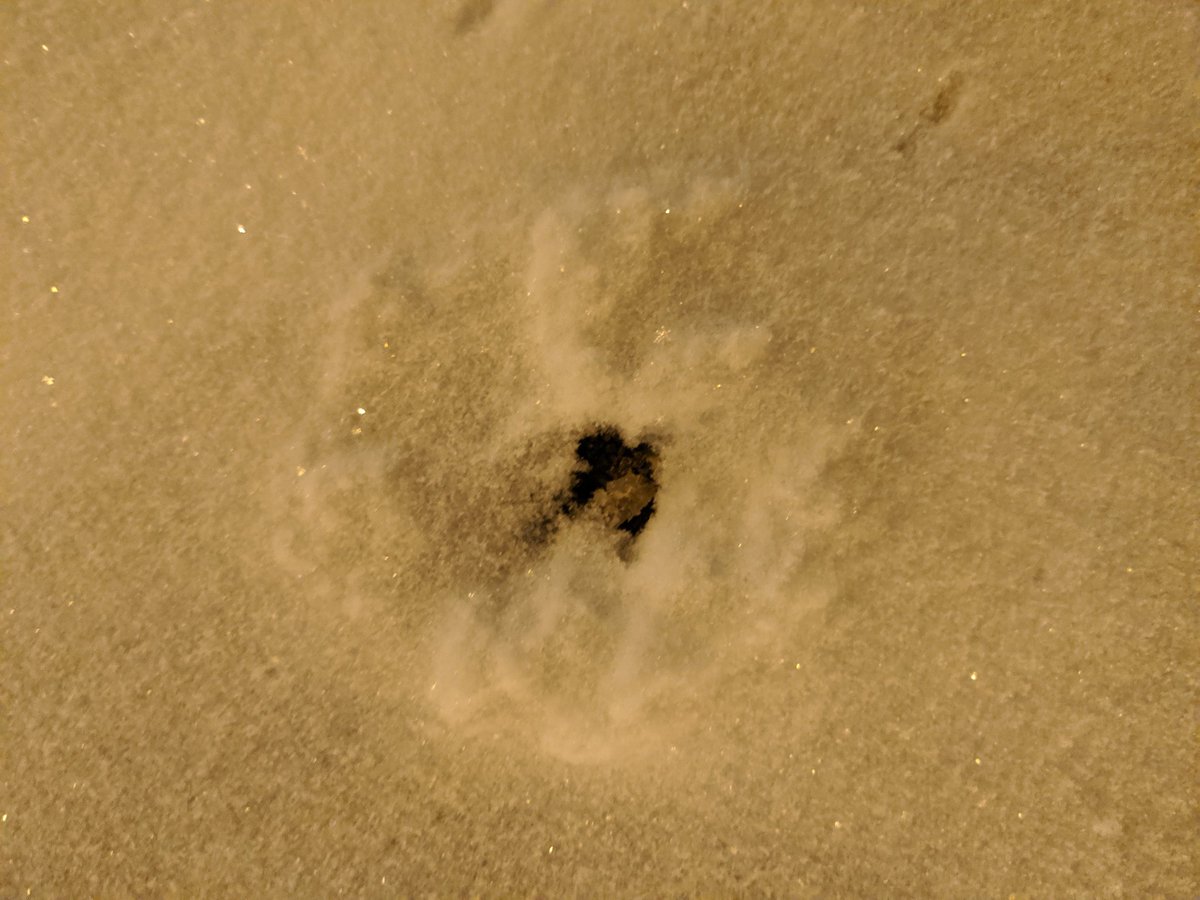
Stumbled across some incredible science-in-the-wild walking home last night in a light snow storm. Every one of those little snow mounds has a big salt crystal in the middle.
I'll put my favorite mechanism in the responses, but I'd love to hear other ideas!
@CodysLab@TheRisingFury Yeah exactly. The main explanation in that is greenhouse effects (though I didn't know the ammonia one!), it says solar mass loss "can not by itself resolve the paradox."
@CodysLab@TheRisingFury I thought the silicate weathering feedback (fixing more CO2 when rain increases) dominated that? The sun is like 50% brighter, that'd be an absolutely enormous change in orbital distance. Wikipedia says the sun has lost a few % of its mass which wouldn't move earth 25% farther.
@_absrp@topoerosion Yes! Elena Hartley did it. It was a few years ago so I'm not sure if she's still active, but worth reaching out. This is her website https://t.co/vxLf59yRLS (the second one on the home page was the one for me). Earth science background so understood the important notes to hit.
Stumbled across some incredible science-in-the-wild walking home last night in a light snow storm. Every one of those little snow mounds has a big salt crystal in the middle.
I'll put my favorite mechanism in the responses, but I'd love to hear other ideas!
As a southern Californian I thought SF was a cold enough spot for a conference—idk who thought Chicago was a good idea, bc ya boi has really had to bundle up