Over the years, we’ve received a lot of valuable feedback, but some stand out.🌟
This 5-star #Clutch review is still one of the strongest validations of our approach. What makes it even more meaningful is that this collaboration has been ongoing since 2018, continuously growing.
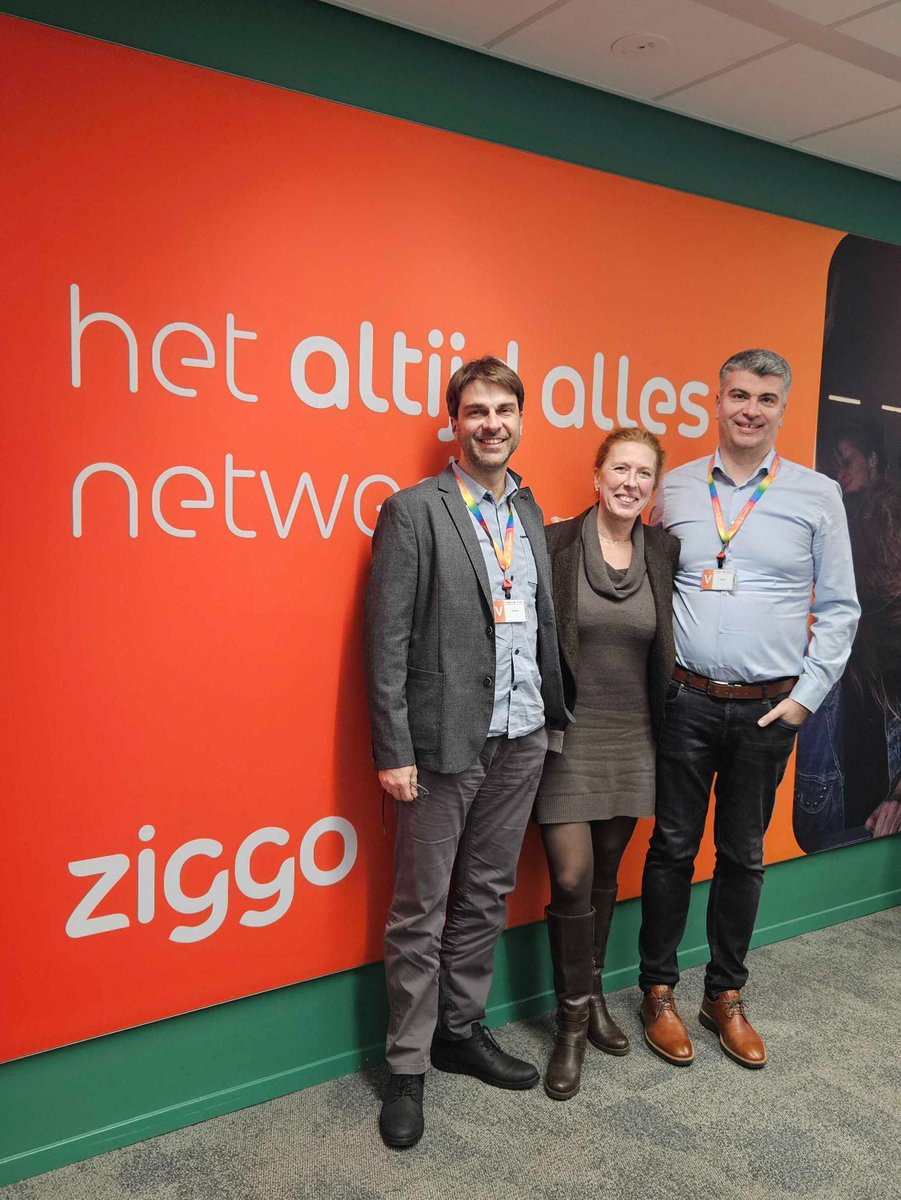
We continue to strengthen our client relationships by making time for conversations in person.
Our team visited VodafoneZiggo, exchanging perspectives and gaining a deeper understanding of their needs.
For us, being present is an important part of being a trusted partner.
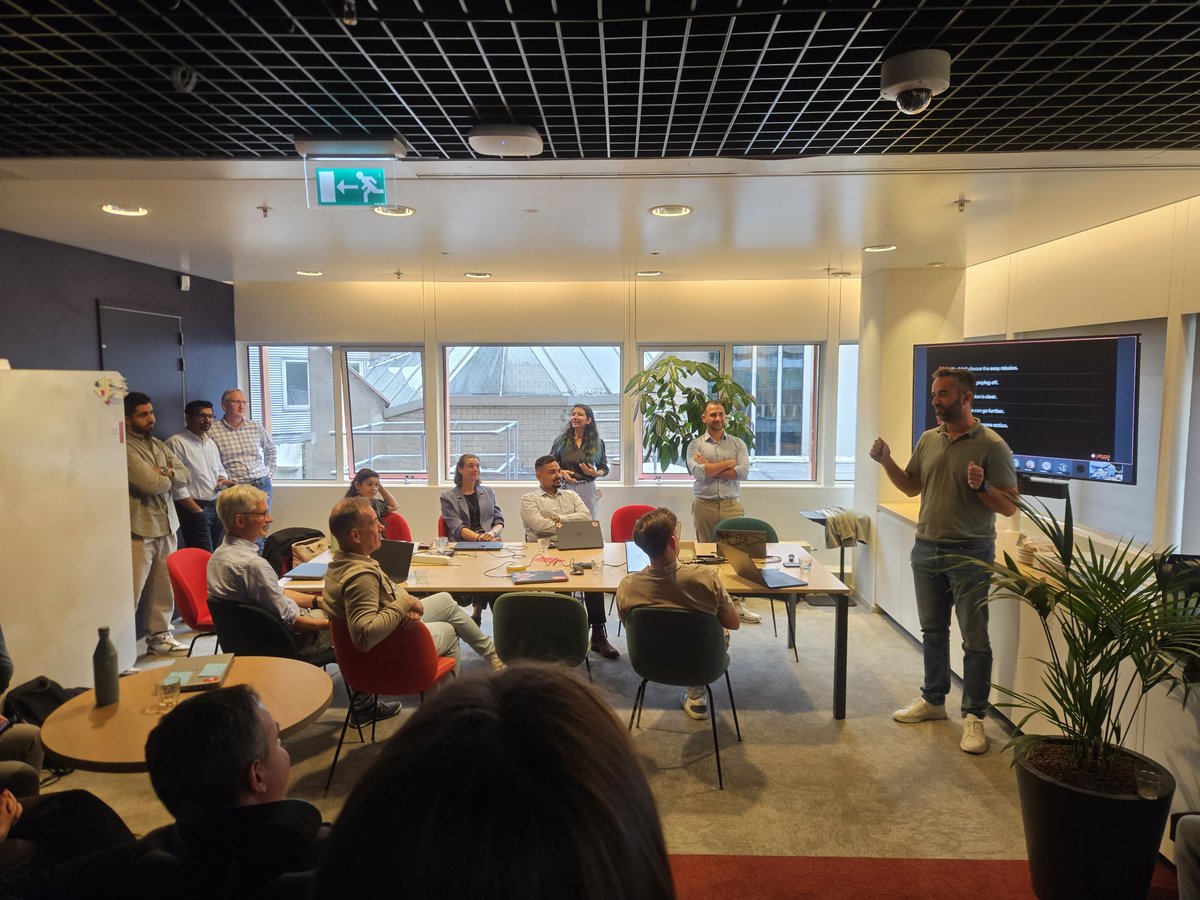
A day away from screens and deadlines. 🌲
Our team spent a day in nature at the Visitor Center Pecka, trading laptops for fresh air. It was also the setting for our traditional Superdemo, now in its 16th edition.
Thank you, team, for making Codaxy what it is today.💙
This year, our colleagues Nikola Babić and Daniel Etman will be attending Network X in Vienna from October 13–15.
If you’re working on network automation, AI transformation, data centers, or autonomous operations, drop a comment or reach out to them directly to arrange a coffee.
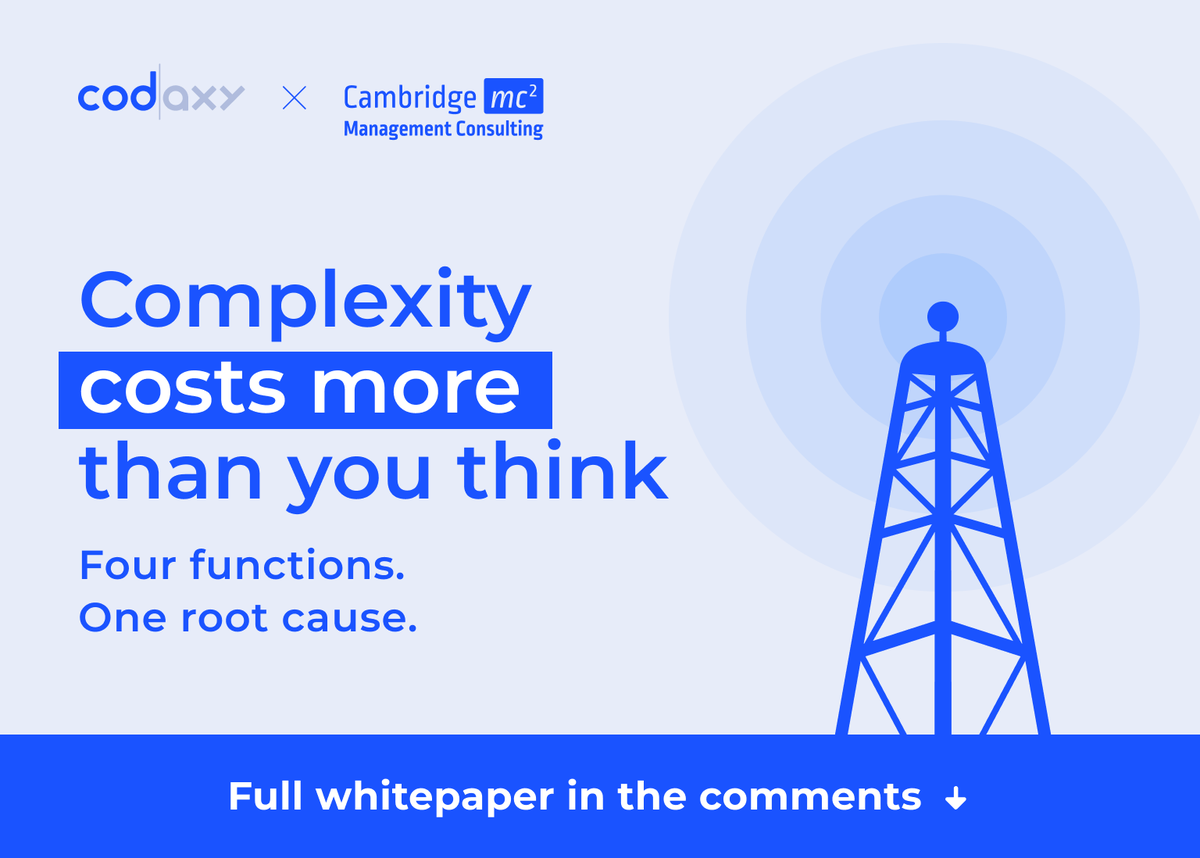
We call this the Complexity Tax: a cost every telecom operator is paying, whether or not it has been measured.
Our new whitepaper explores where complexity destroys value and how to simplify what already exists. Read it here: https://t.co/MF7X90S4Y7
In telecoms, the biggest costs rarely show up on the P&L.
Across the operators we speak with, the pattern repeats: significant investment in network, IT and transformation, and yet the same symptoms persist: rework, delays, revenue leakage, escalating operating costs.
The CFO sees margin erosion. The COO sees inefficiency and rework. The CIO and CTO see fragmented systems, duplicated data and technical debt.
Behind these symptoms, people are often left to fill the gaps between systems, spending valuable time on workarounds.
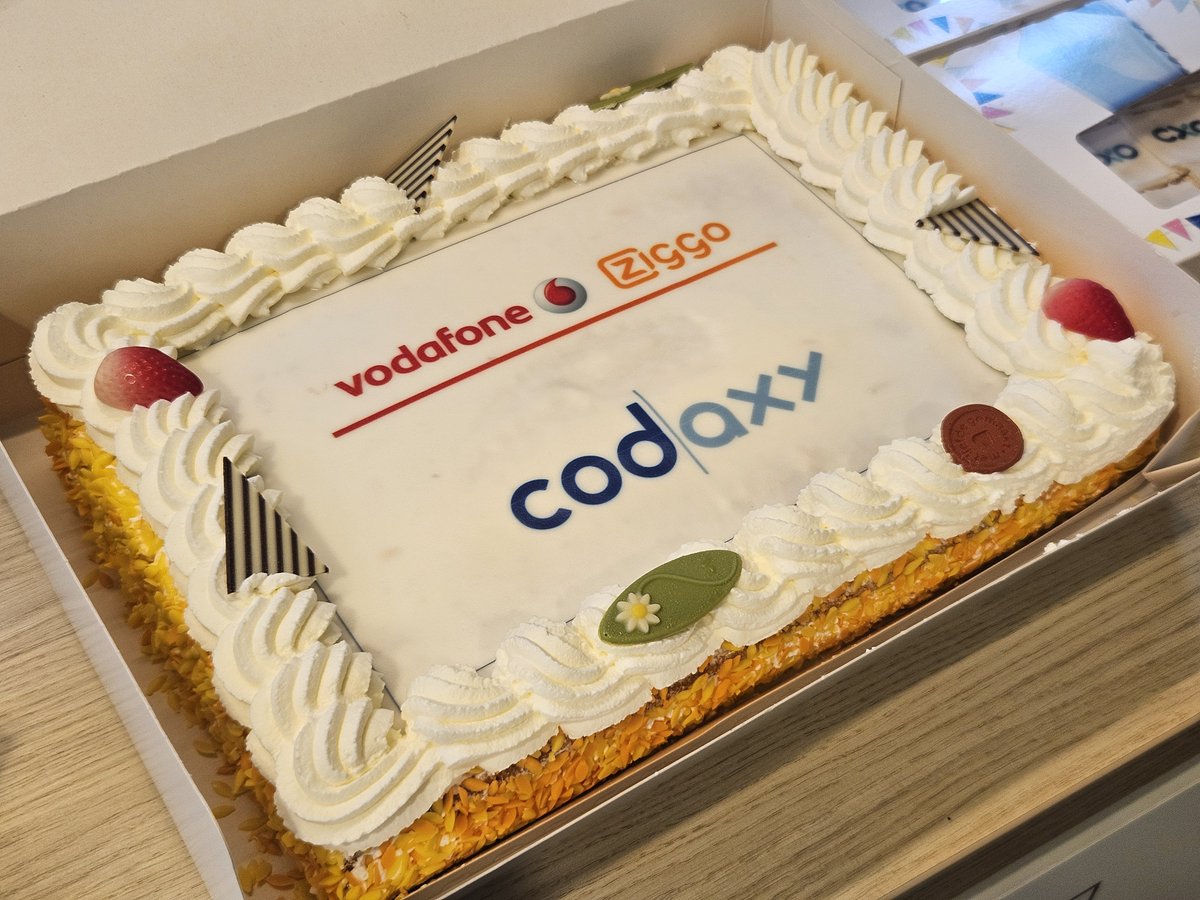
We visited our client VodafoneZiggo for a quarterly planning session, catching up on progress and celebrating an important milestone along the way.
And what better way to mark the occasion than with a cake?
Thank you, VodafoneZiggo, for years of trust and great collaboration.🥂
That's the payoff of a standards-based architecture built on TMForum Open APIs: inventory is a byproduct of ordering, not a separate system you reconcile later.
And every new infrastructure domain is a workflow away, not a platform rebuild away.
More on https://t.co/rQaTwkjTxj
The same orchestration engine that powers telco network services now provisions Kubernetes clusters. We just built workflows on top of the existing core.
That capability became the basis for a private cloud orchestration solution we're developing with a Tier-1 operator in Europe
✔ One order, one running cluster.
✔ Additional worker capacity can be applied directly
✔ Security as an add-on, not a rebuild.
✔ Everything visible in one place, in one dashboard
✔ Provisioning and billing in the same flow
🔽
Start with one use case. Expand when it makes sense. No big-bang migration. No rip-and-replace.
Interested in seeing this model in action? Let's talk. 👇
https://t.co/r62VSJx4qC
Telecom operators don't need another disconnected tool. They need a way to orchestrate the systems they already have.
CxOrchestrator solves this through unified orchestration across services, systems, workflows, and domains.
What does that mean for operators?
🔹End-to-end orchestration across IP, access, cloud, and IT domains
🔹Live inventory aligned with the actual network state
🔹Automation with human control
🔹Integration without replacing your stack
🔹Open and operator-controlled architecture
🔹Scalability without added complexity
DTW Ignite starts next week, and our team is heading to Copenhagen.
From June 23–25, you’ll find us at Booth 223.
We'll be talking about what we’re building, and sharing where we see #CxOrchestrator heading.
If you’re attending, feel free to reach out.
See you in Copenhagen👋
#AutoCon5 exceeded expectations, and we left with fresh ideas, new connections, and encouraging feedback on our #CxOrchestrator
A special highlight: seeing our colleague Nikolina Grahovac on the stage talking and sharing our experience to a full hall.
See you at the next one.
The result is not just reduced risk.
It’s a smarter way of operating, where decisions are validated through simulation, engineers learn the network interactively instead of relying on documentation, and issues are identified before they become incidents.
In complex network environments like telecom, every change carries risk. That’s why the digital twin is becoming a critical capability.
CxOrchestrator provides a live digital twin of the network, a continuously synchronized virtual replica that reflects its real state.
At any moment, teams have a real-time view of the entire network topology as it exists right now.
This means operators can:
• Test change requests before deployment
• Simulate failure scenarios and predict impact
• Roll out upgrades with reduced operational risk
🔹 Provisioning takes 3 weeks instead of 3 days
🔹 Outages caused by manual config errors
🔹 Projects delayed because engineer is unavailable
Sound familiar?
CxO replaces fragmented processes with a single layer across domains and vendors. ▶️ https://t.co/r62VSJx4qC
For decades, scaling telecom operations followed a simple formula:
more devices, more customers, more complexity ⭢ hire more engineers, write more scripts, add another spreadsheet.
It worked because growth was linear and predictable. That's no longer the case. ⏬
The number of technologies operators must manage keeps multiplying. Growth is exponential, but operations models are still linear.
Every new service, technology, or vendor adds more pressure on a system never designed for this level of complexity.
The result is slow degradation⏬